
Barking / IG11
Carpet Cleaning Barking: Remove the Grit Before It Meets the Rinse
- Entrance soil mapped through the rooms
- Slow vacuum passes used as a cleaning stage
- Bonded residue treated only after particles are lifted
- Maintenance advice focused on preventing fresh abrasion
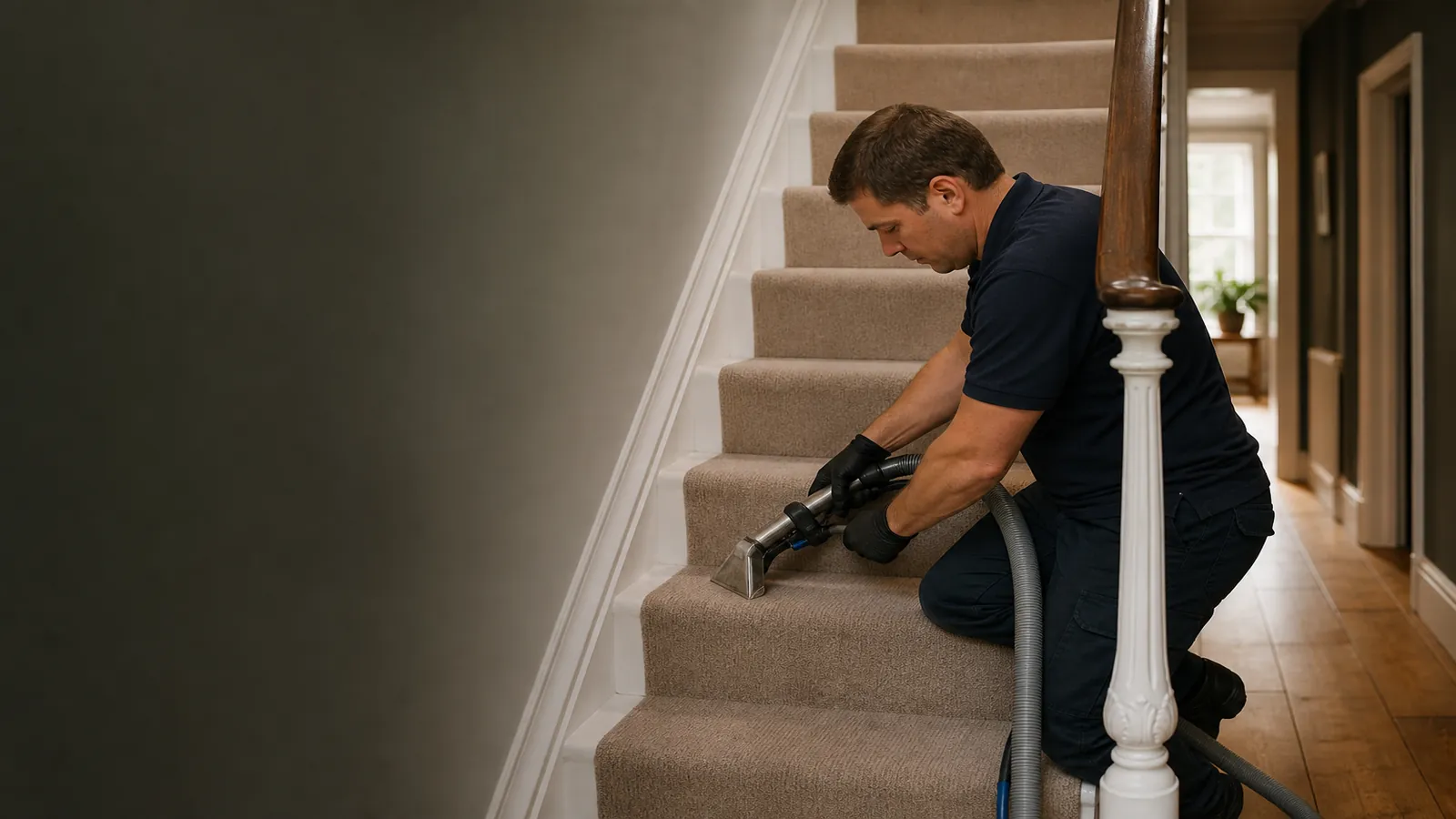

Much of the damaging load begins as dry material
Carpet can hold a surprising quantity of fine particulate matter without looking dramatically stained. Tracked grit travels from entrances into circulation routes, settles beneath the visible pile and moves against fibres under foot pressure. The Barking page concentrates on dry-soil control because removing that load early improves both the cleaning process and the maintenance conversation.
The assessment follows the route of use rather than assuming uniform dirt. An entrance may contain larger debris, a corridor can show compacted fine dust, and protected areas provide a comparison for colour and texture. None of these patterns is claimed to be universal in Barking; the cleaner confirms them in the property and records wear that will not disappear with extraction.
Vacuum preparation is performed with suitable overlap, attention to pile direction and narrower tools at boundaries. A quick pass cannot be rescued simply by spraying more solution afterwards. If loose particles remain, moisture may turn them into a difficult suspension and place needless demand on the rinse and recovery stage.
Once the dry fraction has been reduced, bonded contamination can be addressed more precisely. Pre-treatment is chosen for the carpet and given time to act. Measured agitation helps release films from fibres, while extraction carries them away. This order makes each stage accountable instead of asking one powerful machine pass to perform every function.
Prevention after the appointment is modest but worthwhile: effective entrance control, vacuuming suited to actual footfall and prompt blotting of spills. General housekeeping can be coordinated through domestic cleaning, but the frequency and equipment used on the carpet should remain appropriate to its pile and condition.
SERVICE SCOPE / READ BEFORE BOOKING
A particulate-first Barking carpet service
Included in this brief
- Survey of traffic routes, edges, protected pile and visible marks
- Purposeful dry extraction before liquid products are introduced
- Fibre-compatible pre-conditioning, agitation, rinse and recovery
- Review of remaining wear plus practical prevention and drying guidance
Outside this cleaning brief
- A claim that vacuuming can restore fibre already abraded away
- Structural repair of thresholds, seams, backing or underlay
- Exterior entrance cleaning and unlisted household services

PRICING / CLEAR STARTING POINTS
The soil pattern contributes to a clear quotation
Rooms, stairs, measured area, carpet type, furnishings, access and notable contamination are described before work is priced. Consult current price guidance, then provide the Barking job details. A traffic lane can require attention without being turned into an unsupported local characteristic.
01
Single room
From £15 / room
Compact bedroom or study
02
Double room
From £15 / room
Standard double bedroom
03
Lounge
From £15 / room
Living room with clear equipment access
04
Stairs
Quotation
Standard flight, subject to construction
05
Hallway
Quotation
Reachable hall or landing
06
Whole property
Quotation
Measured rooms and fibre types
Prices are guide prices.
Final quotation depends on the property, condition and requirements.
SERVICE TEAMS / THE AGREED WORK
Dry matter appears differently across a floor

Coarse particles near an entrance
Visible crumbs and grit are collected before pre-spray. The operative also checks beneath the surface because repeated steps can drive smaller material beyond what an ordinary quick vacuum reveals.

A grey route through the room
The band may combine dust, sticky soil and abrasion. Dry extraction removes its particulate component; later treatment addresses bonded residue, while the handover identifies physical wear that remains.

Dust along skirting and corners
Edges need an appropriate narrow tool and patient passes. Flooding the boundary is not a substitute, especially where gaps, finishing strips or looseness make uncontrolled moisture undesirable.

A cleaner patch beneath furniture
Protected pile helps establish a reference for colour and handle. It can show what soil removal may reveal, although fading and compression elsewhere still limit a perfect match.
Dry-soil control is a foundation rather than a complete method. Oily films, spills and water-soluble residue still require their own compatible treatment after the loose load is reduced. The advantage is diagnostic as well as practical: once grit is lifted, the cleaner can judge remaining discolouration more accurately and avoid mistaking a layer of particles for a stain that needs concentrated chemistry.
PROCESS / FOUR DECISIONS
Separate particle removal from bonded-soil treatment
01
Trace use and inspect condition
The operative compares routes, corners and sheltered sections, checks the textile and notes defects. The customer identifies known spills and previous products so dullness is not attributed automatically to grit.
02
Work the carpet while it is dry
Vacuum passes proceed slowly and may change direction to lift material from the pile. Edges and accessible sections beneath movable light items are included according to the agreed furniture plan.
03
Release what vacuuming cannot take
Suitable pre-conditioner is distributed across the required area, with separate spot work where justified. Agitation, dwell time and controlled extraction remove bonded contamination without indiscriminate chemical strength.
04
Leave a useful maintenance baseline
The floor is groomed and viewed across the light. Remaining traffic wear is explained, drying precautions are given, and the customer receives suggestions based on room use rather than a rigid universal calendar.
VISIT / HANDOVER
Do not hide the entrance route before inspection


Clear small items but leave photographs or descriptions showing where soil normally enters and travels. Mention building work, unusual debris or sharp material for safety. If carpet care accompanies end of tenancy cleaning, schedule vacuum-heavy work before the clean floor must be protected.
Vacuum lines are not proof of deep preparation
A groomed surface can display neat stripes while particles remain at depth. Effective dry extraction depends on pace, suitable equipment, overlap and access. Presentation is welcome, but it should not be confused with evidence that the base of the pile was addressed.
Entrance matting needs maintenance too
A mat that is overloaded can become another source of tracked material. Clean or replace it according to its own care instructions and keep the surrounding hard floor manageable. This supports the carpet without pretending that matting eliminates all outdoor soil.
A dark line may be filtration soil
Air movement can deposit fine material along boundaries or beneath doors. Such lines may be deeply bonded and do not always release completely. They receive targeted assessment rather than repeated saturation along vulnerable edges.
Fabric seating can carry a different soil mix
An armchair may collect body oils and spills rather than entrance grit. Request upholstery cleaning separately so its construction and contaminant profile receive the right preparation.
MAP / COVERAGE CONTEXT
Plan the route into the Barking property.
Coverage context for Barking. This map does not represent a staffed local office.
EXPLORE / NEXT
Related services in Barking
EXPLORE / NEXT
Nearby areas for carpet cleaning
Dry equipment removes particles efficiently before they mix with solution. Wet extraction is then free to concentrate on released bonded soil instead of carrying a preventable load of grit.
Barking questions about grit and carpet cleaning
Why vacuum if extraction will remove dirt?
Abrasive particles can contribute to fibre wear under footfall. Cleaning removes recoverable material, but it cannot rebuild tips already lost, which is why ongoing dry-soil control matters.
Can embedded sand permanently damage carpet?
Ordinary tidying is fine, but professional preparation remains part of the service. Tell us about sharp debris or hazardous material and avoid concealing a condition that needs assessment.
Should I vacuum immediately before the appointment?
A bed is a separate textile service with layered construction and hygiene considerations. Use mattress cleaning to scope it properly rather than treating it as spare carpet area.
Can a mattress be vacuumed as an add-on?
No. It describes service coverage and practical local context, not a staffed branch.
Describe how soil travels through the Barking property
Send the room and stair list, measurements, carpet information and photographs of traffic routes or distinct spots. Explain recent building dust, outdoor tracking or products used on the pile. A clear history helps us plan dry extraction, targeted treatment and a maintenance handover without confusing abrasion with dirt. Mention whether your vacuum has struggled with the pile or repeatedly fills from one zone. That observation does not diagnose the floor, but it can direct the initial survey towards an area carrying an unusual particulate load.