
Bromley / BR1
Carpet Cleaning Bromley: A Condition-Led Plan for the Floor
- Rooms, stairs and reachable floor agreed in advance
- Equipment route considered without making local assumptions
- Furniture decisions separated from textile treatment
- Drying and return-to-use discussed as part of the booking
Dull traffic lanes often combine particles and films
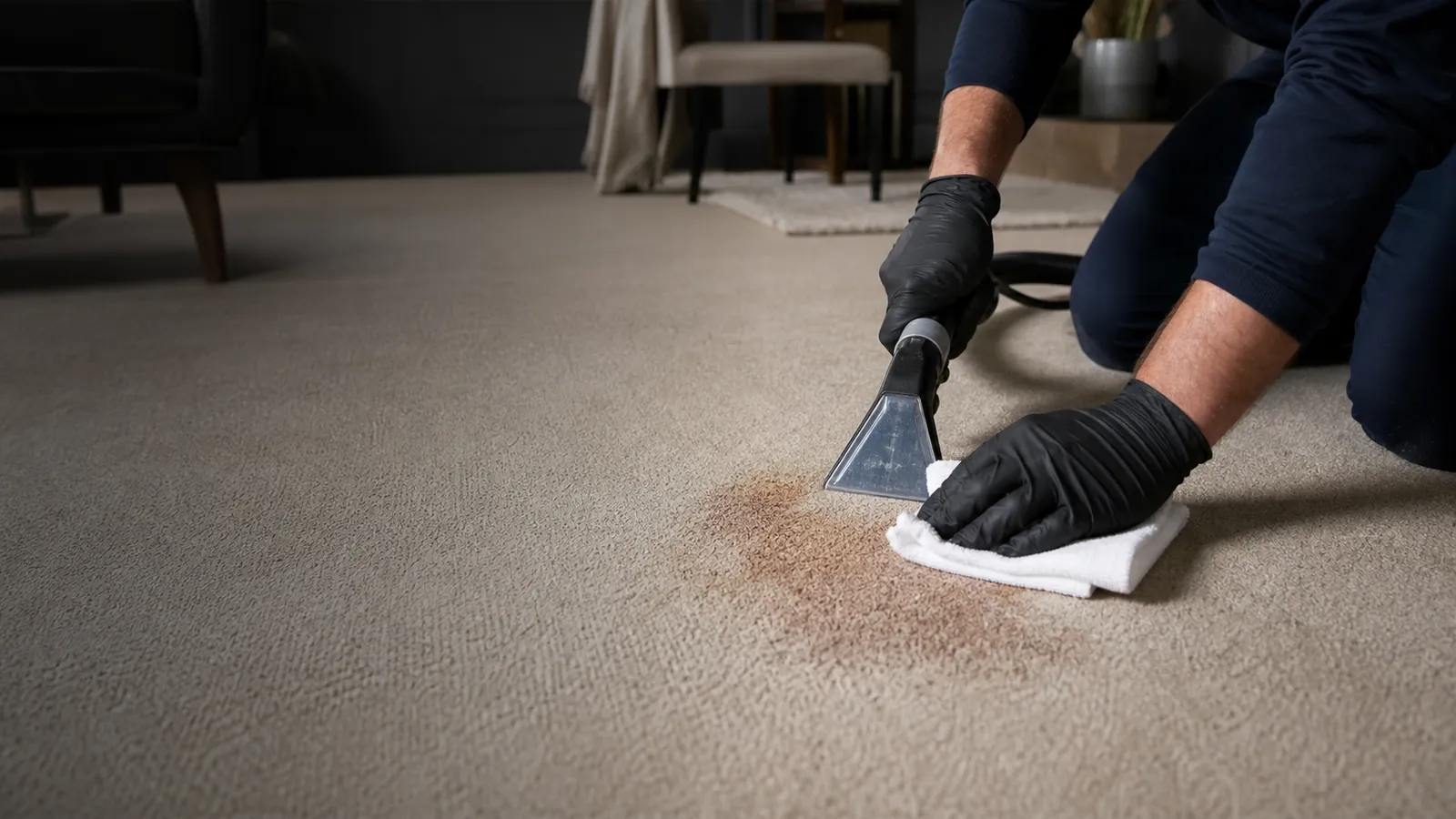
A dark route through carpet can contain dry grit, tracked moisture, airborne film and physical wear at the same time. One stronger chemical does not solve all four. The Bromley page examines layered soil: take away what is loose, identify what is bonded, rinse what can be released and leave abrasion outside the cleaning promise.
History adds context. The customer mentions nearby food preparation, repeated spills, entrance tracking, earlier shampoos or any patch that feels sticky. These details are not converted into assumptions about Bromley properties. They direct the on-site comparison between the main traffic lane, protected pile and quieter areas.
Dry extraction comes first because particulate matter is abrasive and should not be dissolved into slurry. The operative changes direction, works edges and monitors the recovered load. Once the loose fraction is reduced, a compatible pre-treatment can contact the remaining film more evenly and with less competition from avoidable debris.
Agitation provides controlled movement and dwell time allows the chosen chemistry to work. Extraction then removes suspended contamination and solution. Repeated recovery strokes matter because a sticky residue can attract new dirt after the appointment. The objective is not a scented surface but a pile that feels clean within the limits of its material.
A traffic lane may still reflect differently when worn fibre has lost height or changed direction. That is explained at handover. Additional liquid is not poured onto an abraded strip simply because it remains darker under one light. The result is evaluated through soil removal, residue, texture and a realistic comparison.
PROCESS / FOUR DECISIONS
A sequence designed around an occupied interior
01
Confirm entry and working space
On arrival, the operative verifies the rooms and equipment route, checks that agreed objects have been cleared and identifies anything that cannot be shifted without risk. The plan is adjusted before hoses and tools obstruct circulation.
02
Inspect the textile in place
Pile, edges, seams, visible wear and marks are reviewed under the available light. A discreet test is used where fibre or colour behaviour requires evidence, and permanent concerns are noted before cleaning changes the appearance.
03
Clean in a controlled order
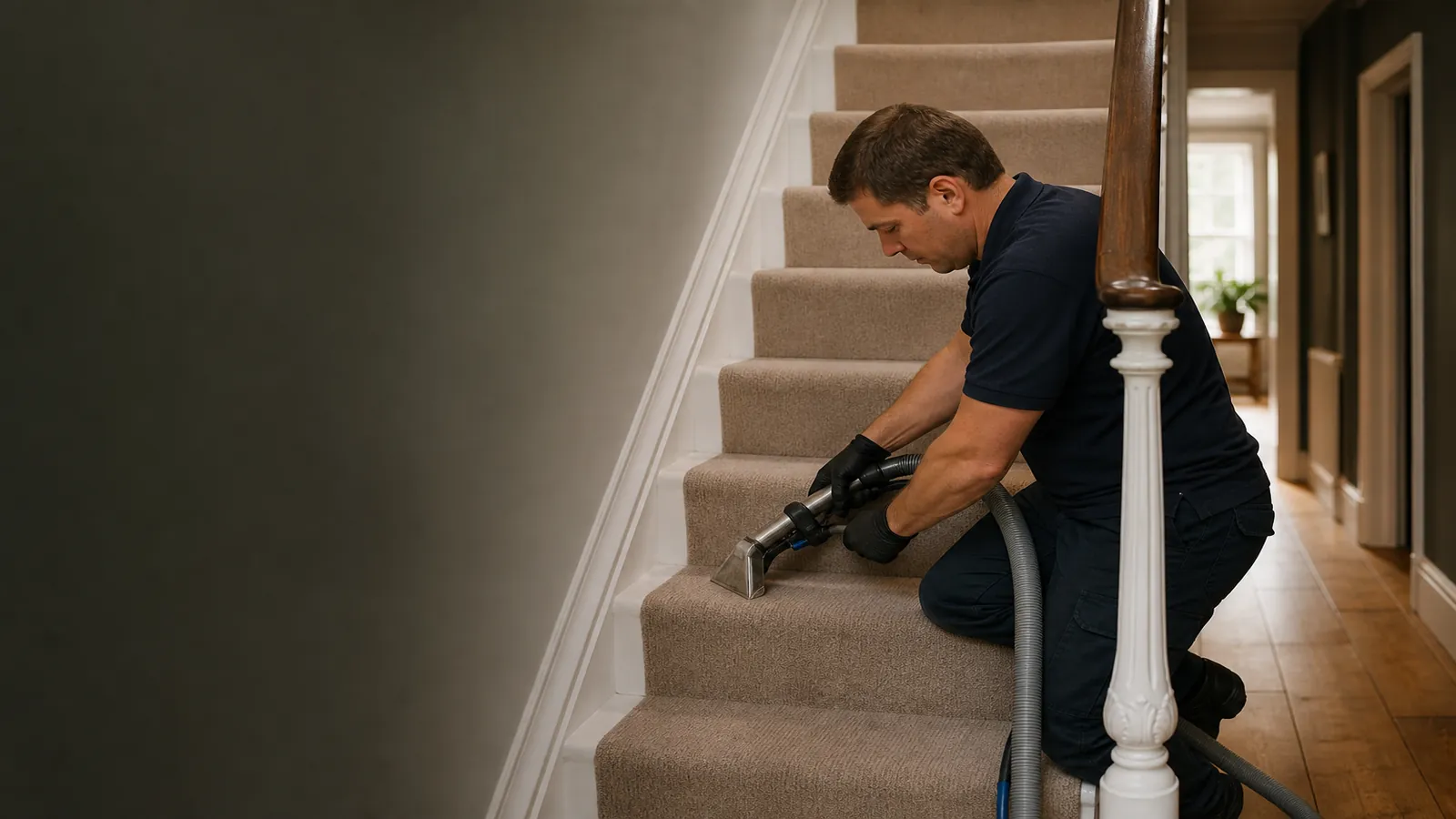
Dry debris is extracted first. Pre-treatment and agitation follow the carpet’s tolerance; rinsing proceeds from the planned working position with enough recovery passes to avoid leaving excess solution simply for speed.
04
Reopen the room carefully
The final check covers edges, traffic routes and isolated treatments. Items are returned only where sensible, protective measures are used when appropriate, and the customer receives clear advice about ventilation and temporary restrictions.
VISIT / HANDOVER
Preserve the incident facts

Blot fresh liquid without scrubbing, retain product labels and do not add fragrance immediately before the visit. State whether underlay has ever been exposed. If wider room cleaning is needed, book domestic cleaning separately so the source discussion remains clear.
Nominal room size is not reachable carpet
A floor plan may include space occupied by fitted units, loaded storage or objects that have nowhere safe to go. The useful measurement is paired with a furniture discussion. This yields a realistic working area and prevents disagreement about sections that could never be accessed.
Known marks still need a textile test
Advance photographs help locate concerns but cannot reveal backing condition, dye stability or every product previously applied. The technician assesses the spot on site, beginning conservatively and stopping when further treatment would add risk rather than meaningful improvement.
Drying is part of room logistics
Ventilation, temperature, pile depth and recovered moisture all influence the handover. Occupants should avoid outdoor shoes, replace heavy items only when advised and leave air paths open where safe. A generic clock-based answer would disregard those variables.
Mattresses have a different return-to-use question
A bed cannot be treated as another patch of floor. Layers, filling and intended use require their own inspection and moisture plan. See mattress cleaning when that item belongs in the wider booking.
SERVICE TEAMS / THE AGREED WORK
Four timing questions worth resolving early

Which room is needed first?
Priority can influence the sequence when access permits. It does not remove inspection or safe dwell time, but it helps the team avoid finishing the most urgent space last without a reason.

Where will furniture stand?
An item cannot be moved onto freshly cleaned pile merely to expose another patch. Agreeing safe positions beforehand prevents a furnished room from becoming an improvised obstacle course.

What airflow is genuinely available?
The cleaner asks about ventilation options on site and gives proportionate advice. No particular window, balcony, fan or building system is presumed from the Bromley location name.
Will another team enter afterwards?
Decorators, movers and general cleaners can re-soil damp fibres. Their schedule should be shared so carpet treatment is not placed immediately before heavy traffic through the same rooms.
Return-to-use planning manages expectations and sequencing. It cannot override the physical time required for a specific pile and backing to release moisture safely.
PRICING / CLEAR STARTING POINTS
Layered contamination needs a declared scope
Provide carpeted area, stairs, fibre, furnishings, access, spill history and any section with a different feel. Published information is on the prices page. The Bromley quote covers the floor treatment described, not unlisted cleaning of the surrounding source.
01
Single room
From £15 / room
Compact bedroom or study
02
Double room
From £15 / room
Standard double bedroom
03
Lounge
From £15 / room
Living room with clear equipment access
04
Stairs
Quotation
Standard flight, subject to construction
05
Hallway
Quotation
Reachable hall or landing
06
Whole property
Quotation
Measured rooms and fibre types
Prices are guide prices.
Final quotation depends on the property, condition and requirements.
SERVICE SCOPE / READ BEFORE BOOKING
A carpet clean with an explicit handover plan
Included in this brief
- Discussion of room priorities, furnishings and intended use after the visit
- Pre-clean survey and detailed removal of loose dry matter
- Compatible treatment with controlled rinse and moisture recovery
- Condition-specific ventilation, access and aftercare guidance
Outside this cleaning brief
- A fixed drying promise made without inspecting the textile and room
- Moving occupants’ fragile or powered equipment without prior agreement
- Restoration of worn pile, faded dye or structural carpet faults

MAP / COVERAGE CONTEXT
Plan the route into the Bromley property.
Coverage context for Bromley. This map does not represent a staffed local office.
EXPLORE / NEXT
Related services in Bromley
EXPLORE / NEXT
Nearby areas for carpet cleaning
No. We can clean accessible carpet and explain the result, but an odour may originate in backing, underlay, subfloor, furniture or another source that requires different work.
Bromley questions about carpet odour
Can you guarantee that the smell will disappear?
It is better to leave the condition assessable. Ventilate safely if appropriate, but avoid applying fragrance or another cleaner that may mask the pattern and add residue.
Should I use air freshener before the appointment?
Not unless a distinct, competent arrangement has been made. Routine fitted-carpet cleaning does not include removal, refitting or treatment of concealed construction layers.
Will lifting the carpet be part of the service?
Yes. Colour and smell may come from different residues or depths. The handover treats them as separate observations instead of using visual improvement as proof of complete source removal.
Can a visible stain vanish while odour remains?
No. It describes service coverage and practical local context, not a staffed branch.
Build a Bromley booking around the handover
List the carpeted rooms and stairs, identify the space needed first, describe furnishings and state who will enter afterwards. Include fibre information and mark photographs where available. We can then discuss a cleaning sequence and realistic aftercare instead of attaching an unsupported drying time to an unseen floor. If access is available only during a narrow window, say so before confirmation. The appointment needs sufficient time for inspection, preparation, treatment and recovery; compressing those stages to satisfy an undisclosed departure time would not be responsible.