
Clapton / E5
Carpet Cleaning Clapton: A Practical Plan Built Around Condition
- Room priorities agreed before treatment starts
- Moisture controlled without compromising soil removal
- Ventilation assessed from the conditions actually available
- Handover advice based on the finished carpet, not a fixed slogan
Low disruption begins with a complete brief
A room may need to return to reading, study, remote work or ordinary rest soon after the appointment. That requirement is useful planning information, but it does not justify skipping inspection or promising an unseen carpet dry by a fixed hour. The Clapton editorial angle is the quiet-room clean: organise belongings, access, machinery and handover so treatment remains thorough without creating avoidable disruption.
The customer first identifies what cannot enter the working area. Loose papers, books, floor-standing electronics and fragile objects are removed or protected by the owner before setup. Heavy shelving and connected desks are not shifted casually. The quotation then reflects reachable carpet, preventing a narrow visible gap beneath furniture from being presented as an area that tools can clean properly.
Noise and movement are considered factually. Equipment still has to perform dry extraction, agitation and solution recovery; a request for quiet cannot turn those stages into silent surface grooming. Timing can be agreed around the customer’s own commitments where availability permits, without making generic claims about how people in Clapton use their rooms.
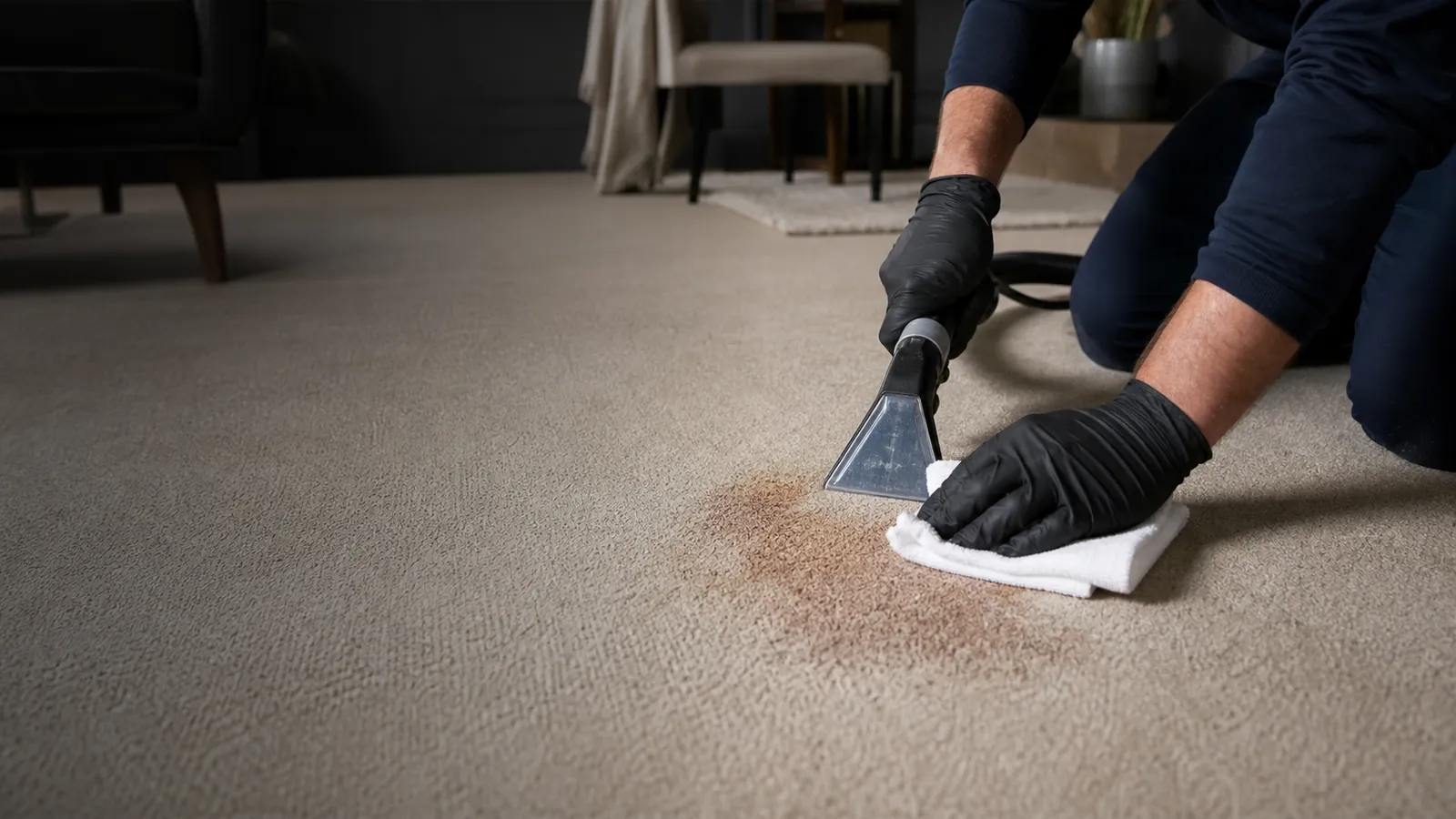
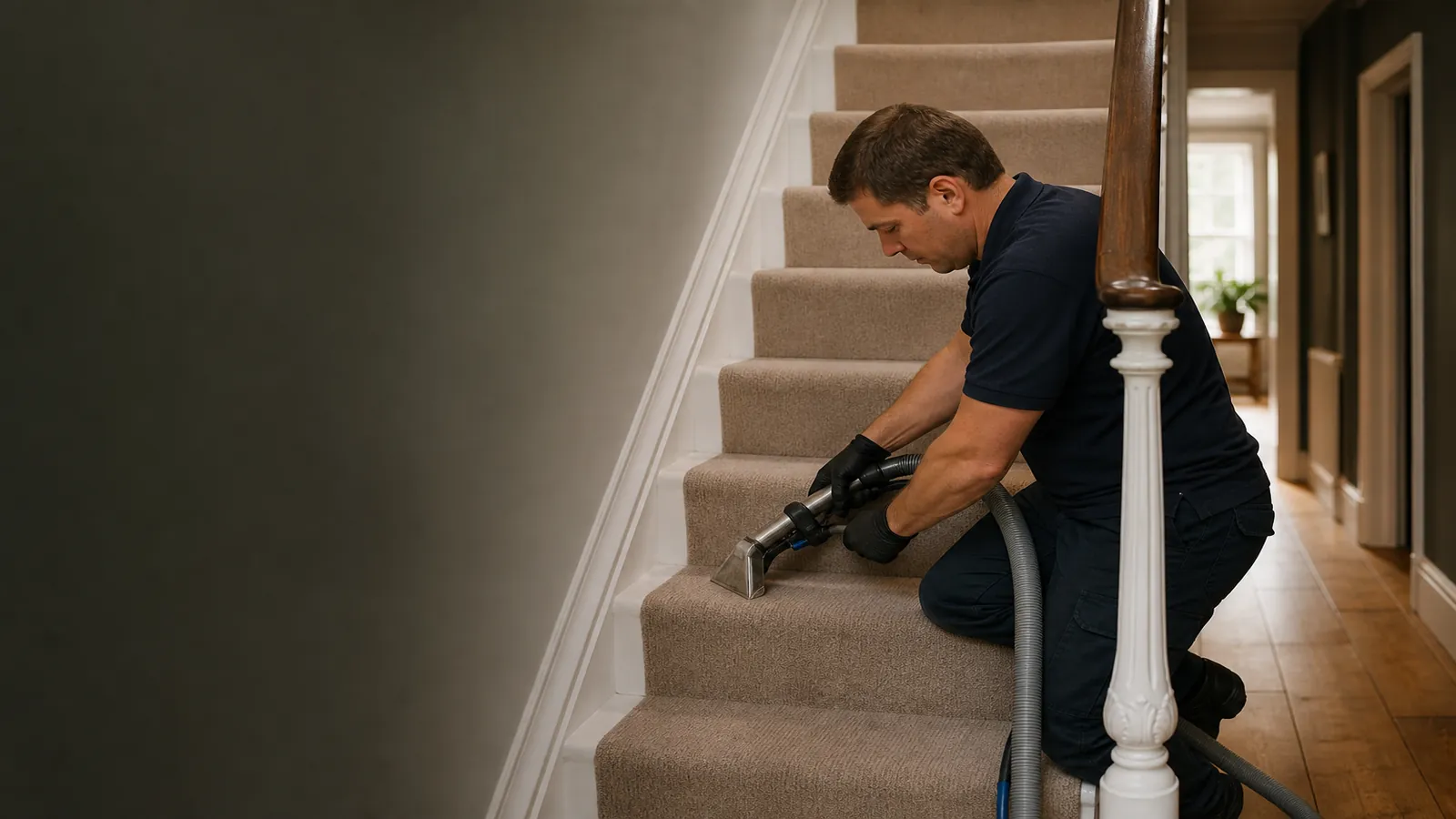
The textile receives its full condition review. Pile, seams, known marks, traffic routes and previous products are recorded. Dry matter is removed before wet treatment. Compatible pre-conditioner and proportionate agitation loosen bonded soil, while controlled extraction combines adequate rinsing with repeated recovery passes.
Handover closes the disruption plan. The cleaner explains ventilation, temporary footwear limits, furniture protection and when the room can sensibly resume use. A remaining patch is identified as soil, wear, fading or uncertain change rather than being hidden under furniture. The customer receives practical information, not a generic fast-dry slogan.
SERVICE SCOPE / READ BEFORE BOOKING
A Clapton clean for carpet affected by declared fine dust
Included in this brief
- Confirmation that the area is ready and debris is suitable for normal cleaning
- Detailed dry extraction of reachable pile, edges and traffic routes
- Compatible pre-treatment and rinse after particulate reduction
- Final review plus guidance on preventing immediate recontamination
Outside this cleaning brief
- Removal of rubble, sharp waste or hazardous unidentified substances
- Cleaning while construction or sanding continues in the same area
- A guarantee against dust arriving later from untreated surroundings

PRICING / CLEAR STARTING POINTS
The quotation defines the affected layers it can address
Provide room size, stairs, fibre, access, incident history and approximate affected area. Current guidance is maintained on the prices page. The Clapton quotation covers declared carpet work and does not quietly price in structural investigation that the service cannot perform.
01
Single room
From £15 / room
Compact bedroom or study
02
Double room
From £15 / room
Standard double bedroom
03
Lounge
From £15 / room
Living room with clear equipment access
04
Stairs
Quotation
Standard flight, subject to construction
05
Hallway
Quotation
Reachable hall or landing
06
Whole property
Quotation
Measured rooms and fibre types
Prices are guide prices.
Final quotation depends on the property, condition and requirements.
SERVICE TEAMS / THE AGREED WORK
Four observations within a busy floor

A turning point near an entrance
Particles and moisture can concentrate where people change direction. Dry extraction is intensified, while abrasion at the pile tips is recorded so it is not sold as a removable stain.

A route around chairs or desks
Furniture defines narrow traffic bands and access limits. Cables, castors and connected equipment are handled only under an agreed plan, with reachable carpet stated clearly.

A quieter perimeter reference
Less-used pile helps show colour and texture, though it may also be less faded. It informs the result without creating an impossible target for physically worn central fibre.

A logged one-off spill
Time, substance and previous treatment are recorded. The mark receives a compatibility test and controlled attempt rather than stronger chemistry being spread throughout the high-footfall zone.
Footfall mapping is a planning device, not a claim that busy carpet must be replaced or aggressively treated. It shows where dry particles, bonded films and abrasion are most likely to overlap, then lets each observation earn its own response. The map can also support future maintenance: repeated incidents are distinguished from gradual dullness, and the customer can focus ordinary vacuuming where it carries the greatest dry load. Changes in use are noted rather than forcing an old schedule onto a newly arranged room.
PROCESS / FOUR DECISIONS
From inspection to a usable handover
01
Read and record the condition
The operative confirms the agreed rooms, checks pile, seams and backing where visible, and notes pre-existing damage. Colour response is tested discreetly whenever the construction or stain history makes that sensible.
02
Remove what is still dry
Edges, open floor and traffic lanes are vacuumed with attention to direction and overlap. This stage is not ceremonial preparation; it removes material that a wet system should never have to carry.
03
Loosen, rinse and recover
Pre-treatment is selected for the observed soil and given time to work. Agitation is proportionate to the fibre, after which extraction balances adequate rinsing with repeated recovery strokes and avoids unnecessary saturation.
04
Review the finish honestly
The pile is checked from several viewpoints, remaining spots are reconsidered only if another safe attempt is justified, and the customer is shown any wear or colour change that cleaning could not alter.
VISIT / HANDOVER
Information to provide before the Clapton appointment


List the rooms and stairs, describe entry controls and disclose any time-limited access. Clear portable belongings and tell us which furniture must stay. If a broader household visit is needed, domestic cleaning should be requested in its own right rather than assumed within carpet extraction.
Why colour is weak evidence
Brown may describe tea, tracked soil, oxidation or a reaction to an earlier cleaner; red may come from several unrelated dyes. Selecting a remover from colour alone is therefore unreliable. Context, fibre and a controlled response test provide a safer basis.
Odour and visible staining are not identical
A mark can fade while an odour source remains deeper, or an odour may have no obvious coloured boundary. Carpet cleaning addresses the agreed textile treatment, but it cannot promise remediation of concealed structural contamination that has not been inspected.
Blotting protects more options than rubbing
Pressure with an absorbent towel lifts liquid vertically. Rubbing drives it sideways, distorts pile and may transfer dye. Work from the edge towards the centre, change the towel surface as it loads and stop before adding improvised chemistry.
Beds affected by a separate incident
A mattress has absorbent internal layers and different drying constraints. When it is part of the incident, request mattress cleaning separately, state what happened and avoid presenting carpet extraction as a complete answer for both items.
MAP / COVERAGE CONTEXT
Plan the route into the Clapton property.
Coverage context for Clapton. This map does not represent a staffed local office.
EXPLORE / NEXT
Related services in Clapton
EXPLORE / NEXT
Nearby areas for carpet cleaning
Images can record prominent marks, joins and colour variation before grooming changes the view. They support a shared account but do not replace inspection or prove the cause of every discolouration.
Clapton questions about condition records
Why photograph a carpet before cleaning?
Only when safe handling, permission and suitable space are established. Valuable or fragile items are not moved casually; inaccessible carpet is stated openly in the agreed scope.
Will you move delicate furniture to clean beneath it?
Cleaning can remove soil but cannot return missing dye. A border is tested and treated within safe limits, while re-dyeing or textile restoration requires a different specialist service.
Can a faded border be restored during cleaning?
It may be coordinated if declared, but the bed needs its own inspection and drying plan. See mattress cleaning rather than treating it as an extension of the floor.
Can you clean a mattress in the same visit?
No. It describes service coverage and practical local context, not a staffed branch.
Arrange an Clapton assessment around the textile
Describe the rooms, steps and important marks, then share any fibre label or previous cleaning information you hold. Include access and furniture notes. We will use those facts to prepare the appointment while reserving the final cleaning decision for the carpet’s observed construction, colour response and condition. If a care leaflet specifies restrictions, photograph the relevant page so the technician can compare it with the material and proposed treatment.