
Eltham Park / SE9
Carpet Cleaning Eltham Park: Care Planned from the Textile Outwards
- Rooms, stairs and reachable floor agreed in advance
- Equipment route considered without making local assumptions
- Furniture decisions separated from textile treatment
- Drying and return-to-use discussed as part of the booking
Fine dust changes the preparation, not just the appearance
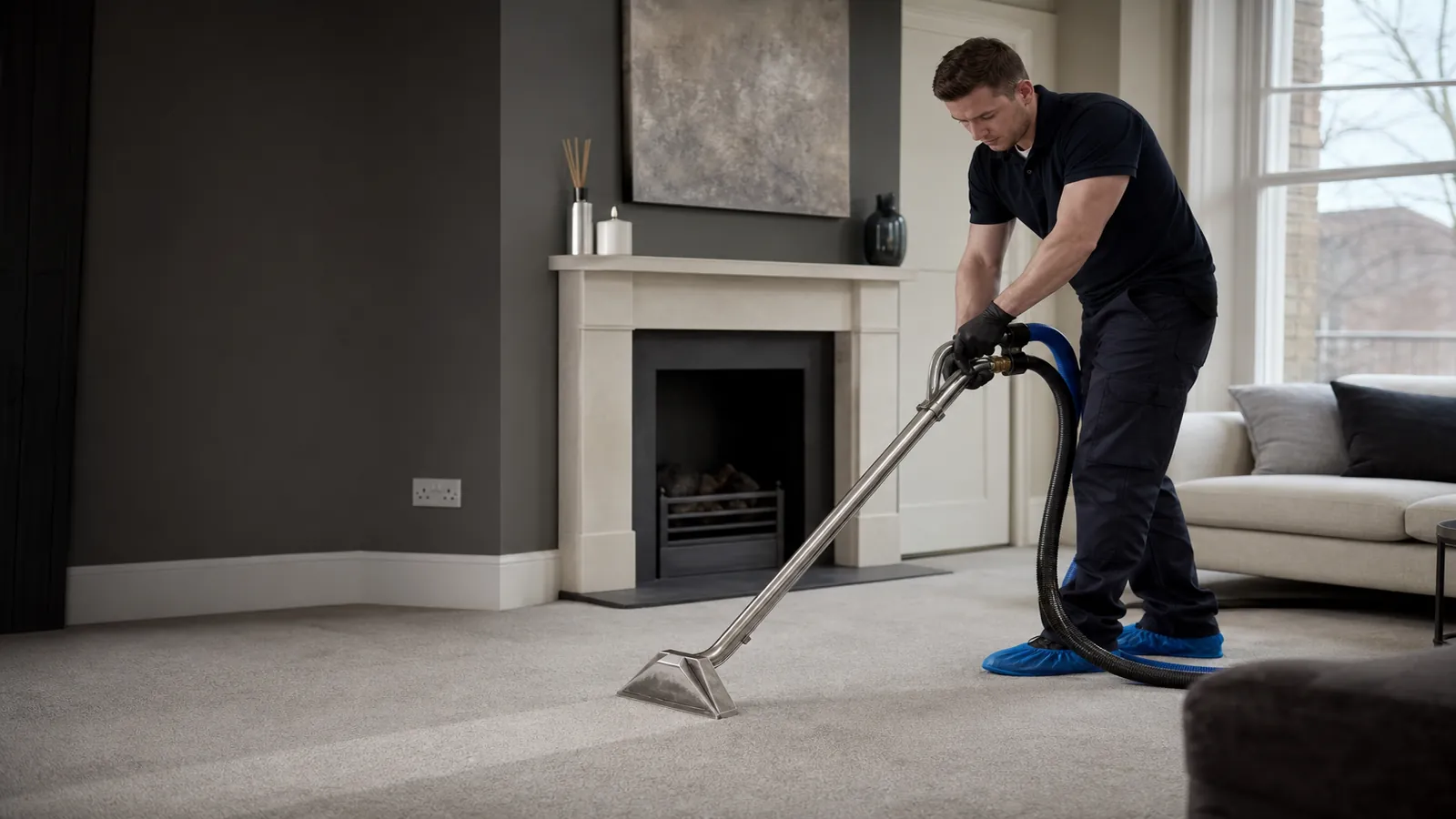
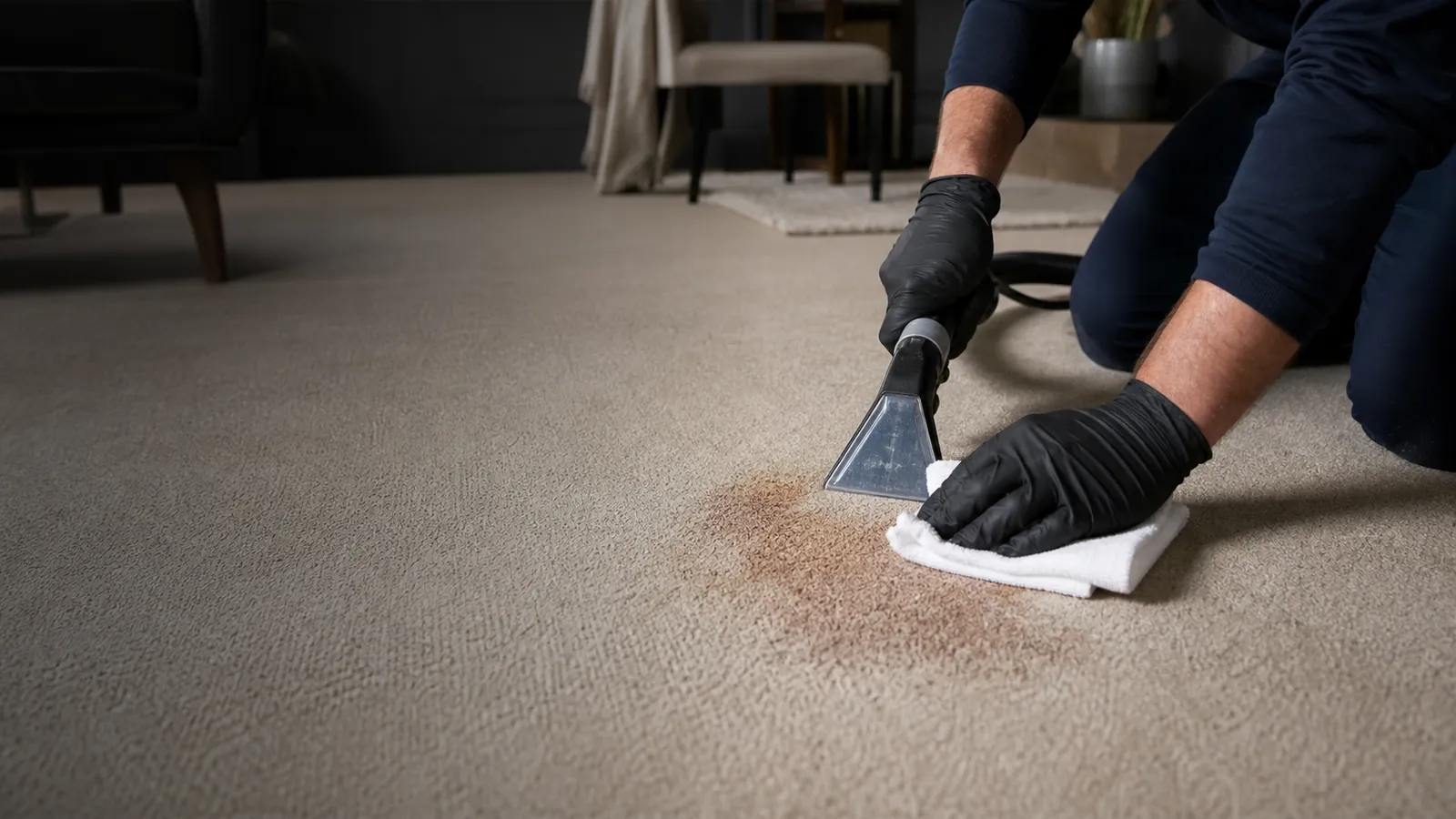
Sanding, drilling and decorating can leave particles much finer than ordinary crumbs. They settle across open pile, gather at skirting and may continue arriving from uncleared surfaces. The Eltham Park editorial theme is dust-first recovery: establish whether the source has stopped, remove as much material as possible while dry, and only then decide what bonded residue needs wet cleaning.
A carpet cleaner should not enter an active dusty workspace and pretend extraction alone will complete the property. The customer confirms that work has finished, loose debris is safe, and contractors’ waste has been removed. Hazardous or unidentified material requires appropriate handling outside an ordinary cleaning appointment.
The survey looks beyond the central floor. Fine lines near walls, beneath doors and around air routes may be filtration soil or recent dust deposition. Protected carpet beneath furniture offers a reference. Abrasion and old fading are recorded so a newly exposed contrast is not attributed automatically to missed particles.
Dry passes are slow and repeated, using tools suited to edges and accessible gaps. Bags, filters and equipment must be managed for the load. Introducing moisture too early can create paste, carry material deeper and make recovery harder. Pre-treatment therefore waits until the cleaner is satisfied that loose dust has been reduced responsibly.
The later rinse addresses remaining films and ordinary soil within the carpet’s safe range. It cannot guarantee removal of dust still falling from untreated walls, vents or furniture. A complete handover explains what was extracted, which surrounding sources remain and how to protect the floor from renewed deposition.
SERVICE SCOPE / READ BEFORE BOOKING
A particulate-first Eltham Park carpet service
Included in this brief
- Survey of traffic routes, edges, protected pile and visible marks
- Purposeful dry extraction before liquid products are introduced
- Fibre-compatible pre-conditioning, agitation, rinse and recovery
- Review of remaining wear plus practical prevention and drying guidance
Outside this cleaning brief
- A claim that vacuuming can restore fibre already abraded away
- Structural repair of thresholds, seams, backing or underlay
- Exterior entrance cleaning and unlisted household services
PRICING / CLEAR STARTING POINTS
Reachable area and handling requirements shape the quote
The enquiry includes rooms, dimensions, stairs, carpet condition, visible spots, access and a furniture outline. Current guidance remains on the prices page. A Eltham Park room is not charged from a fictional empty-floor model when its contents materially affect the proposed work.
01
Single room
From £15 / room
Compact bedroom or study
02
Double room
From £15 / room
Standard double bedroom
03
Lounge
From £15 / room
Living room with clear equipment access
04
Stairs
Quotation
Standard flight, subject to construction
05
Hallway
Quotation
Reachable hall or landing
06
Whole property
Quotation
Measured rooms and fibre types
Prices are guide prices.
Final quotation depends on the property, condition and requirements.
SERVICE TEAMS / THE AGREED WORK
Odour situations that require different expectations

A recent surface spill
Prompt blotting may limit spread, but the cleaner still asks about substance and volume. Treatment remains controlled, with enough recovery to avoid driving fresh moisture deeper.

An old incident of uncertain depth
Age and repeated products complicate the picture. The accessible pile can be cleaned, while any claim about backing or underlay is withheld unless those layers have actually been examined.

A smell without a visible boundary
The room is surveyed rather than soaking the most convenient patch. Carpet, furnishings and non-textile sources remain possibilities, and the cleaning scope addresses only what has been identified and agreed.

A perfumed area that still smells later
Fragrance may temporarily dominate without removing residue. We prioritise extraction and transparent handover, avoiding another masking product as proof that the source has gone.
Odour work is especially vulnerable to overpromising. Cleaning can remove accessible contamination effectively while still being the wrong service for material hidden below the fitted carpet. The customer should also report whether the concern is constant, seasonal or strongest after the room has been closed. This observation does not identify a source by itself, but it can prevent the cleaner from judging success solely from the first fragranced minutes after treatment. A measured follow-up description is more useful than repeated masking products. The incident area should remain accessible during inspection, with furniture moved only under a safe agreement. If the customer knows that liquid reached a wall edge, doorway or gap, that route belongs in the brief even when no colour remains there. The technician can then keep applications precise and watch recovery rather than treating the centre of the old mark as the complete affected footprint. After drying, any continuing concern is reported with its location and conditions. That evidence helps decide whether further carpet work has a defensible purpose or whether investigation below the textile is the more appropriate next step.
PROCESS / FOUR DECISIONS
Inspect the view, clean the textile, then inspect again
01
Establish visual reference points
The cleaner views the room from entrances and windows, checks protected pile and notes fixed spots. Existing fading, wear and directional bands are recorded before vacuuming changes fibre orientation.
02
Remove soil without chasing shadows
Dry extraction covers edges and open areas, followed by compatible pre-treatment. A directional dark zone is not singled out for strong chemistry unless other evidence indicates contamination.
03
Rinse and groom consistently
Agitation and extraction follow the carpet’s safe range. Recovery passes remove solution; grooming provides an even finishing direction while leaving the technician alert to how that direction changes appearance.
04
Repeat the multi-angle review
The finished floor is observed from the same reference positions. Persistent marks are reconsidered safely, and the handover separates permanent visual features from the soil that was removed.
VISIT / HANDOVER
Tell us what may have created the film


Do not apply another shampoo immediately before the visit. Retain product names and identify spills or recurring tackiness. Clear small items. For non-textile surrounding surfaces, domestic cleaning should be listed separately so the carpet quote remains accurate.
Residue is a diagnosis, not a marketing label
A carpet that soils quickly is not automatically full of detergent. Footfall, outdoor particles, cooking films, fibre wear and an ineffective vacuum routine may also contribute. We look for supporting signs and treat the floor found, avoiding a dramatic claim that cannot be established visually.
The rinse needs a purpose
Extraction is intended to carry suspended soil and cleaning solution out of the textile. It is not improved by unlimited passes with high water flow. The operative watches recovery, revisits only where justified and uses dry strokes to support an efficient finish.
Vacuuming after the carpet is dry
Once the floor has dried fully, regular vacuum care helps keep loose grit from settling deeply again. Frequency should reflect actual use. Entrances may warrant more attention than a spare room, while a delicate pile may have equipment requirements that differ from a robust synthetic carpet.
Beds are not an extension of the floor
A mattress has different layers, use patterns and drying considerations. When a wider textile refresh is required, request mattress cleaning as a named service so its inspection and quotation remain visible rather than being folded into carpet square metres.
MAP / COVERAGE CONTEXT
Plan the route into the Eltham Park property.
Coverage context for Eltham Park. This map does not represent a staffed local office.
EXPLORE / NEXT
Related services in Eltham Park
EXPLORE / NEXT
Nearby areas for carpet cleaning
Sometimes its history is known, but appearance alone is rarely conclusive. We combine the customer’s account, fibre information and a limited treatment response rather than presenting a guess as diagnosis.
Eltham Park questions about marks and spill treatment
Can you tell what a stain is by looking at it?
Further chemistry or moisture may threaten dye, backing or pile while producing little additional movement. Stopping at that point protects the carpet and is more responsible than pursuing a dramatic promise.
Why might you stop before the mark disappears?
Not automatically, and multiple visits cannot be sold as a route to certainty. The first inspection and controlled attempt show whether further work has a reasonable basis or the remaining change is permanent.
Will an old stain need several visits?
Yes, photographs can support quotation and show scale, but also provide the substance, age and product history. An image cannot demonstrate dye stability, depth or backing condition, so on-site assessment still matters.
Should I send a photograph of the spill?
No. It describes service coverage and practical local context, not a staffed branch.
Create a Eltham Park carpet baseline worth referring to
Send the room list, stairs, fibre, current traffic pattern, spill history, last professional clean and access details. Include photographs taken in ordinary light. We can scope the present condition, document permanent features and leave you with practical evidence for deciding when another appointment is genuinely useful.