
Mitcham / CR4
Carpet Cleaning Mitcham: A Clear Plan for Soil, Fibre and Access
- Seams, trims and pre-existing marks documented first
- Method chosen from construction rather than appearance
- Furniture and decorative edges handled within agreed limits
- The handover distinguishes cleaning from restoration
A clean carpet should not become a dirt magnet
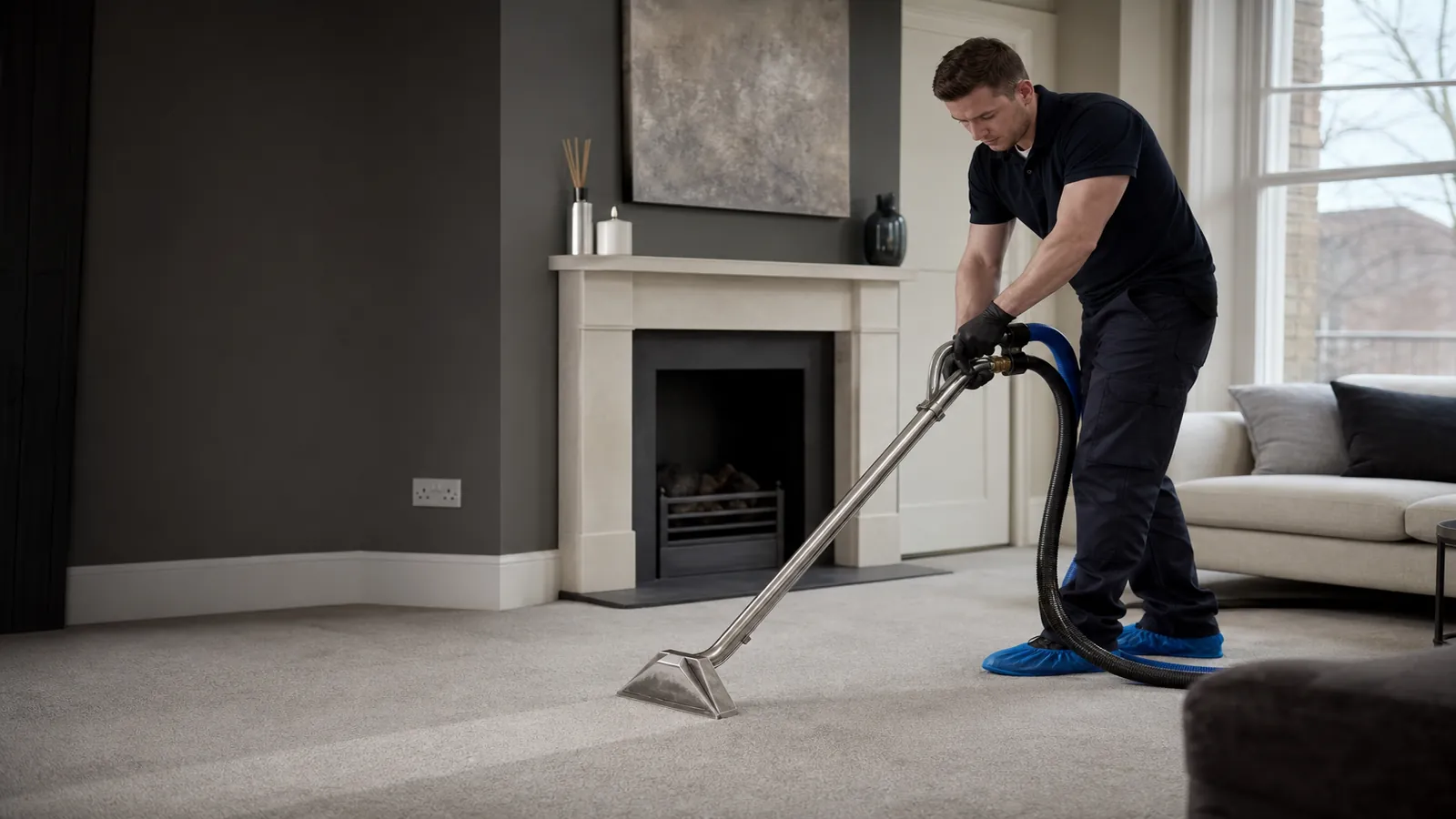
Some carpets look better immediately after attention yet lose that clarity surprisingly quickly. The cause can be an incomplete rinse, detergent left by earlier DIY work, or dry grit that was never removed before wetting. For an Mitcham enquiry, our editorial focus is the maintenance reset: take away what attracts new soil and leave the pile straightforward to care for afterwards.
That begins with questions about the carpet’s recent history. We want to know whether a hired machine has been used, which household products were applied, and where the floor feels tacky or stiff. Residue cannot be diagnosed by assumption, but this information directs inspection and helps explain why one room may behave differently from another despite looking similar.
Dry vacuuming is given proper time because it reduces the burden placed on the rinse stage. Pre-treatment is then measured against the kind of soil present, not applied at maximum strength as a precaution. The operative works for adequate contact and controlled agitation, allowing chemistry and movement to loosen contamination before extraction carries it away.
A maintenance-minded service also looks beyond the appointment. Entrance control, suitable vacuuming and prompt blotting of spills influence how long the floor remains presentable. Customers who want regular help with the rest of their home can read about domestic cleaning; that service complements carpet care but does not replace textile-specific treatment.
No rinse can restore fibre already worn flat, and no responsible cleaner will claim that recurring discolouration is always dirt. We distinguish residue from abrasion, shading and permanent colour change. The objective is a neutral-feeling, evenly treated floor whose limitations have been understood, rather than a heavily perfumed surface offering a short-lived impression of cleanliness.
SERVICE TEAMS / THE AGREED WORK
Access scenarios that change the practical plan

A furnished room with limited spare space
Furniture cannot simply be shuffled onto freshly treated pile. We agree what can be moved, where it can stand safely and which sections will remain inaccessible, then clean the available floor consistently.

Stairs on the equipment route
The customer identifies the route before arrival. The team can prepare for safe handling and protect the workflow, while the carpeted treads themselves remain separately counted cleaning areas.

A room needed later that day
The deadline is disclosed at enquiry stage but does not create a false drying promise. Method, recovery and ventilation are planned responsibly, and the final advice reflects the carpet’s response.

Carpet beside upholstered furniture
Equipment may already be in the room, yet seating is not an automatic add-on. Fabric construction is assessed under a separate upholstery cleaning brief.
These are planning examples, not claims that a particular access condition is typical in Mitcham. The customer’s own description is the authoritative starting point.
Colour matching is not fibre identification
Manufacturers can produce similar shades in wool, nylon, polypropylene and blends. Material claims need labels, construction evidence or cautious testing. Appearance alone is too weak a basis for chemistry or temperature.
A threshold is both join and decision point
The strip is inspected for looseness and sharp edges. It also marks where tools, product or moisture settings may change. Stable joins can be cleaned around; repair remains outside the extraction service.
Rugs should be declared, not treated as loose carpet
A removable rug can have dyes, fringes and backing unlike the fitted pile below. It receives a separate suitability check and is not included merely because it lies within the measured room.
Furniture fabric creates another construction
Seating requires its own fibre and dye assessment. Use upholstery cleaning when chairs or sofas belong in the brief, keeping each textile’s test meaningful.
PRICING / CLEAR STARTING POINTS
Reachable area and handling requirements shape the quote
The enquiry includes rooms, dimensions, stairs, carpet condition, visible spots, access and a furniture outline. Current guidance remains on the prices page. A Mitcham room is not charged from a fictional empty-floor model when its contents materially affect the proposed work.
01
Single room
From £15 / room
Compact bedroom or study
02
Double room
From £15 / room
Standard double bedroom
03
Lounge
From £15 / room
Living room with clear equipment access
04
Stairs
Quotation
Standard flight, subject to construction
05
Hallway
Quotation
Reachable hall or landing
06
Whole property
Quotation
Measured rooms and fibre types
Prices are guide prices.
Final quotation depends on the property, condition and requirements.
PROCESS / FOUR DECISIONS
Keep the dry and wet phases clearly separated
01
Confirm readiness and material type
The operative checks that dusty work has ceased, scans for sharp debris and agrees reachable rooms. Existing carpet defects and inaccessible sources are recorded before extraction.
02
Remove particles methodically
Vacuum passes overlap and change direction where useful. Edges, transitions and open pile receive attention, with filters monitored so loss of airflow does not turn a long session into ineffective surface grooming.
03
Reassess before using solution
Once the loose load is reduced, the cleaner judges remaining discolouration. Compatible pre-conditioner, agitation and rinse address bonded soil; moisture is not used to conceal inadequate dry preparation.
04
Protect the recovered floor
The carpet is checked after grooming and the room sources are discussed. Ventilation, footwear and later contractor access are covered so fresh deposition does not undermine the completed work.
VISIT / HANDOVER
Share any previous moisture problem


Mention earlier slow drying, rippling, loose seams or products used on spots. Clear light belongings and do not shampoo the floor immediately before arrival. Coordinate a broader schedule with end of tenancy cleaning so freshly rinsed pile is not crossed repeatedly.
SERVICE SCOPE / READ BEFORE BOOKING
The boundaries of a low-disruption Mitcham clean
Included in this brief
- A room-use, access and furniture discussion before work begins
- Condition inspection and methodical dry-soil removal
- Fibre-compatible pre-treatment, agitation, rinse and recovery
- A handover covering drying, room access and lasting limitations
Outside this cleaning brief
- Moving loaded shelving, fragile collections or connected electronics
- A guarantee of silent operation or a universal return-to-use hour
- Document, book, curtain and furniture cleaning unless separately scoped

MAP / COVERAGE CONTEXT
Plan the route into the Mitcham property.
Coverage context for Mitcham. This map does not represent a staffed local office.
EXPLORE / NEXT
Related services in Mitcham
EXPLORE / NEXT
Nearby areas for carpet cleaning
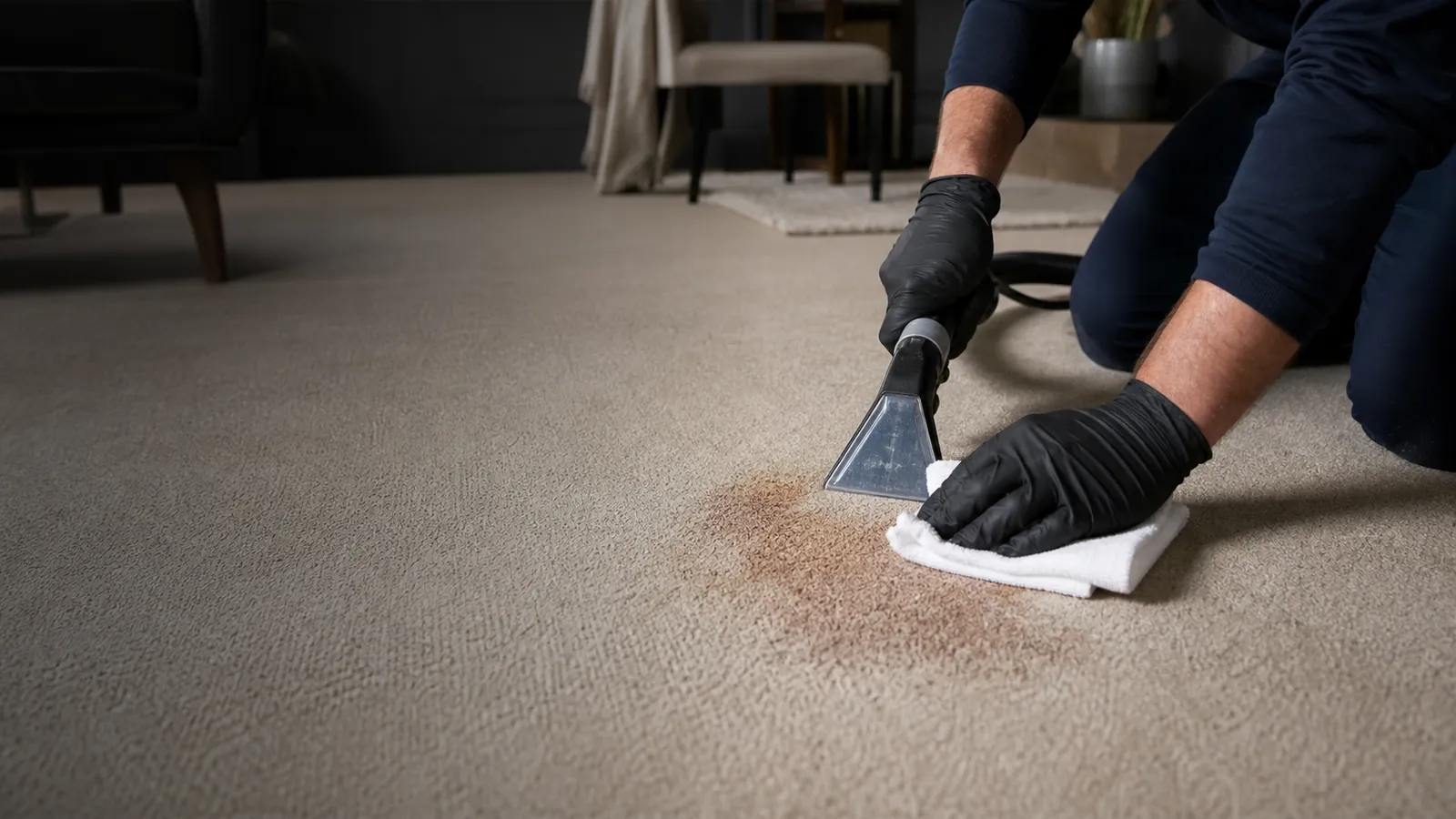
Sometimes its history is known, but appearance alone is rarely conclusive. We combine the customer’s account, fibre information and a limited treatment response rather than presenting a guess as diagnosis.
Mitcham questions about marks and spill treatment
Can you tell what a stain is by looking at it?
Further chemistry or moisture may threaten dye, backing or pile while producing little additional movement. Stopping at that point protects the carpet and is more responsible than pursuing a dramatic promise.
Why might you stop before the mark disappears?
Not automatically, and multiple visits cannot be sold as a route to certainty. The first inspection and controlled attempt show whether further work has a reasonable basis or the remaining change is permanent.
Will an old stain need several visits?
Yes, photographs can support quotation and show scale, but also provide the substance, age and product history. An image cannot demonstrate dye stability, depth or backing condition, so on-site assessment still matters.
Should I send a photograph of the spill?
No. It describes service coverage and practical local context, not a staffed branch.
Send the Mitcham rooms as a condition map
List carpeted rooms, stairs and landings; mark the busiest routes, known spills, fibre changes and furniture restrictions. Include photographs from more than one direction. That information helps us price meaningful zones, choose a safe working order and explain why a clean can be consistent without pretending that every section will become visually identical.