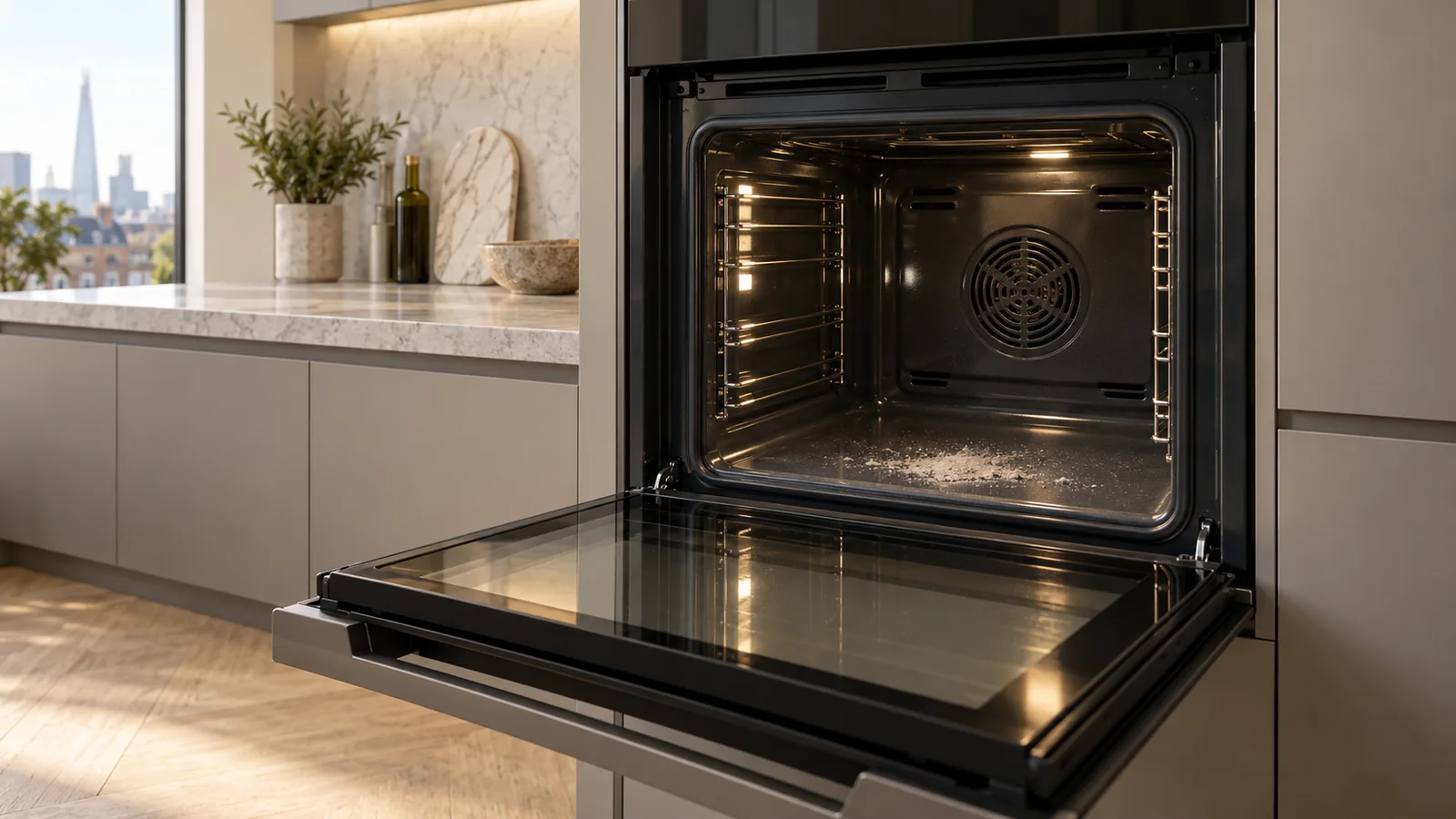
A pyrolytic programme heats an oven intensely to turn many food deposits into a fine residue. It can make the cavity easier to clean, but it does not leave every surface ready for cooking without attention. Ash may remain on the floor, the door glass may still have marks, and parts excluded from the cycle may need separate care. The appliance must finish its cooling and unlocking process before anyone reaches inside.
The right aftercare depends on your oven model. Some makers require racks, side rails or accessories to be removed beforehand; others permit specified items to stay in. Follow the manual for your exact appliance before running a cycle and before wiping the cooled cavity. This guide explains the usual decisions after a cycle, with the manual taking priority wherever its instructions differ.
Wait for the programme and cooling to finish
Do not try to force the door while the pyrolytic lock is engaged. The oven interior, glass and surrounding cabinetry can remain hot after the display says the heating phase has ended. Wait until the appliance signals that it is safe to open and the reachable surfaces have cooled. Keep children and pets away during the cycle and cooling period according to the manufacturer's advice.
Ventilate the kitchen as the manual recommends. If you notice unusual smoke, a strong persistent odour or an error code, follow the appliance's fault guidance instead of immediately starting another cleaning cycle. A heavy spill should normally be addressed in the way the maker specifies before self-cleaning; a programme is not a reason to ignore a large pool of grease.
When the oven is cool, open the door and assess what remains. Fine pale or grey ash is different from a thick, sticky deposit. Take a photograph if the result is unexpectedly heavy or uneven. If a rack or tray was left inside against the manufacturer's instructions, check for discolouration or damage before using it again. Do not assume a high-temperature programme has cleaned every detachable part.
Lift ash without spreading it
Use a soft cloth or sponge prepared according to the manufacturer's instructions. A slightly damp cloth often lifts fine ash with less airborne dust than a dry brush. Wipe the oven floor slowly and fold the cloth inward as it collects residue. Rinse or replace it before wiping a clean area, so grey powder is not smeared around the enamel. Avoid scrubbing abrasive particles across the glass or a glossy finish.
Check the corners and the lower edge near the door, where loose ash can gather. Keep moisture out of vents, electrical openings and controls. Do not pour water into the oven cavity. A vacuum may be unsuitable for fine ash unless its maker permits the material and the oven maker allows that method; a hand cloth gives more control for an ordinary household residue.
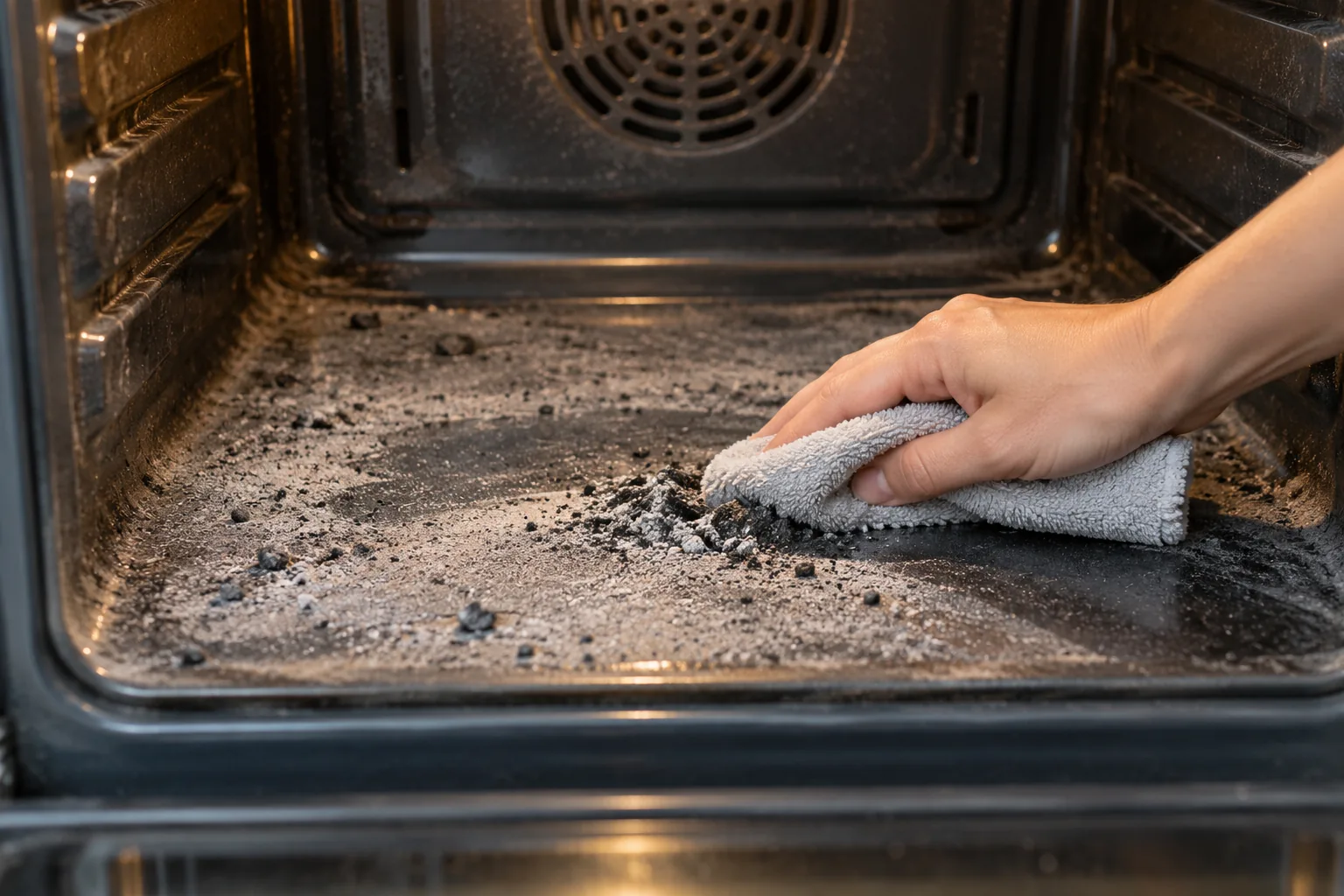
If a patch remains after a gentle wipe, do not immediately repeat the hottest programme. Inspect whether it is a stain, a damaged coating or a deposit that needs a manual-approved treatment. Our article on oven cleaning hacks that damage appliances explains why aggressive scraping and unsuitable chemicals can create a larger problem than a cosmetic mark.
Check the door glass and frame separately
The pyrolytic cycle may not remove splashes between glass panels or marks on the outer door. Wipe accessible inner glass only after it is completely cool, using a method allowed by the manual. Keep cloths and cleaning liquids away from openings where moisture could run between panes. A mark between panes may require door disassembly; follow the maker's instructions or use an appropriate appliance specialist rather than prising trim loose.
Inspect the door frame and gasket. Ash close to the seal can be lifted gently, but avoid pulling, soaking or scrubbing the gasket. A brittle, torn or displaced seal is a repair concern. The high heat of a self-cleaning programme can make existing wear easier to notice; cleaning does not restore a damaged seal. If the door no longer closes as it did before, stop and seek model-specific advice.
The general guide on cleaning an oven professionally covers broader manual cleaning. After pyrolysis, the immediate job is narrower: remove the cooled residue and inspect excluded parts without undoing the appliance's finishes.
Deal with accessories according to the manual
Racks, telescopic runners, trays and side supports can have coatings or moving parts that are unsuitable for pyrolytic heat. If you removed them before the cycle, clean each separately by its own instructions and let it dry before refitting. Do not assume a dishwasher is safe for a shiny runner or non-stick tray. A warped rack or damaged support should not be forced back into place.
If the manual permits particular accessories to remain inside, they may still need a wipe after cooling. Note any colour change or stiffness in a sliding mechanism. The appliance maker can advise whether it is expected or requires service. Do not oil rails or hinges without explicit instructions; a lubricant unsuitable for oven temperatures can create a new issue.
Replace accessories in the correct positions and check that they sit securely. The same applies to removable side rails. If you are unsure how a part attaches, consult the diagram for your model rather than guessing. A rack that tips when loaded is a practical safety problem, regardless of how clean the oven looks.
Inspect for problems before the next meal
Look at the enamel and door glass in good light. Hairline marks, chips, persistent opaque patches or a newly loose seal deserve assessment. Check that the fan cover and visible fittings appear in place. Do not reach behind panels or into electrical areas. When the oven is reassembled, run it only as instructed and observe whether it heats, locks and closes normally. An error code or unusual noise after a cycle belongs with an appliance repairer.
Pyrolysis is designed as a cleaning function, but frequent use is not always necessary. Follow the maker's suggested frequency and remove fresh food spills after the oven cools. This can reduce how much ash is left after the next cycle. Avoid placing protective foil on the oven floor unless the manual expressly permits it; it can affect heating and finishes.
If the cycle leaves a greasy or baked-on area that you cannot treat under the manual, a professional oven cleaning service can assess accessible surfaces and explain what its method can and cannot improve. Share the model number, what programme you ran and any warning on the display. A cleaner should not be expected to repair damaged enamel or electronics.
Make aftercare part of the kitchen routine
Once the oven is cool and the ash is gone, clean the nearby hob and worktop separately if particles settled there. A kitchen cleaning visit can help with accessible surfaces when the whole room needs attention. A wider deep clean may cover cabinets and splashbacks at the same time, but the oven's model instructions should still govern its cavity and accessories.
Keep the process simple: let the door unlock and the appliance cool, lift ash gently, inspect glass and seal, clean excluded accessories by their own instructions, then refit everything securely. If a part is damaged or a fault appears, seek appliance advice before another high-temperature cycle. The best result is an oven that is both clean enough to use and still assembled as its maker intended.