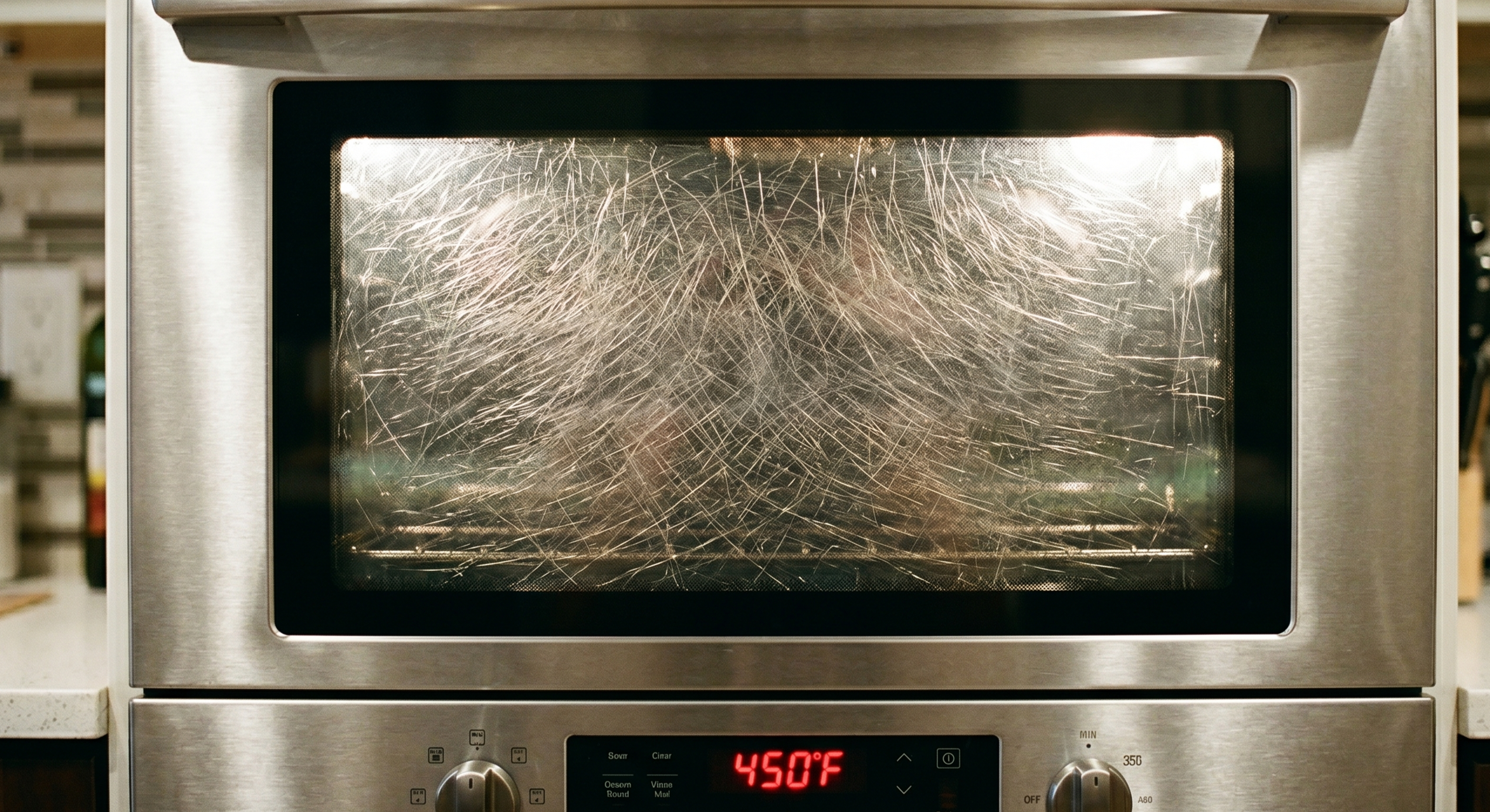
The Costly Truth Behind Viral “CleanTok” Trends
Let’s be honest: cleaning the oven is arguably the worst chore in the entire household. It requires awkward bending, breathing in questionable fumes, and scrubbing grease that has basically bonded to the metal on a molecular level. It is completely understandable why millions of us scroll through TikTok or Pinterest desperately looking for an easier way out.
When a 30-second video promises to melt away years of burnt-on carbon with zero effort, it feels like magic. But here is the cold, hard truth: modern appliances are highly calibrated machines, not high school science experiments.
“Just because a cleaning hack goes viral doesn’t mean it’s safe for your kitchen. In fact, appliance repair technicians see the expensive, heartbreaking aftermath of these trends every single day.”
Before you grab that pantry staple or try a “game-changing” trick you saw online, let’s look at five popular oven cleaning hacks that are actually fast-tracking your appliance to the junkyard—and what you should do instead.
5 Popular Hacks That Are Secretly Ruining Your Oven
Modern ovens are equipped with delicate electronics, specialized porcelain coatings, and precise airflow systems. When internet hacks ignore these engineering realities, a $500 repair bill (or a completely dead appliance) is usually the result. Stop doing these five things immediately.
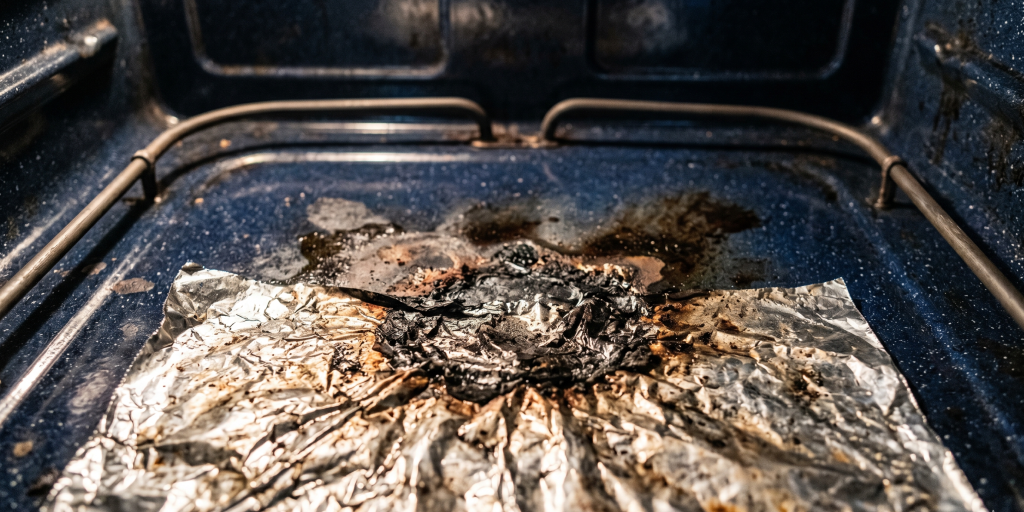
1. Lining the Oven Floor with Aluminum Foil
The Trend: It looks like the ultimate lazy-girl hack. You line the entire bottom floor of your oven with heavy-duty aluminum foil to catch pie spills, cheese drips, and stray tater tots. When it gets dirty, you just ball up the foil, throw it away, and replace it.
The Reality & Damage: This is a guaranteed way to permanently ruin your oven interior. Modern ovens frequently place their heating elements beneath the floor layer, meaning heat radiates upward from the bottom. Foil is a powerful thermal conductor; it traps and reflects heat at extreme intensities.
This intense heat buildup can literally melt the aluminum foil directly onto the porcelain enamel floor of your oven. Once it fuses, it cannot be removed, voiding your warranty and ruining the appliance. Even worse, in gas ovens, foil can block crucial airflow vents, leading to uneven cooking, a potential fire hazard, or carbon monoxide buildup.
2. The Baking Soda and Vinegar “Volcano” Paste
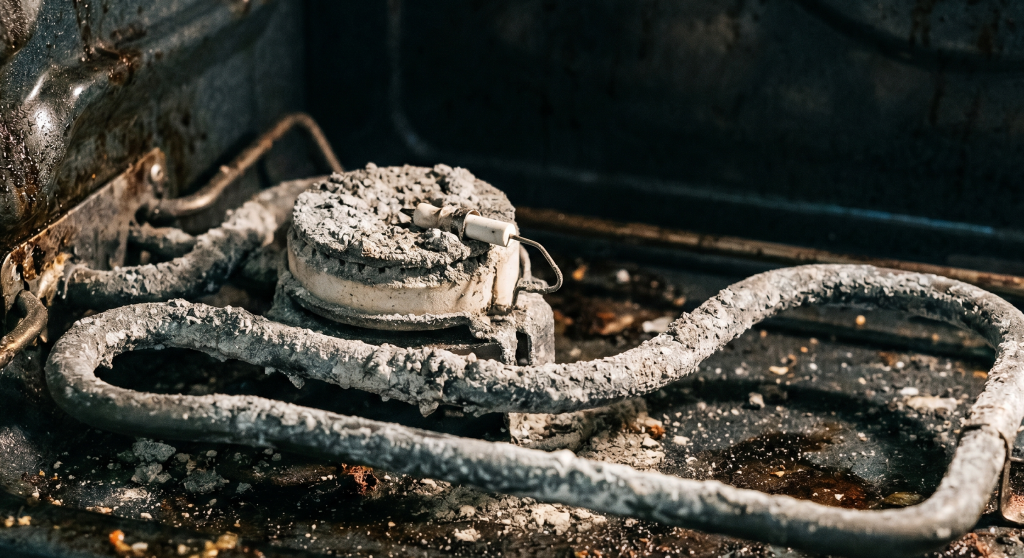
The Trend: Mix baking soda and white vinegar into a thick paste, slather it all over the inside of your oven, and watch the satisfying fizzing action magically dissolve the grease.
The Reality & Damage: We need to revisit middle school chemistry. Baking soda is a base (alkaline), and vinegar is an acid. When you mix them together, they instantly react to form carbon dioxide gas (the fizzing) and leave behind a solution of water and a tiny bit of salt. They literally neutralize each other. The fizzing looks like it’s working hard, but it’s doing absolutely nothing to cut through baked-on grease.
The real danger comes from the physical residue. Baking soda is highly abrasive and incredibly difficult to completely wipe away. If that gritty paste gets into the oven’s igniters, heating elements, or the convection fan assembly, it acts like sandpaper. It can cause mechanical components to seize up or create electrical shorts that kill your oven entirely.
3. Scrubbing Glass Doors with Dishwasher Pods
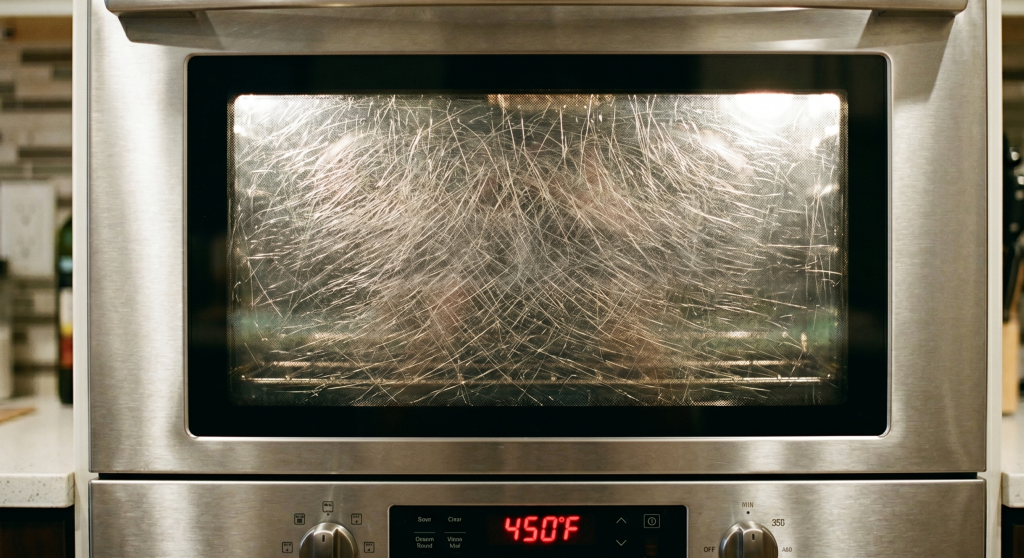
The Trend: Take a solid dishwasher tablet, dip the end of it in water, and use it like a pumice stone to scrub the brown grease stains off your tempered glass oven door.
The Reality & Damage: Dishwasher pods are engineered to be dissolved in several gallons of hot water inside a dishwasher. They contain highly concentrated, aggressively abrasive chemical compounds.
When you rub a hard, concentrated block of these chemicals directly onto your oven glass, you create thousands of microscopic scratches. You might not see them at first, but they are there. Oven doors are made of tempered glass designed to handle extreme thermal stress. Over time, as you heat your oven to 400°F and cool it back down, those micro-scratches compromise the structural integrity of the glass. Eventually, the glass door can randomly shatter into a thousand pieces while you’re cooking dinner.
4. Overusing the “Self-Clean” Cycle
The Trend: It’s a built-in feature on the appliance, so it must be safe to use whenever the oven looks a bit greasy, right? Many people run it right before major hosting holidays like Thanksgiving or Christmas to make their kitchen look pristine.
The Reality & Damage: Ask any appliance repair technician what feature makes them the most money, and they will universally answer: the self-clean button.
To burn off grease, the self-clean cycle cranks your oven up to extreme temperatures—often between 800°F and 1,000°F—and holds it there for hours. This extreme heat is a brutal stress test for the appliance. It frequently fries expensive electronic control boards, melts internal wiring insulation, or blows thermal fuses. If you absolutely must use the self-clean cycle, do it months before a major holiday so you aren’t left with a dead oven on Thanksgiving morning. Better yet, avoid it altogether.
5. Scouring with Steel Wool or Pumice Stones
The Trend: Attacking burnt carbon with heavy-duty metal scouring pads, pumice stones, or even razor blades to forcefully scrape the grime away.
The Reality & Damage: The interior of your oven isn’t just plain metal; it is coated in a specialized porcelain enamel. This smooth glass-like coating is designed to withstand high heat and make it harder for grease to stick.
Using harsh abrasives like steel wool or pumice stones strips away this protective enamel layer. Once the enamel is scratched, two bad things happen: future grease will bond even tighter to the newly textured surface, making it twice as hard to clean next time, and the exposed raw metal underneath will begin to rust out from the moisture generated during cooking.
What to Do Instead: Safe & Effective Alternatives
You don’t need dangerous shortcuts to get a clean oven. Here are two safe, expert-approved methods that preserve your appliance and your wallet.
- The Classic Dawn Dish Soap Method: Blue Dawn dish soap is a legendary degreaser for a reason. Mix hot water with a generous squirt of dish soap, apply it to the oven walls, and let it sit for 30 minutes to break down the oils. Scrub gently with a non-scratch blue scrubbing sponge. It requires a little elbow grease, but it poses zero risk to your oven’s components.
- The Gentle Steam Trick: Fill a large, oven-safe glass bowl with water and a few lemon slices (for a fresh scent). Place it on a rack, turn your oven to 250°F, and let it sit for 20 to 30 minutes. The steam will naturally loosen the grease and softened debris on the walls. Turn off the oven, let it cool down until it’s safe to touch, and simply wipe away the grime with a microfiber cloth.
Conclusion: Protect Your Appliance (and Your Wallet)
At the end of the day, 30 seconds of convenience on social media isn’t worth the cost of replacing a major kitchen appliance. When it comes to home maintenance, the old-fashioned, “boring” ways are usually the safest. Ditch the foil, skip the dishwasher pods, and treat your oven’s enamel with respect. A little extra patience today will save you hundreds of dollars tomorrow.
Have you fallen victim to any of these viral cleaning hacks? Let us know your experiences—and your favorite safe cleaning methods—in the comments below!