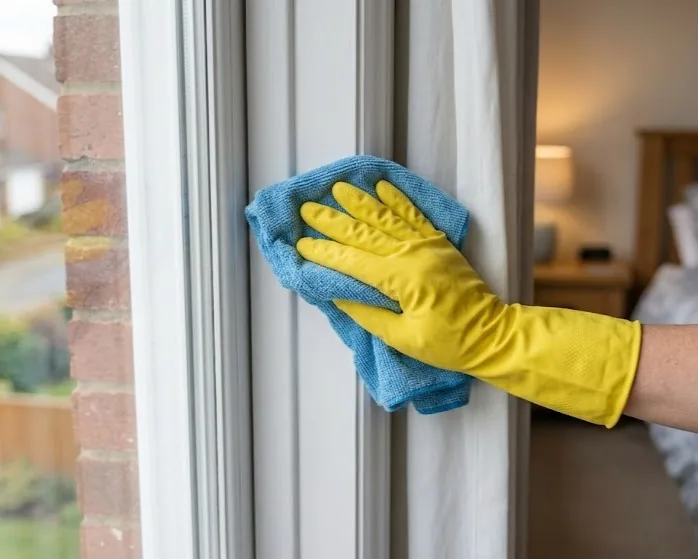
Condensation on a window is not a cleaning failure. It forms when humid indoor air meets a surface cold enough for water vapour to become liquid. Wiping the glass removes today’s droplets, but unless moisture production, ventilation and surface temperature are addressed, the water returns and may feed mould on seals, paint and curtains.
London homes are especially varied: a tightly sealed new-build flat, a Victorian bay window and a rented basement need different solutions. This guide provides a safe daily routine, a practical diagnosis and realistic prevention steps. It also explains when persistent damp suggests a leak, failed glazing or a building defect that needs professional investigation.
Quick answer
Remove droplets each morning with a clean squeegee or absorbent cloth, dry the frame, ventilate during moisture-producing activities and maintain steady heat. Record where and when water appears. Reduce indoor humidity before buying gadgets, and never paint over mould or seal a wet frame.
- Wipe glass and frames promptly and dry the sill.
- Run extraction while cooking and showering, then continue afterwards.
- Keep trickle vents open and avoid blocking radiators with heavy curtains.
- Dry laundry outdoors or use controlled ventilation and dehumidification.
- Measure humidity and look for patterns by room and weather.
- Investigate water between panes, rain-related stains or structural damp.
Why the right method matters
Warm air can hold more moisture than cold air. When that air touches a cold pane, its temperature falls below the dew point and water forms. Bedrooms often show the problem after sleep because breathing adds moisture while doors and windows stay closed. Kitchens and bathrooms create sharp peaks from steam.
The droplets damage more than glass. Water sits in timber joints, softens paint, supports fungal growth and transfers dirt into seals. Mould cleaning without moisture control becomes a repeating cycle. Prevention works by lowering humidity, exhausting vapour at source and keeping vulnerable surfaces warmer.
What you need
- Absorbent microfibre cloths reserved for windows
- Small squeegee with a controlled edge
- Washable towel for the sill
- Digital hygrometer
- Disposable gloves for small mould spots
- Mild surface-compatible detergent
- Dehumidifier where ventilation alone is insufficient
- Notebook or phone for a moisture diary
| Condition | Best response | Why |
|---|---|---|
| Droplets on room side in morning | Improve ventilation and heat | Typical internal condensation pattern. |
| Moisture between double-glazed panes | Glazing assessment | The sealed unit may have failed. |
| Stain appears after rain | Check frame, flashing and masonry | Likely water ingress rather than condensation. |
| Black mould on silicone | Clean safely and reduce moisture | Growth is being fed by repeated wetting. |
| Whole wall feels damp | Arrange damp diagnosis | A broader building issue may be present. |
Preparation and safety checks
Start by identifying which side of the glass is wet. Interior droplets can be touched from the room. Exterior condensation can be normal on efficient glazing and usually clears with weather. Moisture trapped between panes cannot be wiped away. Photograph the window before cleaning and note the outdoor temperature, room use and time of day.
Use a hygrometer for at least a week. Short peaks after showering are expected, but prolonged high humidity shows that moisture is not leaving the property. Check extractor airflow, trickle vents and furniture placement. Never block a gas appliance vent, and ask the landlord or a competent engineer before altering fixed ventilation.
Step-by-step method
1. Remove standing water safely
Pull curtains clear, place a towel on the sill and draw a clean squeegee downward into an absorbent cloth. Wipe the corners and frame, then dry them. Do not allow water to run into timber joints, electrical window controls or laminate flooring. Wash cloths after use so mould spores and dirty residue are not redistributed.
2. Ventilate at the source
Run bathroom and kitchen extraction before moisture rises, keep it operating during the activity and continue afterwards. Close the room door so vapour does not spread through the home. Openable windows can provide short purge ventilation, but leaving a room cold all day may worsen surface temperatures.
3. Use steady, appropriate heating
Intermittent blasts of heat warm air faster than walls and frames. A moderate steady temperature often reduces cold surfaces and helps ventilation carry moisture away. Keep radiators unobstructed and leave a small gap behind furniture on cold external walls. Energy and safety advice should come from the appropriate provider.
4. Manage laundry and everyday moisture
Dry clothes outdoors when possible. If indoors, use one ventilated room or a properly sized dehumidifier and keep the door shut. Fit pan lids, avoid unvented paraffin heaters and do not vent tumble dryers into the room. These habits remove litres of water from the weekly indoor load.
5. Clean small mould patches cautiously
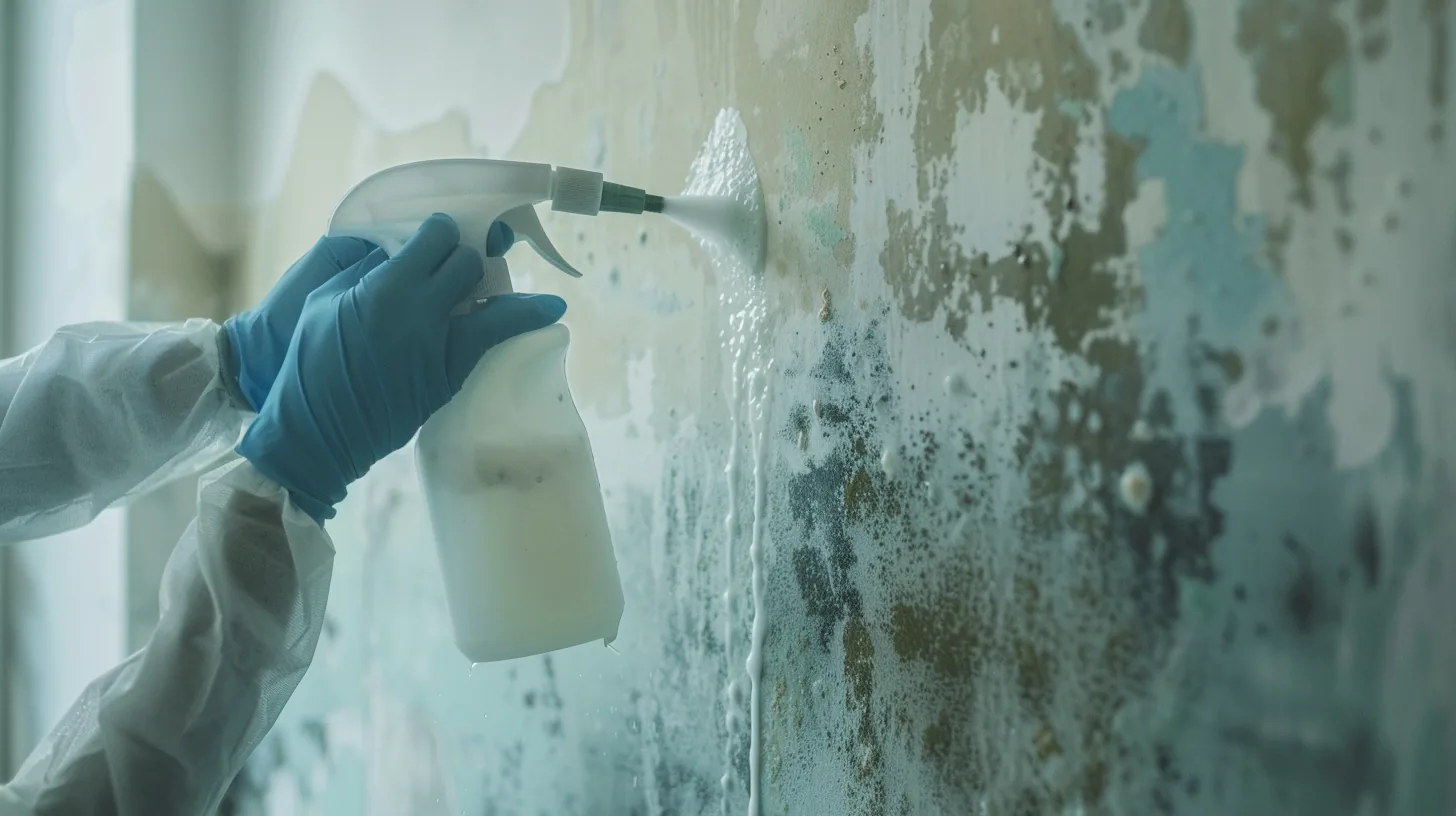
For a small surface patch, wear gloves, ventilate and use a product compatible with the seal, paint or uPVC. Apply to the cloth rather than aerosolising it. Never mix bleach with vinegar, ammonia or another cleaner. Porous plasterboard or failed silicone may require removal and replacement.
6. Review the result
Track humidity and inspect the same window after seven to fourteen days. If droplets reduce, continue the routine. If water remains severe, compare other rooms and look for cold bridges, failed extractors or overcrowding. Our domestic cleaning service can address surface soil, but building defects need the relevant trade.
Real-life scenarios
New-build flat with wet bedroom windows
The home is airtight and two occupants sleep with vents closed. Open trickle vents, keep the bedroom door positioned for safe airflow, avoid drying laundry there and use controlled morning ventilation. If humidity remains high, ask building management to test mechanical ventilation.
Victorian bay with mould behind curtains
Heavy curtains trap still air against cold glass and an external wall. Clean the small affected area safely, shorten or reposition the fabric, maintain heat and leave air space. Persistent wall growth may indicate insulation or penetrating damp that a surveyor should assess.
Bathroom window wet after every shower
Extraction is weak and the door is opened immediately, sending steam into the hallway. Clean the grille, test airflow, keep the door closed and run extraction longer. If the fan is defective, the landlord or electrician should repair it rather than relying on repeated wiping.
Why a moisture diary helps
A short record turns guesswork into evidence. Note humidity before bed and after waking, when extraction runs, where laundry dries and whether rain occurred. Patterns help cleaners, landlords and surveyors separate occupant-generated vapour from failed equipment or water ingress.
Common mistakes
- Assuming every damp mark is condensation without checking rain and plumbing patterns.
- Leaving droplets on timber frames and painted sills.
- Closing trickle vents to keep heat in while indoor humidity rises.
- Drying laundry throughout the home without extraction or dehumidification.
- Using bleach repeatedly while ignoring the moisture source.
- Mixing mould products or spraying them overhead.
- Painting or re-caulking before the substrate is clean and fully dry.
Practical checklist
- Wet side of glazing identified
- Water removed and sill dried daily
- Extractor fans operating effectively
- Trickle and fixed vents unobstructed
- Humidity monitored for at least one week
- Laundry moisture controlled
- Curtains and furniture allow airflow
- Mould area photographed and measured
- Rain-related and between-pane moisture ruled out
When to call a professional
Call a glazing professional when moisture is trapped between panes, seals have failed or frames are distorted. Contact a roofer or building surveyor for rain-related stains, widespread wall damp, persistent cold bridges or crumbling plaster. A qualified electrician should handle failed extractor fans and powered window systems.
Professional mould remediation is appropriate when growth is extensive, returns rapidly, affects porous materials or involves a vulnerable occupant. Tenants should report defects in writing with dated photographs. For surface cleaning after the cause is controlled, consider one-off cleaning, window cleaning or end-of-tenancy cleaning.
Frequently asked questions
What indoor humidity should I aim for?
A practical target is often around 40–60%, but comfort and building conditions vary. Sustained readings near the upper end in cold weather increase condensation risk.
Does opening windows always solve condensation?
Short, purposeful ventilation helps, but leaving rooms cold can lower surface temperatures. Combine ventilation with source control and appropriate steady heating.
Will a dehumidifier cure damp?
It can reduce airborne moisture, but it cannot repair leaks, failed glazing, missing insulation or broken extraction. Use it as part of a diagnosis, not as proof the building is sound.
Why is condensation worse on new windows?
Replacement windows may be more airtight, reducing unintended ventilation. The glass may also reveal humidity that previously condensed elsewhere. Ensure approved ventilation is present and working.
Can I remove mould with vinegar?
Vinegar is not suitable for every surface and must never be mixed with bleach. Use a compatible labelled product and address moisture first.
Who is responsible in a rented home?
Responsibility depends on the cause and tenancy circumstances. Report leaks, failed fans, defective windows and persistent damp promptly, and keep evidence of reasonable ventilation and heating.
Why is water outside the glass?
Exterior condensation can occur when efficient glazing keeps the outer pane cold. It is usually weather-related and not evidence of indoor damp.
Condensation improves when daily drying, ventilation, heat and moisture control work together. If you need help distinguishing surface cleaning from a specialist repair, contact Go Cleaners London with clear photographs and the room history.