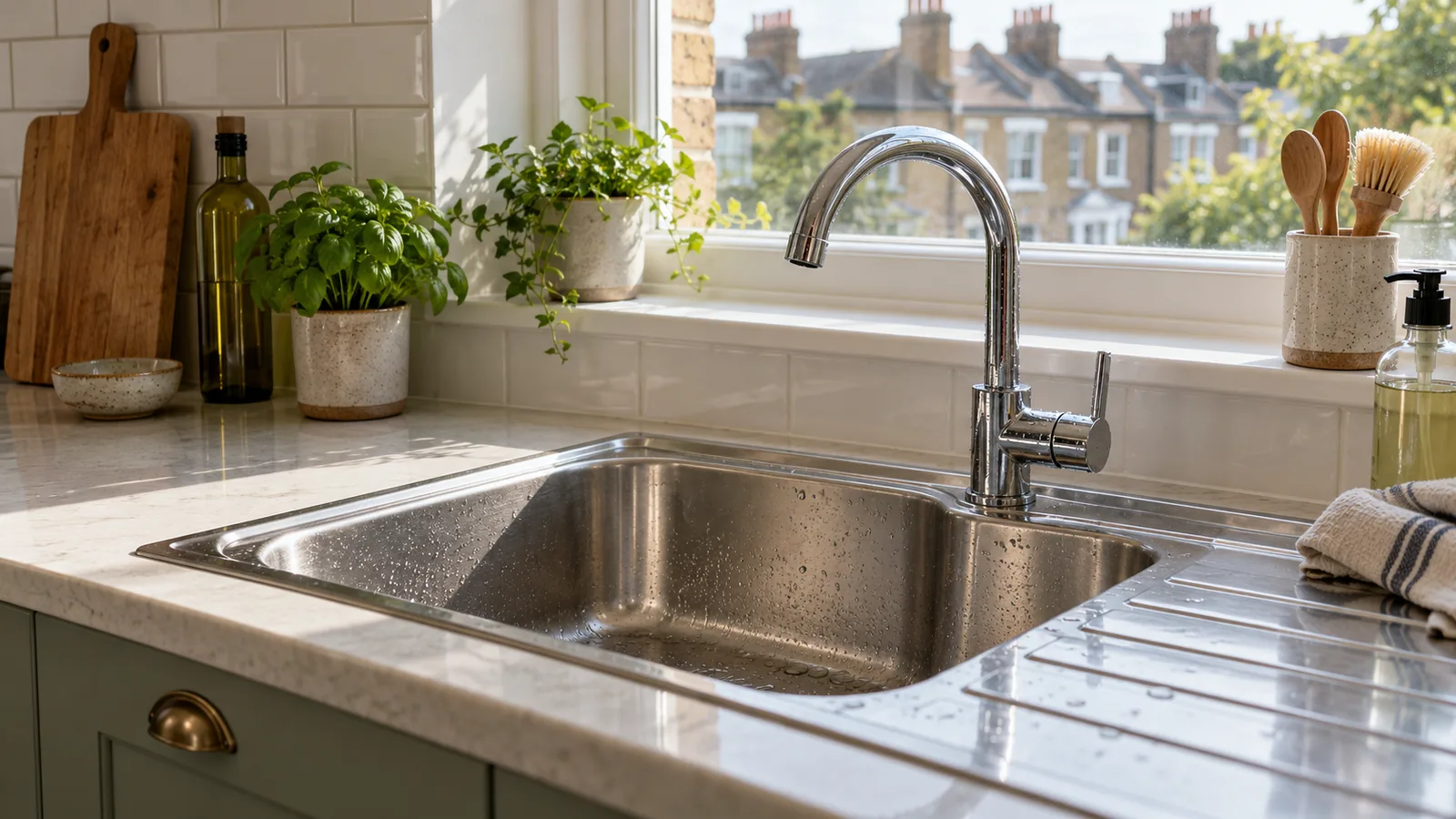
Stainless steel is a practical sink material, yet it makes water spots, soap film and fine scratches easy to see. A shiny tap beside a brushed basin may need a different product, while hard-water marks around the drain can be mistaken for permanent damage. Cleaning works best when you identify what is on the metal and respect the direction and finish of its grain.
For everyday care, clear food residue, wash gently, rinse and dry. For a persistent chalky mark, use a descaling method approved by the sink maker and keep it away from materials that cannot tolerate it. A deep scratch or dent is not something a stronger cleaner will remove. The steps below help you make that distinction and keep the sink usable without chasing a flawless mirror finish.
Inspect the finish before cleaning
Look at the sink in daylight. Is it brushed, satin, polished or textured? Many brushed sinks have a visible grain direction, often different on the sides and bottom. A cloth moved along that direction is less likely to highlight fine marks. Check the maker's care guide for products and tools to avoid, particularly if the sink has a special coating or coloured finish.
Separate the surfaces in your mind: steel basin, tap, drain fitting, silicone joint and surrounding worktop. A cleaner safe for plain steel may affect chrome, sealant, quartz or timber. Remove dishes and loose utensils so metal cutlery is not dragged across the surface while you wipe. Check the drain for food scraps that can leave odour even after the bowl is polished.
An aluminium sink cleaning guide covers another metal with different care needs. Do not use its product advice on steel without checking the label. The same apparent white mark may have a different cause and treatment on a different material.
Wash and dry after ordinary use
Rinse food particles into a strainer and dispose of them appropriately. Use a soft cloth or non-abrasive sponge with a mild washing-up solution permitted by the sink maker. Wipe the bottom and sides, working with the grain where visible. Pay attention to the rim and the area behind the tap, where splashes dry into a film. A narrow soft brush can help around a fitting without scratching it.
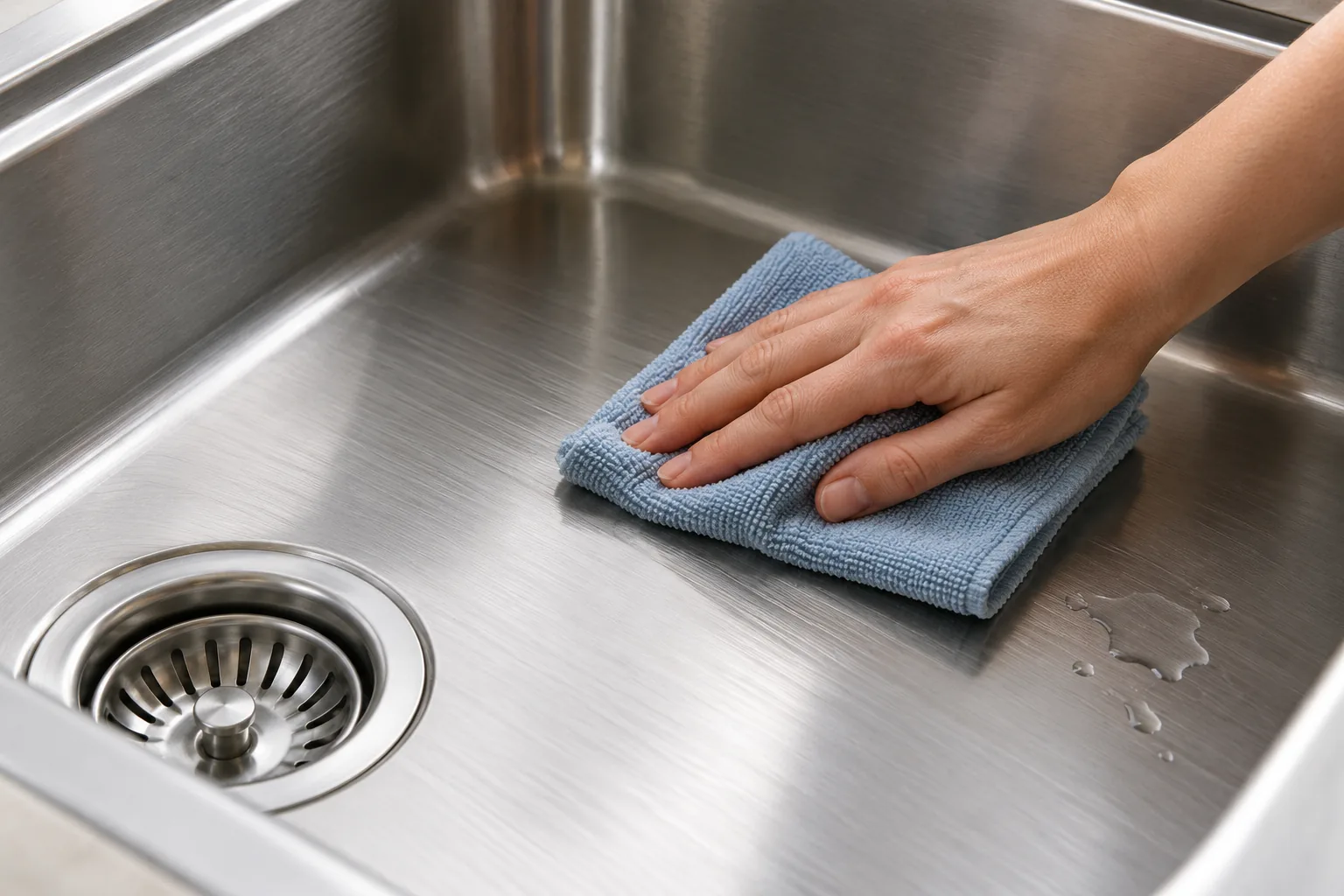
Rinse thoroughly to remove detergent. A partly rinsed sink can look cloudy when the water dries. Finish with a clean, dry microfibre cloth, including around the tap base and drain. This last step makes a large visual difference in hard-water areas. It is easier than allowing droplets to evaporate and then trying to remove a thicker mineral deposit later.
Avoid leaving damp steel wool, tins or cast-iron cookware in the sink. They can leave rust-coloured transfer marks on the stainless surface. The stain may come from the object rather than the sink itself, but leaving it in place adds another job. Use a rack or mat only if it can be lifted and cleaned underneath; trapped grit can scratch when the mat moves.
Distinguish water spots from limescale
Fresh droplets may leave a light outline that wipes away with the normal wash. A rougher, chalky deposit around the tap or drain is more likely mineral scale. The wider limescale guide explains why it returns in hard-water areas. Check the sink manufacturer's advice for a compatible descaler and its contact time. Apply product narrowly to the deposit rather than soaking the whole sink and its joints.
Do not assume that stronger acid or longer soaking is better. A descaler can affect tap finishes, sealant and nearby stone. Never mix it with bleach or other cleaning chemicals. Rinse according to the product instructions and dry the area. If a dull patch remains after the scale is gone, it may be an altered finish rather than more residue to dissolve.
Where the deposit is around an aerator or tap outlet, follow the tap maker's separate instructions. The sink bowl and tap may have different coatings. A cloth wrapped around a fixture for hours may let liquid reach parts that were not meant to be soaked.
Handle grease and food marks gently
Cooking oil and sauce can leave a slippery film. Wash with a suitable mild detergent and warm water, using a fresh cloth rather than the one that just cleaned a greasy pan. A dried raised spot can be softened before wiping. Avoid scraping it with a knife or scouring pad. If the mark does not change after the recommended method, look for a scratch or discolouration beneath it.
Tea or coffee residue at a drain rim may need more careful attention, but keep the product limited to what the manufacturer approves. Clean around the plug and strainer if they are removable, then refit them securely. Do not push food into the drain while cleaning. If the drain smells despite a clean bowl, inspect the strainer and follow appropriate plumbing or drain guidance rather than adding scent to the steel.
The cleaning cloth itself can cause marks when it carries grit. Rinse or replace it often. A clean cloth and gentle pressure usually achieve more than a harsh product on a dirty sponge. If the sink has a satin grain, finish each section in the same direction to avoid a patchwork of streaks.
Know what is wear or damage
Fine scratches are normal on a frequently used sink. They may become less noticeable as the finish develops an even patina, but cleaning cannot erase a deep groove. Be cautious with polishing kits and abrasive powders: they may change the finish in one local patch and make it more visible. Ask the maker or a specialist before attempting refinishing, especially on a coated or coloured sink.
A dent, loose fitting, leak at the waste or lifted silicone joint is a repair issue. Dry the cabinet below and check for water after using the sink. A leak will continue to damage surrounding materials no matter how well the bowl is cleaned. Rust-coloured marks from a pan may lift with an approved method, but widespread corrosion or damaged coating needs assessment.
Take a photograph of a persistent mark in good light before trying another product. Note what you used and how long it was left. That information helps a manufacturer or installer distinguish mineral film from finish damage without more experimenting on the sink.
Keep the surrounding area aligned
Wipe the splashback and worktop separately with products suitable for their materials. Water dragged from the sink to a wood edge or cabinet joint can cause trouble there even if the steel tolerates it. A kitchen cleaning service can address accessible sink and worktop surfaces as part of a wider room routine. Deep cleaning may help when old grease extends to cabinet fronts and tiles, while domestic cleaning can support regular upkeep. Tell the cleaner if the sink has a special finish or known leak.
The effective routine is simple: remove food particles, use a mild compatible wash, rinse thoroughly and dry. Treat mineral scale with a narrow, approved method and accept that a scratch is not a stain. That keeps the steel's appearance even and prevents cleaning from creating the very damage you were trying to remove.