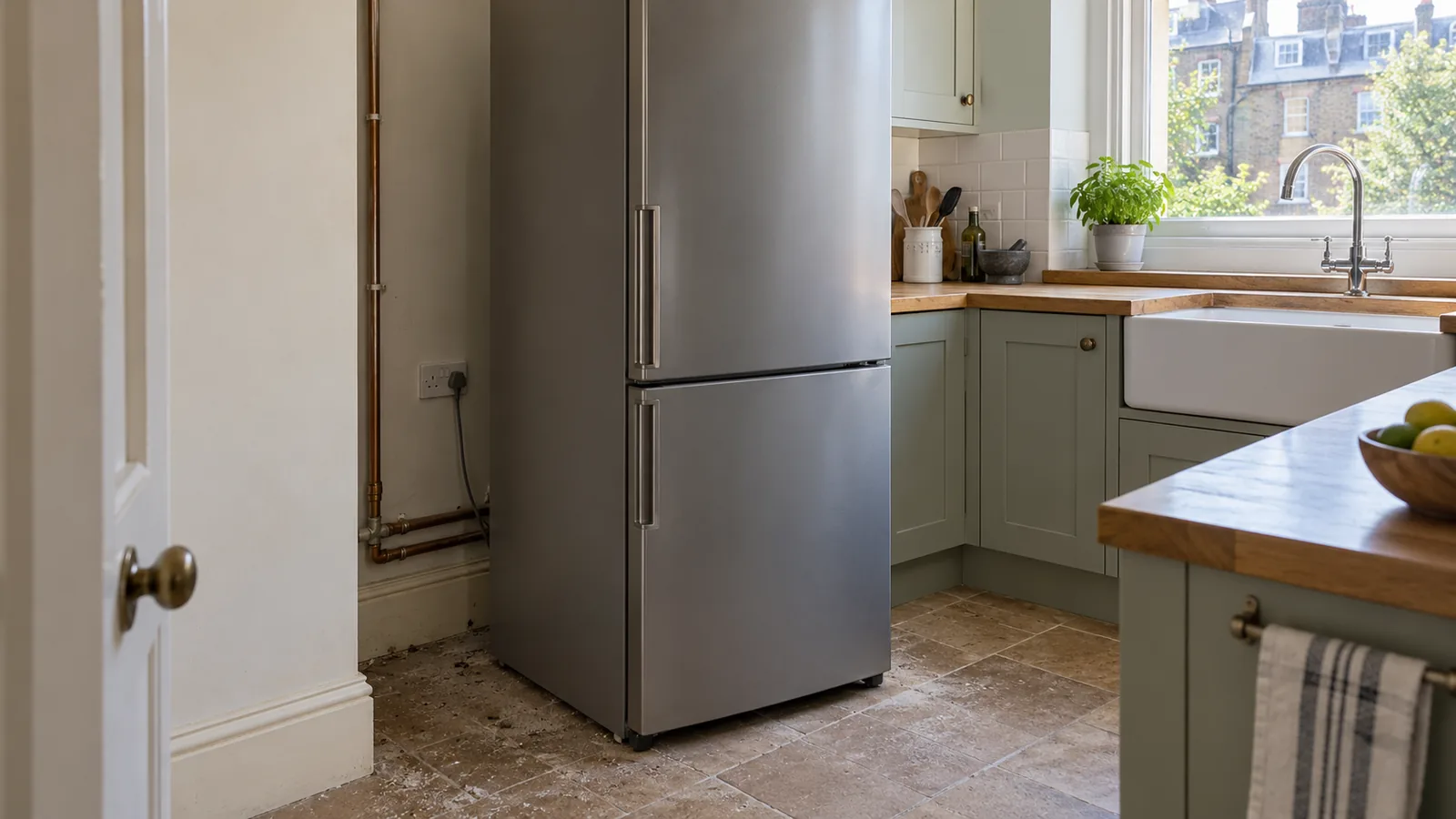
The narrow gap behind a refrigerator is easy to ignore until crumbs, dust and a dropped item become visible. Cleaning it can improve the surrounding kitchen, but moving a heavy appliance introduces risks that a normal floor wipe does not. Power cables, water lines, ventilation space and the fridge's balance all matter. Pulling it by the door or pushing a vacuum nozzle into a component can turn a small housekeeping task into an appliance repair.
Start by reading the fridge manual and checking how it is installed. Some freestanding units can be moved carefully for access; built-in models may be secured to cabinetry. The aim is to clean only areas you can reach safely, then return the appliance to its intended position with room for ventilation. Internal food shelves and seals are a separate job covered in the fridge cleaning guide.
Decide whether the fridge can be moved
Look for a freestanding appliance with a clear route forward. Check the floor for a lip or loose tile that could catch a wheel. Remove a mat, bin or stool from the path. If the fridge is tall, heavy or unstable, ask for help; do not try to drag it alone. Never pull on the door handle, which is not designed to carry the weight of the whole unit.
Check whether there is a water dispenser or ice maker. A connected water line may have little slack, so moving the fridge without understanding the connection can cause a leak. Likewise, the power cord may be short or routed behind cabinetry. If the unit is integrated, bolted in place or difficult to access, follow the installer's or manufacturer's instructions rather than forcing it out.
The fridge maker may advise turning the appliance off or unplugging it before cleaning around rear components. Follow that guidance and consider food storage if it will be off for an extended period. Do not unplug it by pulling the cable. If the socket is inaccessible, do not reach blindly behind the unit or push metal tools towards it. Plan the task for a time when someone can help move and reconnect the appliance safely.
Make a safe space before reaching behind
Use cardboard or floor protection if the manufacturer recommends it for the surface, but avoid material that makes the fridge slide unexpectedly. Move it slowly and straight, keeping it upright. Stop if you feel resistance from a pipe, cord or fixed bracket. A fridge can have levelling feet rather than wheels, and dragging those feet may scratch flooring. Consult the manual for how to adjust them before movement.
Once there is a workable gap, check the floor and wall with a torch. Look for dry dust, crumbs, old spills, signs of insects and any water mark. A wet patch may be a plumbing or condensate issue, not just a cleaning problem. Photograph anything unusual before wiping it away. If there is an active leak, electrical damage or a damaged pipe, stop and use an appropriate repair professional.
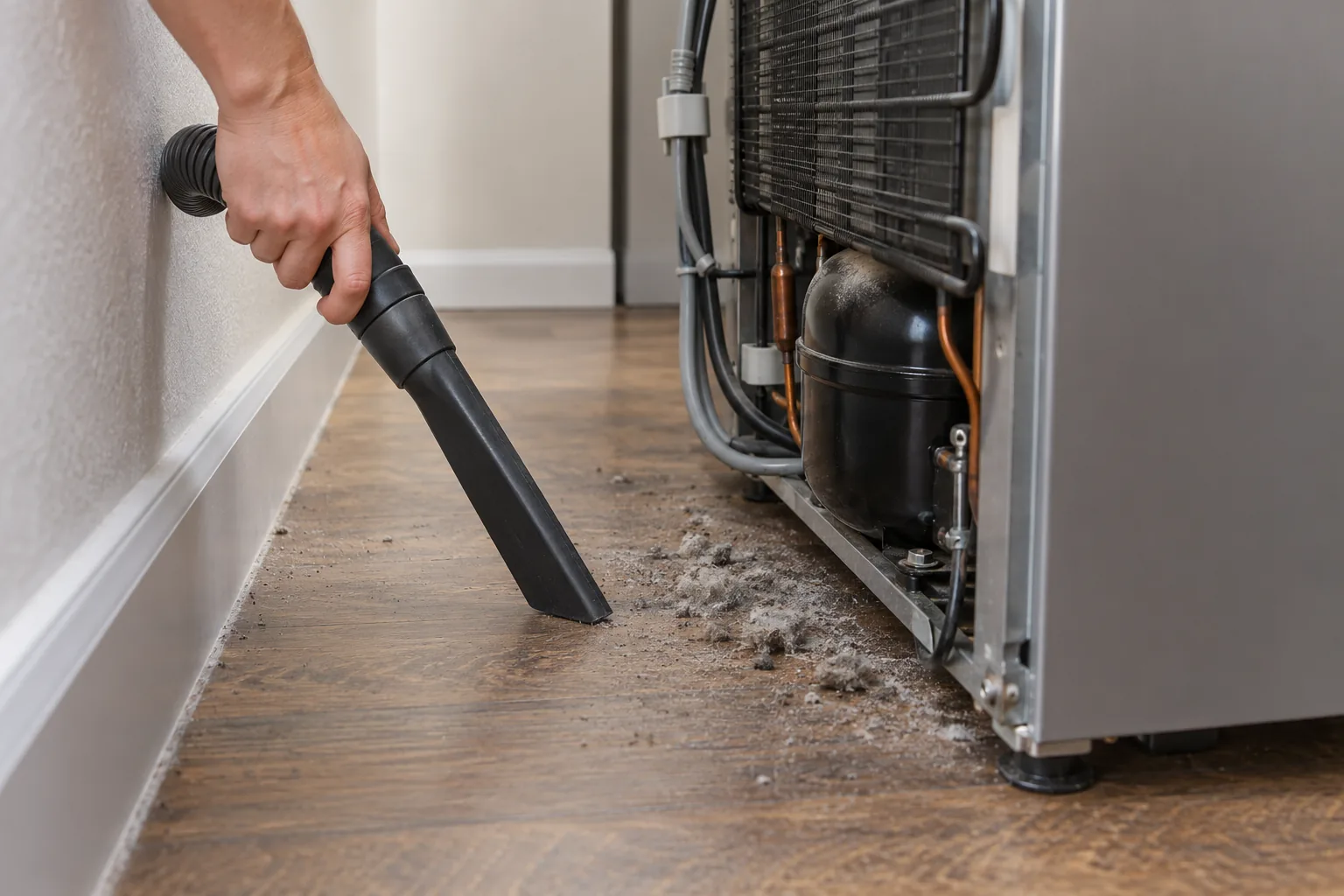
Keep hands and vacuum parts clear of exposed rear components. Some surfaces can be sharp. Do not remove a rear panel merely to clean the floor. If the appliance has accessible coils or a grille, follow its specific instructions and use only the recommended brush or attachment. Many modern fridges have different layouts; a universal “clean the coils this way” instruction can be wrong for your model.
Remove dry dust first
Vacuum loose dust and crumbs from the accessible floor and skirting. Use a crevice tool where it fits without pressing into cables, water lines or delicate fins. Work slowly so the nozzle does not snag a cord. A soft brush can lift dust from a wall or floor edge. If you cannot see where the tool is going, avoid probing deeper; moving the appliance a little further with help may be safer than blind scraping.
The post on household dust explains how particles accumulate in overlooked places. Behind a fridge, kitchen crumbs and grease can mix with that dust. Removing the dry layer first stops it becoming a muddy film when you wipe the floor.
If the maker permits cleaning an accessible rear grille, use the prescribed method with the appliance in the required power state. Do not bend fine metal fins or pull at tubing. A coil brush that is too stiff or wide can damage components. When in doubt, limit yourself to the floor and outer vents you can clearly identify in the manual.
Wipe the floor and surrounding surfaces
After vacuuming, use a cloth or mop suitable for the flooring. Apply only enough liquid to lift grime without leaving a puddle under the appliance. Keep water away from the socket and rear electrical parts. Clean the skirting and wall if their finish permits it, then let them dry. A sticky spill may need a little more contact time with a compatible cleaner, but avoid soaking timber, laminate edges or grout.
If there is a stain directly beneath the fridge, check whether it is old food, condensation or a continuing leak. Clean once and inspect again later. A fresh wet patch after the area was dried needs investigation. Do not cover it by pushing the appliance back and assuming it will evaporate. A damp floor can also damage cabinetry and encourage odour in a closed gap.
Wipe the fridge's external sides and door with a suitable product while they are accessible. The surface may be painted metal, stainless steel or coated plastic. Use the maker's instructions for each. Do not spray cleaner into ventilation openings or electrical controls. A fridge cleaning service can address accessible exterior and interior surfaces when the appliance condition is sound, but moving an integrated or connected unit may be outside routine cleaning scope.
Return the appliance carefully
Check that the floor is dry and nothing has been left behind. Move the fridge back slowly without trapping its cord or water line. Keep the ventilation clearance the manufacturer specifies; pushing it flush against the wall can restrict airflow. Confirm the appliance is level and the door closes properly. Reconnect power and water as instructed, and check for leaks around a water connection if present.
If the fridge was switched off or disconnected, follow the manufacturer's advice before loading food or assuming normal operating temperature. Do not guess how quickly it cools; check the display or use the method the maker recommends. If the unit was tilted during movement, consult its instructions before restarting. These steps matter more than making the last centimetre of floor spotless.
Listen for unusual noise after repositioning. A rattle might be an item touching the back or a changed levelling position. If you see an error code, damaged plug or water leak, stop and arrange appropriate service rather than continuing to push the fridge around.
Keep the gap manageable
Clean visible floor edges regularly so crumbs do not build up behind the unit. Check the ventilation grille on the schedule in the manual. If a nearby bin or food-preparation area repeatedly drops debris into the gap, rearranging it can reduce future work. The wider kitchen cleaning service can address accessible floors and cabinets, while deep cleaning may include neglected areas when safe access is available. Tell any cleaner about water connections or installation constraints before moving the appliance.
The practical boundary is clear: clean the space you can access while keeping the fridge stable and its connections intact. Stop if movement strains a line, a component looks damaged or water appears. An undamaged, properly ventilated fridge in a clean surrounding area is a better result than a spotless gap created by risky handling.