Oven racks and door glass collect grease in different ways and are made from materials that respond differently to heat, moisture and abrasion. Treating every part with the strongest chemical or roughest scourer can scratch glass, strip coatings, discolour metal and damage seals.
This component-focused guide explains how to prepare the appliance, remove racks safely and clean the visible door and cooking accessories without turning a routine job into a repair. For a full appliance treatment, including heavy internal build-up, consider a professional oven cleaning service in London.
Read the oven manual before dismantling anything
Switch the oven off, let it cool completely and isolate the power if the manufacturer directs. The manual should identify removable racks, shelf supports, trays and door panes, plus any catalytic, enamelled or self-cleaning surfaces that require special care. Never assume a part is removable because it appears to slide or unclip.
Take a photograph of rack positions and fittings before removal. Work on a protected floor or worktop and keep screws or clips in a labelled container. If a door pane needs tools, spring tension is involved or the manual does not describe removal, leave it assembled.
Tools that are usually safer
- Non-scratch sponges and microfibre cloths.
- A plastic or purpose-made glass scraper approved by the manufacturer.
- A soft washing-up brush for rack joints.
- Warm water and a compatible degreasing product.
- Old towels or a washable mat to protect surrounding surfaces.
- Gloves and good ventilation as directed on the product label.
Avoid wire wool, metal paint scrapers, knives, pumice stones and abrasive powders unless the manufacturer explicitly approves them. Do not use a steam cleaner on electrical controls or between door layers. Caustic oven cleaner can damage aluminium, self-cleaning liners, painted trim, seals and some enamel finishes.
How to clean oven racks
Remove and identify the finish
Standard chrome racks may tolerate soaking, while telescopic runners often contain lubricant and moving parts that must not be submerged. Enamelled accessories may chip if knocked together. Check the manual and separate incompatible parts.
Soften grease before scrubbing
Place suitable racks in a large sink or tray lined with a towel. Add warm water and the recommended amount of compatible detergent. Allow the product time to loosen residue rather than immediately attacking it with force. Keep children and pets away from soaking solutions.
Use controlled pressure
Brush along the bars and around joints with a non-scratch tool. Turn the rack rather than bending over an awkward angle. Rinse thoroughly and dry completely to reduce spotting or corrosion. Refit only when the rack and oven interior are dry.
How to clean trays and accessories
Remove loose crumbs first. For enamelled trays, soak with warm water and washing-up liquid, then lift residue with a soft sponge or plastic utensil. Avoid sudden temperature changes that can distort metal or crack enamel. Aluminium trays can darken or pit when exposed to strong alkaline oven chemicals.
Do not put every oven part in a dishwasher. High temperatures and aggressive detergent can affect coatings, non-stick finishes and telescopic mechanisms. Follow the appliance and accessory instructions.
How to clean the outer door glass
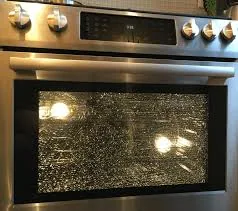
- Make sure the glass is cool and inspect it for chips or cracks.
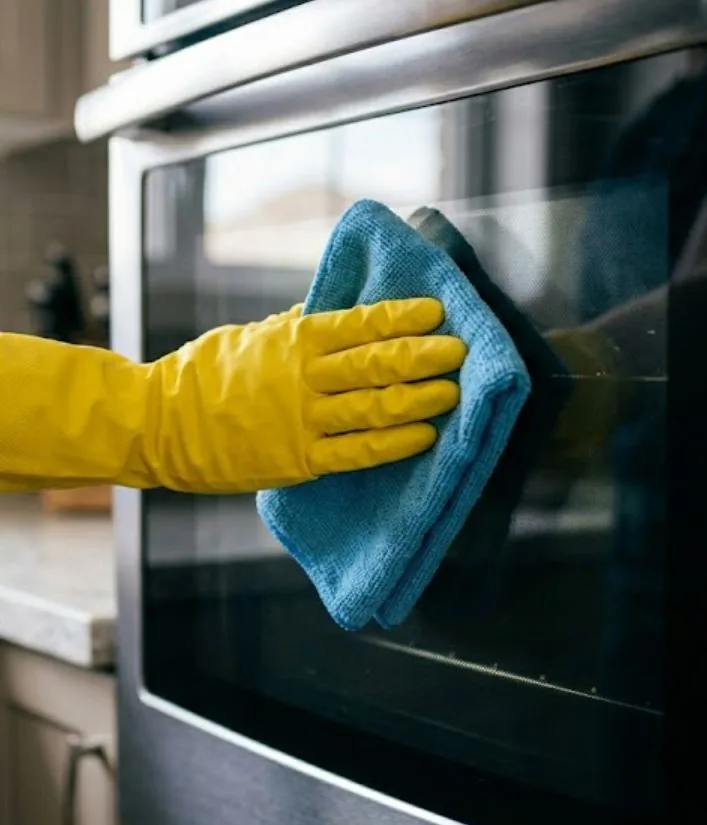
- Wipe away loose dust and crumbs with a dry microfibre cloth.
- Apply a compatible cleaner to the cloth, not into vents or door edges.
- Leave it for the labelled contact time without allowing it to dry.
- Lift softened spots with a non-scratch pad or approved scraper held at the recommended angle.
- Remove residue with a clean damp cloth and buff dry.
Do not lean or sit on an open oven door. Avoid flooding the glass because liquid can travel through vents and become trapped between panes. If there are deposits inside a multi-pane door, use only the manufacturer’s documented removal process or book professional help.
Cleaning the oven interior around the door
Brush out dry crumbs, then wipe smooth enamel with a product approved for the appliance. Keep liquids away from heating elements, fans, lamps, ignition components, thermostats and electrical connections. Never spray directly into openings.
Catalytic liners are intentionally porous and can be damaged by abrasive tools or caustic cleaner. Pyrolytic programmes require racks and accessories to be removed where the manual says so, and the cycle should not be run when there is an abnormal fault, damaged seal or excessive loose spill.
What commonly causes damage?
- Scraping glass with a knife or unapproved metal blade.
- Using wire wool on enamel, coated racks or door glass.
- Spraying controls, elements and ventilation slots.
- Mixing cleaning chemicals or using more concentrate than instructed.
- Submerging telescopic runners and washing away their lubricant.
- Removing door panes without supporting the glass or recording the order.
- Running a self-clean cycle with incompatible accessories inside.
- Cleaning hot glass with cold liquid, risking thermal shock.
When professional cleaning is sensible
Professional help is useful when grease is thick, carbonised or spread behind fixed panels; when the door needs dismantling; or when you cannot identify the surface. Stop and seek an appliance technician rather than a cleaner if the glass is cracked, the door does not close correctly, wiring is exposed, a fault code appears or there is a gas or electrical concern.
If the oven forms part of a wider property reset, combine the job with a one-off deep clean or arrange it alongside end of tenancy cleaning.
Keep the racks and glass easier to maintain
Deal with spills once the appliance is cool instead of letting repeated heating turn them into hard carbon. Use trays of the correct size to catch drips without blocking airflow, and avoid overfilling dishes. Wipe the accessible door edge regularly, because crumbs and grease near the seal can interfere with closing.
Inspect the seal rather than scrubbing it aggressively. A loose, brittle or torn gasket is a maintenance issue and may affect temperature control. Keep a note of the oven model so the correct manual and replacement parts can be found. Routine gentle cleaning generally protects the finish better than occasional extreme treatment.
Frequently asked questions
Can oven racks be soaked overnight?
Only if the manufacturer permits soaking for that finish. Telescopic runners and components with bearings or lubricant generally need different treatment.
Can I use a razor blade on oven glass?
Use only a scraper specifically approved by the oven manufacturer. An ordinary blade can scratch glass, damage trim and cause injury.
Why is the glass cloudy after cleaning?
Residue may remain, or moisture may have entered between panes. Wipe the accessible surface clean and dry; do not dismantle the door unless the manual explains how.
Should heating elements be covered or soaked?
No. Keep cleaning liquid away from heating elements and electrical components. Follow the manual for cleaning around them.
Is baking soda safe for every oven?
No universal cleaner suits every finish. Fine particles can remain in openings or abrade sensitive coatings, so confirm compatibility first.
How often should racks and glass be cleaned?
Wipe fresh spills after the oven has cooled and clean more thoroughly before grease becomes heavily carbonised. Frequency depends on use.
For advice on a heavily soiled appliance, contact Go Cleaners London with the oven type, condition and photographs so the scope can be assessed before booking.