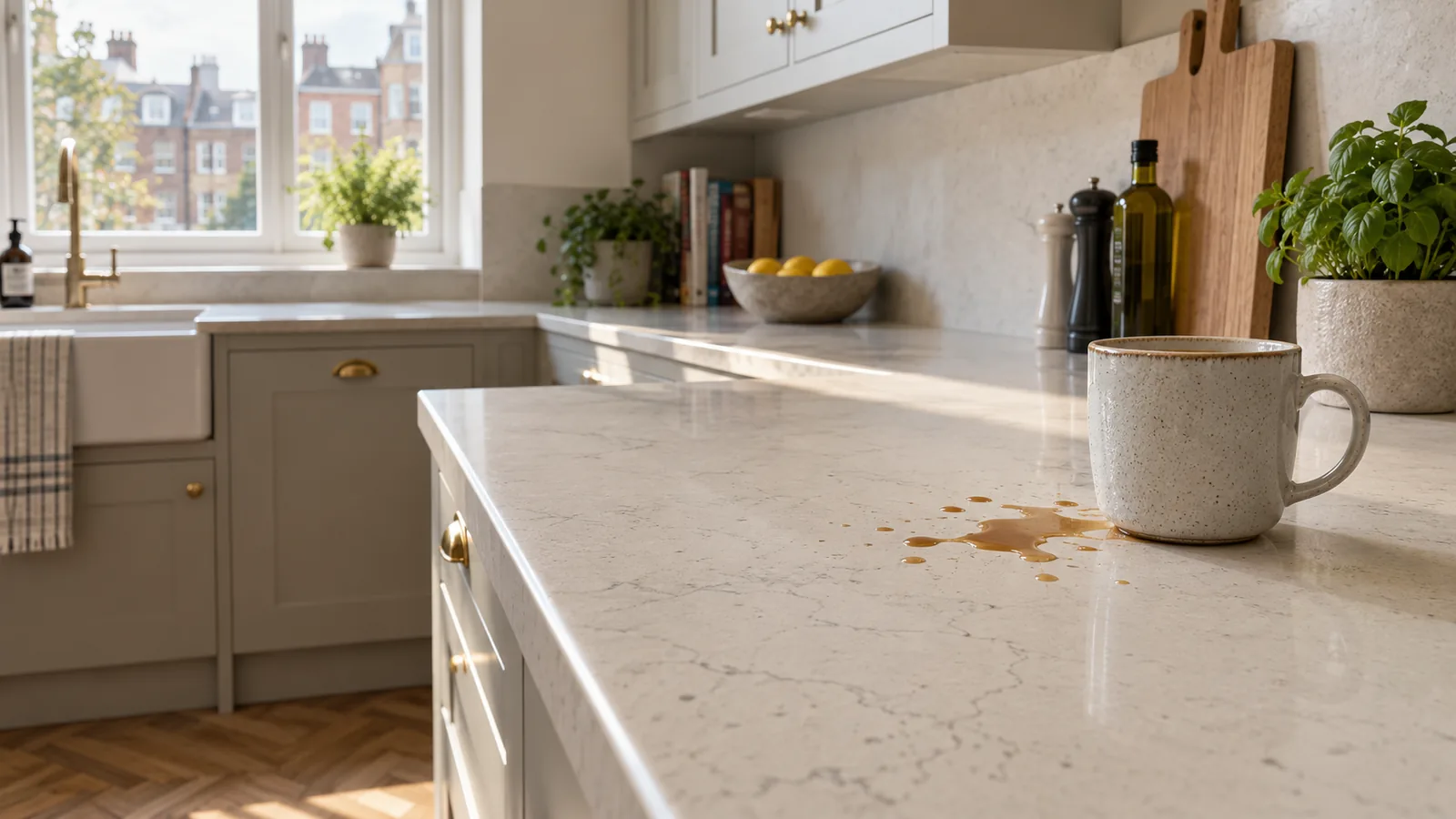
Engineered quartz is popular for its even appearance and straightforward day-to-day care. It is often described as low maintenance, but that does not mean every household chemical, hot pan or abrasive tool is safe for it. Quartz worktops contain mineral particles held in a binder, and the finish can react differently from natural granite or marble. A mark may be a removable film, a stain in a seam or a change to the surface itself.
The best routine is modest: remove grit, wipe fresh spills with a compatible mild cleaner and dry the surface. When a mark remains, identify its likely cause before increasing the strength of the product. The worktop manufacturer's care guide should lead the decision, especially for matt, textured or specialist finishes.
Confirm the surface you have
Ask the installer or look up the brand and colour if you can. Some worktops sold informally as “quartz” may be a different composite or natural stone, and the approved products can differ. A polished engineered-quartz slab can respond differently from a textured finish to the same wiping method. Keep installation paperwork or a photograph of the label for future reference.
Look closely at the mark in daylight. Does it sit on top as a smear, catch on a fingernail as dried food, or appear to be beneath a smooth surface? Check whether it is near a join, sink cut-out or silicone line. Food and water can collect at those edges, where the sealant rather than the quartz may have changed colour. Do not scrape a seam just because the adjacent slab is hard.
The article on granite countertop care is useful for another common kitchen material, but its treatment should not be copied onto engineered quartz without checking the product guidance. Different surfaces have different sealants, binders and finishes.
Make daily cleaning gentle and complete
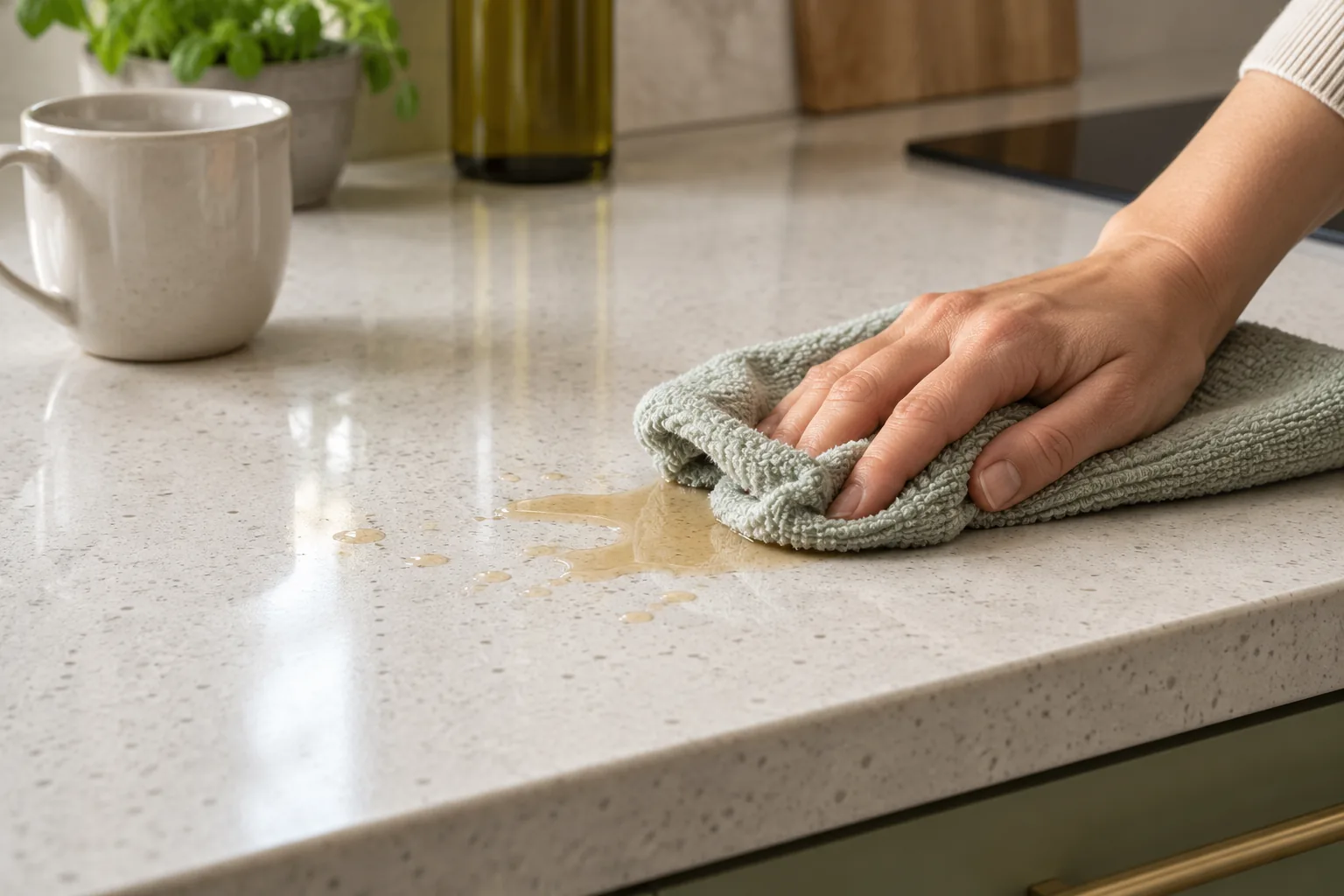
Brush away crumbs and grit with a soft cloth before wiping. Fine particles dragged under a sponge can create dull trails. Use warm water and a mild, non-abrasive cleaner permitted by the maker. Apply it to the cloth rather than flooding joints, electrical sockets or cabinet edges. Wipe the working area, then remove cleaner residue with a fresh damp cloth if the instructions require it. Dry with a clean microfibre cloth to reduce streaks and water spots.
Handle food preparation areas as surfaces that need regular hygienic cleaning. Follow the cleaning product's instructions for food-contact use, including any required rinsing, and keep cloths used for raw-food spills separate. A strong fragrance is not proof that a surface is clean. Wash reusable cloths frequently and let them dry between uses.
Wipe coffee, tea, wine, oil and coloured sauces promptly. A fresh spill is usually easier to lift than a patch left to dry beside a warm appliance. Do not let a wet cloth sit over a seam for hours in an attempt to dissolve a mark. The surrounding sealant and cabinetry may be more vulnerable to prolonged moisture than the slab itself.
Work through a stubborn spot in stages
Start by identifying whether the spot is greasy, sugary, mineral or an adhesive residue. A mild wash and a clean rinse may remove ordinary cooking film. Give an approved cleaner its stated contact time rather than scrubbing harder immediately. For a raised deposit, follow the manufacturer's advice on a plastic scraper or other permitted tool, keeping it away from joints and decorative edging. Never use a metal blade by default.
Test any specialist product in an inconspicuous place and allow the area to dry before judging the result. Avoid scouring powders, abrasive pads and unapproved solvents. Acids, alkalis and bleach can affect finishes or surrounding materials, depending on the brand and concentration. Do not combine products to make a stronger mixture. If the manufacturer lists a specific stain-removal method, follow it exactly instead of relying on a social-media trick.
The existing guide to kitchen grease removal describes grease on several surfaces. On quartz, limit treatment to products compatible with the particular worktop and clean adjacent metal, tile or timber separately. Grease moved from a hob can leave a film on the counter if the cloth is not changed.
Recognise heat and chemical damage
A discoloured ring beneath a hot pan may not be a stain on top of the slab. Heat can affect the binder or finish, and repeated scrubbing cannot reverse that change. Use trivets for hot cookware and avoid setting an oven tray directly onto the worktop. Even if the mineral content resists heat, the finished composite and nearby seams have limits.
Likewise, a dull or unusually shiny patch after a strong cleaning chemical may be a changed finish. Look at it in side light after the area is clean and dry. If the patch stays in exactly the same place and shape, seek advice from the manufacturer or installer before trying a polishing kit. A mismatched shine can be more obvious than the original mark, especially on a matt or dark surface.
Chips at an edge, cracks near a cut-out and open joints are repair issues. Stop forcing water or cleaner into them. A worktop specialist can assess whether a repair is possible and whether any underlying cabinet movement contributed. A cleaning service can remove surface soil but should not promise to repair resin, adhesive or a structural crack.
Protect joins, sinks and edges
The area around the sink often accumulates hard-water marks and soap residue. Wipe splashes as they occur and dry the seam. Use a product approved for quartz and compatible with tap finishes and sealant. Do not leave acidic descaler sitting across the worktop while treating the tap. Apply it narrowly according to its instructions, keeping it off vulnerable surfaces.
At a hob cut-out, crumbs can collect in the narrow junction between glass and quartz. Use a soft cloth or suitable small brush rather than a sharp implement. Keep liquids away from hob controls. Along a wall, check whether a dark line is dirt on the silicone or deterioration beneath it. Cleaning may brighten intact silicone; failed sealant may require replacement after the area is dry.
Use chopping boards rather than cutting directly on the worktop. This protects both the surface and knife edges. Lift heavy pots instead of dragging them, and put felt or other suitable protection under frequently moved small appliances. Preventing avoidable marks makes the mild daily routine more effective.
Decide when to get help
If a mark responds to gentle cleaning, repeat only as directed and finish by rinsing and drying. If it remains unchanged, document the product used and ask the worktop maker or installer for material-specific guidance. Do not keep switching to stronger chemicals. For a whole kitchen with ordinary grease and food residue, kitchen cleaning can cover accessible surfaces with appropriate methods. A deep cleaning service may help when cupboards and splashbacks need the same attention. If the hob or oven is the main source of deposits, oven cleaning can address that separate appliance.
Tell any cleaner that the top is engineered quartz and share the brand guidance if available. Flag heat rings, chips and open seams before work starts so they are not mistaken for removable stains. A successful clean removes soil while preserving the existing finish. The simplest durable routine remains a soft cloth, compatible mild product, prompt spill removal and protection from heat and abrasion.