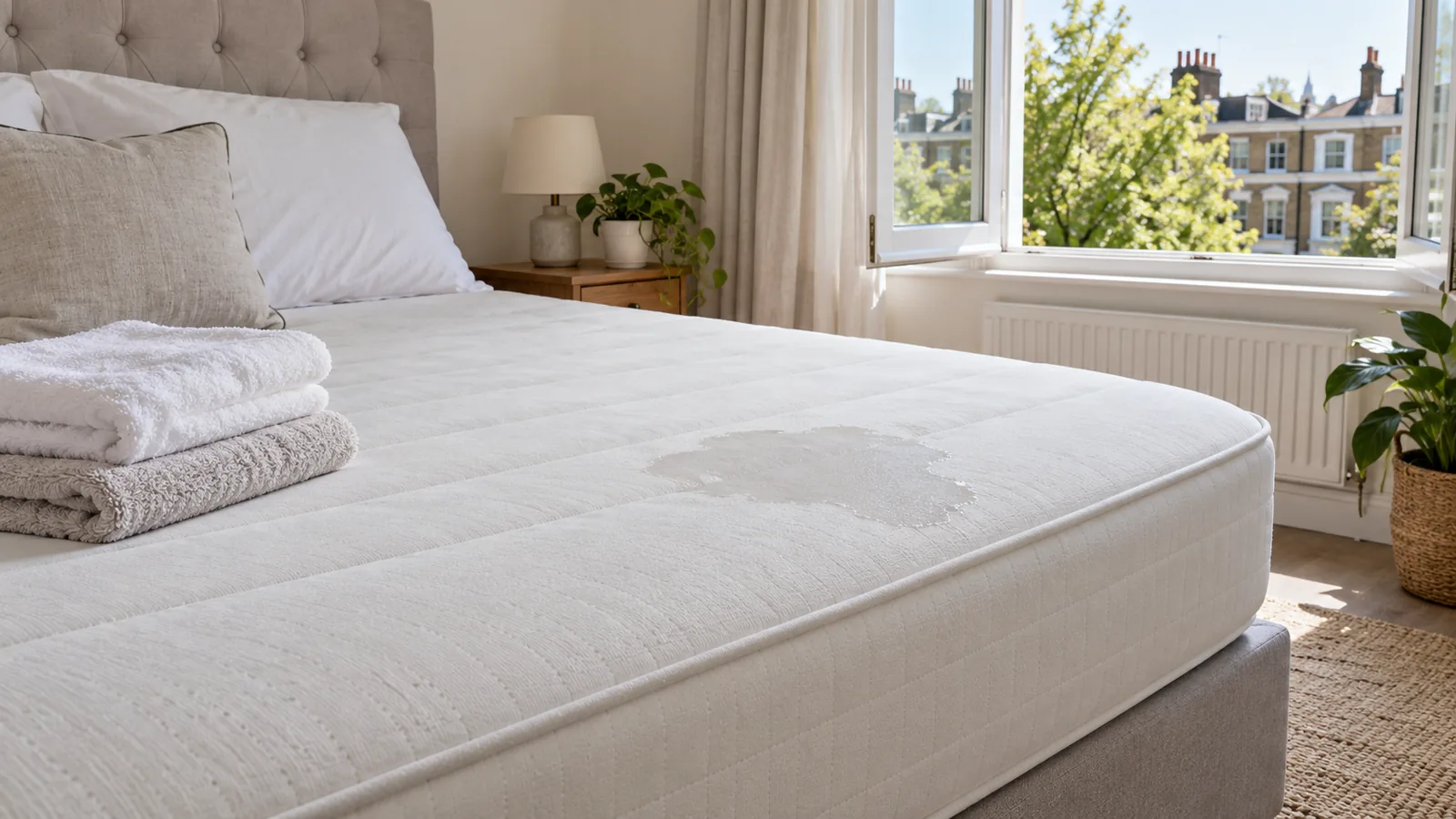
A glass of water on a bed is very different from a mattress soaked by a leaking pipe. Both may leave a damp patch, but the source, volume and depth of moisture determine what to do next. A surface that feels dry after an hour can still conceal water in the padding or foam. Bedding placed back too soon can trap that moisture and make the problem harder to assess.
If the mattress has just become wet, move promptly without assuming that every stain can be cleaned away. First identify the liquid and whether it may be contaminated. Then limit further absorption, check the mattress construction and give it a realistic drying opportunity. This guide sets out decisions for common household situations and explains when cleaning, professional assessment or replacement makes more sense.
Identify the liquid and its source
Clean drinking water from a small fresh spill presents a different problem from floodwater, sewage, an unknown leak or a bodily-fluid incident. Do not treat an unidentified liquid as clean simply because it appears clear. If the water came through a ceiling or wall, consider what it passed through. If electrical equipment nearby is wet, deal with that hazard before touching the bed or using fans.
Note the time and approximate amount. A few drops on a removable mattress protector may never have reached the mattress. A whole mug tipped onto the bare surface can enter quilting, foam and seams. Water rising from below can wet the base and the underside while the top looks normal. Photograph the wet area if a landlord, insurer or repair contractor needs to understand a leak.
Remove sheets, duvet and protector. Wash or handle them according to their care labels. Check the underside of the mattress and the bed base. The general guide to deep cleaning a mattress covers routine care; an active wet incident needs this source-and-depth assessment first.
Blot a small clean-water spill promptly
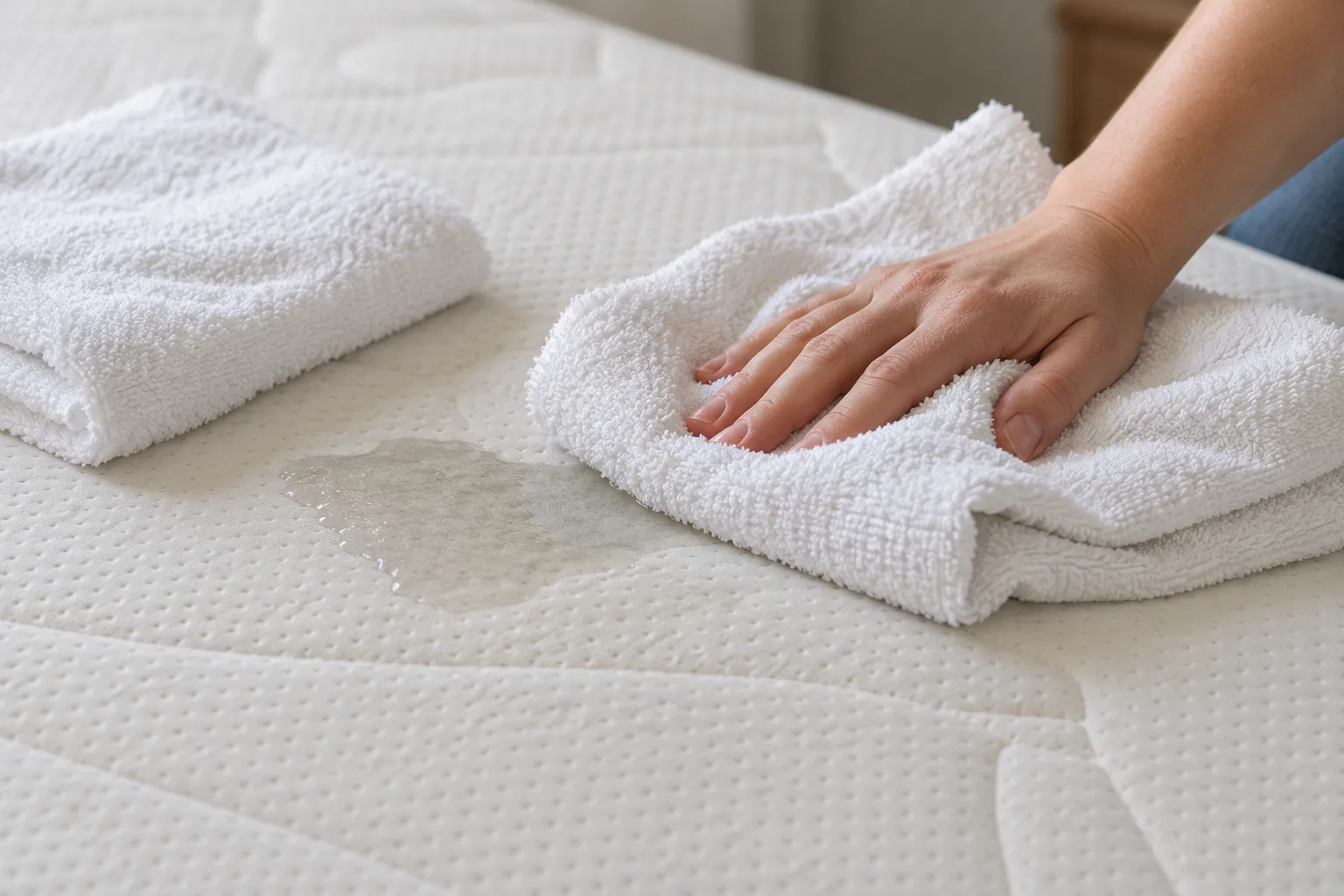
For a recent small spill of known clean water, place absorbent towels over the area and press gently. Replace them as they become damp. Avoid rubbing, which can spread the patch and abrade the cover. Do not add a bucket of cleaning solution to a mattress that is already wet. Extra liquid increases the amount that must be removed from its inner layers.
If the cover is removable, follow the manufacturer's instructions before taking it off. Some covers are not intended to be removed even when they have a zip; opening them may expose materials that should remain enclosed. Keep the mattress label and care instructions handy. A manufacturer may specify how to handle spills for a particular foam or spring construction.
For a small surface spill, dry towels and good airflow may be sufficient. Do not assume a household hairdryer on high heat is a shortcut: heat can affect some foams, adhesives and covers, while the air may dry only the surface. Keep the room ventilated and position a fan to move air across the mattress if it is safe to do so. Maintain enough space around the bed for air to circulate.
Check how far moisture travelled
Press a clean, dry towel firmly onto the top and then the underside. If it picks up moisture repeatedly, the mattress is still wet. Look at seams, tufting and handles, where liquid can gather. If the wet area is broad or the mattress feels heavy and cool in a way the dry side does not, moisture may have entered deeper layers.
Open the window where practical and allow ventilation, but protect the mattress from rain and outdoor dirt. Raising it safely from the base can expose the underside to airflow. A heavy mattress may need two people to move. Avoid bending or standing it upright if the manufacturer warns against this, and do not leave it where it can fall. Check the base, slats and floor as well; drying the mattress while a wet base remains underneath will not solve the problem.
Drying time depends on the volume of water, material, room humidity and airflow. A fixed promise of a few hours is unreliable. Wait until the cover and accessible inner areas no longer show dampness or odour before replacing bedding. If you cannot tell whether a thick mattress has dried internally after substantial wetting, ask the maker or an appropriate professional for advice. Do not use an odour spray to disguise uncertainty.
Treat contamination as a separate decision
If the liquid was sewage, floodwater or an unknown contaminant, a mattress can be difficult to make hygienic because porous layers hold moisture and contamination beyond reach. Keep it out of use while you seek guidance from the relevant cleanup or property professional; replacement may be necessary. The same caution applies when a long-standing leak has repeatedly wetted the mattress or visible mould is present. Surface wiping cannot establish what is inside the padding.
A small, recent bodily-fluid mark is a different case from extensive contamination, but it still needs a material-compatible cleaning approach. Follow the mattress maker's instructions and avoid saturating it. If the sleeper has a health concern or the liquid presents an infection risk, seek suitable professional health guidance rather than relying on a general cleaning article. A cleaner can discuss what treatment is feasible; a cleaning service cannot guarantee that deeply contaminated internal layers are safe merely because a surface stain fades.
Our complete mattress-cleaning guide addresses regular maintenance. For a serious wet incident, prioritise the source of water and the extent of penetration. This keeps a routine cleaning appointment from being mistaken for flood restoration or a hygiene clearance.
Consider the mattress type and age
Memory foam and other dense foams may hold water differently from a traditional sprung mattress. A thick topper can conceal a wet mattress below; remove it and check both surfaces. Pillow-top quilting and stitched channels can also retain moisture. Follow the specific manufacturer's advice for rotating, lifting and drying, because construction varies.
An older mattress that already smells musty, has a torn cover or shows old discolouration is harder to assess after a spill. Cleaning can remove some surface soil, but it does not restore damaged foam or worn support. If moisture has reached the core and you cannot dry it reliably, replacing the mattress may be a more practical choice than repeated wet treatments. Keep in mind that replacing only the mattress while leaving a damp bed base will expose the new one to the same problem.
If a leak caused the incident, fix and dry the surrounding building materials first. A domestic cleaning service may help clean accessible room surfaces after the source is resolved, while plumbing or building repair belongs with the relevant trade. If a rug or carpet also became wet, a carpet cleaning assessment can address that separate material and its drying needs.
When a professional mattress clean may help
For a limited spill on a sound mattress, mattress cleaning may be appropriate once the liquid source and depth are understood. Describe when it happened, what spilled, how much, what you have already applied and whether the underside is damp. That information helps a cleaner judge whether a treatment is suitable. Ask how they plan to manage moisture and when the mattress can realistically be used again.
Professional cleaning is not a substitute for replacing a mattress that has been heavily soaked with contaminated water, has persistent internal dampness or has deteriorated padding. Be wary of promises to remove every mark or sterilise an unknown core without examining it. The colour of a stain and the hygiene of the inside are different questions.
After the immediate problem is resolved, consider a washable protector that suits the mattress and sleeper. Follow its care label and check it after future spills; a protector reduces exposure but may not stop a large volume at seams or edges. Keep a simple response plan: remove bedding, identify the liquid, blot clean-water spills, inspect both sides and the base, then allow thorough drying or seek an assessment. Reuse should depend on what actually got wet, not just how the top looks in daylight.