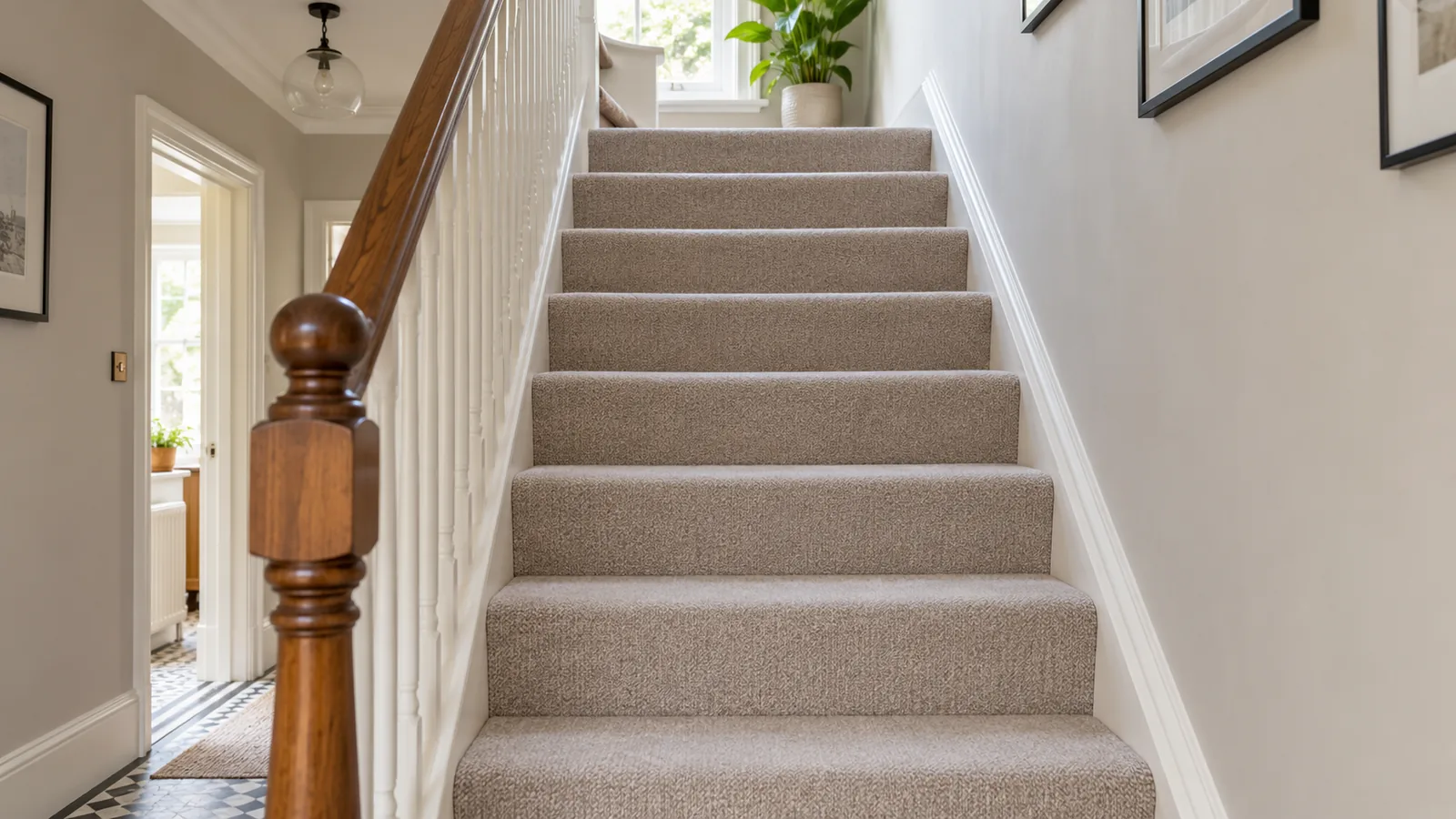
Carpeted stairs collect grit at the front of each tread, along the wall and where shoes turn at a landing. Those areas are harder to reach than a flat room, and they take more wear. A heavy machine or too much cleaning solution can leave dampness at the nosing and edges, while a rushed clean may miss the dirt that causes the visible dark lines.
A good stair-cleaning plan starts with safe access, dry soil removal and the carpet's fibre and construction. The aim is to improve the pile without making the stairs slippery, stretching the runner or trapping moisture where it is difficult to extract. The approach below works as a decision guide for routine care and for discussing a professional clean.
Inspect the stairs from top to bottom
Look for a fitted runner, fully carpeted treads or separate carpet pieces. Check for loose edges, lifting rods, frayed binding and worn nosings. Those are repair concerns. Cleaning equipment can catch an insecure edge, and wetting a damaged backing can make it worse. Photograph existing damage before moving anything.
Notice where the soil is concentrated. The middle of a tread may be flattened from traffic; the wall edge may hold dust; the front curve may look dark because fibres are worn, not merely dirty. A stain from a dropped drink is a separate problem from a general grey traffic lane. The distinction helps avoid treating the entire staircase with an unnecessarily strong product.
Read the carpet label if known, especially for wool, loop pile or a handmade runner. An older stair carpet may have a fragile backing even when the face looks sound. Ask the installer or manufacturer if you are unsure about permitted cleaning methods.
Remove dry grit before any wet treatment
Vacuum one tread at a time using a suitable attachment. Begin at the top and work down so loosened dust is not dropped onto cleaned steps. Pay attention to the junction of tread and riser, the wall edge and the nosing. A crevice tool helps with narrow edges; an upholstery tool may be gentler on a loop pile. Avoid dragging a spinning brush across loose binding.
Keep a firm handhold and do not balance a heavy vacuum on a narrow step. If the machine is too awkward, use a lighter hose attachment or ask for help. Cables should not cross the route people need to use. Never leave a vacuum, bottle or cloth where someone could trip.
Dry vacuuming often improves the look more than expected because stair grit is concentrated. It also prevents loose particles from turning into muddy residue when moisture is added. Regular attention protects fibres from abrasion. The guide to extending carpet life explains the role of grit in long-term wear.
Treat individual marks separately
Identify a spill before choosing a cleaner. Blot fresh liquid with a clean white cloth, working gently from the edge of the mark towards the centre. Lift solids with a blunt edge. Do not scrub across the step: friction can roughen the pile and create a pale patch visible from the landing.
Check the manufacturer's instructions and test a hidden section before using a product. Use minimal moisture. A stair tread is smaller than a room floor, so a little excess liquid can reach the nosing, backing and riser quickly. Do not pour cleaner onto the carpet or spray so heavily that it runs down the step.
If the mark is old, strongly coloured or on a delicate runner, a targeted stain removal assessment may be safer than repeated home attempts. Tell the cleaner what caused it and what has already been applied. An old dye or worn fibre may not return to the surrounding colour even after suitable treatment.
Why stair edges need controlled moisture
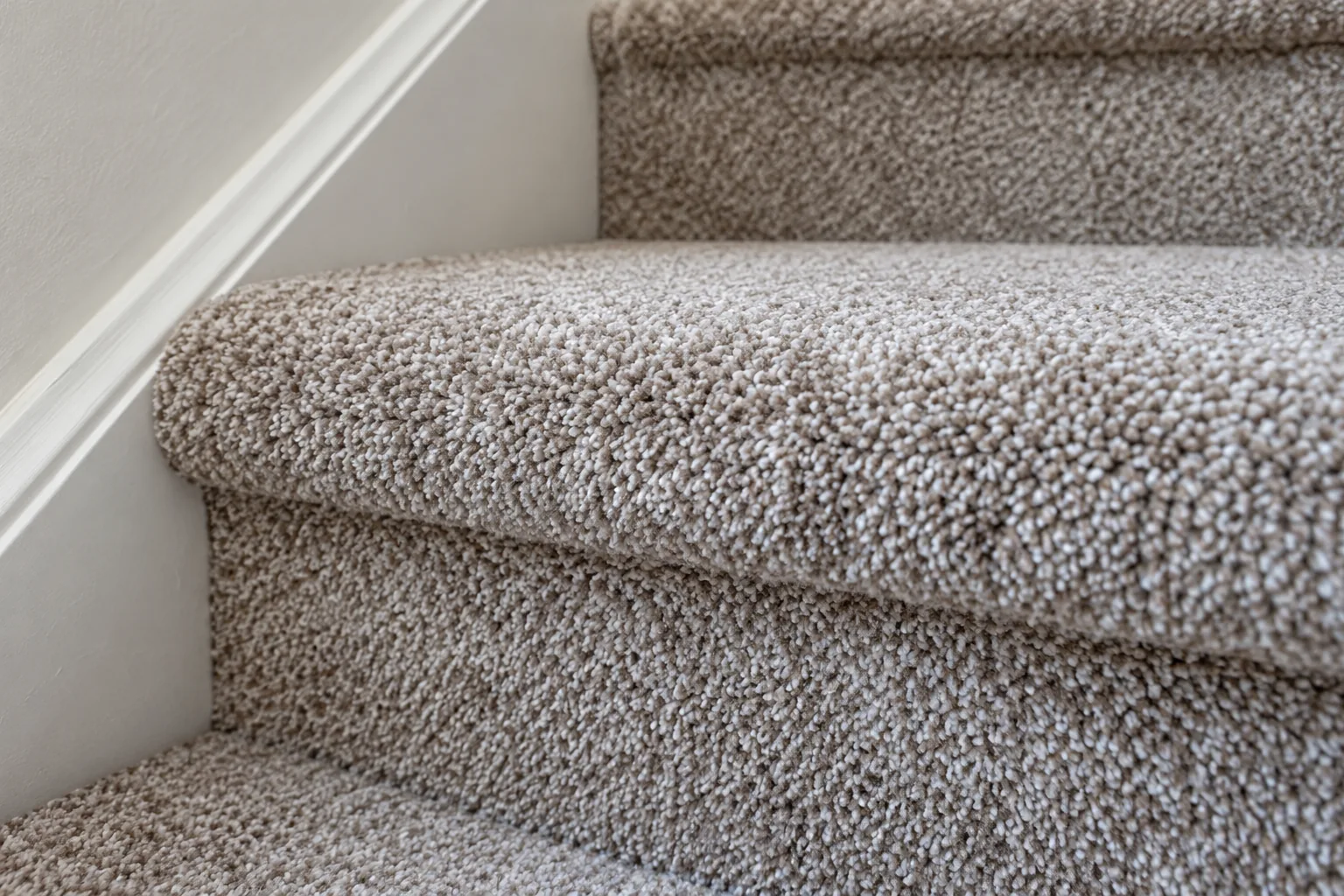
The carpet bends over a nosing and may be fixed with grippers, adhesive or rods. Moisture can settle in these layers. The edge by the skirting is difficult to extract fully, and a soaked runner can take longer to dry than a flat carpet with free airflow. Over-wetting can also create a tide mark as soil moves towards a drying boundary.
Professional equipment and technique should be adapted to the staircase. Ask how the cleaner will protect walls and timber, manage solution at the nosing and extract from the edges. The carpet cleaning service is relevant where a whole flight needs treatment, but the method should follow the runner's material and condition.
The article comparing professional and DIY carpet cleaning discusses why water recovery matters. A rental machine that is manageable on a flat floor may be awkward or unsafe on stairs. Do not carry a heavy filled machine up a staircase without a safe plan.
Manage access while the stairs dry
The staircase may be the only route to bedrooms or a bathroom, so plan cleaning for a period when foot traffic can be reduced. Ask the cleaner which steps will be treated first and how long they expect drying to take. A precise estimate depends on the carpet and room conditions; do not assume every tread will dry at the same rate.
Ventilate safely and keep normal airflow moving. Do not place a heater directly against the carpet or cover steps with plastic. Avoid walking on damp stairs in socks that may slip, and keep children and pets away until the route is safe. If access is essential, discuss a phased clean or another safe arrangement beforehand.
Check the nosing, wall edge and landing as well as the centre of each tread before returning to normal use. A clean dry cloth pressed lightly at an edge can show whether moisture remains. The wider guide to carpet drying after extraction explains why the slowest area should decide when rugs or furniture return; the same principle applies to stairs.
Know when the issue is wear or repair
A dark traffic lane may improve when soil is removed, but flattened or broken fibres remain altered. Loose binding, ripples, exposed gripper or a detached runner should be repaired before cleaning. No cleaning product can secure a carpet edge safely. If the underlay is compressed, the tread may continue to look uneven after the pile is cleaned.
Do not cut stray loops or pull threads to make a runner look neat. A repairer may be able to address a local fault before a clean. If a water leak has affected stairs, treat it as a moisture and building issue, not a routine cleaning appointment. The backing and timber underneath may need assessment.
A maintainable stair routine
Vacuum high-traffic steps more often than spare bedrooms, using a safe position and appropriate attachment. Keep an entrance mat clean to reduce grit brought in on shoes. Respond promptly to spills, but use only a method suited to the fibre. Check runner edges during routine cleaning so a loose section is noticed before someone catches a foot on it.
For a full staircase, Go Cleaners London can discuss carpet cleaning with attention to nosings, edges, material and drying access. Share photographs of any wear or loose binding in advance. A careful plan should leave the stairs cleaner and safe to use, without pretending that permanent wear is a removable stain.