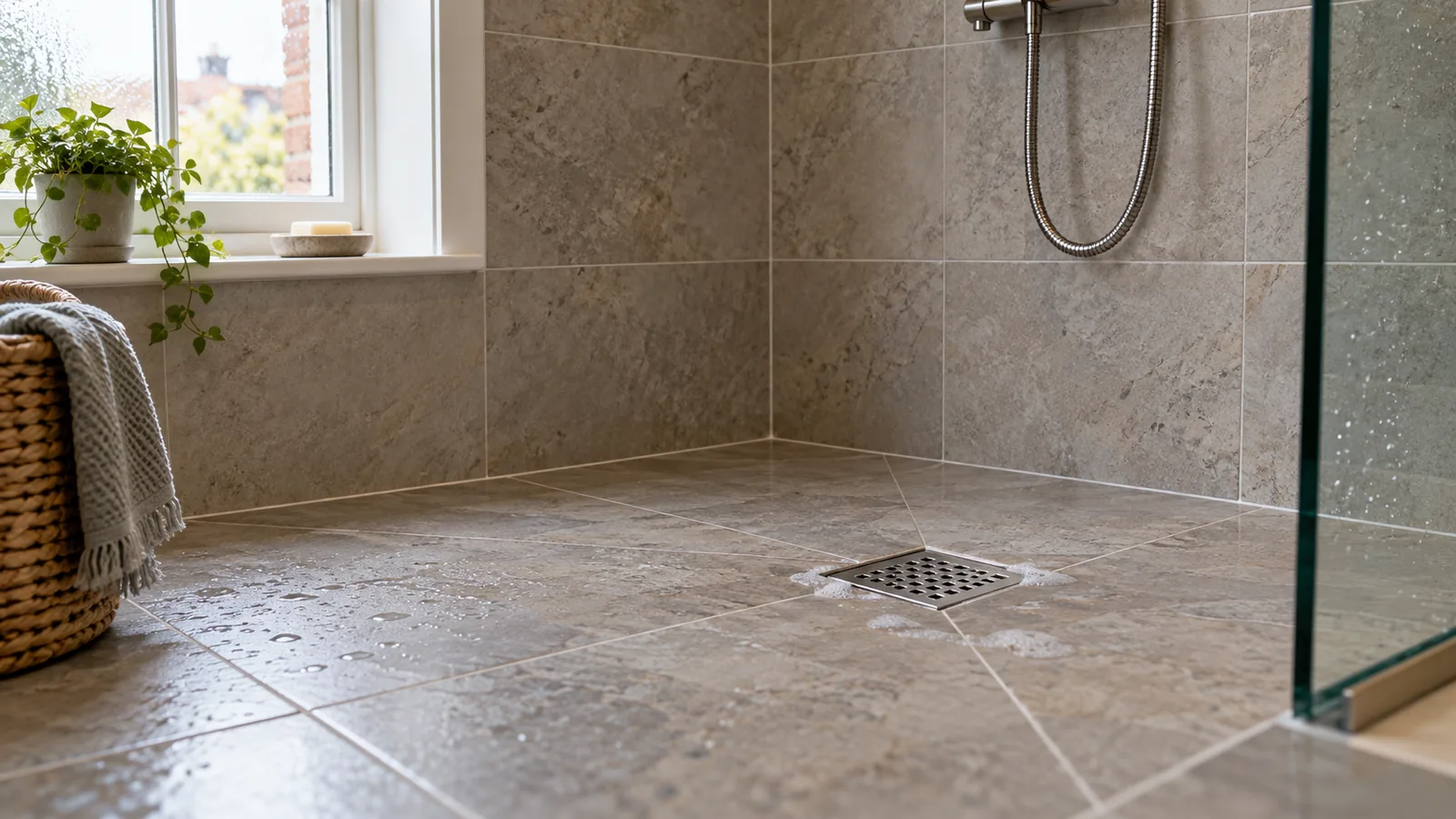
A wet-room floor drain receives water from a broad area rather than a raised shower tray. Hair, soap residue and small particles can collect under its visible cover. If water pools around the grille or a smell appears between showers, the first sensible step is to check the parts the drain maker says users may remove. The hidden pipework and waterproof floor construction are a different matter.
Drain designs vary. A square metal cover might lift to reveal a basket, a removable trap insert or only a sealed assembly. Pulling out the wrong part can break a water seal or disturb waterproofing. Identify the model or ask the installer before disassembling it. This guide covers an accessible cleaning routine and signs that call for a plumber or wet-room specialist.
Observe the drain before opening it
Run the shower briefly and watch where water gathers. Does it flow towards the drain evenly, or pool in a corner away from it? Slow drainage directly at the grille may indicate a local obstruction. Water collecting elsewhere may reflect the floor's slope or a screen leak, not a dirty basket. Photograph the pattern if it is new or worsening.
Look for hair across the cover, soap film and loose grout particles. Check the surrounding tile and silicone for cracked joints or movement. Do not press a tool into a loose tile to reach the drain; the waterproof layer below matters more than a small visible speck. If water is escaping into the room or the ceiling below, stop using the shower and arrange urgent repair advice.
The broader article on preventing clogged drains covers other fixtures. A wet-room floor drain adds the need to preserve the floor seal and any removable odour trap.
Lift only user-removable parts
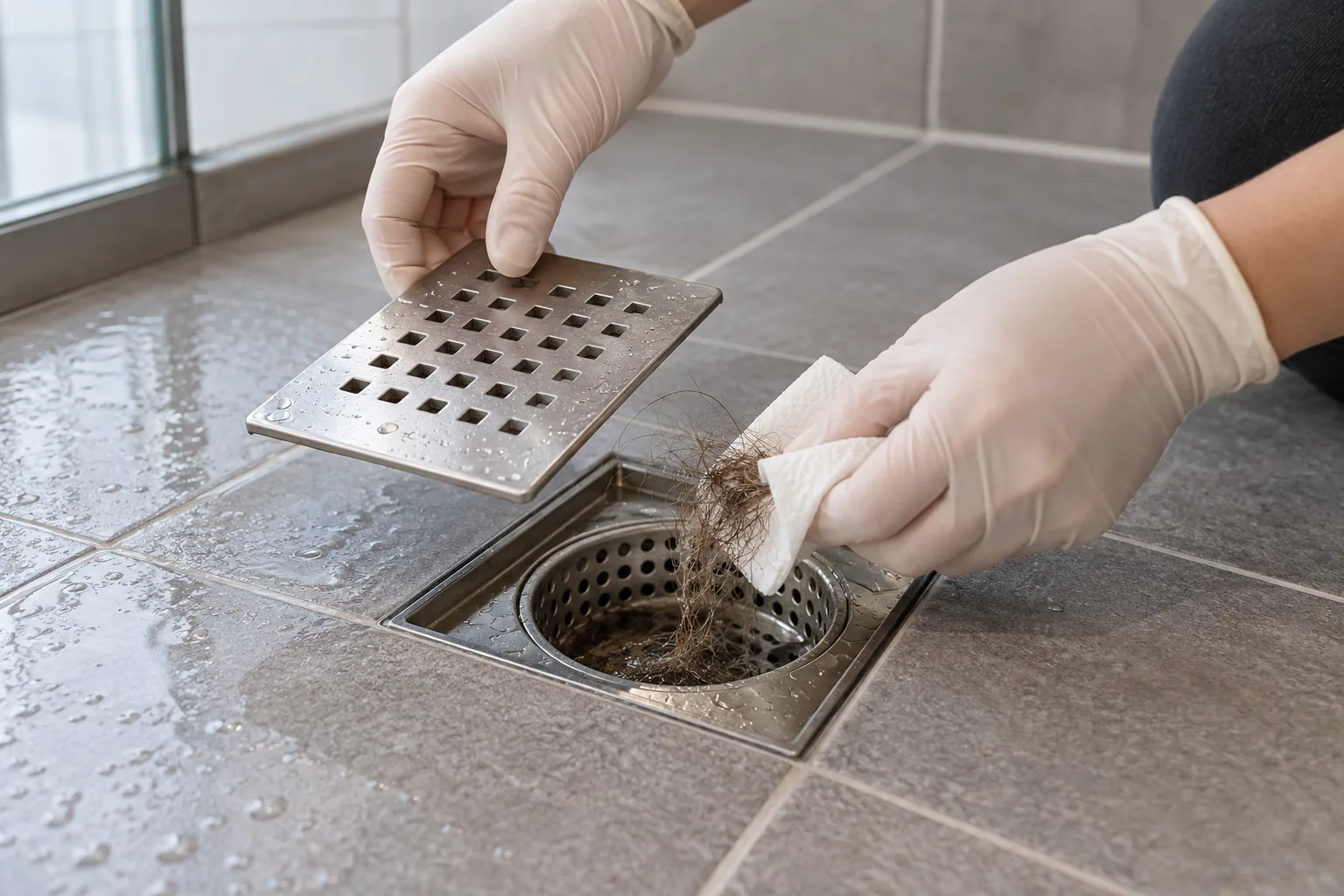
Follow the manufacturer's instructions for removing the cover. Some grilles lift with a supplied hook; others have a screw or clip. Wear suitable gloves and work carefully, as metal edges can be sharp. Place the cover on a towel, not directly on a delicate worktop. Keep fasteners in a small container and photograph each layer before removing it.
Take out an accessible hair basket or strainer if the design permits. Lift hair and debris with kitchen paper and put it in the appropriate waste. Do not push it into the pipe. A small soft brush can reach the mesh without scratching or bending it. If you see a removable water-trap insert, note its position and remove it only if the maker says users should clean it.
Avoid inserting a wire hanger, sharp hook or chemical drain cleaner into an unknown assembly. These may damage plastic parts, gaskets or waterproof connections. If a solid object is lodged beyond easy reach, ask a plumber rather than dismantling a sealed floor fitting. The goal is to remove accessible debris, not to explore the whole drainage system.
Wash and refit the accessible pieces
Rinse a removable basket and cover with a mild compatible cleaner and warm water, following the maker's care guidance. Brush away soap film and rinse thoroughly. Check for cracks, missing seals or corrosion. A damaged removable insert may need a correct replacement; it can affect how the drain traps debris or odours.
Wipe the accessible drain rim and surrounding tile with a method suitable for both materials. Do not flood a loose joint or use a strong acid across metal and grout indiscriminately. Rinse cleaning residue and dry the floor. Refit the trap insert, basket and cover in the order recorded. The cover should sit flat without rocking. Do not leave a part out to improve flow; the missing piece may serve a water-seal or safety function.
Run a small amount of water to test drainage and check for leaks or an unusual smell. If the drain has a water trap, water may need to remain in it to block sewer odours. Follow the design instructions. A dry trap after long periods without use can smell even when the grate is clean, but a smell that persists with the trap correctly filled needs investigation.
Understand odours and slow flow
Soap and hair held near the surface can produce an unpleasant smell. Cleaning those parts may solve it. A deeper blockage, damaged trap, poor venting or a leak can also cause odour. Do not mask a recurring smell with a strong fragrance; note when it appears and whether it changes after water runs. If several fixtures drain slowly together, the issue may be further along the plumbing.
Standing water around the grille after a normal shower may indicate a partially blocked basket or a slope problem. Clean the accessible parts first. If the floor still pools when the drain is clear, contact the installer or a wet-room specialist. Chemical drain openers may not fix the gradient and can be incompatible with drain components.
The article on often-missed bathroom deep-cleaning areas includes fixtures that are easy to overlook. A wet-room drain deserves a separate check because a hidden basket can fill while the exposed tile appears clean.
Protect the waterproof floor
Wet rooms rely on a continuous waterproofing system beneath the visible tile or surface. Cleaning should not chip grout, pry up a drain frame or loosen silicone around it. If the cover sticks, look up the model instead of levering against the tile with a screwdriver. A damaged joint can let water travel out of sight.
Use a soft tool on the grate and tile, particularly if the floor has a slip-resistant finish that catches lint. Rinse product residue fully so the floor does not become slippery. Drying the shower area after use reduces standing moisture, but do not block the drain with a mat or bottle. Keep hair catchers clean if the design permits an additional one.
If the property is rented, report a loose frame, recurring leak or persistent drainage issue to the landlord or manager. Provide photos and observations rather than attempting a repair to the waterproof layer. A cleaning visit can maintain accessible surfaces, but it cannot certify the floor's waterproofing.
Set a practical maintenance interval
The right interval depends on how many people use the shower and how much hair the basket catches. Look at the grille during routine bathroom cleaning and remove visible hair promptly. Inspect the removable basket more often if water has begun to slow. Record the model and the order of parts so that anyone else in the household can refit it correctly.
A bathroom deep cleaning visit can include accessible drain and floor surfaces where the design permits, alongside tile and screen care. Domestic cleaning can support regular wiping, while limescale treatment may address compatible mineral deposits elsewhere in the room. Tell the provider about any slow flow, loose cover or waterproofing concern before work begins.
The useful boundary is simple: lift and wash parts the maker identifies as user-removable, remove hair rather than pushing it down and refit the water-trap components exactly. If water still pools or odour returns after that, seek plumbing or wet-room advice. Cleanliness matters, but preserving the drain's seal and the floor below it matters more.