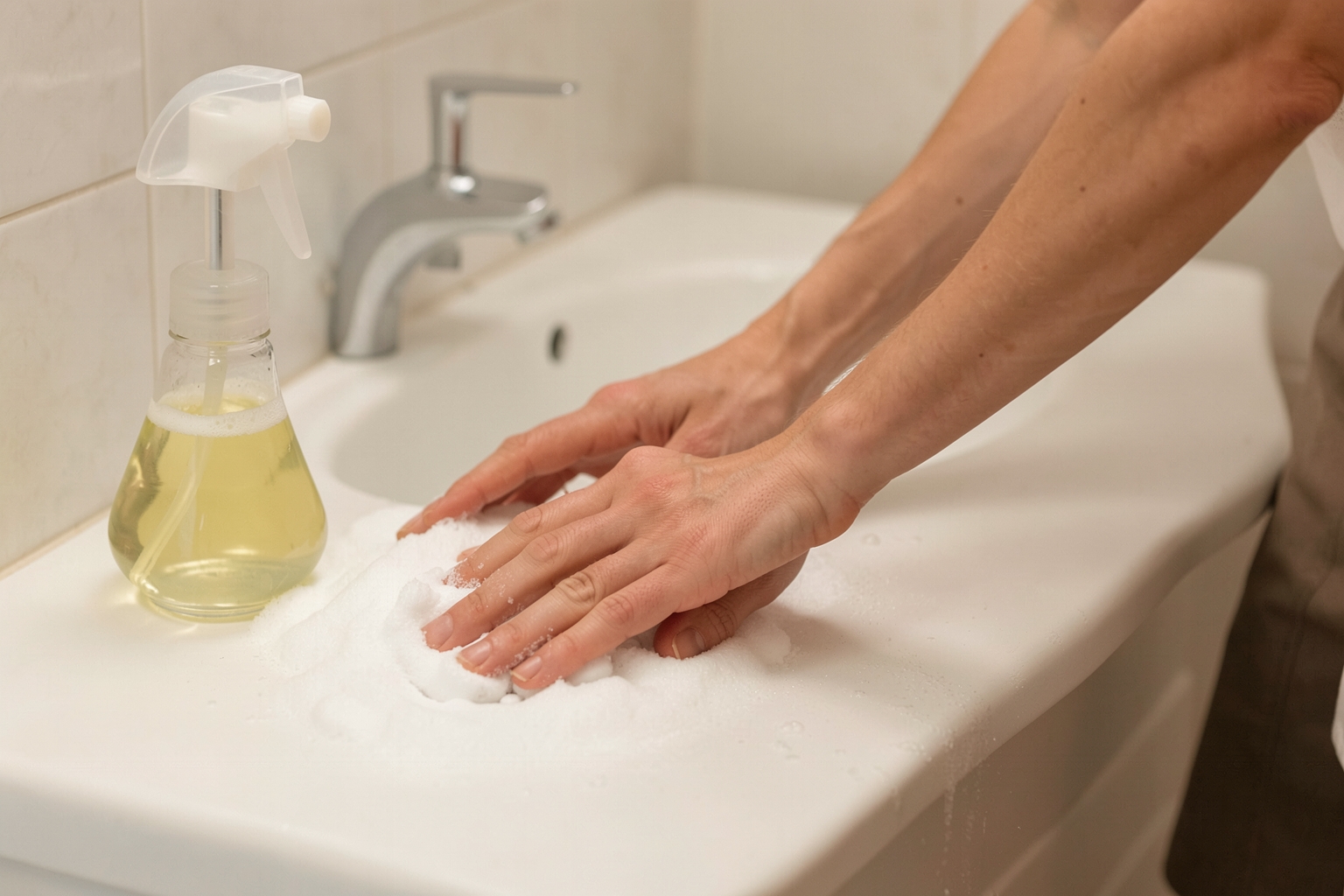
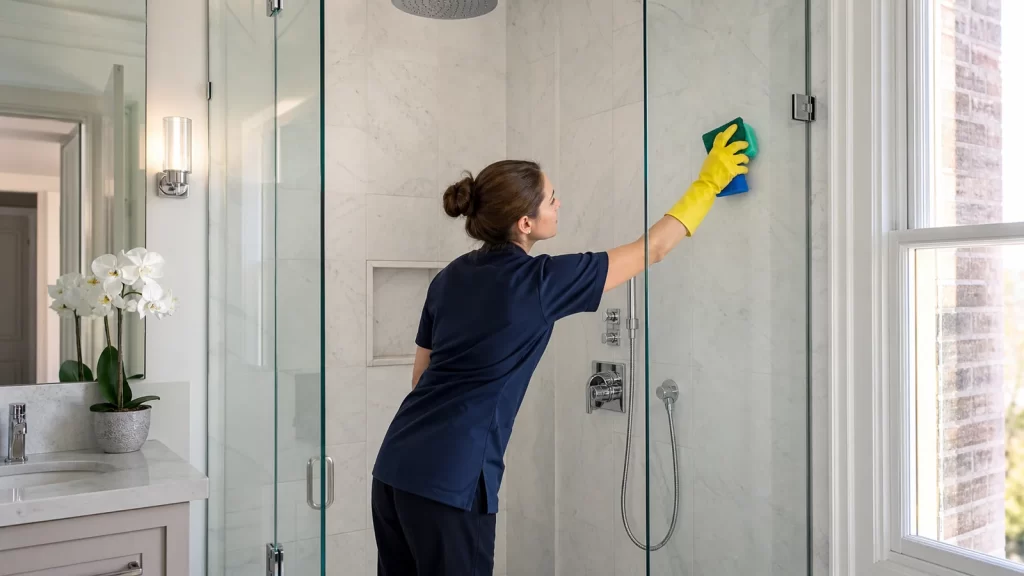
A quick bathroom wipe usually covers the basin and mirror. A deeper clean reaches the tap bases, shower fittings, cupboard edges and floor corners that are easy to overlook. The best approach is to work methodically and choose products for each material, rather than using one strong cleaner across the whole room.
Make space and check surface finishes
Remove bottles, bath mats and items from shelves. Launder washable textiles according to their labels, and check cleaning instructions for taps, tiles, shower screens and stone surfaces. Put on the protective equipment recommended on product labels and keep the room ventilated. Never mix bleach with descalers, vinegar, toilet cleaners or other products.
Remove dust before wet cleaning
Dust accessible shelves, ledges and the top of the door frame. Wipe the exterior of an extractor cover only as directed by its manufacturer; keep water away from electrical parts and do not dismantle equipment unless qualified to do so. Clearing dry debris first helps prevent it becoming a muddy film when you begin wiping surfaces.
Work around taps and shower fittings
Soap residue can build up around handles, spouts and the base of a mixer tap. Use a soft cloth or non-scratching brush with a compatible cleaner, following the stated contact time. Rinse where required and dry the finish. For limescale, choose a treatment approved for the surface. Acidic products can damage marble, limestone and some plated fittings, so avoid assuming a homemade acidic solution is universally suitable.
Give shower screens and seals separate attention
Wash the screen with a suitable product and a non-abrasive tool. Clean tracks and accessible edges gently, removing loose hair and debris without forcing it into drainage channels. Check silicone for splits or persistent staining. Cleaning cannot repair failed seals or leaks: report these to the person responsible for maintenance. If mould is extensive or repeatedly returns, address the moisture source and seek appropriate specialist advice rather than repeatedly covering the problem with stronger chemicals.
Use separate cloths for the toilet
Keep toilet-cleaning tools separate from those used on basins, taps and shelves. Follow the toilet cleaner’s label and clean the exterior, seat, hinges and surrounding floor with suitable products. Avoid splashing other surfaces. Finish by washing reusable cloths appropriately and cleaning your hands.
Finish the floor and restore the room
Remove loose dirt before mopping, paying attention to corners and the space behind the door. Use minimal moisture where the flooring requires it and allow the room to dry. Replace only clean, dry items. Between deeper cleans, remove shower water with a squeegee where suitable and use the room’s ventilation system as intended. For help with a bathroom reset alongside the rest of your home, ask Go Cleaners London for a quote and specify the surfaces and areas that need attention.