
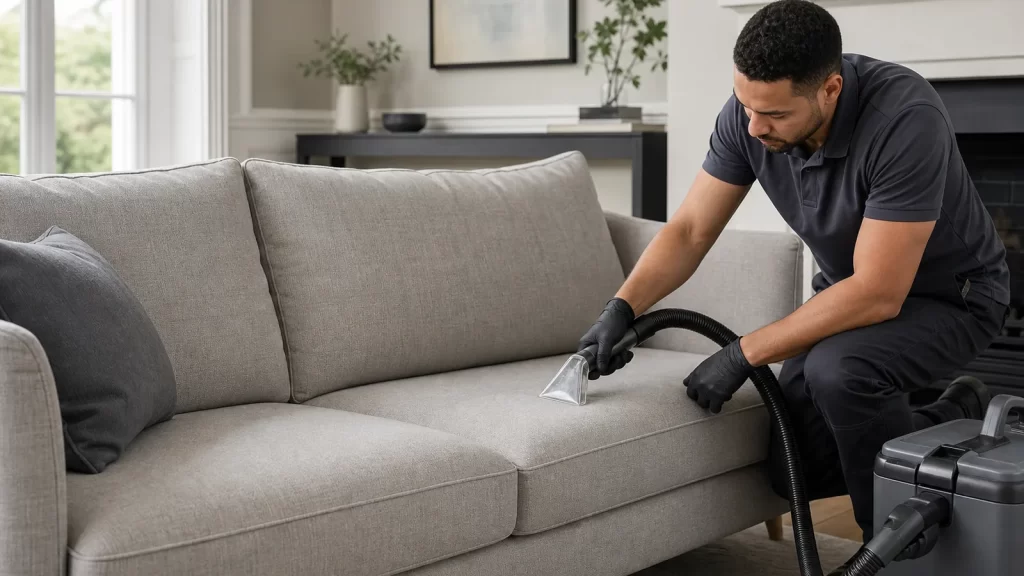
A fabric sofa collects crumbs, dust and everyday marks long before it looks obviously dirty. Regular, gentle care can keep it looking presentable between deeper cleans. The key is to identify what the upholstery can tolerate and avoid soaking the fabric in an attempt to remove a small stain.
Read the care instructions first
Look for the manufacturer’s label under the cushions or frame and check the original care guide if available. Removable covers are not automatically machine washable. Some fabrics require specialist treatment, and different components of the same sofa may have different instructions. If the guidance is missing or unclear, ask the manufacturer or an upholstery specialist before applying water or chemicals.
Vacuum before treating marks
Remove cushions only where the design allows and use the upholstery attachment at a suitable suction level. Work across the seat, back and arms, then into accessible seams and crevices. Avoid snagging decorative trim or loose threads. Vacuum both sides of removable cushions and the platform beneath them. This first step prevents loose dirt being rubbed into the weave during spot cleaning.
Deal with a fresh spill gently
Lift solid material carefully with a blunt utensil, then blot liquid with a clean, absorbent white cloth. Work from the outside of the affected area towards the centre and avoid scrubbing. Do not pour cleaner directly onto the sofa. If the care instructions allow a particular product, test it in a hidden place and let the test area dry completely before deciding whether to continue. Check for colour change, texture change and water marks.
Use the smallest suitable treatment
Follow the approved cleaner’s directions and apply only the amount required. Repeated wetting can spread a mark or leave the filling damp. Stop if dye transfers to your cloth or the fabric changes appearance. Avoid improvised combinations of household chemicals and do not assume steam is suitable for every material. Leather, velvet and delicate natural fibres need their own care methods.
Allow the sofa to dry fully
Keep the room ventilated as conditions allow, follow any drying guidance and leave cushions positioned as instructed by the manufacturer. Do not use the sofa while it is damp or place wet cushions against walls. Avoid direct heat from a hairdryer or heater, which can affect some fabrics and fillings. A lingering damp smell is a reason to stop further wet cleaning and get advice.
Know when to book professional care
Large marks, unknown stains and heavily soiled seating are better assessed before further home treatment. Tell the cleaner the fabric type, the age of the stain and every product already applied. Ask what method is appropriate, what drying time to plan for and which outcomes are uncertain. Explore Go Cleaners London’s cleaning services to arrange an assessment or quote. Between appointments, vacuum regularly and rotate cushions where the sofa’s design permits.