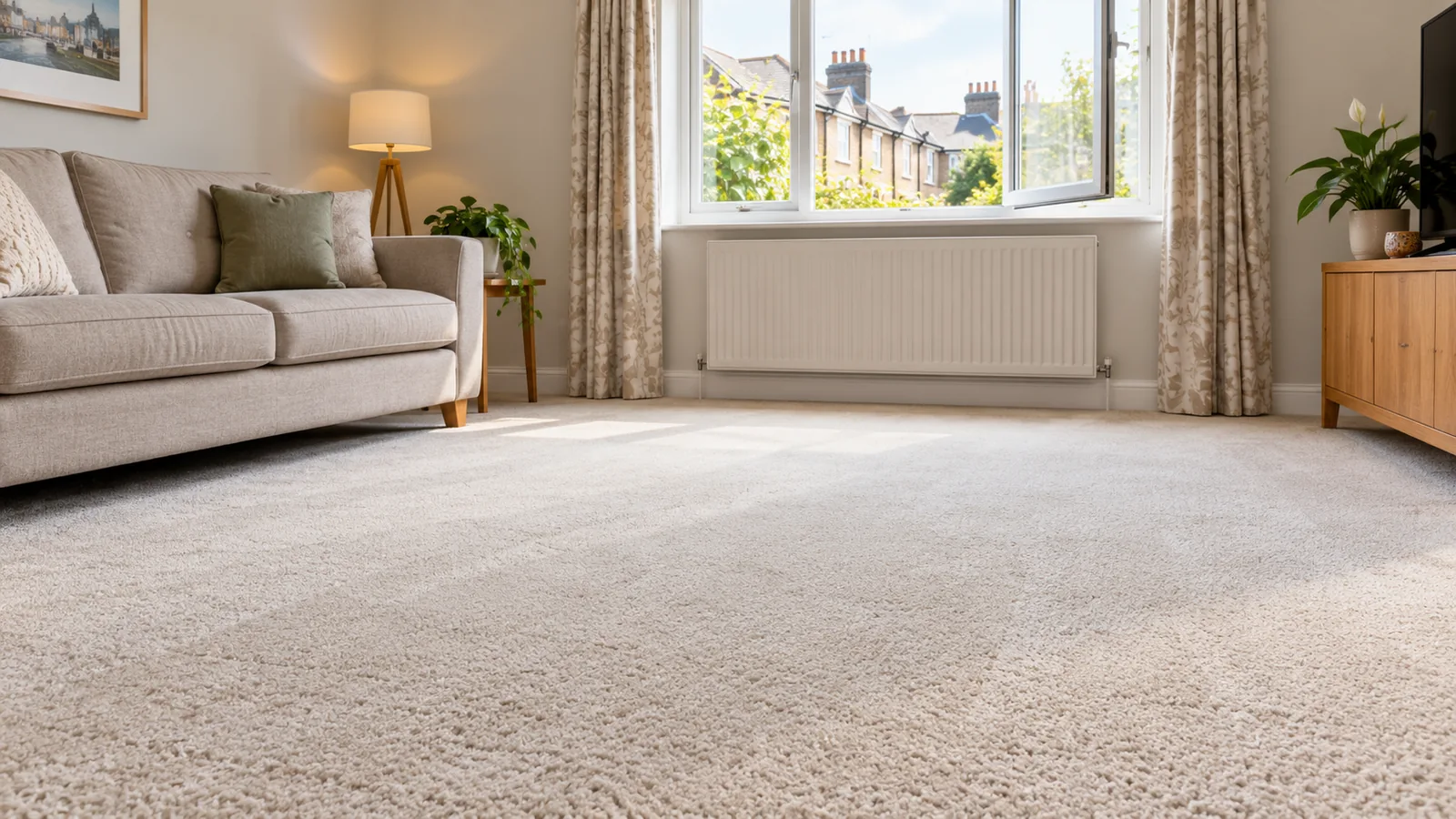
Hot water extraction can remove soil held in carpet pile, but the job is not finished when the equipment is packed away. The carpet needs time and suitable airflow to dry. A room can look ready while the pile is still damp near skirting, under furniture or in a thick underlay. Walking on it too soon can track soil back in, and covering it can trap moisture.
There is no reliable drying hour that fits every home. Fibre, pile depth, underlay, the amount of water used, room temperature, humidity and ventilation all influence the result. Use the cleaner's instructions for the carpet in front of you, then check the slowest-drying areas before returning the room to normal use.
What extraction leaves behind
The machine applies cleaning solution and draws it back out with loosened soil. A sound technique aims to recover as much liquid as practical. Even so, some moisture remains in the pile while it evaporates. Heavier soil, repeated stain treatment or a thick carpet can increase the drying period. If a spill had already soaked the underlay, a routine carpet clean may not address the deeper moisture.
Ask the cleaner which rooms received extra treatment, whether the underlay was known to be damp and which areas need particular care. The guide to hot water extraction in the cleaning industry explains the method itself. A discussion of drying should be specific to the carpet and room, not just the machine used.
Wool and synthetic carpets do not behave identically. Some fibres hold moisture within the fibre; others allow water to sit in the pile or backing. A dense rug on top of carpet, or furniture placed closely together, blocks airflow. The professional carpet cleaning service should identify material and condition before choosing a process.
Prepare the room before the clean
Move small items and loose rugs out of the way. Discuss heavy furniture with the cleaner rather than moving it alone. Make a clear route so nobody needs to cross damp carpet repeatedly. If possible, plan an alternative room for children and pets while the carpet dries. Keep electrical leads and portable fans away from wet floor areas.
Open curtains and arrange safe ventilation. In a small London flat, an open window may not be appropriate in heavy rain or where it creates a security problem. Decide how the room will get fresh air before the cleaning starts. If a dehumidifier is available, check that it can be used safely and emptied as instructed.
The cleaner may place temporary protective tabs under furniture feet. Ask when to remove them. Returning a metal or stained wooden leg directly onto damp carpet can leave a mark. Do not place a large plastic sheet over the carpet: it prevents moisture escaping and can delay drying.
Improve airflow without overheating the carpet
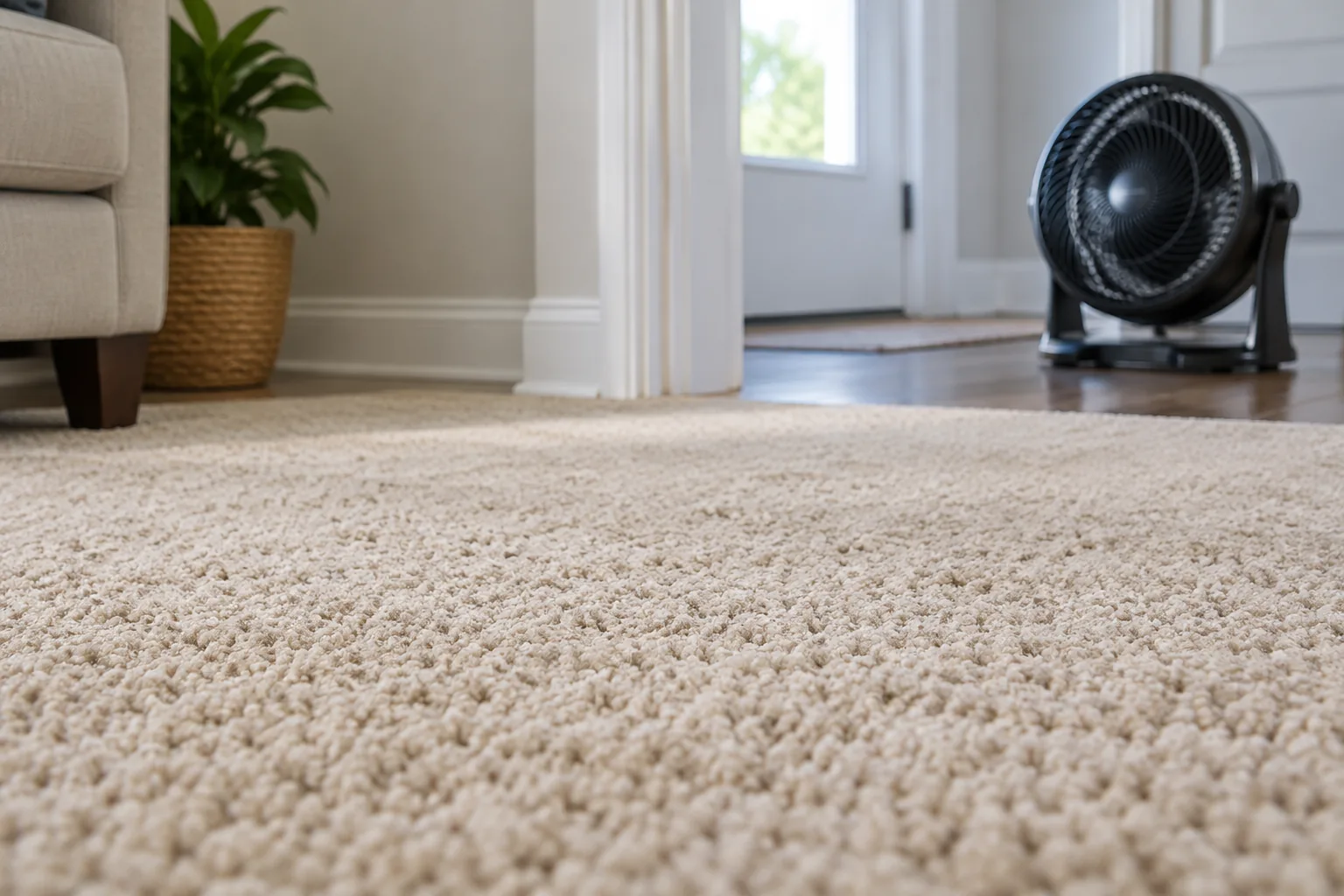
Gentle air movement across the room helps moisture evaporate. An ordinary room fan may assist if positioned safely away from damp patches and cables. Keep doors open where appropriate so air can circulate, and use a dehumidifier if room humidity is high. Follow the appliance instructions. If the outside air is very humid, opening every window may be less helpful than controlled indoor ventilation.
Avoid pointing a heater directly at one section of carpet. High heat can affect backing, adhesives, fibres or nearby flooring, and it may dry the top while deeper layers remain damp. Do not use an ordinary household vacuum on wet carpet. Most are intended for dry debris and can be unsafe with liquid. If water has pooled, contact the cleaner or use equipment specifically designed for liquid extraction and suitable for the carpet.
Check that the carpet has not been pushed against a wall or skirting by cleaning equipment. Damp edges need air as much as the centre. If a room has an existing damp problem, a clean cannot resolve its source. Look for leaks or condensation if the same area repeatedly feels wet.
How to decide when it is dry enough
Test more than one spot with a clean hand or cloth. Check the centre of the room, shaded corners, doorway, edges and any heavily treated stain. A carpet can feel cool without being damp, so compare it with an untouched area of the same fibre if available. Press a dry white cloth gently into the pile and inspect it for moisture or colour transfer.
Do not walk on the carpet in outdoor shoes while checking. Clean socks or indoor footwear reduce soil transfer, though the best option is to wait until the cleaner's recommended period has passed. Before replacing rugs or heavy furniture, be confident that the pile and backing are dry. Ask for advice if the carpet feels dry on top but still has a damp smell.
If a mark reappears during drying, do not automatically treat it again. This may be residue from an old spill wicking towards the surface, or soil moving from deeper layers. Photograph it and tell the cleaner what was there before the clean. Repeated spot treatment can enlarge the affected area. The article on professional versus DIY carpet cleaning discusses why equipment and technique affect both cleaning and moisture recovery.
Warning signs that need attention
Call the cleaner if a carpet remains substantially damp beyond the expected window, if water appears when the pile is pressed, or if a new strong odour develops. Colour bleeding, rippling or a tide mark also deserve prompt assessment. Do not hide a damp patch under a rug or furniture to make the room look finished.
A routine clean is not a substitute for water-damage work. If water from a leak, flood or unknown source has entered the underlay, the issue involves the floor beneath as well as the visible pile. The water source may carry contamination. Seek appropriate specialist advice rather than assuming a standard carpet clean will make the structure safe and dry.
Check adjoining surfaces too. Timber flooring at a doorway, skirting boards or furniture feet may be affected by persistent moisture. If you find a leak, address it before cleaning again. A dehumidifier can assist normal drying but cannot repair the cause of recurring wetness.
After the carpet is dry
Vacuum when the carpet is completely dry and the cleaner says it is appropriate. This can lift the pile and remove any loose debris. Return furniture carefully, using suitable protectors where recommended. If an area rug is placed on top, make sure both its underside and the carpet are dry first.
Resume routine maintenance to preserve the result. Vacuuming high-traffic areas regularly and using clean entrance mats limits grit that abrades fibres. Tackle new spills promptly with a method suited to the carpet, rather than applying a general stain product without checking the material. The guide to extending carpet life explains why daily wear matters alongside periodic cleaning.
Plan for a usable room
Arrange cleaning for a time when the room can be left clear, and ask for a drying estimate based on the carpet and method. Keep air moving safely, avoid direct heat and check slow areas before replacing rugs or furniture. If dampness, odour or a returning stain worries you, contact the cleaner promptly. Go Cleaners London can discuss carpet cleaning or a stain removal assessment with realistic expectations for the material and its condition.