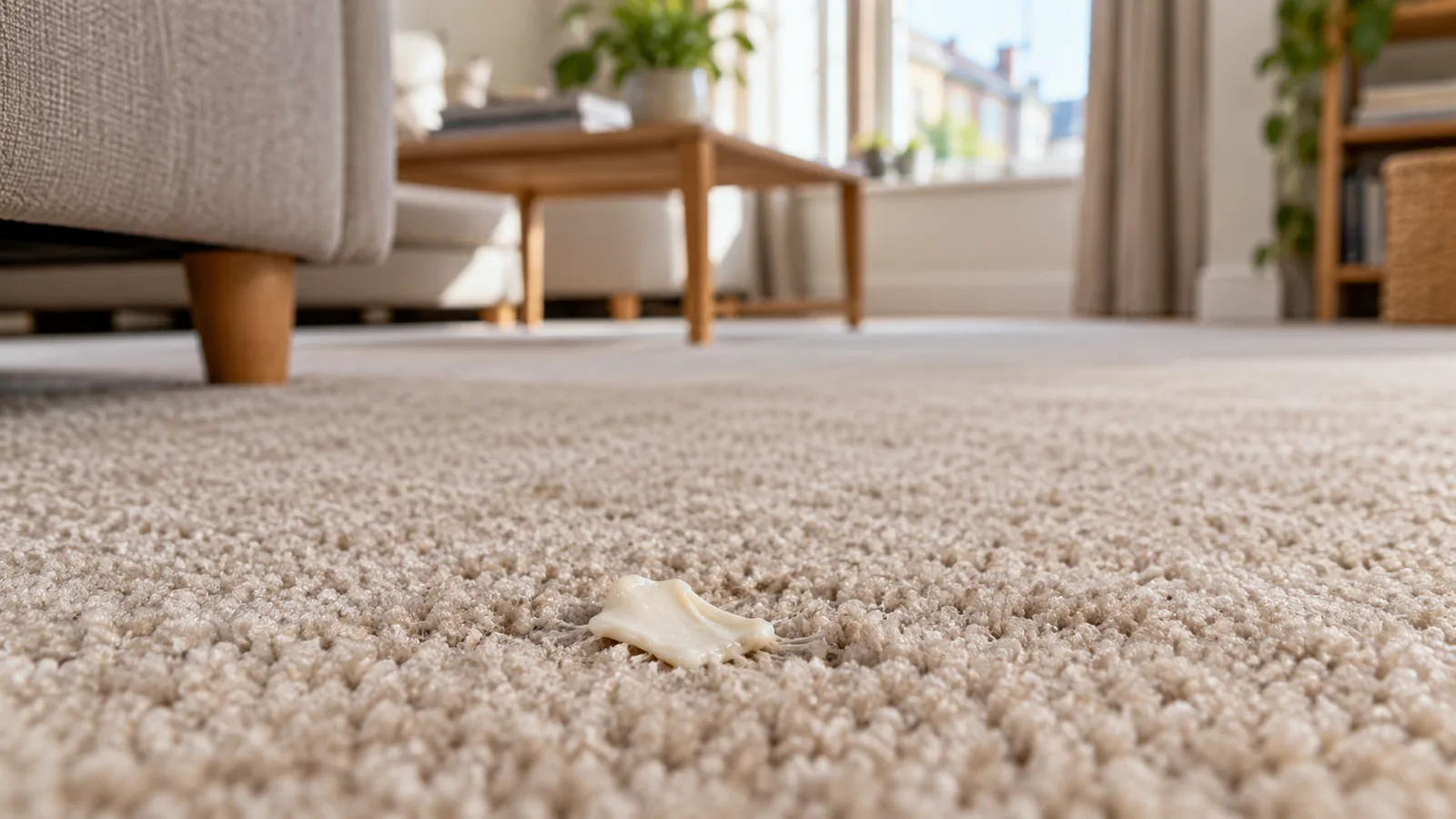
Chewing gum becomes awkward on carpet because it bends around individual fibres. Pulling it while soft can stretch it into a larger sticky patch; scraping too hard can damage the pile. A small piece that has not been trodden in is usually easier to manage than gum flattened by shoes, furniture or a vacuum head.
Start by keeping people away from the spot and checking the carpet type. The aim is to make the gum less tacky, lift as much solid material as possible and then assess any residue. Avoid a strong solvent or hot iron as a first move. Both can create a problem that is harder to reverse than the gum itself.
Assess the carpet and the gum
Look at the pile construction. Cut pile has separate yarn ends; loop pile has continuous loops that can be pulled by a sticky mass. Wool, synthetic blends and delicate rugs also have different tolerances for moisture, heat and cleaning products. Read any care label or manufacturer advice before applying a product.
Check whether the gum is fresh and raised, or flattened deep into the pile. Note any colour transfer from the gum or dirt already embedded around it. Photograph the patch before treatment. This helps you judge whether the spot is improving or whether the carpet fibres themselves are being altered.
If the carpet is valuable, very old, loosely woven or already damaged, skip home experiments and ask a specialist. A small gum mark is not worth a pulled loop or a melted patch. The general carpet stain removal guide offers wider principles, but this sticky residue needs a more focused sequence.
Protect the area from more pressure
Do not walk on the gum or put furniture over it. If the patch is near a doorway, route foot traffic around it until it is treated. Keep children and pets away from any small pieces you lift. Gum can transfer onto shoe soles, rugs and upholstery, creating several marks from one.
Do not run the main vacuum head over soft gum. Rotating brushes can push it into the pile and contaminate the machine. Remove loose crumbs around the patch with a suitable attachment without touching the gum itself. If the gum has already been vacuumed, check the brush and hose before using the machine elsewhere.
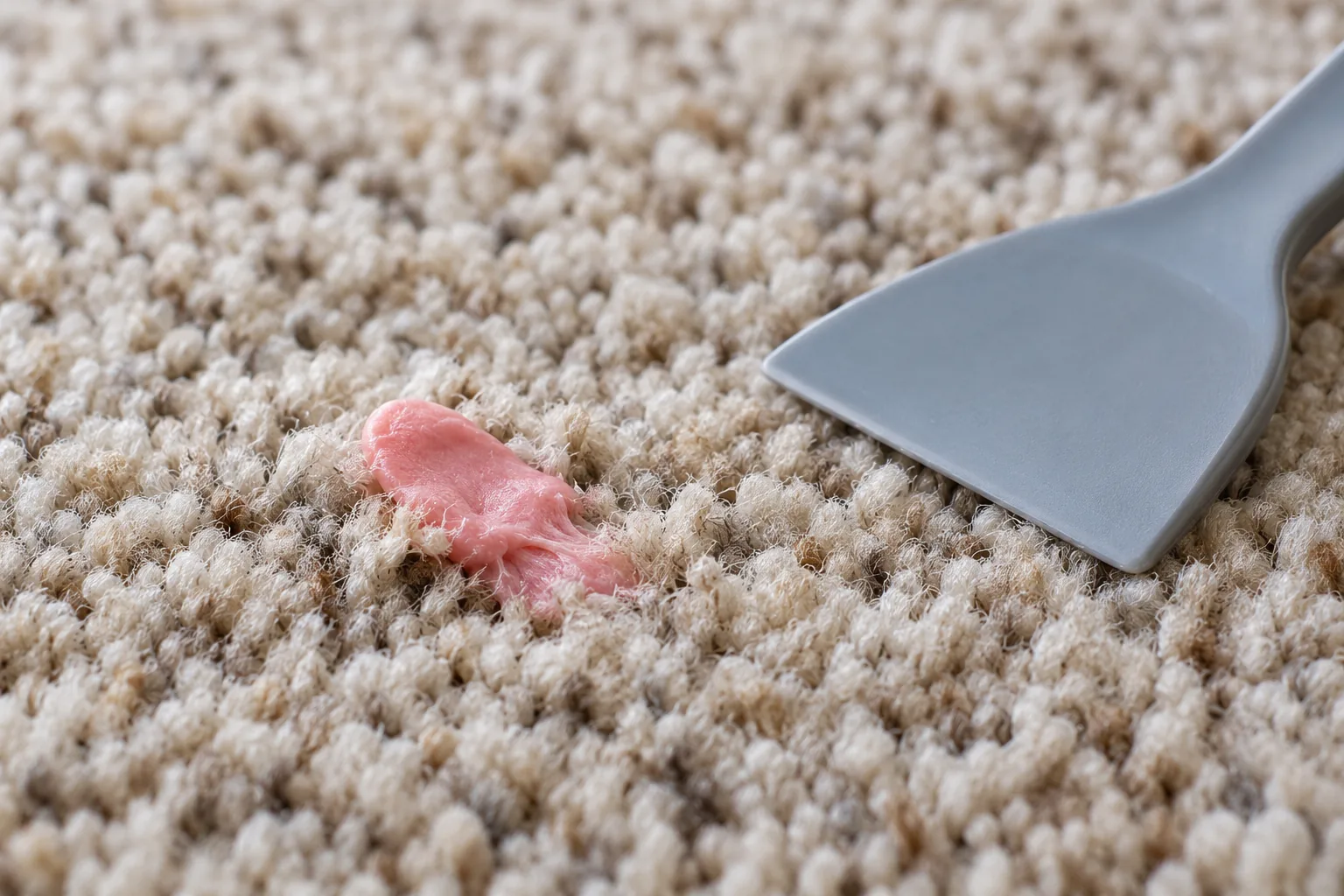
Have a clean white cloth, a blunt plastic edge and a small bag ready for lifted pieces. Avoid knives, scissors or metal scrapers close to the backing. Cutting out the gum may leave a bald area that is more visible than the original spot.
Cool and lift what you can
Cooling can make gum less stretchy. Use a sealed cold pack wrapped in a clean dry cloth so condensation does not soak the carpet. Hold it over the gum for a short period, then test whether the gum lifts with a blunt edge. Do not place loose ice directly on a moisture-sensitive carpet. If the material starts to soften again, pause and cool it once more rather than pulling harder.
Work from the outside of the gum towards the centre. Lift a small piece at a time and collect it. Keep the tool nearly flat to the carpet, protecting the yarns. If fibres are pulling up with the gum, stop. A little residue left in place is easier to address than a damaged loop or frayed pile.
The method may do little for gum pressed to the base of a dense carpet. Repeating forceful scraping will not improve that. At that point, a controlled professional treatment may be more effective. The material and gum age should guide the decision, not the desire to finish the job in one attempt.
Treat remaining tackiness cautiously
After the solid pieces are removed, touch the area lightly with a clean fingertip. A tacky feel means residue remains; a rough feel may instead be disturbed fibres. Do not assume that detergent will dissolve gum. Water-based cleaners often have limited effect on this type of residue and can spread dirt into a wider ring.
Some specialist products can soften adhesive-like residues, but their suitability depends on the carpet fibre, dye, backing and ventilation. Household oils may loosen gum yet leave an oily stain. Nail varnish remover, white spirit and other strong solvents can affect fibres or backing and carry fire and inhalation risks. Do not apply them to an unknown carpet.
If a carpet manufacturer recommends a particular product, follow its instructions and test a hidden area first. Apply only the specified amount, keep the room ventilated and let the test dry fully. Stop if colour transfers, the pile changes or a ring develops. If no suitable method is clearly approved, ask for a targeted stain removal assessment.
What to avoid with heat
Heating gum makes it softer and more likely to move through the pile. A hot iron can flatten or melt synthetic fibres and damage the backing. A hairdryer may spread the gum while warming only the surface. Do not use steam as a substitute for a solvent assessment; moisture and heat can create a tide mark or alter fibres.
The same caution applies to combining methods. If a product has already been used, tell any cleaner what it was. Adding a second chemical over unknown residue can change the carpet and complicate removal. Let the area dry and reassess rather than layering treatments in quick succession.
For a wool carpet, consult material-specific guidance such as the article on wool carpet cleaning. For a rug, check whether gum has reached the backing. A movable rug may need assessment on both sides, and a rug cleaning service may be more appropriate than a fixed-carpet method.
When professional cleaning may help
Contact a cleaner if gum is spread over several centimetres, deeply embedded, mixed with grit or stuck to a delicate loop pile. Tell them the carpet fibre if known, how long the gum has been there, and what cooling, scraping or products have already been tried. Send a close photograph and a wider view of the room.
A professional may be able to remove the gum and treat residue with a material-compatible process. The result still has limits. Gum that has trapped dirt for months may leave a shadow; fibres pulled or melted by earlier attempts cannot simply be cleaned back into shape. A whole-room carpet clean can address general soil, but the gum itself should be assessed separately first.
Finish without creating a new mark
After treatment, allow the spot to dry completely before walking on it. Check for tackiness with a clean cloth, then vacuum gently if the carpet's care instructions allow it. Inspect from more than one direction in daylight. A temporary change in pile direction can look like a stain, while an oily ring needs further attention.
Dispose of lifted gum in a bag rather than leaving pieces where they can stick to shoes. Clean any tools and check the vacuum before returning them to storage. If a product was used, keep children and pets away until the area is dry and the product instructions say it is safe.
A simple decision rule
Cool a small raised piece, lift it gently with a blunt edge and stop if fibres begin to pull. Do not use heat or strong solvent on an unknown carpet. If residue is deep or tacky after the solid gum is gone, Go Cleaners London can assess a stain removal treatment suited to the carpet, with an honest view of what can still be improved.