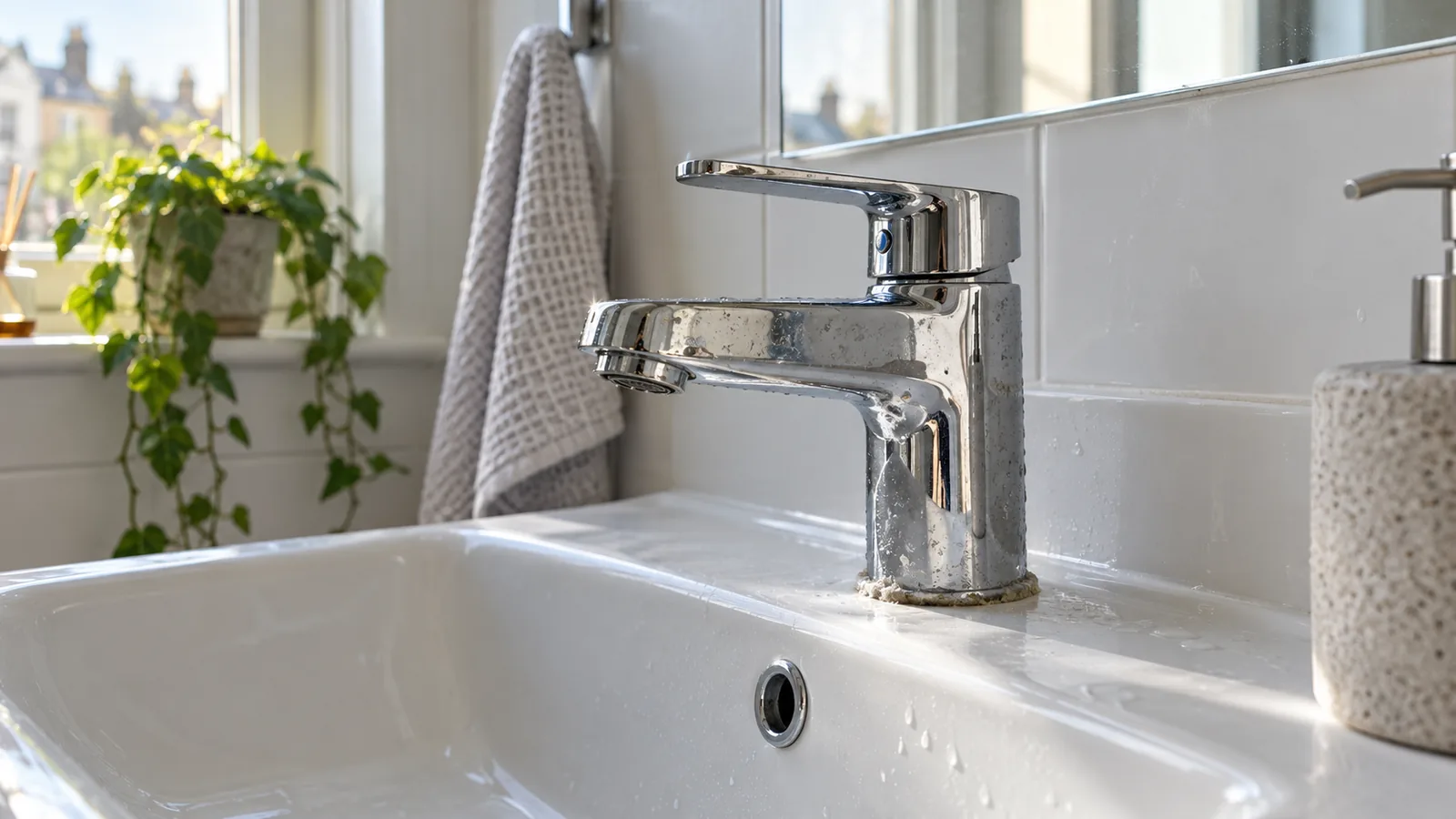
Chrome taps are easy to wipe but surprisingly easy to mark. A bright plated finish shows water spots, fingerprints and limescale at the base; vigorous rubbing can leave fine scratches or expose damage that was already developing. The tap also sits beside ceramic, silicone and sometimes natural stone, so a product safe for the metal may not suit the surrounding surfaces.
Start with a soft cloth and a mild cleaner compatible with the tap maker's instructions. Drying after use prevents many marks. For established scale, keep the treatment narrow and brief. If a patch is pitted, peeling or dark beneath the plating, cleaning cannot put the coating back. This guide helps distinguish residue on chrome from damage to chrome.
Identify the finish and inspect the tap
Check the manufacturer's care sheet if you have it. A tap that looks silver may be chrome plated, polished stainless steel or a specialist finish. Some modern taps have thin decorative coatings that require particular products. Do not assume an old cleaning trick is safe because it works on a different tap in the house.
Look at the tap dry in good light. White deposits around the base and aerator are often scale. A smudgy film on the handle may be soap or skin oils. Tiny dark pits, flaking edges or areas where a different metal colour shows through suggest plating damage. If the tap leaks from a joint or rocks on the basin, arrange repair; polishing it will not stop water reaching the cabinet below.
The article on limescale and its causes explains why hard-water marks recur. The cleaning decision at a plated tap is how to remove them without leaving a stronger chemical in contact with the finish for too long.
Wash ordinary marks first
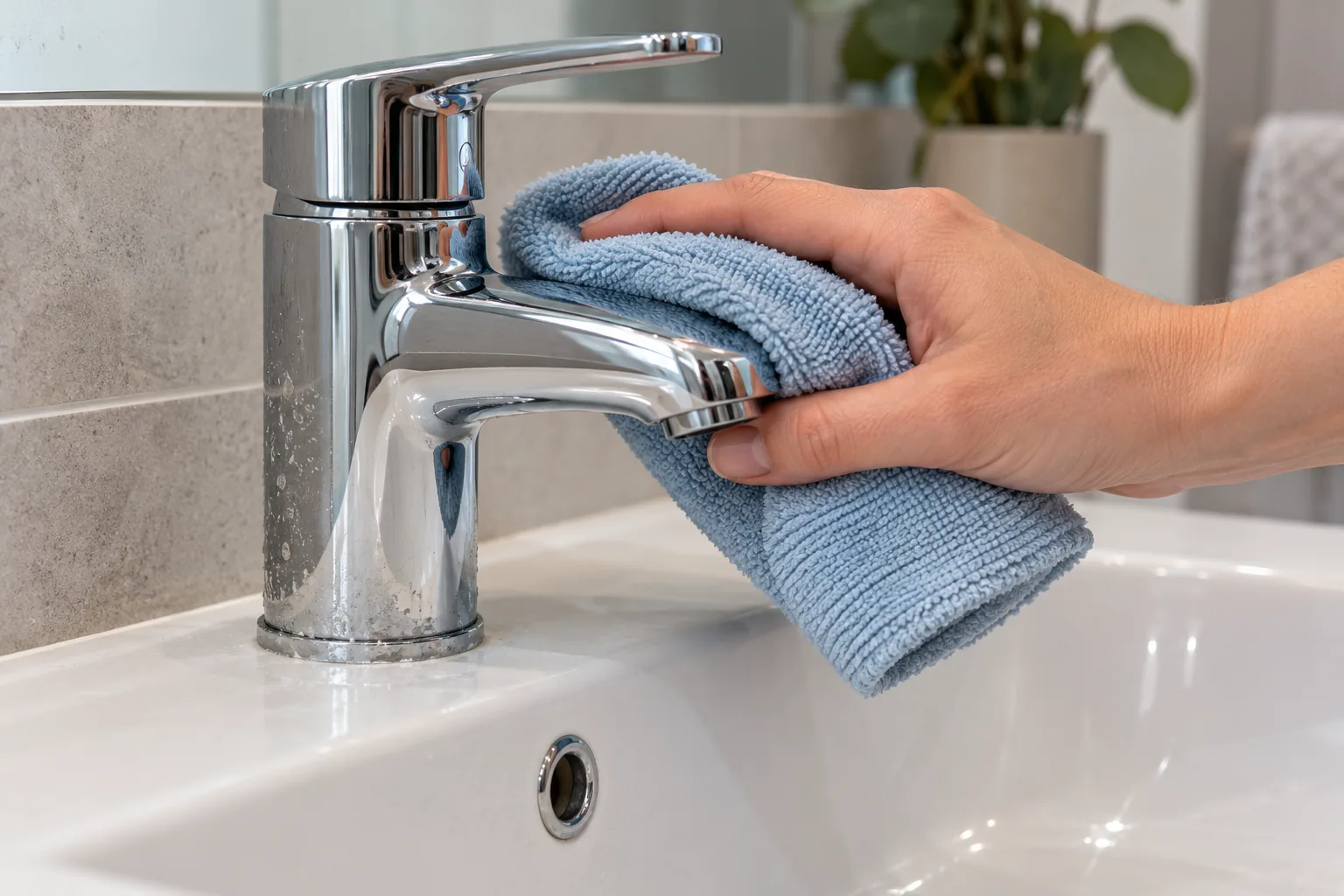
Use a clean, soft microfibre cloth dampened with water or a mild product approved by the maker. Wipe the spout, handle and base gently. Reach into seams with a soft cloth edge or a suitable small brush, without poking into moving parts. Rinse as instructed and dry with another cloth. A dry finish shows clearly whether the mark was just water film.
Avoid rough pads, scouring powders and metal tools. They can scratch a reflective surface, especially when grit is trapped between cloth and metal. Do not use a cloth previously used on grout or a rough tile. Change it if it picks up particles. A few seconds of drying after a shower or hand wash can prevent a harder descaling job later.
Keep cleaner out of a sensor or electronic control if the tap has one. Apply product to the cloth rather than spraying into openings. Wipe the basin separately with its own suitable method. Chrome and acrylic, for example, may have very different tolerances even when they touch at the same rim.
Treat limescale narrowly
If a chalky ring remains, check the tap maker's recommended descaler, dilution and maximum contact time. Apply it only to the deposit with a cloth, protecting the basin, stone, grout and silicone nearby. Do not tie a bag of acid around the spout overnight unless the manufacturer specifically instructs that method. Prolonged exposure can affect plating, rubber seals and finishes beneath drips.
After the stated time, gently wipe and rinse thoroughly. Dry the tap and reassess. If a white ring has reduced but not gone, another maker-approved short treatment may be better than one long soak. If nothing changes, stop and consider whether the mark is a changed surface. Never mix descaler with bleach or another cleaning chemical, and keep the bathroom ventilated as the product label requires.
Scale at the outlet may affect flow. Some aerators can be unscrewed for separate cleaning, but follow the tap manual and protect the finish if a tool is required. Retain any washer, note the assembly order and refit gently. If the part is stuck, forcing it with pliers can score the chrome or damage the thread. A plumber or supplier may be able to provide a replacement aerator.
Take care around the base and joints
The tap base is where water often sits longest. Wipe around it after use and keep the seal between tap and basin dry. A dark line at the joint may be dirt, deteriorated sealant or moisture entering below. If water reappears at the base even when the surrounding basin is dry, inspect for a leak rather than treating it as a stain.
Where the tap meets natural stone or engineered worktop, use a product compatible with both materials or shield the worktop. An acid that removes scale from chrome can mark vulnerable stone. Apply cleaner to a cloth and keep it away from the joint. Do not flood the installation hole or cabinet below. If you find swollen board under the basin, fix the source of water and dry the area before returning to cosmetic cleaning.
The bathroom deep-cleaning checklist highlights hidden edges and fittings. On a tap, those edges should be cleaned with control, not with a broad spray across every finish in the room.
Recognise pitting and worn plating
Pitting can look like dark specks that remain after the white deposit has gone. Peeling or blistering chrome may have sharp edges. A cleaner cannot replate a tap in place. Polishing harder may enlarge the affected area or expose more of the base metal. Photograph the dry tap and ask the manufacturer or installer whether the part is covered by a finish warranty or whether replacement is appropriate.
A rough texture does not always mean scale. Test an approved cleaning method on a small spot, then rinse and dry. If the roughness remains fixed and the colour has changed, stop. A new tap is often a better investment than repeated aggressive cleaning of a failed finish, especially if the existing fitting also leaks or has a stiff control.
Prevent new damage by avoiding metal jewellery scraping across the spout and not hanging heavy items from the tap. Keep bottles with leaking cleaners away from the base; drips can sit unnoticed against the plating.
If a household has more than one bathroom, compare taps before choosing a single cleaning product for all of them. One may be true chrome while another is brushed nickel or a coloured plated finish. Label the cloth or product used for a specialist fitting, and share the maker's instructions with anyone who cleans the room. A consistent method reduces the chance that a good result on one tap becomes damage on another. Inspect old deposits after the surface is fully dry, when the difference between remaining scale and pitting is easier to see.
Make the routine sustainable
For a wider room refresh, bathroom deep cleaning can address taps and surrounding accessible surfaces with finish-appropriate methods. Limescale treatment can help with heavier deposits when the tap condition allows treatment. Domestic cleaning can support regular soft wiping and drying. Tell the cleaner if the tap is a special finish or already pitted.
The daily habit is uncomplicated: wipe splashes, use a mild compatible wash and dry. For scale, apply only a maker-approved treatment for a controlled time. For a leak or damaged plating, ask for repair or replacement advice. Knowing where cleaning ends protects the remaining chrome and prevents a small water mark from becoming a large worn patch.