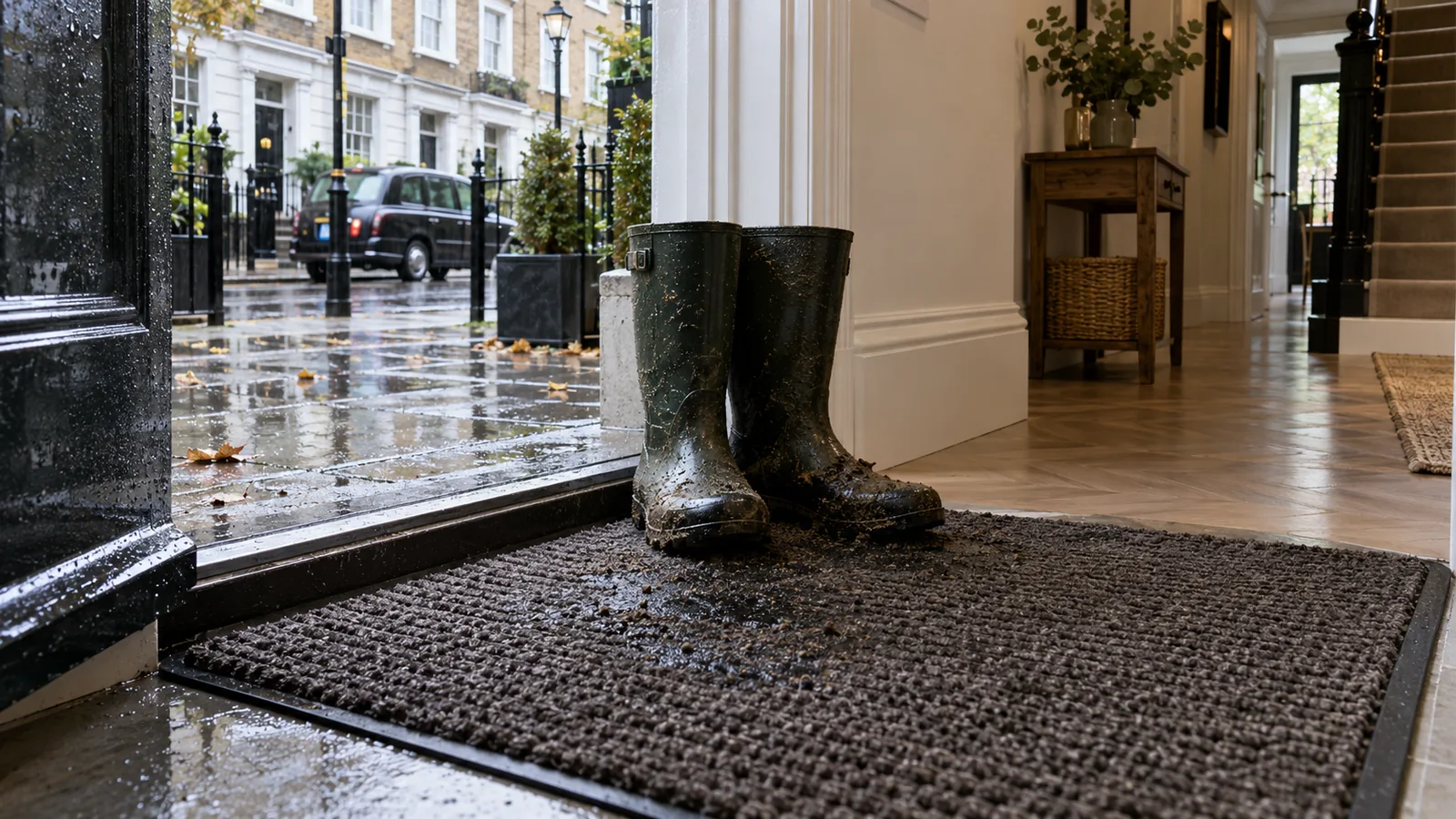
An entrance mat is the first cleaning tool a visitor uses. In a wet London autumn or winter, it catches grit from pavements, road spray and water from shoes before these reach the hall. Once the fibres are packed with dirt or the backing stays damp, the mat stops doing that job well. It can even become a source of tracked marks and a slip hazard.
Entrance mat cleaning depends on the material. A washable synthetic runner, a coir mat and a fitted commercial mat should not all be put through the same wash. Start by reading any care label, checking the backing and deciding whether the mat needs dry soil removal, washing or replacement. The floor beneath needs attention too.
Choose the right arrangement at the threshold
If space permits, use two stages: a coarse scraper mat outside to knock off mud and a more absorbent mat inside to catch moisture and fine particles. An exterior mat must suit outdoor conditions and drain rather than sit in a puddle. Indoors, the mat should lie flat with an appropriate non-slip backing for the particular floor. Check that doors clear it without catching the edge.
A very small decorative mat can become saturated in a few visits. A longer runner gives people more than one step to wipe their shoes. It should still leave a clear, accessible walking route. In shared entrances or workplaces, consider the heavier traffic and cleaning instructions for fitted matting. An edge that curls up, a backing that crumbles or a mat that slides should be repaired or replaced before anyone trips.
Dark mats hide soil, but they do not keep trapping it indefinitely. Inspect the route beyond the mat: a trail of grit on a hard floor shows that either the mat is overloaded or people are stepping around it. If moisture reaches timber or a vulnerable floor finish, extend protection and dry the area promptly.
Remove dry grit before applying water
Take a loose mat outside if it is safe to lift. Shake it away from other people and brush off larger debris. Vacuum both sides using a suitable attachment, paying attention to the pile direction and the edges. For a fixed mat, vacuum slowly in overlapping passes. One quick sweep over the centre usually leaves grit embedded near the threshold.
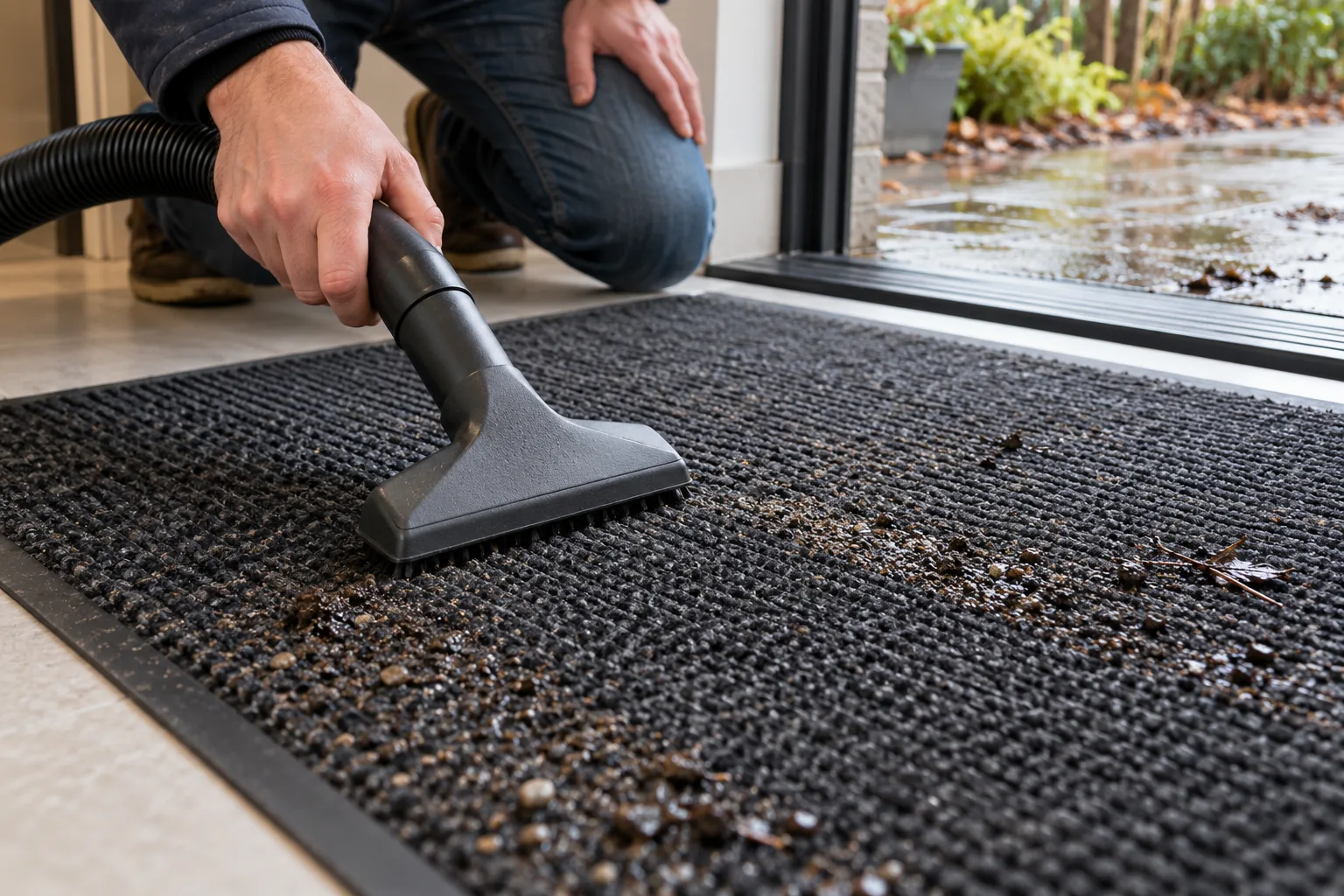
Lift the mat and vacuum the floor underneath as well. Grit trapped between the backing and a hard floor can scratch the finish with every footstep. Check for moisture, mould-like marks or dye transfer. Let the floor dry before replacing the mat. If the backing has left a mark, test the floor manufacturer’s cleaning method in a small area instead of scrubbing with a general solvent.
In busy wet weather, a quick daily check may be needed. The full vacuum can be less frequent if the mat remains effective, but increase it when visible mud builds up. Our guide to floor cleaning tools and solutions explains why the right vacuum head and a clean mop matter beyond the entrance.
Wash synthetic mats according to their label
Many small synthetic mats are washable, but the care label decides the temperature, detergent and whether machine washing is allowed. Measure the mat first: forcing a large, heavy wet mat into a domestic washer can cause poor cleaning and strain the machine. Some rubber-backed mats should never be tumble dried because heat can crack their backing. If a label calls for professional laundering, follow it.
For a hand-washable mat, remove grit before wetting. Use the approved diluted detergent, work it through gently, rinse thoroughly and extract as much water as possible. Soap left in the fibres attracts more dirt. Dry the mat completely in a ventilated place before it returns to the floor. Laying a wet mat on sealed wood, laminate or stone can trap moisture and cause damage.
A commercial rental mat may be designed for off-site laundering and regular exchange. Follow the provider’s schedule rather than improvising a strong chemical wash. For fitted entrance matting, check the manufacturer's instructions for vacuuming, spot treatment and wet extraction. Extraction equipment must remove moisture effectively; a mat that stays wet for days can smell and lose its backing integrity.
Treat coir and natural fibres more cautiously
Coir scrapes shoes well but often sheds fibres, especially when new. Shake or vacuum it regularly. Many coir mats do not tolerate soaking or machine washing: the natural fibres and backing may distort, retain water or break down. Check the individual label before using any moisture. If suitable, blot a small stain with a lightly damp cloth and dry the area thoroughly. A heavily contaminated coir mat may be better replaced than saturated with detergent.
Jute and other natural-fibre mats can also change shape or colour when wet. Avoid treating every natural-looking mat as coir; identify the material first. Where the doorway is exposed to frequent rain, a synthetic absorbent indoor mat may be easier to maintain. The exterior scraper can still be made from a different material.
For odour, look for a damp backing and a wet floor before adding a scented product. Fragrance can mask a musty smell while the cause remains. If a mat smells soon after a thorough clean and dry, inspect it for deterioration or replacement. Our article on household dust and where it comes from is a reminder that entrance dirt includes fine particles as well as visible mud.
Clean spills without spreading the stain
Blot a fresh spill from the outside towards the centre with a clean cloth. Remove solids carefully. Test an appropriate spot cleaner on a hidden part, then use only the amount recommended. Rubbing a coloured drink deeply into the pile can enlarge the mark. If the spill passed through to the floor, lift the mat and clean both surfaces. Work out whether a dark patch is a stain in the pile, discoloured backing or moisture held underneath.
After treatment, press with dry towels or extract the liquid as the material allows. Keep the entrance route safe while the mat dries. A temporary dry mat may be useful in a busy household; placing the wet one back for convenience defeats the cleaning. Be especially careful if cleaning solution makes nearby tile or vinyl slippery.
Keep the floor and the route safe
Mats are only one part of entrance care. Sweep or vacuum the adjacent floor, wipe up puddles and inspect skirting and thresholds for grime. A hard floor cleaning visit can address accumulated soil beyond the mat, while deep cleaning can cover doors, frames and the wider hall. Give any cleaner the mat’s care instructions if it is to be handled.
Check that the mat still grips after each wash. Backing can harden, split or lose traction. Avoid layering several loose mats to cover a gap; their raised edges create more trip points. If someone uses a mobility aid, ensure the route remains smooth and wide enough. A clean mat should make the entrance easier to use, not harder.
A useful wet-weather routine is simple: inspect the mat daily, remove dry grit before washing, match wet cleaning to its material, dry it fully, and check the floor underneath. Replace the mat when its fibres or backing can no longer perform safely. That small maintenance habit protects the rest of the home from a much larger cleaning job.