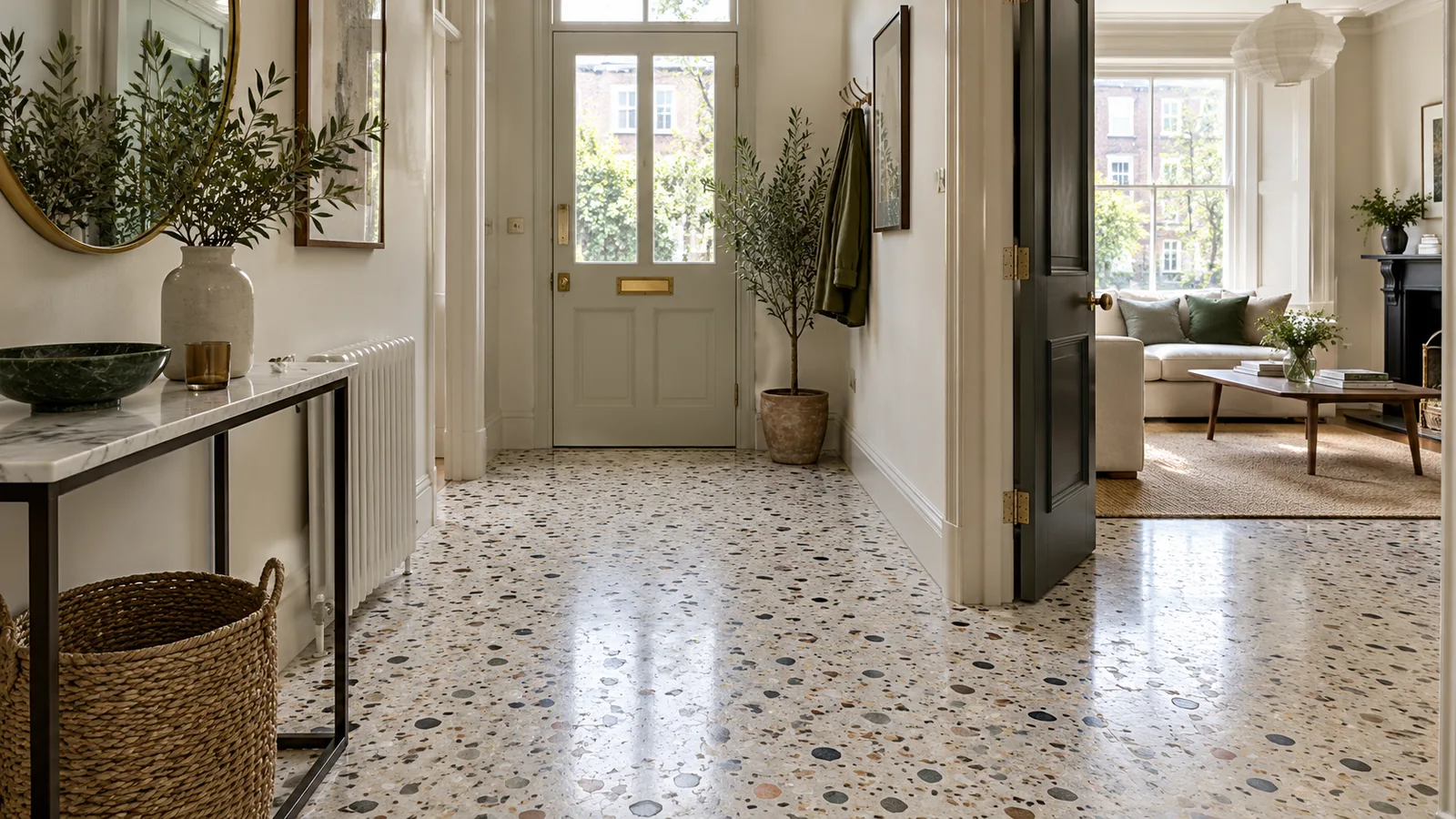
Terrazzo is recognised by pieces of stone or other aggregate set in a smooth surface. The pattern can look similar across many floors, but the material holding those chips together may be cement, resin or another system. A cleaner that leaves one terrazzo floor unharmed can etch or dull another. The existing seal or polish also changes what is safe to use.
Before choosing a product or machine, identify the installation and finish as well as you can. Then remove grit, use a compatible mild cleaner and inspect the dry result. A cloudy patch may be old film, wear or chemical damage. This guide explains the choices and when a specialist should assess the floor rather than another stronger treatment.
Identify the binder and finish
Ask the installer, building manager or previous owner for flooring records. Cement-based terrazzo can be sensitive to acidic products, especially where marble or limestone chips are present. Resin terrazzo has different chemical and heat limits. Both may have a sealer, wax or polished finish that needs its own care. Colour and chip size alone are not a reliable way to identify the binder.
Look at a threshold or inconspicuous edge if it is already exposed, without chipping or prising anything up. Note any sealant line, grout or movement joint. A historic terrazzo floor may have been polished and re-sealed several times; a modern resin floor may be seamless across a room. Share photographs and any paperwork with a floor-care specialist if the material remains uncertain.
The general floor cleaning tools guide introduces equipment, but terrazzo's binder and finish should determine the actual pad, cleaner and water exposure. Do not assume a product labelled “stone safe” covers every aggregate and resin combination.
Remove grit before damp cleaning
Dry soil is the daily enemy of a polished floor. Sweep with a soft brush or vacuum using a hard-floor head, paying attention to entrances where outdoor grit arrives. A dirty mop pad can drag particles over the surface and create fine scratches. Clean entrance mats regularly and check their backing is suitable for the floor.
Lift loose objects and inspect under furniture. Felt pads can help but need replacing when they collect grit. If a plant pot sits on terrazzo, use a suitable tray and check for water beneath it. A long-standing damp ring may reflect a damaged sealer or mineral deposit rather than ordinary surface soil.
For a small fresh spill, blot it promptly and follow the floor maker's guidance for cleaning the residue. Do not leave wine, citrus or a strong cleaning product sitting while you finish another room. Acidic liquids may mark sensitive mineral chips or cement binder. Early response is easier than trying to polish out a set etch later.
Choose a compatible cleaner and pad
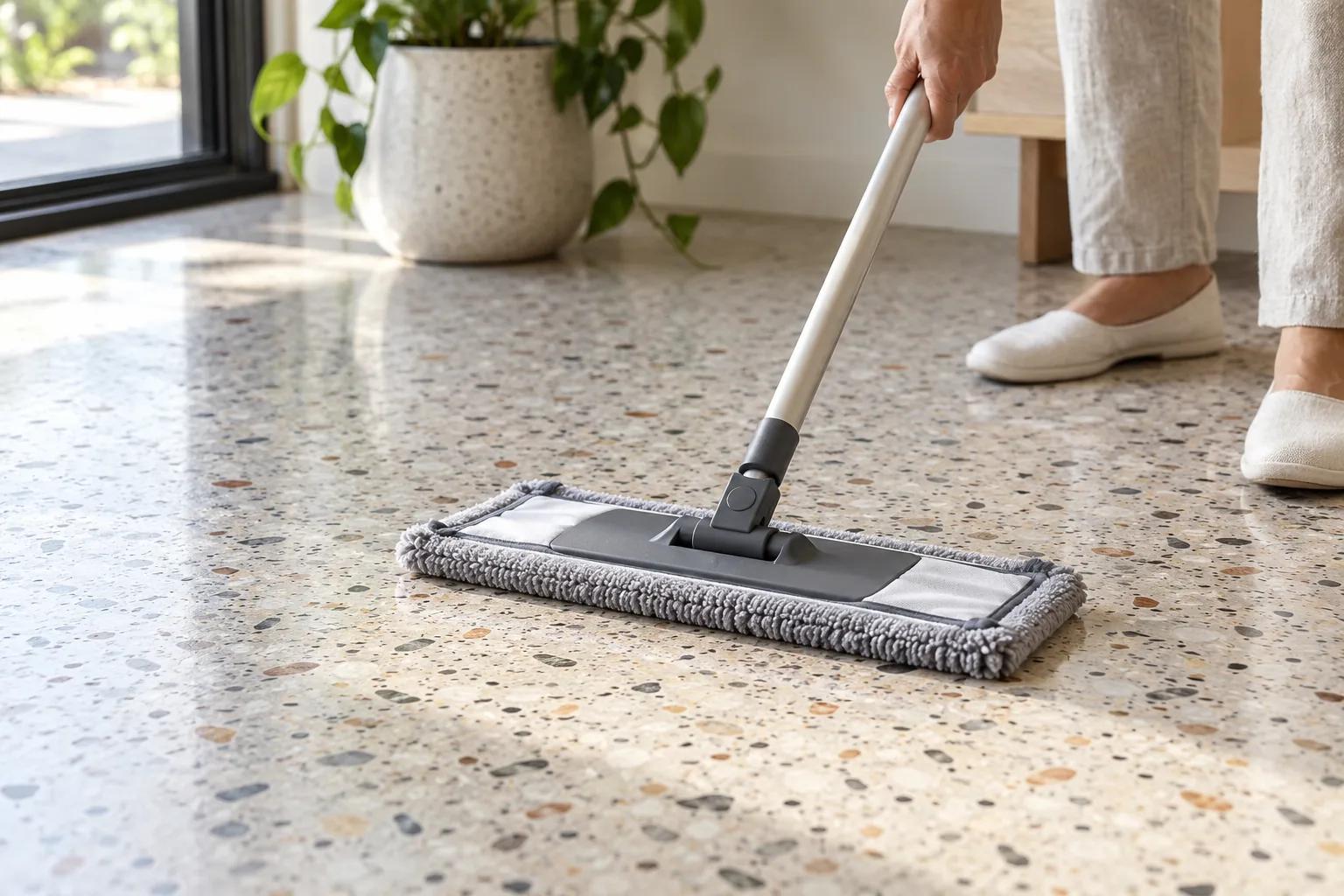
Use the product recommended for the known floor system, at the specified dilution. Where the system is unknown, ask a specialist before using an acid, alkaline stripper or abrasive machine. A clean microfibre mop can handle light soil with controlled moisture. Change the solution before it turns grey and rinse if the product instructions require it. Let the floor dry fully before judging its shine.
Avoid household vinegar as a default. On cement terrazzo or calcareous stone chips, acid can leave a permanent dull mark. A descaler meant for a bathroom fitting can be especially risky on a floor that contains marble. Resin systems may tolerate some chemistry differently, but only the maker's instructions can confirm a suitable method. Never mix products.
Do not jump to a stiff rotary pad to chase a stain. Mechanical polishing may remove a finish or change gloss unevenly. The article on mopping and rotary buffing for dull floors explains that dullness needs diagnosis before equipment is chosen. A specialist can test a small area and determine whether the floor needs cleaning, resealing or refinishing.
Diagnose a dull or cloudy patch
Look at the floor when dry under side light. A streak that follows a mop route may be detergent residue. A round mark under a planter may be moisture-related. A pale splash shape after an acidic spill may be etching, and a high-traffic lane may simply have worn finish. These possibilities need different responses.
Start with the approved mild cleaner on a small area and compare it after drying. If the haze lifts, review product dilution and rinsing. If it does not change, stop increasing strength. Repeated scrubbing can enlarge an etched or worn patch. Photograph the mark and tell a floor specialist what was spilled or applied, including any old sealer if known.
Cracks, loose aggregate and movement at joints are repair issues. Do not fill them with household adhesive or polish over them. Moisture can travel through a crack or failed joint, especially in an entrance or bathroom. A suitable flooring professional can assess the substrate and repair method.
Protect edges and adjacent materials
Terrazzo may meet timber skirting, metal trim, painted walls or other flooring. Apply cleaner to the mop or cloth rather than flooding edges. An acid-sensitive terrazzo beside a tile that tolerates descaler still needs protection from runoff. Use separate cloths for metal fittings and floor so chemical residue is not transferred by accident.
At entrances, wet shoes can leave dirty water to dry on the surface. Use a mat and wipe tracked-in moisture promptly. Avoid a rubber-backed mat unless its maker and the floor finish permit it; some backings can mark or trap moisture. Keep chair legs and movable furniture protected so aggregate chips are not exposed by repeated impacts.
If the floor has a glossy sealer, follow its maintenance schedule. Adding generic wax on top can create slippery, patchy buildup and complicate future professional work. A matt finish should not be polished to a shine without confirming that the system was designed for it.
Older terrazzo may also have local repairs that respond differently from the original floor. A replacement patch can have a different binder, aggregate or sealer even when its colour matches. Look for changes in texture around repaired cracks or former fixtures and test any approved product away from that boundary first. If the room was recently renovated, ask the contractor what treatment was applied and when it can be cleaned normally. This avoids stripping a new sealer before it has reached the maker's stated cure time. Documenting those details will make later cleaning visits more consistent.
Seek a material-specific assessment
A stone floor cleaning service can assess terrazzo composition and finish before treatment. Share any records, previous cleaning products and photographs of problem areas. A hard floor cleaning visit may suit neighbouring surfaces, but the terrazzo method should be chosen separately. Deep cleaning can address the wider room without using the same chemistry on every material.
The safe daily pattern is dry grit removal, prompt spill response and a compatible mild clean when needed. Reserve stronger chemistry or polishing for a confirmed binder and finish. Once the floor is etched or its sealer has failed, cleaning alone has reached its limit; identifying the material first is what protects the terrazzo's pattern and sheen.