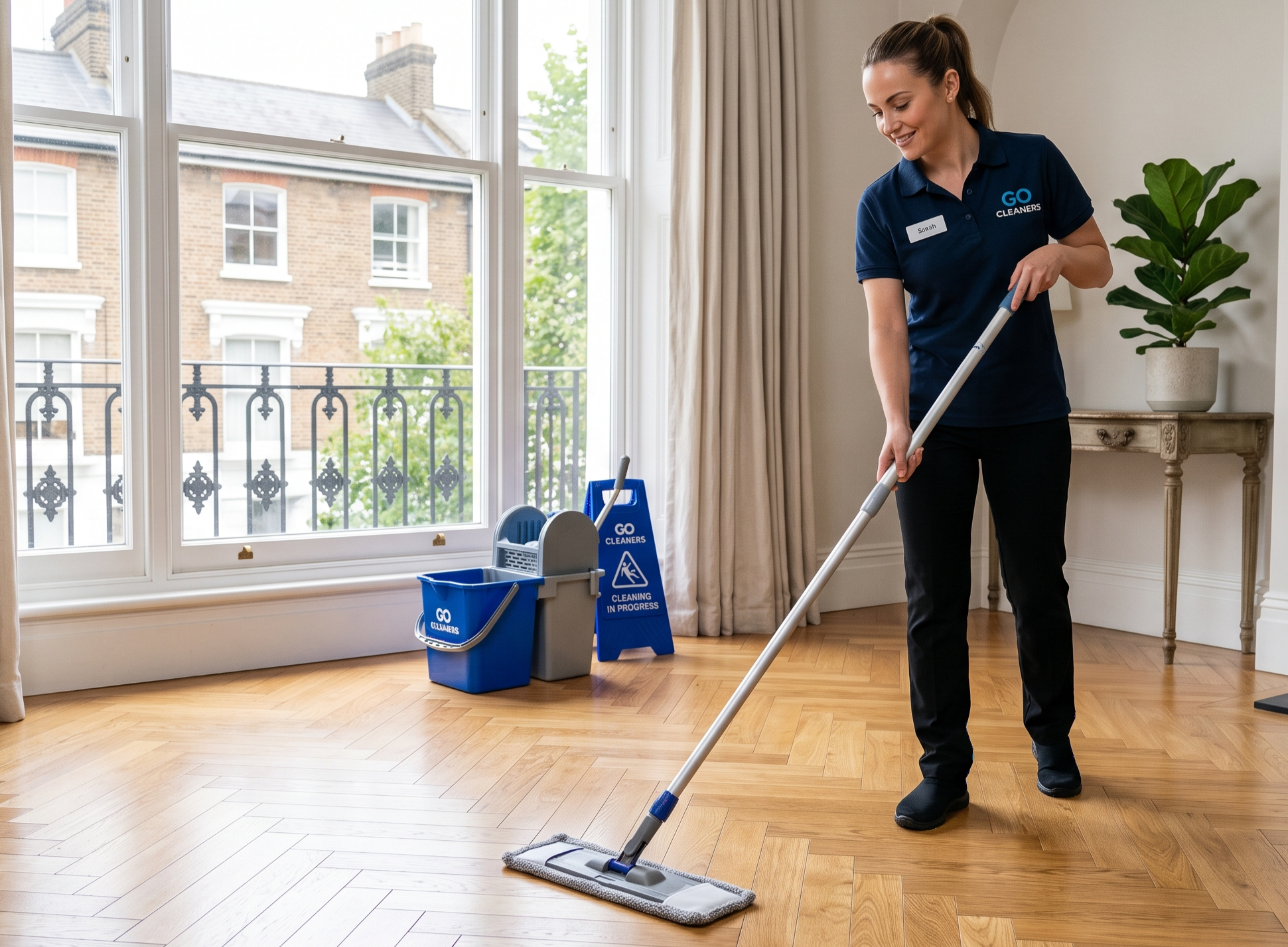
Many homeowners and property managers invest thousands in premium hardwood, stone, or tiled floors, only to watch them lose their showroom luster within a few years. Despite rigorous daily or weekly mopping schedules, a stubborn, cloudy film often remains. The truth is that traditional cleaning methods frequently do more harm than good, trapping contaminants rather than removing them. To truly understand why your surfaces look lackluster, we must explore the mechanical and chemical differences between manual mopping and professional rotary buffing.
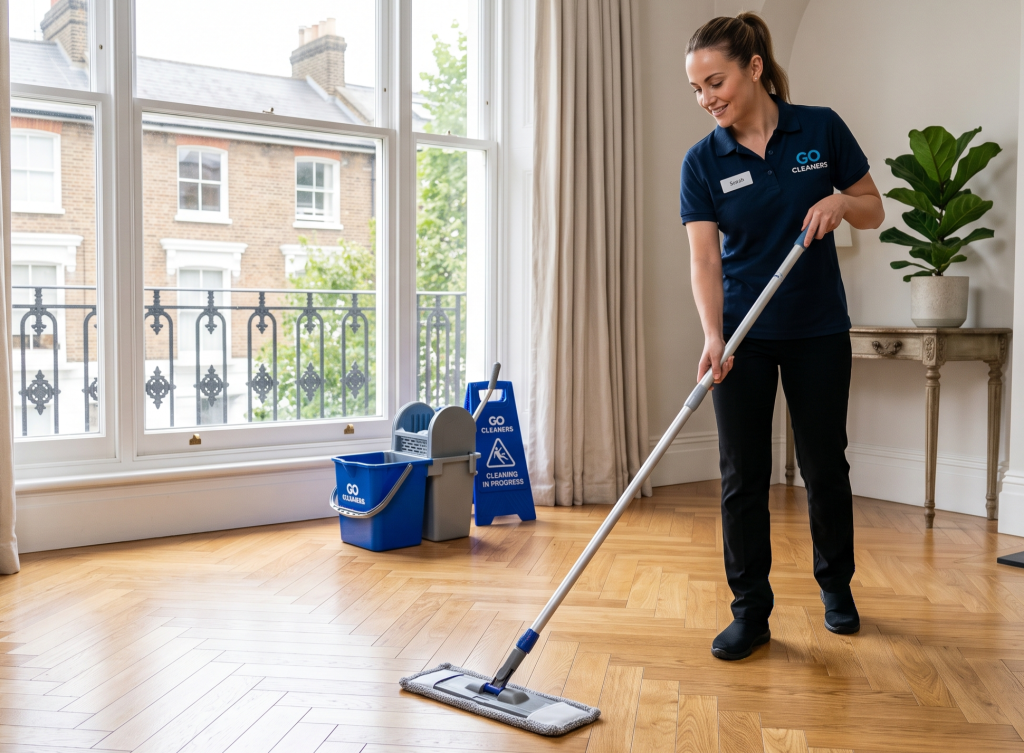
1. The Anatomy of a Dull Floor: Why Mopping Fails
The Limitations of Standard Mopping Cotton
Standard string and flat mops are designed for superficial maintenance, not deep restoration. When you push a manual mop across a hard surface, the fibers only make contact with the highest points of the material texture. Instead of lifting deep-seated grit, the manual pressure simply glides over microscopic ridges, leaving a substantial amount of daily environmental soil completely untouched at the base of the floor’s profile.
How Dirty Water Recycles Grime
The moment a mop is dipped back into a cleaning bucket, the entire solution becomes contaminated with suspended dirt particles. As you continue to clean, you are effectively painting a fine layer of diluted grey wastewater across your premium installations. Once the moisture evaporates, this recycled grime settles uniformly across the surface, compounding the exact cloudiness you were attempting to eliminate in the first place.
The Chemical Residue Film Dilemma
Many off-the-shelf supermarket floor detergents rely on heavy surfactants and synthetic waxes designed to dry quickly. Unfortunately, these formulas rarely rinse away cleanly without industrial extraction machinery. Over weeks and months, these chemical layers stack on top of one another like sheets of tracing paper, creating a sticky, light-absorbing membrane that actively attracts and holds onto new airborne dust particles.
Micro-scratches and Light Reflection
Shiny floors require a perfectly flat surface to bounce light rays directly back to your eyes, creating that coveted mirror-like finish. Manual mopping often drags fine sand and silica particles across the floor under the weight of the mop head. This creates thousands of microscopic scratches that scatter light in random directions, transforming a once-brilliant finish into a dull, diffused surface that looks perpetually weathered.
2. The Science of Rotary Buffing and Restoration
Rotational Force vs. Manual Scrubbing
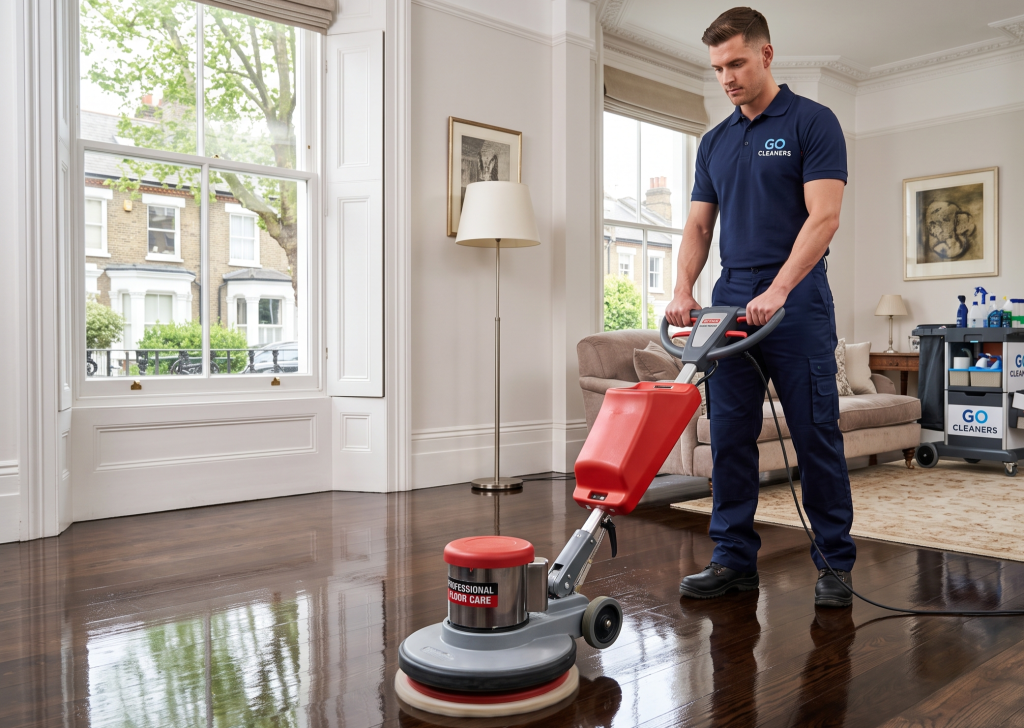
Professional rotary floor machines operate on a completely different mechanical principle than manual labor. By spinning heavy-duty, material-specific pads at high speeds, these systems generate consistent, multi-directional kinetic energy across every square millimeter of the floor. This specialized rotational friction loosens bonded environmental soils that manual downward pressure could never hope to dislodge.
Mechanical Heat and Pad Friction
As a rotary buffer operates, the rapid interaction between the engineered pad and the floor surface generates a subtle, controlled thermal reaction. This localized heat serves a vital purpose: it softens hardened, dried-on waxes and grease accumulations without altering the structural integrity of the floor itself. Once softened, these stubborn contaminants are instantly transferred into the porous matrix of the industrial pad.
Deep Grime Emulsification
True floor restoration relies on turning solid, impacted dirt back into a fluid state that can be permanently removed. Rotary buffers combine specialized mechanical agitation with targeted fluid distribution to emulsify old traffic lane soils completely. This process suspends the oils, skin flakes, and outdoor tracked-in grime safely within a liquid suspension layer, entirely separate from the floor material beneath.
Restoring Light Reflectivity
Once the deeply embedded impurities are stripped away by mechanical buffing, the true flat profile of your flooring material is revealed once more. By smoothing out minor microscopic abrasions and applying targeted pressure, a professional buffer realigns the surface texture. This structural correction allows light rays to reflect uniformly off the floor surface again, instantly reviving that deep, vibrant color depth.
3. What Traditional Mopping Does to Grout Lines
The Gravity Trap for Soil
Tiled floors may look uniform, but their grout lines sit marginally lower than the surrounding ceramic, porcelain, or stone surfaces. When you glide a standard mop across the room, the tool acts exactly like a window squeegee, scraping surface dirty water directly into these recessed channels. Instead of cleaning, traditional mopping continuously fills these low-lying valleys with concentrated household waste.
Porous Grout Substructures
Unlike glazed tiles, standard cement-based grout is highly porous and acts like a rigid, high-absorption sponge. When contaminated mopping water settles into these joints, it is quickly drawn deep into the molecular structure of the mixture. Over time, this deep liquid absorption locks dirty pigments beneath the surface layer, turning pristine white or grey lines into patchy, unsightly dark tracks.
Mildew and Bacterial Breeding Grounds
Because manual mopping leaves grout lines saturated with stagnant, nutrient-rich wastewater, it creates an ideal micro-climate for biological growth. Dust mites, mold spores, and household bacteria thrive inside the damp recesses of unsealed grout lines. This hidden accumulation not only degrades the visual appearance of your bathroom or kitchen floor but can also gradually impact the overall hygiene of your indoor living environment.
The Discoloration Illusion
Many property owners mistakenly assume their grout has permanently stained or faded due to age, considering expensive remodeling options. In reality, the dark coloration is almost always an accumulation of old, dried mopping residues trapped within the stone matrix. Only specialized mechanical agitation can penetrate these deep crevices to draw out the embedded oils and reveal the true original shade hidden underneath.
4. The Role of pH-Neutral Formulas in Floor Longevity
The Danger of Acidic Grocery Store Cleaners
Many general household surface cleaners contain citrus extracts, vinegar, or mild acids designed to slice through kitchen grease quickly. While effective on countertops, these acidic solutions pose a catastrophic threat to natural stone installations like marble, limestone, and travertine. Acid chemically reacts with the calcium carbonate in these floors, causing permanent chemical burns known as etching that ruin the gloss finish.
Alkaline Build-up and Stripping
On the opposite end of the chemical scale, highly alkaline cleaners like bleach or ammonia are frequently overused in an attempt to blast away stubborn floor stains. Frequent application of high-pH chemicals strips away the protective clear sealants factory-applied to hardwood and luxury vinyl tiles (LVT). Once this defense layer is compromised, the raw core materials are left entirely vulnerable to water damage and deep staining.
Protecting the Factory Seal
Preserving the integrity of your floor requires an advanced understanding of chemical balancing. Professional restoration technicians exclusively utilize specialized, material-specific pH-neutral chemistry during the maintenance process. These balanced formulations are engineered to break the molecular bonds holding dirt to the surface without interacting with or softening the underlying protective factory sealants.
Material-Specific Chemical Chemistry
There is no such thing as a true “all-purpose” floor cleaner that works safely across all interior structural materials. Hardwood demands low-moisture, fast-evaporating compounds to prevent grain warping, while unpolished stone requires penetrating detergents that lift deep oils without leaving artificial gloss agents behind. Matching the exact chemical profile to your specific flooring type is crucial for extending its total operational lifespan.
5. Common Hard Floor Types and Their Weaknesses
Hardwood Water Sensitivity
Natural hardwood remains one of the most desirable flooring installations, but its cellular structure is incredibly sensitive to moisture fluctuations. Traditional wet mopping often forces excess water down into the microscopic joints between the floor planks. Over time, this hidden liquid collection causes the wood fibers to swell, leading to cupping, crowning, and irreversible structural warping that requires intensive sanding to fix.
Natural Stone Etching Traps
Premium natural stones like marble, granite, and slate add undeniable elegance to a property, but their mineral compositions are naturally sensitive to daily friction. Fine outdoor grit acts like sandpaper under the weight of foot traffic, quickly wearing away the polished factory finish. Without regular specialized mechanical polishing, these prestigious installations rapidly take on a dull, cloudy appearance that feels rough to the touch.
Porcelain and Ceramic Glaze Wear
While porcelain and ceramic tiles are highly durable, their brilliant shine relies on a very thin, vitreous surface glaze applied during manufacturing. Using abrasive cleaning powders or rigid manual scrubbing brushes can micro-scratch this delicate top layer over time. Once the protective glaze is worn down, the underlying clay body becomes exposed, absorbing oils and liquid spills much faster than before.
Vinyl and LVT Traffic Lanes
Luxury Vinyl Tiles (LVT) are highly resistant to moisture, but they are particularly prone to developing distinct, dark traffic lane discoloration in high-use corridors. Daily foot friction pushes fine dust particles directly into the textured faux-grain patterns molded into the vinyl surface. Standard flat mops simply skim over these synthetic textures, allowing dirt to pack tightly into the grooves until professional extraction occurs.
6. Understanding the Wear Layer and Sealants
What is a Floor Wear Layer?
Most modern manufactured flooring options, including laminate, engineered wood, and vinyl, feature a transparent top coat known as the wear layer. This microscopic shield is the only barrier standing between daily foot traffic and the decorative photographic or natural wood layer beneath. Maintaining the thickness and clarity of this wear layer is absolutely paramount for preserving the floor’s aesthetic appeal.
How Foot Traffic Erodes Protection
Every time footwear moves across a hard floor, the friction subtly shears away an incredibly minute portion of the protective surface finish. In high-traffic zones like entryways, reception areas, and busy kitchens, this erosion accelerates dramatically. As the protective coat thins out, it loses its ability to bounce light cleanly, creating localized patches of dullness that contrast sharply with the rest of the room.
The Difference Between Cleaning and Sealing
It is important to recognize that everyday sanitation is completely distinct from long-term surface preservation. Cleaning simply removes superficial loose dirt from the top of the wear layer; it cannot repair structural thinning or physical scratches. True restoration requires periodically cleaning the surface down to a microscopic level and reapplying specialized protective sealants to replenish the sacrificial defense layer.
Signs Your Sealant is Completely Gone
Property owners can easily test the health of their floor’s protective seal by observing how it interacts with liquids. If a few drops of clean water spilled on the surface immediately bead up into tight droplets, the sealant is performing correctly. However, if the liquid spreads out flat and begins soaking into the grain or turning the material dark, the wear layer is completely gone, leaving the floor vulnerable to permanent rot.
7. Environmental and Daily Factors That Age Floors
Micro-Abrasives from Outdoor Footwear
The vast majority of interior floor wear is caused by invisible particles tracked into the property from outdoor environments. Fine quartz sand, gravel fragments, and urban concrete dust cling to the undersides of shoes and act like industrial cutting compounds under human body weight. Without an effective barrier matting system, these micro-abrasives systematically destroy your floor’s polish with every step.
UV Rays and Pigment Fading
Direct exposure to sunlight filtering through expansive windows can gradually damage the organic pigments and structural binders within your flooring. Ultraviolet (UV) radiation triggers a chemical process known as photodegradation, which bleaches the natural rich color out of exotic hardwoods and causes synthetic vinyl stabilizers to turn yellow and brittle. This solar damage radically alters how the surface reflects ambient light.
Pet Claws and Dynamic Micro-Impacts
Domestic animals introduce unique structural stresses to hard floor installations through localized mechanical impact. The focused pressure exerted by dog or cat claws during acceleration and turning can punch right through thin wax sealants, creating deep structural gouges in the wood or vinyl. These jagged indentations quickly fill up with dirty mopping water, forming dark, unhygienic scratches that stand out prominently.
Ambient Humidity Fluctuations
The air surrounding your floors plays a continuous, silent role in their overall dimensional stability. Rapid shifts between dry winter indoor heating and humid summer weather force natural materials to expand and contract continuously. This cyclical movement stresses the joints between planks or tiles, creating tiny structural micro-fissures that collect household dust and old cleaning liquids over time.
8. Transitioning from Daily Maintenance to Professional Restoration
Establishing a Sustainable Cleaning Schedule
To keep your floors in peak condition without causing accidental damage, you must balance daily maintenance with periodic deep intervention. Daily routines should focus exclusively on dry methods, such as utilizing high-performance microfiber dust mops or specialized vacuums with soft hard-floor attachments to eliminate abrasive sand particles before anyone walks over them.
Knowing When DIY Options Are Exhausted
If your hard floors continue to look cloudy, grey, or lackluster immediately after a thorough, careful manual cleaning session, your DIY options have officially reached their limit. At this stage, the dullness is no longer a surface cleanliness issue; it is a structural problem caused by embedded grime layers, micro-scratches, or a severely degraded factory sealant that requires heavy machinery to correct.
The Long-Term Financial Benefits of Specialist Interventions
Postponing professional floor maintenance is a costly mistake that often leads to premature structural replacement fees running into thousands of pounds. Investing in timely mechanical buffing, stripping, and resealing safely removes the damaged top layer while leaving the underlying floor core completely intact. This proactive restoration extends the natural lifespan of your installations by decades, saving massive capital over time.
Choosing Expert Care for a Flawless Finish
Achieving that deep, uniform showroom luster requires an advanced blend of industrial-grade rotary buffers, high-extraction vacuum machinery, and deep technical knowledge of material chemistry. Instead of straining your back with an inefficient manual mop that simply relocates grime, trusting a team of dedicated specialists is the most reliable way to secure a thoroughly sanitized, perfectly polished living environment. When your home or business surfaces deserve a definitive reset, contact the fully equipped professionals at Go Cleaners London to safely restore your property investment to absolute perfection.