The Shocking Truth About Hidden Upholstery Grime
The Growing Weight of Your Couch: It’s Not Just Fabric and Foam
When you buy a new sofa, its weight comes from wood frames, high-density foam, springs, and fabric. But after years of daily use, that number on the scale creeps up significantly. The real culprit? Invisible debris that migrates deep into cushions, crevices, and padding. According to upholstery research labs, a sofa used by a family of four can accumulate 2–3 extra pounds of solid waste per year — from food crumbs to microscopic particles. When combined with moisture and body residue, that adds real, measurable weight. Next time you lift a corner of your couch, remember: that extra heft might be years of accumulated grime.
Dead Skin, Sweat, and Body Oils: What’s Secretly Accumulating in Your Cushions?
Humans shed roughly 30,000 to 40,000 skin cells every minute — that’s about 1.5 pounds of dead skin per year per person. Much of it flakes off while you’re lounging, reading, or watching TV. Add nightly sweat (the average person loses half a pint of moisture through skin while sleeping) and natural body oils, and your sofa turns into an absorption sponge. These organic materials seep past surface fabrics, embedding deep into foam padding. Over time, oils oxidize, causing fabric discoloration and a distinct musty odor. The combination of sweat, skin, and oils creates a biofilm that accelerates dirt buildup, adding significant weight and making your cushions feel dense and heavy.
The Microscopic Micro-Climate: Dust Mites Multiplying Inside Your Living Room Furniture
Where there is dead skin, dust mites thrive. These microscopic arthropods (Dermatophagoides farinae) feed on shed human skin cells and flourish in warm, humid upholstery environments. A single gram of sofa dust can contain hundreds to thousands of dust mites, each producing up to 20 waste pellets daily. Over months, mite populations explode, and their feces become one of the heaviest components of hidden grime. Worse, the exoskeletons and waste particles are tiny and cling deep inside foam and fabric interstices. Research from the American College of Allergy, Asthma & Immunology estimates that an average couch can host over 2 million dust mites after 2–3 years without professional cleaning — contributing up to 2–3 pounds of allergenic mass. This hidden “micro-climate” turns your cozy sofa into an invisible bioreactor.
The Air You Breathe: How Hidden Upholstery Grime Spikes Indoor Allergy Symptoms
That stale, dusty smell isn’t your imagination — it’s microscopic allergens becoming airborne every time someone sits, shifts, or fluffs a pillow. Dust mite feces, mold spores, pet dander, and pollen all embed into sofa fibers. When disturbed, these particles circulate through your home’s air, triggering sneezing, itchy eyes, coughing, and even asthma flare-ups. The Environmental Protection Agency (EPA) ranks indoor air pollution among the top five environmental health risks, and upholstered furniture is a primary reservoir for allergens. Regular vacuuming doesn’t remove deep contaminants; instead, it stirs up surface particles. In fact, studies show that sofas with heavy biological grime can reduce indoor air quality by up to 40% in enclosed living spaces. If family members experience unexplained allergies or nighttime congestion, your sofa’s hidden weight of toxic dust could be the root cause.
The DIY Illusion: Why Household Vacuums and Fabric Sprays Can’t Reach Deep-Seated Dirt
Most homeowners rely on weekly vacuuming and occasional spot sprays, believing that keeps their sofa clean. Here’s the hard truth: standard household vacuums lack the suction power and agitation required to extract deeply embedded debris. The majority of dust, mite allergens, and skin cells sink below the surface layer, often trapped inside cushion cores, beneath the decking, or in the crevices of the sofa structure. Fabric sprays and foams only mask odors temporarily and may even add sticky residues that attract new dirt. Meanwhile, DIY steam cleaners (without professional extraction) push moisture deeper, encouraging mold growth. A vacuum removes only loose surface grit — typically less than 15% of total soil load. The remaining 85% of grime — pounds of it — stays behind, adding weight and degrading fabric integrity. The illusion of cleanliness leaves your sofa silently gaining weight and risking your family’s health.
The Science of Extraction: How Professional Sofa Cleaning Lifts Pounds of Trapped Debris
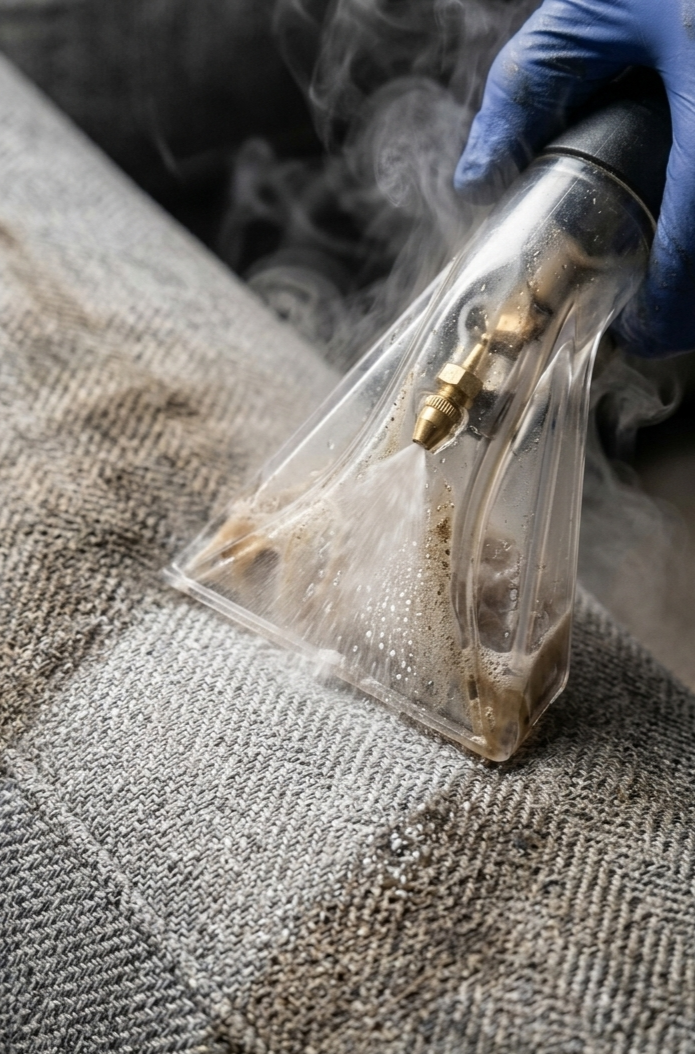
Professional upholstery cleaning uses truck-mounted or portable hot water extraction systems that combine high-temperature water (180–220°F), eco-safe detergents, and industrial-strength vacuum suction. The process emulsifies and suspends deep-seated oils, skin cells, dust mite feces, and then extracts the slurry into a holding tank. On average, certified technicians remove 3 to 7 pounds of solid and semi-solid waste from a standard three-seater sofa. Real-world case studies reveal that sofas weighing 95 lbs before cleaning dropped to 87 lbs after a professional hot water extraction — a removal of 8.4 lbs of hidden debris. Additionally, high heat kills 99% of dust mites and bacteria without harsh chemicals. This science-backed method not only reduces sofa weight but also restores loft to cushions, improves fabric breathability, and eliminates allergens at the source. The before-and-after difference is both visible and measurable.
Protecting Your Investment: How Removing Embedded Grit Prevents Fabric Fraying
Beyond health and weight concerns, embedded grit acts like sandpaper on your sofa’s fibers. Every time you sit down, microscopic dirt particles abrade the yarns, causing pilling, thinning, and premature fraying. Natural fibers like cotton, linen, and wool are especially vulnerable, while synthetics can still degrade due to persistent friction. Over time, this wear leads to faded patches, weak seams, and the need for reupholstery or replacement — costing hundreds or thousands of dollars. Professional extraction removes that abrasive layer, protecting the structural integrity of the fabric. Additionally, body oils left untreated can cause brittleness and cracking in leather or vinyl finishes. By scheduling periodic deep cleaning (every 12–18 months for average households, 6 months for high-traffic homes), you maintain the sofa’s appearance, comfort, and value. Think of it as an oil change for your furniture: small preventive action yields massive long-term savings.
Ready for a Total Living Room Reset? When to Schedule Your Next Professional Upholstery Clean
Your sofa shouldn’t weigh more than the day you brought it home. If you notice any of these signs, it’s time to book a professional upholstery cleaning:
- Increased allergy symptoms when relaxing on the couch.
- Persistent musty or sour odors even after airing out.
- Cushions feel flat, heavy, or dense compared to new.
- Pet owners: dander and fur build up deep within fabric.
- Kids + snacks = organic residue that invites bacteria.
For most households, industry experts recommend professional deep cleaning every 12 to 18 months. Homes with pets, children, or allergy sufferers benefit from semi-annual cleanings. Don’t wait until your sofa feels like a lead weight — schedule a certified technician today. A thorough hot water extraction will lift years of grime, reduce overall sofa weight by pounds, and refresh the entire room’s air quality. Experience the shocking before/after difference: lighter, healthier, and cleaner upholstery.