
Mould on bathroom walls or ceilings is more than an untidy mark. It usually signals that moisture is remaining in the room long enough for spores to grow. Small, recent patches on a sound, washable surface can often be dealt with safely at home, but recurring or extensive growth needs a different response.
This guide explains how to assess the problem, clean suitable surfaces without spreading spores and reduce the conditions that allow mould to return. If the affected area is extensive, keeps coming back or may involve hidden damp, arrange an assessment through our professional mould removal service rather than repeatedly treating the visible marks.
Why mould develops in bathrooms
Warm showers and baths release a large amount of water vapour. When that vapour reaches a colder wall, ceiling, window reveal or grout line, it condenses. If the moisture is not removed by ventilation and heating, microscopic mould spores already present in the air can settle and grow.
Common contributing factors include an extractor fan that is weak, blocked or switched off too soon; windows kept closed; wet towels drying indoors; cold external walls; furniture or stored items restricting airflow; and leaks around baths, showers, pipework or the roof. Cleaning the stain without correcting the moisture source usually produces only a temporary improvement.
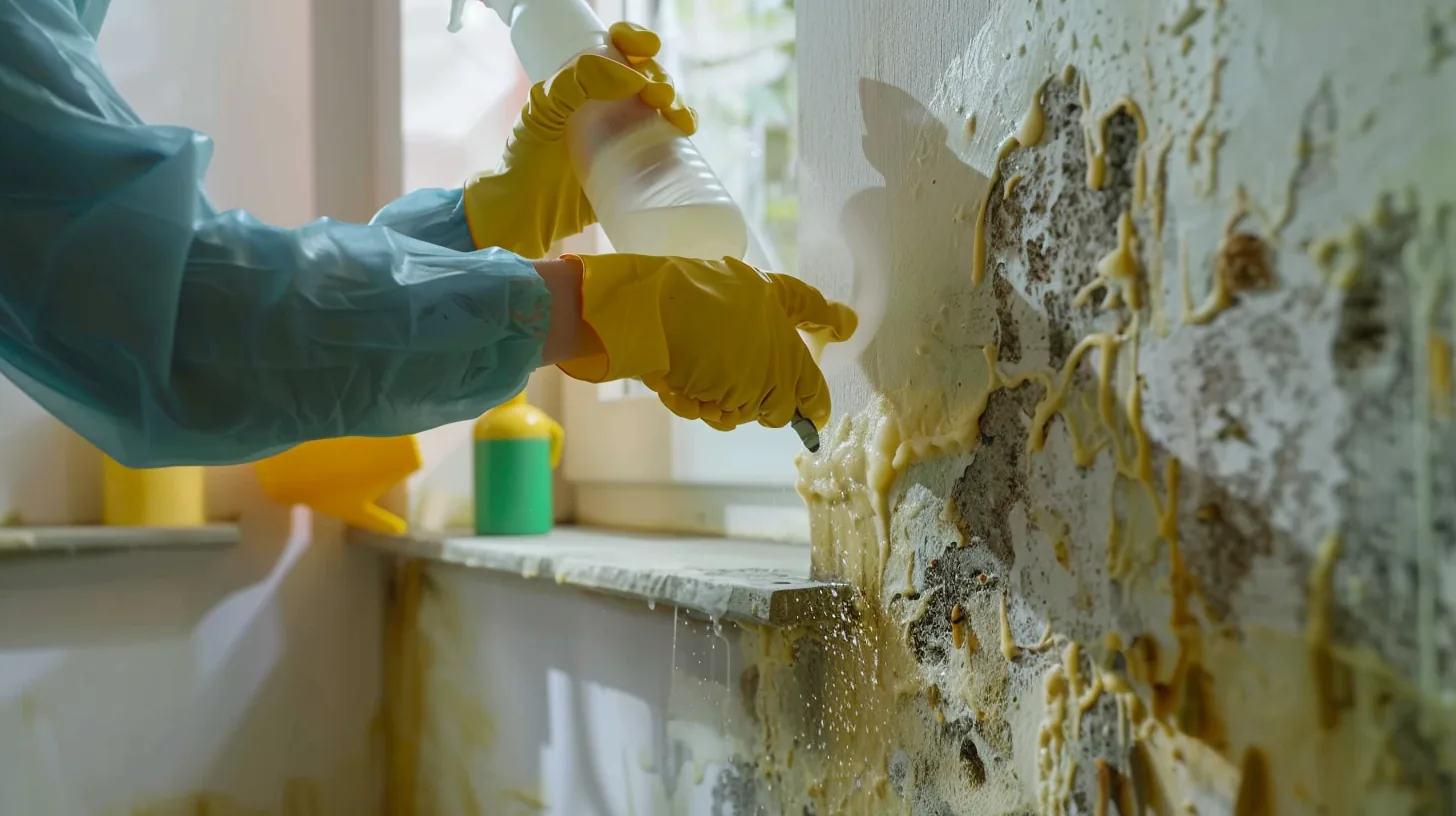
Surface mould or a more serious damp problem?
Surface mould tends to appear as scattered black, grey or green specks on paint, sealant or grout. It is often concentrated in cold corners and improves when the room is dried and ventilated. The underlying material remains firm, and there is no persistent water mark or crumbling plaster.
Warning signs of a deeper issue include bubbling paint, soft plasterboard, salt deposits, a spreading brown water mark, damaged skirting, a strong musty smell outside the bathroom, or growth that returns quickly after careful cleaning. A patch caused by a plumbing or roof leak will not be solved by a cleaning product. Locate and repair the source, then allow the structure to dry.
Before you start: protect yourself and the room
- Open a window and run the extractor fan, provided it vents safely outdoors.
- Wear household gloves and eye protection. A well-fitting mask is sensible where spores may be disturbed.
- Keep children, pets and anyone with asthma, allergies or a weakened immune system away from the work area.
- Remove towels, toiletries and soft furnishings that could be splashed or collect loosened material.
- Read the product label, check surface compatibility and test an inconspicuous spot.
- Never dry-brush, sand or scrape mouldy paint, as this can send particles into the air.
Surfaces that can usually be treated at home
Small areas on intact glazed tiles, glass, sound grout and washable painted surfaces are the most suitable for careful domestic cleaning. Use a product intended for mould on that material and follow its stated contact time. Apply it to a cloth or controlled area rather than creating a fine airborne spray.
Porous materials are less predictable. Mould can penetrate unsealed plaster, plasterboard, wallpaper, untreated timber and damaged silicone. Staining may remain even after surface growth has been removed. Swollen plasterboard, rotten timber and badly affected sealant may need replacement once the moisture problem is resolved.
How to clean a small patch safely
1. Dry the bathroom first
Stop using the shower until surfaces are dry. Ventilate the room and wipe away ordinary condensation with a separate clean cloth. Do not aim a fan directly at visible mould because this may distribute spores.
2. Apply one suitable product
Use a proprietary bathroom mould cleaner or another product specifically approved for the surface. Follow the label exactly, including dilution, ventilation and contact-time instructions. More product is not automatically more effective.
3. Wipe without aggressive abrasion
Work from the outside of the patch towards the centre with disposable cloths or paper towels. Avoid wire wool and harsh scourers, which can damage glaze, paint and sealant. Put used disposable materials straight into a bag.
4. Rinse if the label requires it
Remove residue as directed, then dry the surface thoroughly. Launder reusable cloths separately at a suitable temperature. Wash your hands after removing gloves.
Cleaning products that must not be mixed
Never mix bleach with ammonia, acids, vinegar, toilet cleaner, limescale remover or any other cleaning chemical. Dangerous gases can form. Do not use one product immediately after another unless the first has been completely removed and the manufacturers confirm that the combination is safe. Keep products in their original containers and never improvise stronger mixtures.
How to prevent mould returning
- Run the extractor during bathing and for the recommended period afterwards.
- Open the window when practical and leave the bathroom door open after moisture has begun clearing.
- Wipe water from shower screens, tiles and window sills.
- Dry towels promptly rather than leaving them bunched on a rail or floor.
- Maintain steady background heat in cold weather and avoid large temperature swings.
- Clean the extractor grille and check that the duct terminates outdoors.
- Repair failed sealant, dripping fittings and leaks promptly.
- Keep cupboards and stored items slightly away from cold external walls.
A periodic one-off deep clean can help remove soap residue and grime from accessible bathroom surfaces, but it cannot correct structural damp or inadequate ventilation.
When to call a professional
Seek professional help when the affected area is large, the material is porous or damaged, growth follows a leak, there is a persistent odour, or mould quickly returns. Extra caution is appropriate in households with respiratory conditions or vulnerable occupants. Professional treatment should include identifying moisture conditions and choosing methods appropriate to the substrate, not simply bleaching the visible stain.
Keep a simple record of where and when growth returns, together with photographs and notes about showers, heating and ventilation. A pattern can help distinguish an isolated cleaning issue from recurring condensation or water ingress.
Frequently asked questions
Can I paint directly over bathroom mould?
No. Covering active mould traps the problem and the marks commonly reappear. Resolve the moisture source, clean or replace the affected material, allow it to dry and prepare it according to the paint manufacturer’s instructions.
Is bleach suitable for every bathroom surface?
No. It can discolour finishes, damage some metals and fail to address growth within porous material. Use only where the product label and surface manufacturer permit it.
Why does mould keep returning above the shower?
The area is repeatedly exposed to warm vapour and may also be a cold spot. Check extraction, heating, airflow and any hidden leak before repeating treatment.
Should I use vinegar and bleach together?
Never. Mixing bleach with vinegar or another acid can release dangerous chlorine gas.
Can mouldy silicone be cleaned?
Light surface marks may respond to a compatible product, but growth embedded in failed silicone often requires the sealant to be removed and replaced after the joint is cleaned and dried.
Does opening a window solve the problem?
It helps, but reliable prevention may also require effective mechanical extraction, adequate heat, faster drying and repair of leaks or cold-bridge issues.
If you are unsure whether the problem is safe to tackle, contact Go Cleaners London with clear photographs and details of the affected surface. You can also explore our London cleaning services for related household cleaning support.