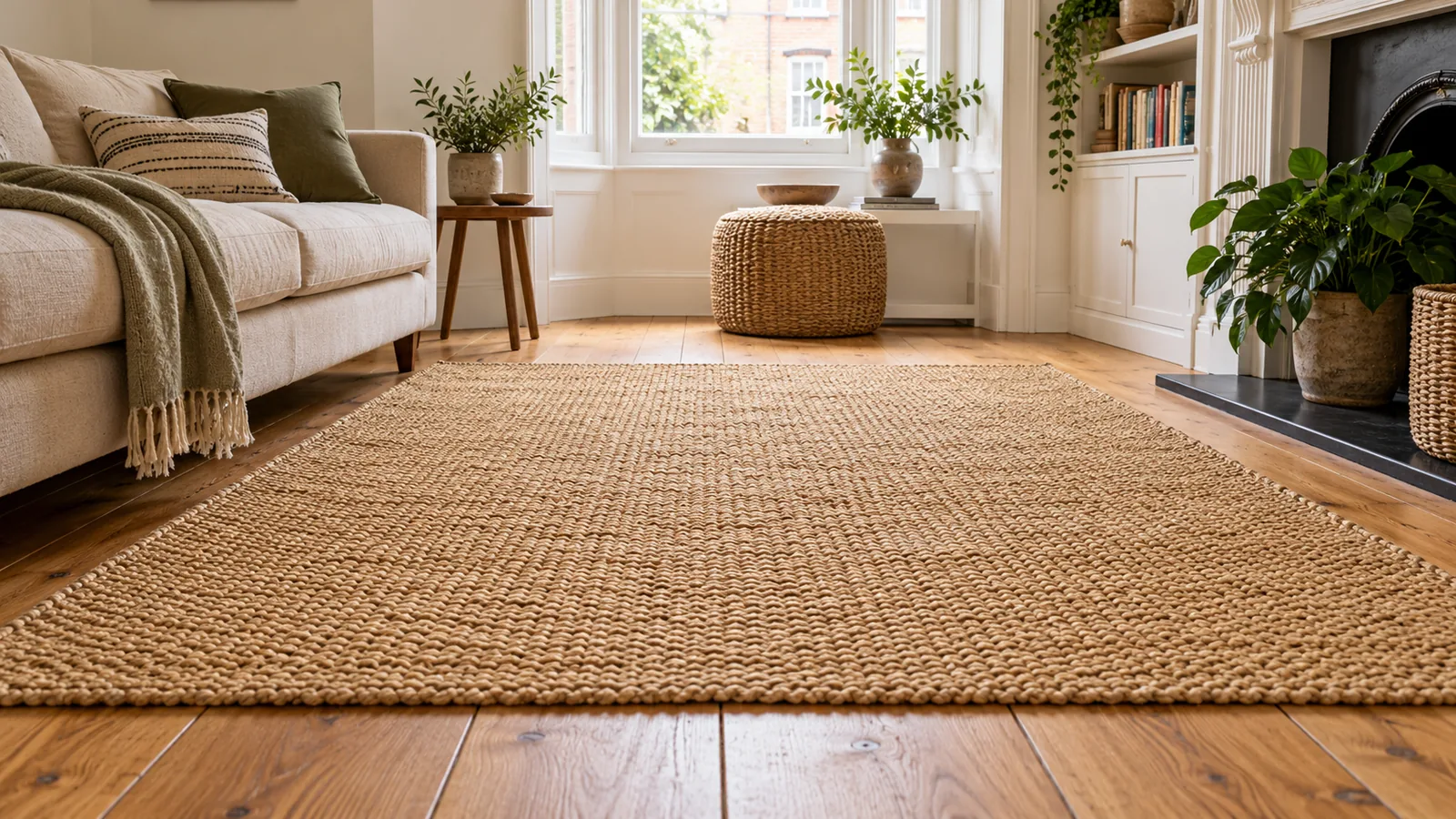
A jute rug brings texture to a room, but it asks for a different cleaning approach from a synthetic carpet. Jute is a plant fibre. It absorbs moisture readily, and wet treatment can leave browning, shrinkage, waviness or a mark that spreads beyond the original spill. The backing and dyes may be just as sensitive as the visible weave.
That does not mean a jute rug should be ignored until it looks dirty. Dry maintenance, quick spill response and sensible placement make a substantial difference. The key is to avoid treating an absorbent natural-fibre rug as though it were a hard floor that can be washed and dried at will.
Check the rug's construction first
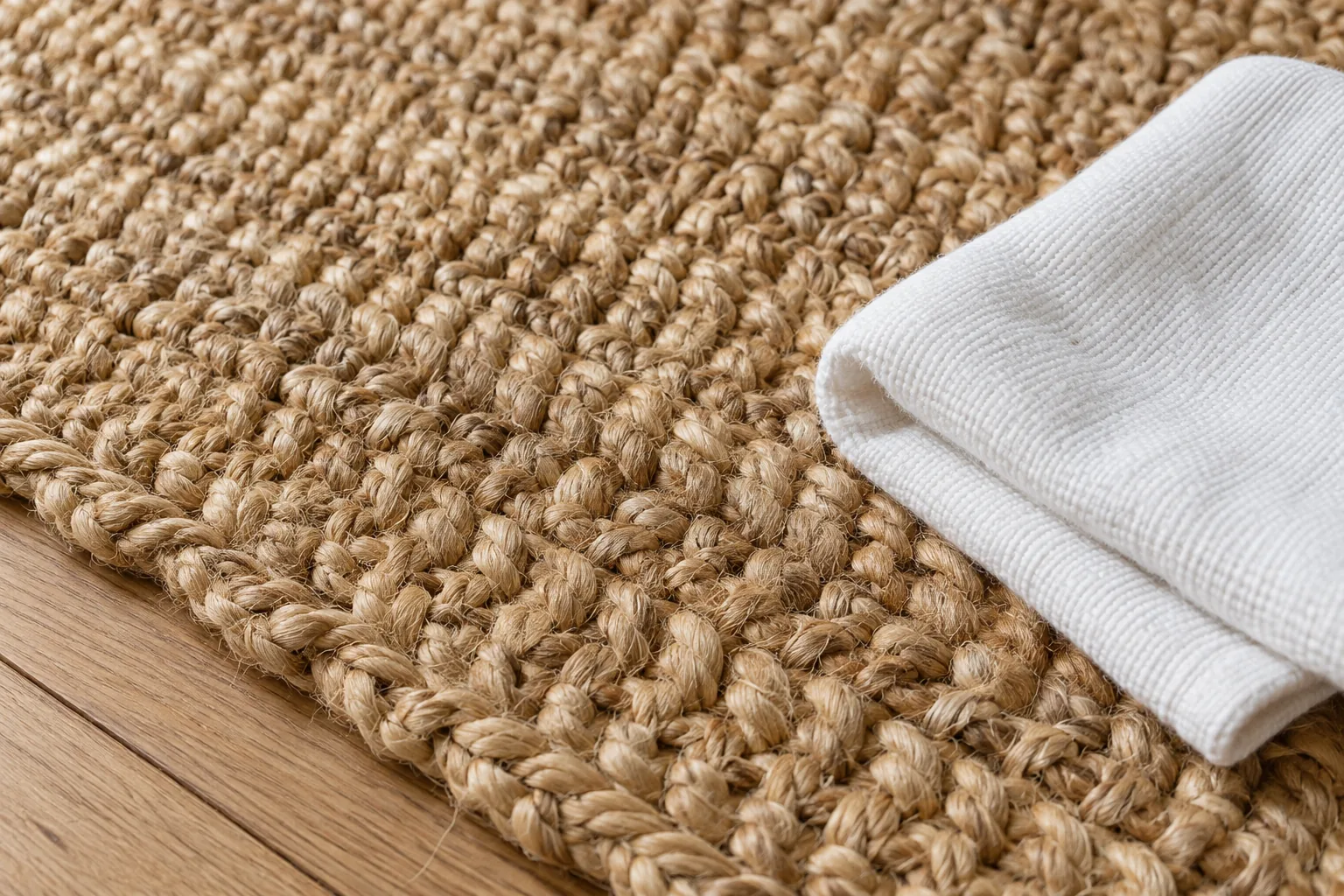
Look at both sides of the rug. Is it tightly woven, loosely plaited or backed with latex or fabric? Does it have dyed borders, decorative stitching or a fringe? These details affect what can be lifted, vacuumed and dried. A backing may trap moisture beneath the visible fibre and transfer residue to the floor. Some rugs sold as 'jute look' are actually synthetic, so check the label rather than relying on appearance alone.
Read the maker's care instructions. Some specify dry cleaning or spot treatment only. If the rug is handmade, old or valuable, ask a rug specialist before using any liquid product. The general guide to handmade rug cleaning methods covers why construction can matter as much as the fibre name.
Check the floor beneath the rug too. Water that reaches timber or a sensitive finish can cause a second problem even when the rug itself looks fine. Lift a corner periodically to look for trapped grit, dampness or colour transfer. A suitable underlay may reduce movement and abrasion, but it must not hold moisture against the floor.
A dry routine that protects the weave
Vacuum regularly with gentle suction and an attachment that will not snag loose loops. Avoid a beater bar or aggressive rotating brush unless the manufacturer expressly approves it. Work with the direction of the weave. If the rug has a fringe, lift or protect it rather than dragging the vacuum over it. A broken strand is a repair issue, not dirt to be scrubbed away.
Turn the rug occasionally if its construction and room layout allow it. This can spread traffic wear and light exposure. Shake a small rug outdoors only if you can handle it safely and the maker permits it; a heavy rug can strain your back and loosen its structure. For larger rugs, vacuuming both sides and cleaning the floor beneath may be more practical.
Do not leave a jute rug where wet shoes and umbrellas regularly drip onto it. Near an entrance, a washable mat designed to absorb moisture is often more suitable. The broader guide to how often rugs and carpets need cleaning can help set a routine, but a jute rug's material should decide the method.
What to do when something spills
Act quickly without rubbing. Lift solids with a spoon or blunt edge. Blot liquid with a clean white absorbent cloth, moving to a dry part of the cloth as it fills. Press gently; scrubbing can spread the stain and fray the weave. If the liquid has passed through, lift the rug so air can reach the underside and check the floor beneath. Keep the rug supported so it does not stretch while damp.
Avoid pouring water, vinegar or detergent onto the spot. Jute can wick liquid along the fibres, leaving a larger dark area or brown edge as it dries. A household spot cleaner may contain ingredients that leave residue or change the fibre's colour. If the spill is oily, coloured or sticky, the stain may need a specialist process. Tell the cleaner exactly what was spilled and what has already touched the rug.
If the care label permits a specific spot method, test an inconspicuous area and use the smallest amount directed. Let it dry fully before judging the result. A small hidden test cannot guarantee that a large visible stain will behave the same way, but it may reveal obvious colour or texture changes.
Why browning appears after wet cleaning
When plant fibres are wetted, naturally occurring colour and residues can migrate as the moisture moves and evaporates. The material may dry darker, or a brown tide line may appear around the treated area. This is sometimes called cellulosic browning. Soil already in the rug can also move outward and settle at a drying edge.
The cause matters because simply applying more water may enlarge the mark. The rug may also shrink unevenly or curl at its edges. A damp backing can hold moisture against the floor and develop odour. A small local stain can therefore turn into a larger appearance or flooring problem after an enthusiastic home wash.
Do not try to speed drying with a hot hairdryer or heater. Heat can change the backing, adhesive or dye and leave uneven results. Normal room ventilation and a dehumidifier used safely may support drying after an accidental spill, but they cannot undo extensive saturation. A rug cleaning assessment is sensible when a rug remains damp, develops browning or has a strong odour.
Choose a method for the actual rug
Some professional methods use controlled moisture and rapid extraction; others avoid wet treatment. The right choice depends on the specific rug, its backing, dyes, age and condition. Ask what the proposed process involves and whether colourfastness or structural tests are needed. A general carpet cleaning method should not automatically be applied to a jute rug merely because both lie on a floor.
For a targeted stain, the stain removal service is a route to discuss the material and residue before any treatment. Be clear about expectations. Old dye, oil or water damage may not be removable without changing the rug's appearance. A cleaner should explain that possibility before starting, especially for a natural-fibre piece with sentimental or financial value.
Placement and prevention in a London home
Choose a dry area with manageable foot traffic. A dining space may expose the rug to food and drink; an entrance may expose it to wet shoes and grit. If the rug sits beneath furniture, protect it from sharp feet and rotate it only if moving the furniture is safe. Do not drag heavy furniture across the weave.
Check condensation-prone rooms. A rug laid against a cold external wall or on a floor with recurring damp needs attention to the moisture source. Cleaning will not solve a leak or condensation problem. Lift the rug and inspect the floor before putting it back. Store a spare jute rug clean and fully dry, rolled rather than tightly folded if the maker advises it, in a dry space away from direct leaks.
A sensible maintenance decision
For most jute rugs, careful dry vacuuming and quick blotting are safer starting points than a home wash. Check the label, backing and floor, and be cautious with any liquid. If a stain persists or browning appears, stop repeated spot attempts. Go Cleaners London can discuss whether its rug cleaning service is appropriate for the particular piece and set realistic limits before treatment.