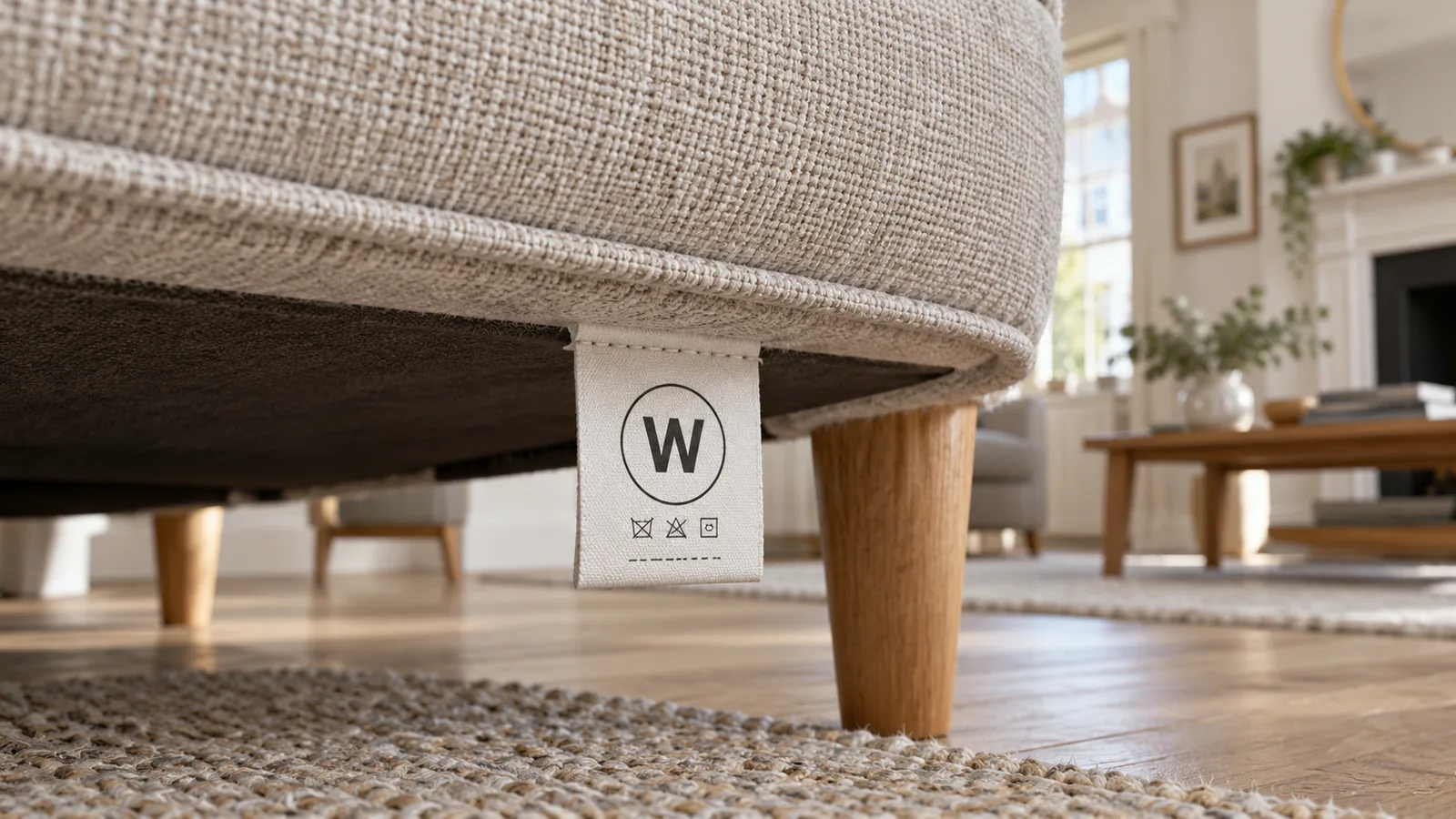
A cup of tea lands on the arm of a sofa. Before reaching for a cloth and a cleaning spray, find the manufacturer's care label. It may contain a single letter such as W or S, or a paired code such as WS. Those letters are useful, but they are not a promise that every stain can be removed at home. They describe the broad type of cleaning agent the upholstery may tolerate. The fabric, dye, backing, filling and construction still matter.
Start by locating the label, recording its wording and checking whether it applies to the whole sofa or only to a removable cover. If the label is missing, do not assume that a water-based cleaner is safe simply because the fabric feels robust. This guide explains what the common codes mean, how to make a sensible first assessment and when to leave a mark alone until a specialist can inspect it.
Where to find the code and what else to read
Look beneath the seat, under a cushion, along the underside of the frame or on the inside seam of a removable cover. A photograph is handy if the label is awkward to reach. Check for a fibre composition, washing symbols, a removable-cover instruction and any warning about heat, bleach or tumble drying. The care code may be printed beside rather than inside those instructions.
If the sofa has several fabrics, a single label may not cover every part. The seat might be woven upholstery while the piping, buttons or decorative panels use a different material. Check those parts before treating a mark that crosses a seam. A cleaning method that is tolerable for the main fabric can still alter a contrasting trim.
An old label can also be unreliable if the sofa has been reupholstered or a replacement cushion cover has been added. Treat it as one piece of evidence, alongside the fabric's condition and any separate instructions supplied when the sofa was bought.
What W, S, WS and X usually mean
W: water-based cleaning may be suitable
W generally permits a water-based upholstery cleaner when used according to the maker's instructions. It does not mean that the sofa can be saturated, steam cleaned or scrubbed with any household detergent. Too much moisture can pass through the fabric into the padding, move dyes, leave a ring or prolong drying. Start with the least moisture needed and test a hidden area first.
If a liquid has just spilled, blot it with a clean, absorbent cloth. Work from the outside of the wet area towards the centre and change to a fresh part of the cloth as it absorbs liquid. Rubbing can spread the stain and abrade the weave. Do not pour water directly onto the sofa in an attempt to flush the spill through.
S: solvent-based treatment may be required
S usually indicates that water-based cleaning is unsuitable and that a suitable dry-cleaning solvent may be specified. This is the code most likely to be misunderstood. It is not permission to use nail varnish remover, white spirit or another general household solvent. Such products can affect dyes, coatings, adhesives and foam. They may also present fire and ventilation risks.
For routine care, vacuum gently with the appropriate upholstery attachment. If a stain needs treatment, ask a qualified upholstery cleaner to assess the fabric and the particular mark. The right product and controlled application matter more than the letter alone. A solvent that removes an oily mark may leave a visible ring if it is applied unevenly.
WS or SW: either type may be possible, with testing
WS and SW commonly indicate that both water-based and suitable solvent-based methods may be considered. They do not remove the need to identify the stain. A food spill, ink mark and greasy cosmetic residue behave differently. The backing and filling may also react even when the face fabric appears stable.
Choose a method only after checking the full label, the product instructions and the manufacturer's guidance. Test an inconspicuous part and allow it to dry completely before judging the result. A temporary dark patch while damp is less informative than the final appearance after drying.
X: vacuuming only
X generally means that only vacuuming or very light brushing is recommended. Liquid cleaners and solvents may harm the fabric. Do not treat this as an invitation to experiment with a small spray bottle: a little liquid can still create a permanent water mark. If there is an actual stain, seek the manufacturer's advice or a specialist assessment. Some marks will be difficult or impossible to remove without changing the appearance of the fabric.
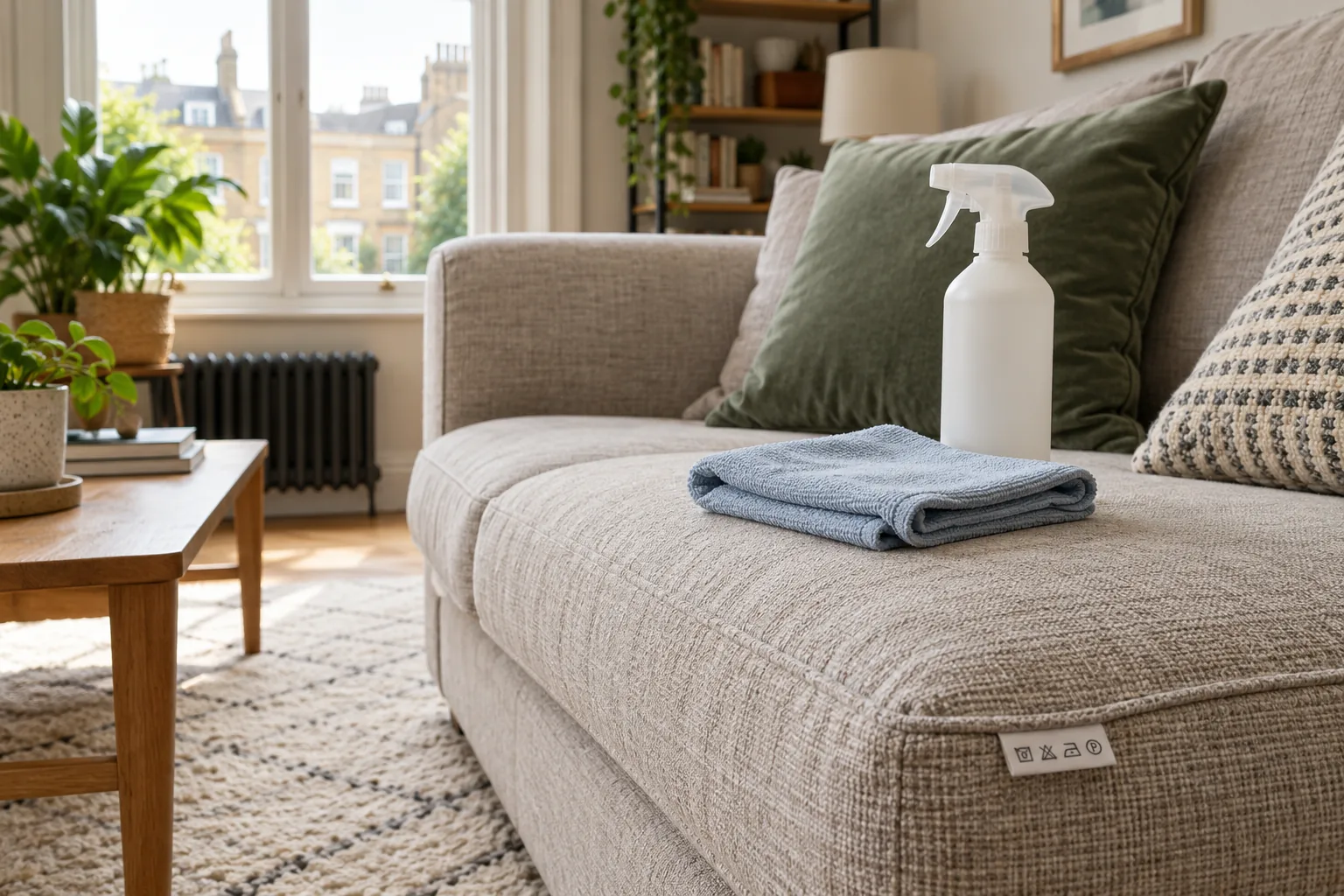
A care code is a starting point, not a cleaning recipe
Two sofas with the same code may react differently. One has a tightly woven synthetic cover; another has a loose weave, dark dye and a water-sensitive backing. A label cannot tell you whether a previous owner used a protector, whether the cushion has an old spill beneath the surface or whether sunlight has weakened one arm more than the other.
The stain also changes the decision. Fresh, water-soluble drink residue may respond differently from old body oil or dye transferred from clothing. A ring that is already visible around an earlier cleaning attempt is a warning that moisture or residue has moved through the fabric. Repeated spot treatment can enlarge it.
For a sofa that needs more than routine vacuuming, professional upholstery cleaning should begin with a fabric and stain assessment. If the sofa is the main item needing attention, the sofa cleaning service page explains the scope to discuss when requesting a quote. Describe the label, the location and age of the mark, and any products already applied.
How to carry out a useful hidden-area test
A test cannot guarantee a perfect result, but it may reveal an obvious problem before a visible panel is touched. Choose a small area on the back, under the sofa or beneath a cushion where the same fabric and dye are used. Avoid testing on a loose thread or a part that is already worn through.
Apply only the amount and type of product allowed by the label and product instructions. Do not mix cleaners. Blot rather than scrub, then let the patch dry naturally with good airflow. Compare it with the surrounding fabric in daylight. Check for colour transfer to the cloth, a tide mark, texture change, stiffness, colour loss or a difference in sheen.
If any of those appear, stop. Even if the test looks fine, a large visible stain remains a different job: more product, a bigger wet area and longer drying can produce another result. Testing is a risk check, not proof that broad treatment will be safe.
Routine care that usually comes before stain treatment
Vacuuming removes grit and dust before it is pressed into the weave. Use a clean upholstery attachment and gentle suction where possible. Pay attention to the junction between the seat and back, beneath removable cushions and around piping. Lift loose crumbs rather than dragging them across the surface.
Rotate reversible cushions if the manufacturer's instructions allow it. This spreads wear and exposure to light. Keep sharp jewellery, pet claws and rough clothing fasteners in mind: some apparent 'stains' are actually flattened or abraded fibres. Cleaning cannot restore lost pile or repair a snag.
Deal with spills promptly, but calmly. Remove any solid material with a blunt edge without pressing it further into the fabric. Blot liquid with a plain absorbent cloth. Then check the label before adding anything. The separate guide on refreshing a fabric sofa without over-wetting it explains why drying and moisture control matter during even a light clean.
Removable covers need their own decision
A zip does not automatically mean a cover is machine washable. The zip may exist so the manufacturer can assemble the cushion. Washing an unsuitable cover can cause shrinkage, colour loss or distortion that makes it difficult to refit. Read the cover's own label and any sofa manual. Where machine washing is explicitly allowed, follow the specified temperature, cycle and drying method, and consider whether all covers need cleaning together to avoid a colour difference.
Do not put a cover back over a cushion while either part is damp. Moisture trapped inside can produce odour and may affect the filling. Likewise, do not use a hairdryer or heater to rush drying unless the manufacturer specifically permits it. Heat can set some stains and alter fibres or adhesives.
If the filling itself has absorbed a spill, surface cleaning of the cover may not solve the problem. Persistent odour, dampness or staining that returns after drying deserves a closer assessment. The guide to cleaning sofa cushions explains why covers and inserts should be considered separately.
When to stop and ask for help
Stop home treatment if the label is unclear, a test transfers dye, the fabric develops a water ring, or the mark covers several panels. Large spills that reach the padding, strongly coloured stains and delicate or heavily worn fabric also warrant caution. Tell a specialist exactly what happened. The product used, its concentration, the time since the spill and any previous attempts can affect the options.
A cleaner should be able to explain the proposed method, its limits and the likely drying time. No responsible assessment can promise that every old stain will disappear or that worn fibres will look new. Where a mark is permanent, knowing that early may prevent further damage from repeated attempts.
The sensible next step
Find and photograph the care label before using a product. Vacuum loose dirt, blot fresh spills, and test only a label-compatible method in a hidden area. Let the test dry fully. If the label says S or X, the sofa is delicate, or the result is uncertain, pause before cleaning a visible panel.
Go Cleaners London can discuss a targeted stain removal assessment or wider upholstery clean when you share the label, fabric type and condition. That information makes it easier to choose a suitable approach and set realistic expectations.