
Linen upholstery has a relaxed texture that suits a living room, but it can be unforgiving when a spill is treated unevenly. A small damp patch may dry with a dark outline. A vigorous attempt to remove that outline can leave a larger one. The risk depends on the particular fabric, dye, backing and previous treatments, so the sensible starting point is to understand the sofa rather than reach for a standard stain spray.
This guide covers routine care, first response to spills and the limits of spot cleaning. It does not assume that every linen-looking sofa is pure linen or that every cover is washable. If the manufacturer's label prohibits water or is missing, treat the sofa as uncertain until a suitable cleaning method has been established.
Check what the cover is made from
Many sofas sold as linen have a blend of linen with cotton, viscose, polyester or another fibre. The face fabric may be linen-rich while the lining or backing is not. Each layer can react differently to moisture. Read the label beneath the sofa, under the seat cushion or inside a removable cover. Photograph it so you can refer to the exact wording when buying a product or discussing a clean.
Look for an upholstery cleaning code as well as the fibre content. A W code commonly permits a suitable water-based method; S points towards an appropriate solvent; WS suggests that either may be considered; X usually restricts care to vacuuming or light brushing. These codes are broad indicators, not instructions to saturate fabric. The guide to sofa cleaning codes explains the distinctions in more detail.
A zip is not a washing instruction. Some covers can be removed for manufacture or repair but will shrink, lose shape or develop colour differences if machine washed. Follow the cover's own care label and the maker's advice. If a previous owner replaced the cover, the label on the frame may no longer describe it.
Keep routine care dry and gentle
Vacuum the sofa regularly with a clean upholstery attachment at a suitable suction setting. Lift crumbs from seams and around cushion edges before they are pressed into the weave. Move the attachment in the direction of the fabric's texture rather than dragging a stiff brush across it. If the linen has a loose weave or raised yarns, lower the suction and watch for snagging.
Deal with loose dust before attempting any spot treatment. Wetting dust can turn it into a grey mark. Rotate reversible cushions if the manufacturer allows it, and avoid leaving one seat exposed to strong sunlight while another remains shaded. Some fading or wear can be mistaken for a cleaning problem; neither can be corrected with detergent.
Keep dark throws, new denim and strongly dyed cushions from resting against pale linen until you know they are colourfast. The separate article on dye transfer on upholstery explains why rubbing or damp contact can move colour between fabrics. A cover can help protect a heavily used seat, but it should be clean, dry and suitable for the sofa.
Respond to a fresh spill without spreading it
For a liquid spill, lift any loose solids with a spoon or blunt edge. Blot the liquid promptly with a clean white absorbent cloth. Press lightly and move to a dry part of the cloth as it takes up moisture. Work from the edge towards the centre. Do not scrub or pour water over the stain. The aim is to remove what has not yet penetrated the fibres or padding.
If the sofa label permits water-based spot cleaning, test the intended method in a hidden area first. Use a very small amount and let it dry completely. Check in daylight for colour loss, a new ring, roughness, stiffness or a difference in sheen. A test on one concealed seam cannot guarantee that a larger visible seat panel will behave in exactly the same way, but it may reveal an obvious risk.
If the label says S or X, or if the fabric is already fragile, stop at careful dry blotting and seek advice. A coloured drink, oil or old stain may need a different treatment. Applying a general cleaner without identifying the residue can set it or leave the sofa patchy.
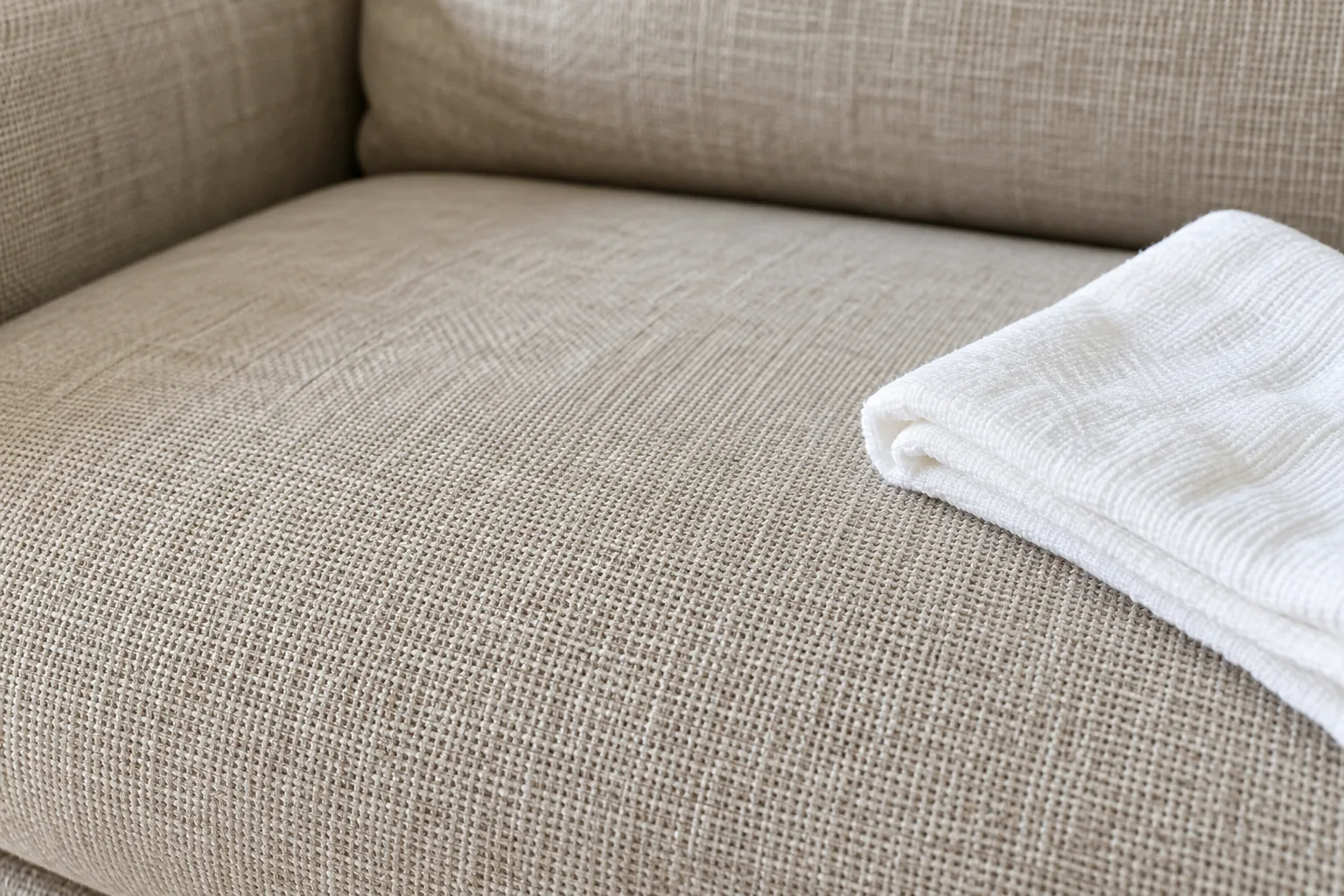
Why a water ring forms
Water can dissolve soil, dye or residues already present in the upholstery. As the wet area dries from the outside in, those materials may move to the boundary and settle in a visible line. The water itself may also affect a backing, finish or previously applied cleaning product. This is why a ring can appear even when the original spill was clear.
The shape of a ring does not tell you exactly what caused it. It may be surface residue, dye movement or moisture drawn from deeper in the cushion. Treating only the edge with more water can push the boundary farther out. Harsh brushing can leave a pale abrasion around a dark stain. Steam and hot air introduce further heat and moisture risks.
If a ring appears, let the area dry fully and photograph it before another attempt. A professional upholstery cleaning assessment can consider whether an even treatment of the wider panel is appropriate. In some cases, the fabric's construction or age limits what can be improved without changing its texture or colour.
When a removable linen cover can be washed
Only wash a cover when its own label explicitly allows it. Check the specified temperature, cycle and drying method. Consider whether all matching covers need to be washed together so they age and fade evenly. Do not force a damp cover back over a foam insert: it may stretch during fitting, shrink as it dries or hold moisture against the filling.
Measure the cover before washing if the fit is already tight, and follow the manufacturer's instructions on reshaping and drying. Some covers need professional care even though they unzip. If the sofa is a valuable or older piece, asking a specialist first can be cheaper than replacing a shrunken set of covers.
If liquid has reached the cushion insert, washing only the fabric cover will not necessarily remove odour or residue from the foam. Airflow may help with ordinary clean water, but a large spill or contaminated liquid may require professional assessment or replacement. The article on upholstery drying time explains why the surface and filling must both dry before use.
Product and equipment choices to avoid
Do not assume that a product labelled 'natural' is safe for linen. Vinegar, bicarbonate mixtures, bleach and strong detergents can alter dyes, leave residue or affect backing materials. Do not mix cleaners. Follow both the sofa label and the product's directions, and keep products away from children and pets.
An ordinary household vacuum is for dry soil, not liquid extraction. A rented upholstery machine may apply more water than the fabric can release, especially if its suction or technique is poor. If you are unsure about the material, a sofa cleaning service can assess the fabric, seams and existing marks before choosing a method. Ask what will be cleaned, how long it should dry and whether old rings can realistically be improved.
A practical finish
For everyday care, vacuum gently, rotate permitted cushions and keep dyed fabrics from rubbing against pale linen. For a spill, blot first, read the label and test any allowed method discreetly. Stop if colour transfers or a water ring develops. Go Cleaners London can assess an individual mark through its stain removal service and explain the limits before treating a visible linen panel.