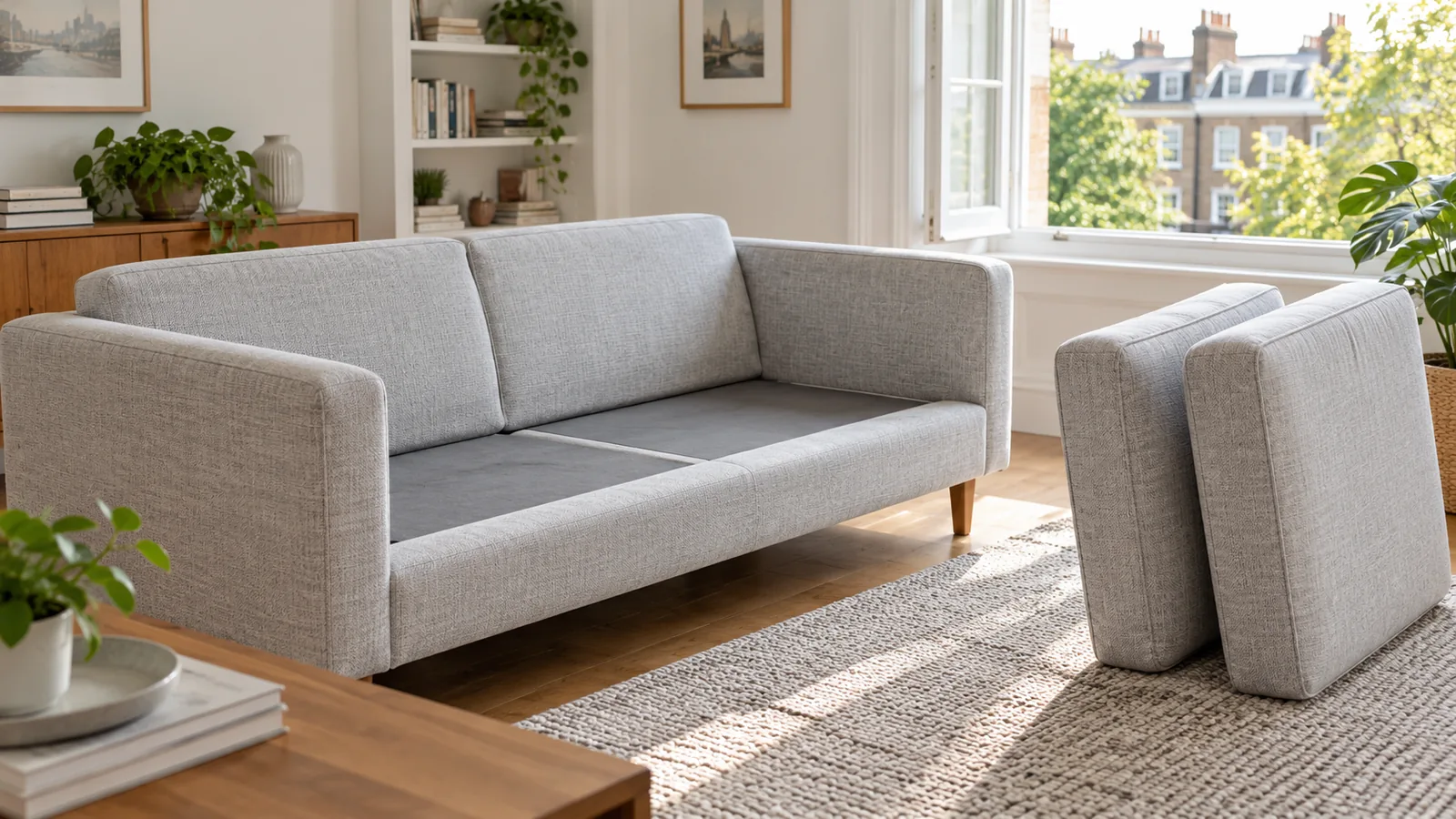
The sofa looks clean, but can anyone sit on it yet? Drying is part of the cleaning job, not an afterthought. Upholstery can feel dry at the surface while moisture remains in the backing or cushion filling. How long it takes depends on the fabric, the method used, the amount of water applied, room humidity and airflow. That is why a single promised drying time is rarely useful for every piece of furniture.
The practical aim is to keep air moving around the item, avoid adding more moisture and check its condition before use. This guide explains what normal drying can look like, how to help it along without heat damage and which signs suggest that a sofa has been over-wet.
Why two sofas dry at different rates
A tightly woven synthetic cover may release moisture more readily than a thick natural-fibre blend. A loose weave can allow liquid to travel into the backing; a foam cushion may then hold it below an apparently dry surface. Heavy upholstery, piping, tufting and deep seams all create places where drying is slower. So do cushions that were cleaned on both sides and returned to a crowded sofa frame.
The cleaning method matters too. Light surface treatment uses less liquid than hot water extraction. Even within one method, equipment, technique and the level of soil can change how much water remains. An old stain may need careful targeted work, but repeated passes over the same patch can increase drying time. If someone has tried to remove a spill by pouring water onto the cushion, moisture may have reached deeper layers before the professional clean even begins.
Room conditions complete the picture. A warm room with moderate humidity and gentle ventilation often supports drying better than a closed, humid room. Opening a window can help when outside air is suitable, but in cold damp weather it may do little. A dehumidifier can reduce room moisture if used according to its instructions. None of these measures can reverse a cushion that is saturated inside; they support normal evaporation rather than replacing proper extraction.
Ask what was cleaned and how wet it became
Before a cleaner leaves, ask which parts of the furniture were treated. Were only the arms and seats cleaned, or were removable cushions treated on both sides? Was a water-based method used, and were additional stain treatments applied? The answers help you decide when to rotate cushions, when to test them and whether a longer drying period is expected.
Follow the cleaner's specific instructions over a general internet estimate. The technician has seen the fabric, room and method in use. If you cleaned the item yourself, read both the machine and upholstery labels. The article on upholstery cleaning codes explains why a W or WS code does not mean that a sofa can be soaked safely.
Do not put removable cushion covers back onto damp inserts. A dry-feeling cover can trap moisture in foam, and a damp cover may stretch while wet then tighten as it dries. Stand cushions where air can reach both faces if the manufacturer or cleaner says that position is safe. Avoid leaning them against a surface that can transfer colour or absorb water.
Set up the room for sensible airflow
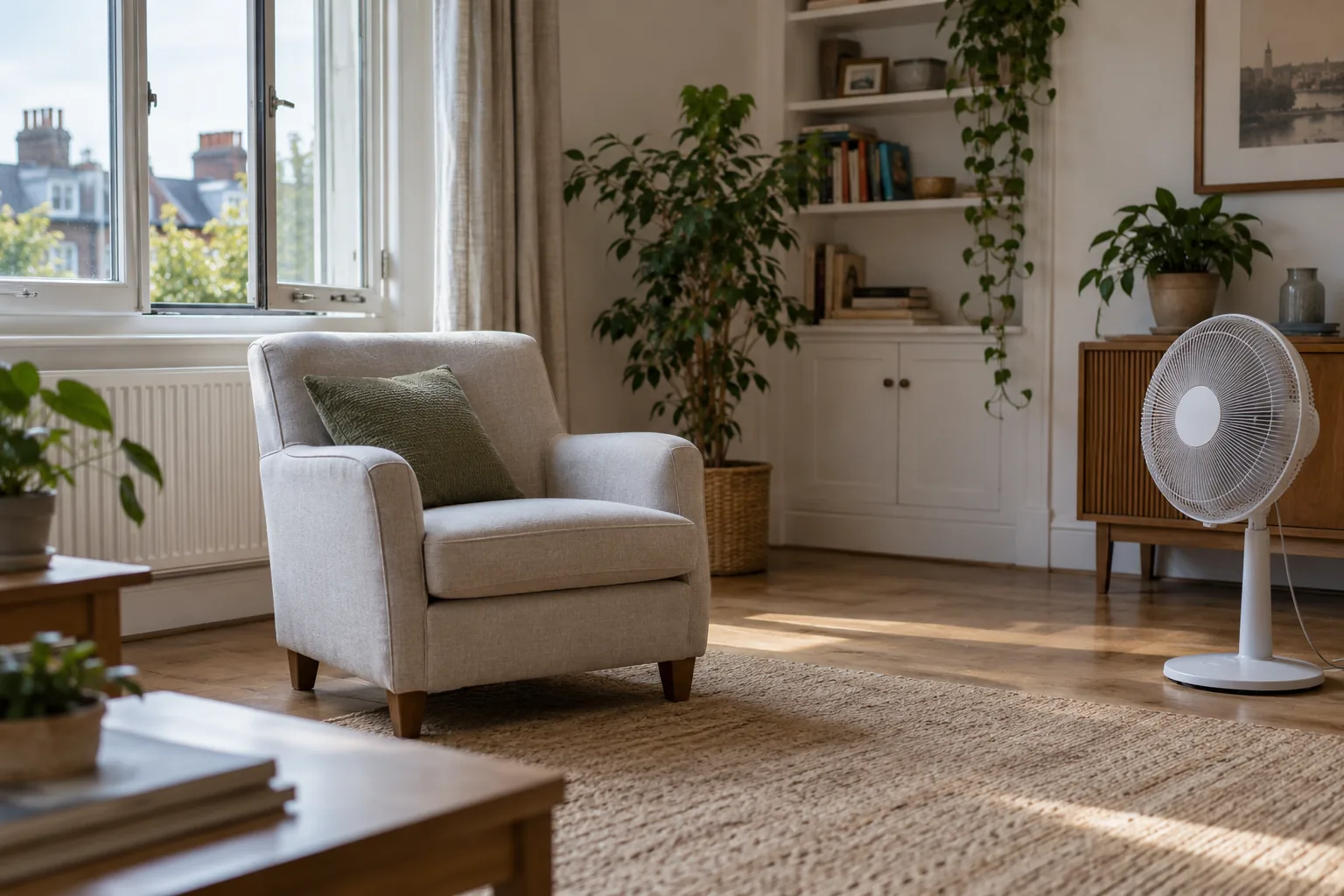
Give the sofa space. Move light loose items away from the sides and avoid covering the upholstery with blankets, plastic or protective sheets. If a fan is available, use it to circulate room air rather than directing a strong blast at one delicate patch. Keep cables clear of damp areas and use electrical appliances according to their instructions.
If the room is humid, a dehumidifier may help by drawing moisture from the air. Empty and position it as instructed by its manufacturer. Avoid placing a heater close to the sofa or using a hairdryer on the fabric. Direct heat can shrink certain fibres, distort backing, affect adhesives or set a remaining stain. It can also dry the top unevenly while the filling remains wet.
Keep the room in normal use only when paths and floors are safe. A freshly cleaned sofa may have a damp edge where it meets a wooden floor or skirting. Check for drips or transferred cleaning solution, and protect sensitive flooring in a way that does not obstruct ventilation. Children and pets should not climb onto damp upholstery or touch products left in the room.
How to judge whether the sofa is ready to use
Touch several areas with a clean, dry hand or cloth: the seat centre, arms, seams, cushion undersides and any spot-treated patch. A cool feeling alone is not reliable; a fabric can feel cool because of the room temperature. Compare it with an untreated area of the same material. Look for darker patches, dampness on a white cloth, water rings or a musty smell.
Press a clean dry cloth gently onto a seam for a moment, then inspect it. Do not press hard enough to drive moisture further into the filling. If a removable cushion still feels heavier or cooler than a similar dry one, allow more time and airflow. Only replace throws, fitted covers or cushions when the upholstery and inserts are fully dry. Sitting too early can compress damp filling and transfer moisture to clothing.
A surface that appears dry but develops a new ring as it dries is a reason to pause. The ring may be dissolved soil or a previous spill moving back towards the surface. Spraying more cleaner on it without understanding the source can enlarge the problem. The guide to refreshing a fabric sofa without over-wetting it explains why controlled moisture is important from the start.
Warning signs of over-wetting
Persistent dampness well beyond the cleaner's expected window, an unpleasant damp smell, visible dye movement or water appearing at seams are signs that more than ordinary drying may be involved. Ask the cleaner what method and amount of solution were used and whether they can assess the item. If the cushion insert has absorbed a large spill, the issue may sit beneath the fabric and require more than surface treatment.
Do not assume that a room deodoriser will solve a damp odour. It can mask the smell while moisture remains. Likewise, do not repeatedly vacuum wet upholstery with an ordinary household vacuum: most are not designed for liquid and may be unsafe. Use only equipment intended for extraction and only when the fabric permits it.
If the source of moisture is contaminated water, such as a leak with an unknown source, the decision is more serious than drying time alone. The padding may not be cleanable to a suitable standard. Seek specialist advice and consider replacement where appropriate. Visible mould, extensive dye bleed or structural damage also need a proper assessment rather than another home treatment.
Plan around cleaning day
If the sofa is essential in the evening, ask about the likely drying period when booking and arrange an alternative place to sit. Try to leave a clear route around the furniture. In a small London flat, it may help to clean one seating item at a time so that the room remains usable. Discuss movable cushions, access to power and ventilation in advance.
The sofa cleaning service and wider upholstery cleaning service are relevant when a fabric needs an assessed method. Tell the team about care labels, previous water rings and any old spill that has reached the filling. For a specific mark, ask whether targeted stain removal is suitable before the whole item is cleaned.
A useful drying check
There is no universal hour when every sofa becomes ready. Allow airflow, keep heat gentle, inspect the slowest-drying parts and follow the instructions from the person who cleaned it. If the fabric stays damp, smells musty or shows new rings, seek advice before anyone sits on it or covers it. A well-planned clean includes enough time for the material beneath the visible surface to dry too.