
A patterned wool rug can contain several dyes, fibres and finishing treatments in one piece. When moisture is added, a dark red border might release colour onto a pale centre, or a fringe can pick up dye from the body of the rug. Once colour has moved, simple washing may spread it farther. Checking colourfastness before cleaning is therefore a practical precaution, especially for handmade, older or strongly coloured rugs.
A hidden-area test can reveal an obvious problem, but it cannot certify that every part of the rug will respond the same way. This guide explains what to inspect, how to make a cautious test and when the safer choice is a rug specialist rather than a home cleaning experiment.
Identify what is actually in the rug
Read any label, care instructions or purchase documents. A rug described as wool may have cotton foundations, silk highlights, a synthetic backing or a fringe made from a different material. The visible pile may be wool while the backing holds dyes and residues that react to water. Construction matters as much as the fibre listed in a shop description.
Look at the front and back in good light. Note distinct colour areas, especially where a dark border meets a light field. Check for signs of past bleeding: blurred pattern edges, pink or blue marks on a pale fringe, or a tide line from an earlier spill. Wear, fading and uneven pile can also change how a rug appears. Photograph the rug before any test so you have a record of the original pattern and condition.
If the rug is valuable, antique, hand-knotted or of uncertain origin, a small DIY test may still be too risky. Ask a specialist to assess the fibre and dye. The article on handmade rug cleaning methods explains why a method suitable for one rug can fail on another.
What colour bleeding looks like
Colour bleeding means dye leaves one area and moves into another material or another part of the same rug. It may appear on a white cloth during blotting. It may also show only after the rug has been wetted and dried, when a light section takes on a coloured haze. Dye migration can be subtle at first and then become more visible along a drying line.
Do not confuse this with ordinary loose lint. Wool may shed fibres, especially when new, without its dye running. Nor is every dark mark transferred dye; ground-in soil can make a border appear smudged. A wet test and a careful visual inspection provide clues, but they do not replace knowledge of the rug's construction.
Previous products can alter the result. A rug that has been spot treated with bleach, strong detergent or an unknown cleaner may have unstable colour in one patch even if an untouched area tests well. Similarly, sunlight may weaken dyes unevenly. Mention any known history when discussing a professional clean.
Make a cautious hidden-area test
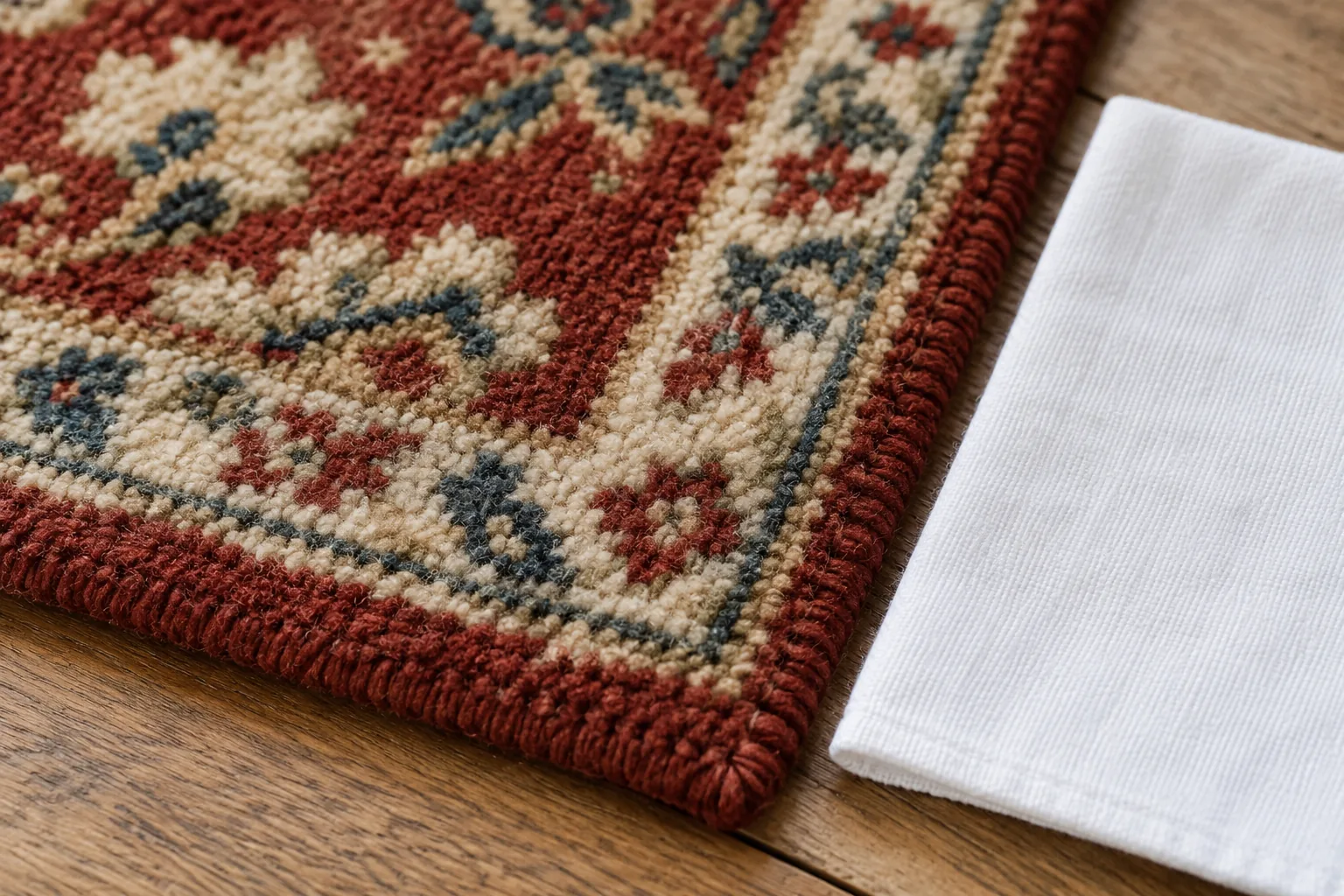
Only test if the manufacturer's guidance permits a damp test and the rug is not especially fragile or valuable. Choose a small concealed spot on a coloured area, away from loose edges and repairs. Use a clean white cloth dampened only as the care instructions allow. Press lightly for a short time; do not rub. Inspect the cloth for transferred pigment and the rug for any immediate change.
Allow the spot to dry completely with normal room airflow. Check again in daylight for a ring, pale patch, rough texture or blurred pattern boundary. Test each strong colour separately if the maker's instructions permit it. A red border passing one test does not tell you whether a blue motif or dark brown field is stable.
Stop if colour appears on the cloth or the rug changes. Do not keep testing with stronger solutions to see whether one will 'work'. A stronger solution can increase dye release. Keep the rug off sensitive flooring until the test area is fully dry, and check beneath it for transferred moisture or colour.
Why a successful test is still limited
A home test uses a small amount of moisture in one place. Full cleaning introduces a larger wet area, contact between colour sections and a longer drying period. The backing may contain dyes that a surface test never reaches. Detergent, temperature, agitation and drying speed can all change the outcome.
That is why a tiny test does not justify soaking a wool rug in a bath or using a carpet machine across its entire face. A rug may look colourfast while wet, then bleed as moisture moves through the pile and evaporates. It may also shrink, ripple or lose its finish. The general guide to cleaning wool carpets is about a different construction and should not be applied automatically to a movable rug.
If you are considering professional rug cleaning, ask how colourfastness will be assessed and what happens if a dye proves unstable. A responsible process may be more cautious, or it may conclude that only limited dry maintenance is suitable. There should be no promise that every stain or old bleed can be removed.
Responding to a spill on a patterned wool rug
Lift loose solids with a blunt edge. Blot liquid promptly with a clean white absorbent cloth, using a dry part as it fills. Do not scrub across colour boundaries. If liquid has reached the underside, lift the rug carefully and inspect the floor. Keep air moving around the damp area without applying direct heat.
Avoid pouring water or a stain remover over the spill to dilute it. This can carry dye and soil into adjacent light areas. Do not add vinegar, bleach or another household remedy without knowing the rug's dye and backing. If colour transfers to the cloth, stop and seek specialist advice. Take note of the substance spilled and any treatment already applied.
An old coloured mark may be a combination of the spill and dye movement. Removing one without affecting the other can be difficult. A targeted stain assessment should take the rug material into account. If the rug has been wet for a prolonged period or smells musty, the concern includes moisture in its foundation, not just appearance.
Routine care with less dye risk
Use dry vacuuming at a suitable setting for the pile and construction, avoiding an aggressive beater bar unless the maker permits it. Protect loose fringes from being sucked into the machine. Rotate the rug occasionally if safe, so wear and light exposure are more even. Keep it away from recurring damp, and check the floor beneath for condensation or leaks.
When moving a large rug, ask for help rather than dragging it by a corner. Pulling can distort the foundation and make later cleaning harder. Store a wool rug clean and dry, with suitable protection against pests and moisture. If the rug has a distinctive fringe, repair or conservation may be more relevant than cleaning when threads are loose.
Choose the next step from the evidence
The best initial check is a careful inspection of the label, construction, colour boundaries and past damage. A permitted hidden-area test can reveal obvious dye movement, but a clean test is not a guarantee for whole-rug washing. For a valuable, strongly dyed or previously stained rug, consult Go Cleaners London about its rug cleaning service or a dedicated rug specialist before adding moisture. The goal is to preserve the rug, even if that means accepting a limited cleaning result.