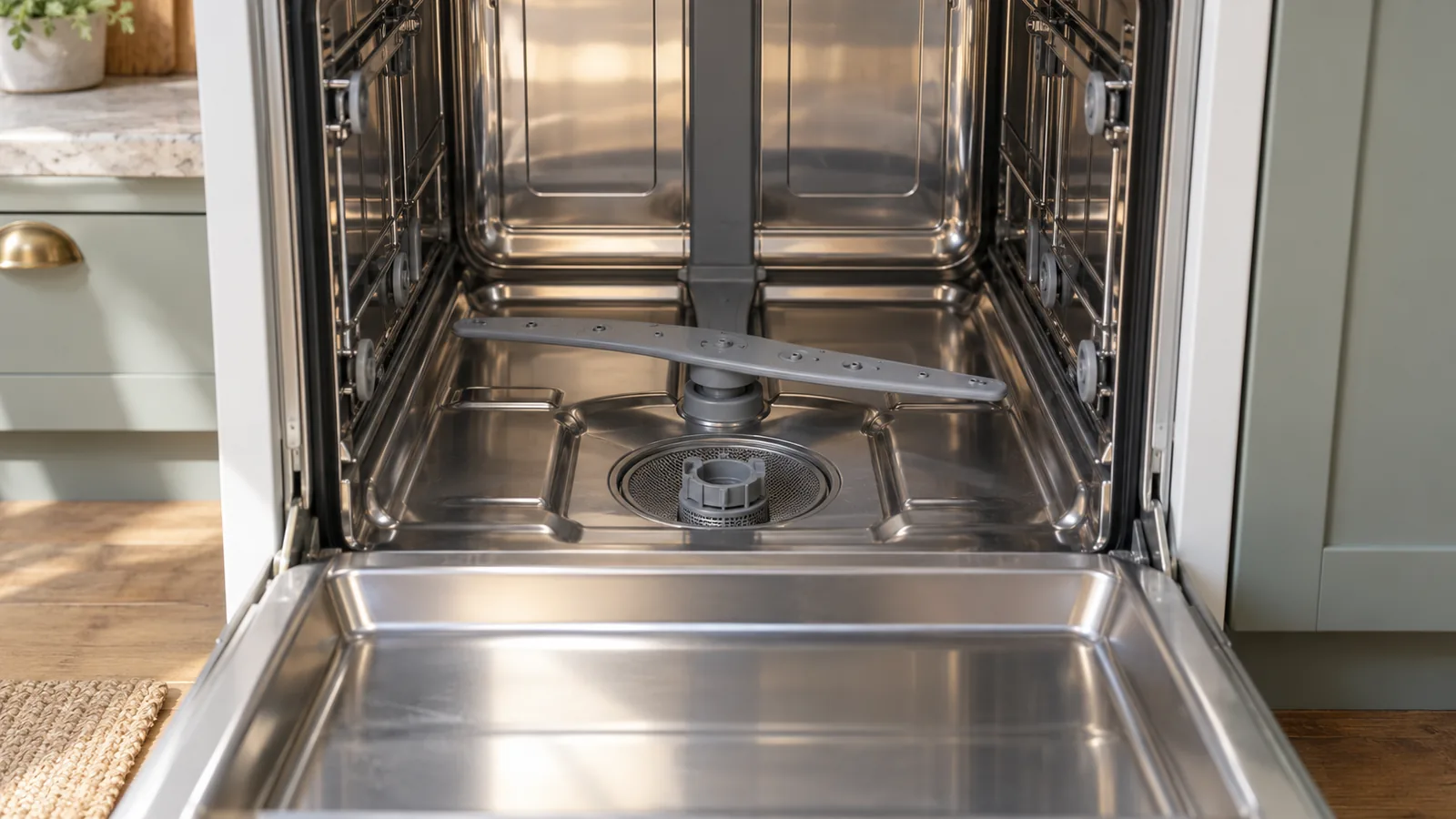
Food particles collect where dishwasher water drains and recirculates. On many domestic machines, a removable filter in the floor catches some of that debris. If it becomes clogged, dishes may emerge gritty, the machine can smell unpleasant and water may not move as intended. Cleaning the filter is usually a small maintenance task, provided you use the method for the exact model and put the parts back correctly.
Dishwashers differ in their filter design. Some have a twist-out cylinder and a flat screen; others use a self-cleaning arrangement or a different access point. Never force a component simply because an online photograph looks similar. Locate the model's manual first, then use the steps below as a framework for inspection, cleaning and deciding when the problem needs repair.
Find the filter and check the manual
Switch the dishwasher off and let a recent wash finish and the interior cool. Remove the lower rack if the manual directs it. Look at the base around the lower spray arm. The filter may be a cylindrical piece with a handle, surrounded by a flat mesh or plate. Read how it unlocks and which parts are intended for users to remove. Photograph the assembled position before lifting anything out.
If there is standing water above the filter, do not reach into an unseen pool with bare hands. Broken glass or sharp food packaging may be present. Follow the appliance guidance for drainage faults. A small amount of water in a sump can be normal for some machines, but water covering the floor after a completed cycle warrants investigation. Do not start by taking apart a pump housing.
The full dishwasher cleaning guide covers racks, seals and interior surfaces. This article focuses on the removable filter and its seating, because a clean interior spray does not replace checking the place where food debris collects.
Remove debris without sending it into the drain
Take out the filter exactly as the manufacturer describes, often by turning a marked handle and lifting. Some pieces are linked; keep them together and note their order. Check the exposed sump only as far as the manual allows. Lift visible scraps with kitchen paper and put them in the appropriate waste. Avoid pushing them deeper into the drain opening.
Be alert for small pieces of glass, bones, labels and fruit pips. Use gloves if needed and do not feel around blindly. A hard object may be wedged against a pump cover that is not meant to be removed as routine cleaning. If you cannot safely lift it without dismantling a protected part, stop and use the appliance maker's service instructions.
Carry the filter to the sink on a tray or towel so trapped residue does not drip over the kitchen. A separate bowl can collect the debris you loosen. The article on unpleasant household odours discusses broader sources; if the smell is strongest inside the dishwasher, food caught in the filter is an efficient first place to look.
Wash the removable parts gently
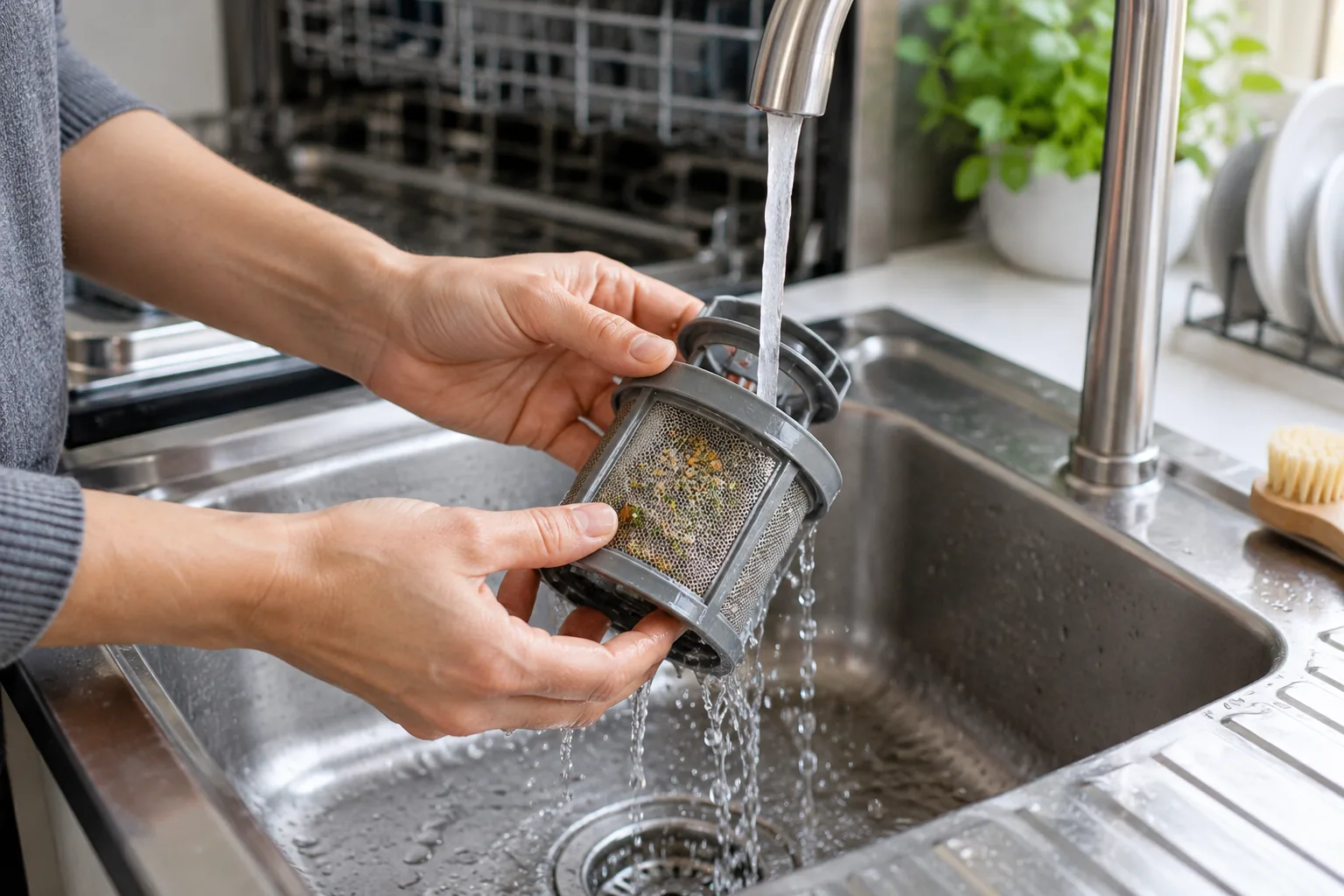
Rinse the filter under running water as permitted by the manual. A soft brush can lift food caught in fine mesh; brush with the weave rather than gouging it. Use a mild washing-up solution if the maker allows it, then rinse thoroughly. Avoid abrasive pads that tear mesh or weaken plastic clips. Do not boil a filter, put it in a dishwasher cycle or soak it in strong chemicals unless its instructions explicitly allow that treatment.
Look through the filter against the light. A layer of grease or mineral scale may make it appear opaque even after crumbs are gone. Follow the manual's approved method for those deposits. If a mesh is torn, a seal is missing or the handle will not lock, order a correct replacement part. A filter that no longer fits properly cannot do its job simply because it looks clean.
Wipe the accessible filter seat and surrounding floor with a soft cloth. Keep fingers away from sharp edges and do not lift covers that the maker reserves for service. Check the lower spray arm for obvious debris in its holes, using only the approved method to remove or clean it. A blocked spray arm can produce poor wash results even when the filter is clear.
Reassemble and test the fit
Return every filter part in the order shown in the manual. Align the markers and turn only until the specified locked position. It should sit flat without rocking. A filter left loose can allow food to reach areas it should not and may interfere with the spray arm. Spin the lower arm gently if the manual permits a check, making sure it moves freely above the filter and rack.
Put the lower rack back and check that its wheels sit on the runners. Do not run a cycle with a missing filter unless the manufacturer expressly says it is safe. If you used washing-up liquid on the filter, rinse it very well; suds from hand dish soap can cause trouble in a machine designed for dishwasher detergent.
Run the dishwasher according to the manual after cleaning, observing for leaks, new noises or an error code. If water still remains at the bottom or dishes continue to come out dirty, do not assume the filter was the only cause. Drain hose, spray arm, pump or loading issues may need inspection by an appropriate appliance professional.
Understand recurring odours and drainage trouble
An odour can also come from the door seal, a dirty lower edge, food on racks or water that does not drain fully. Wipe accessible seals with a compatible method and inspect the door edges. Check that scraps are removed from plates before loading to the extent the dishwasher maker recommends. Avoid excessive pre-rinsing if the appliance's cleaning programme is designed for normally soiled dishes; follow its instructions.
If an odour returns soon after the filter is cleaned, note when it appears. A smell only when the machine is closed for days may differ from a smell with standing water after each wash. Record any error code and the wash programme used. This gives an appliance technician useful clues. Do not pour strong drain cleaner into the dishwasher; it may damage components and is unlikely to solve a mechanical blockage safely.
The filter schedule depends on household use and the maker's guidance. A busy family cooking daily may need to inspect more often than a household running a few light cycles a week. A quick visual check when you unload the lower rack can show whether debris is building up before wash performance changes.
Place filter care within kitchen cleaning
A dishwasher cleaning service can help with accessible interior surfaces and a removable filter where the appliance instructions permit it. Explain any standing water or fault code before booking; that may require repair rather than cleaning. A kitchen cleaning visit can address nearby sink and worktop surfaces, while deep cleaning can cover wider buildup in the room. These services should not be confused with servicing a pump or electrical fault.
The useful routine is to locate the correct part, lift food debris out of the system, wash the filter gently, lock it back into its seat and observe the next cycle. Stop when access requires force or a fault persists. A properly fitted filter is a small component, but cleaning it carefully can prevent avoidable odours and make the dishwasher easier to maintain.