Hidden Office Germ Hotspots: The Critical Areas You Are Forgetting to Sanitize
A tidy office often creates a false sense of security. While clear desks and empty waste bins look pristine, invisible microscopic threats continue to thrive on everyday surfaces. Maintaining a truly hygienic commercial environment requires looking past cosmetic neatness and focusing on deep biological sanitization to protect employee health and boost daily productivity.
Why Superficial Office Tidy-Ups Fail to Protect Workplace Health
The Difference Between Aesthetic Neatness and True Sanitization
Many businesses mistake a visually organized office for a clean one. Straightening stacks of paper, emptying bins, and wiping down surfaces with standard wet wipes may remove visible clutter, but it rarely eradicates deep-seated pathogens. True sanitization requires targeted chemical agents and techniques that break down cellular walls of bacteria, creating a genuinely safe workspace rather than a superficial facade.
How Dry Dusting Spreads Rather Than Eliminates Pathogens
Using traditional feather dusters or dry cloths is one of the fastest ways to compromise office air quality. Instead of capturing dust, these tools simply launch fine particles, dust mites, and bacteria into the air, where they circulate before settling back onto surfaces or being inhaled by staff. Professional maintenance teams use damp microfiber technology and HEPA-filter vacuums to trap and physically remove these irritants permanently.
The Financial Cost of Workplace Absenteeism Caused by Surface Germs
Sick days cost companies thousands of pounds every year in lost productivity and operational delays. Minor illnesses like the common cold, flu, and stomach bugs spread exponentially across communal office layouts through contaminated touchpoints. Investing in rigorous, structured biological deep cleaning directly reduces the rate of cross-contamination, protecting your staff and your bottom line.
High-Touch Danger Zones: From Shared Hot-Desks to Communal Keyboards
The Cross-Contamination Risks of Modern Agile Hot-Desking
The shift toward flexible office spaces and hot-desking means that a single workstation might be used by three or four different employees in a single week. This rapid rotation turns desks, armrests, and monitor buttons into highly active vectors for viral transmission. Without strict sanitization rules between shifts, hot-desks rapidly become the primary origin point for office-wide outbreaks.
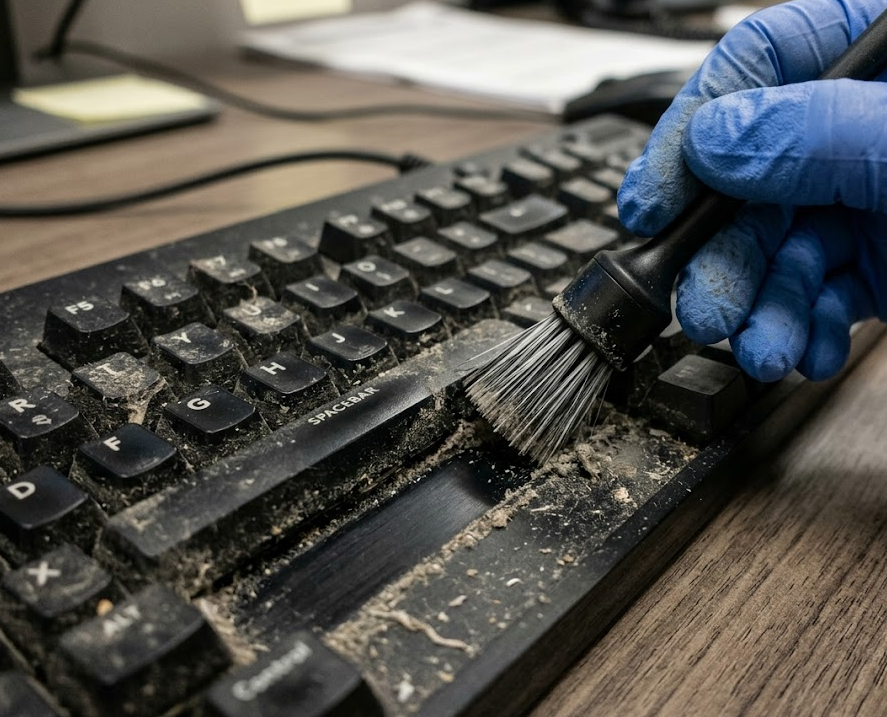
Safe Sanitization Techniques for Delicate Computer Electronics
Computer keyboards, mice, and desk phones are notorious germ magnets, but they cannot simply be sprayed with harsh liquid disinfectants without risking hardware damage. Cleaning these high-touch items requires specialized, anti-static isopropyl alcohol solutions and precision swab tools. These methods break down skin oils and grime trapped within the key wells without compromising the delicate electronic components beneath.
Microfiber Technology vs. Standard Wipes on Workspace Tech
Standard paper towels and cheap wet wipes often leave behind lint and a sticky residue that actually attracts more dust and bacteria over time. In contrast, split-fiber microfiber cloths carry a natural positive charge that attracts and locks in negatively charged dirt particles and microbes. Utilizing the right materials ensures that your workspace tech remains thoroughly sanitized without leaving film or smudges behind.
The Office Breakroom and Kitchen: Where Food Prep Meets Cross-Contamination
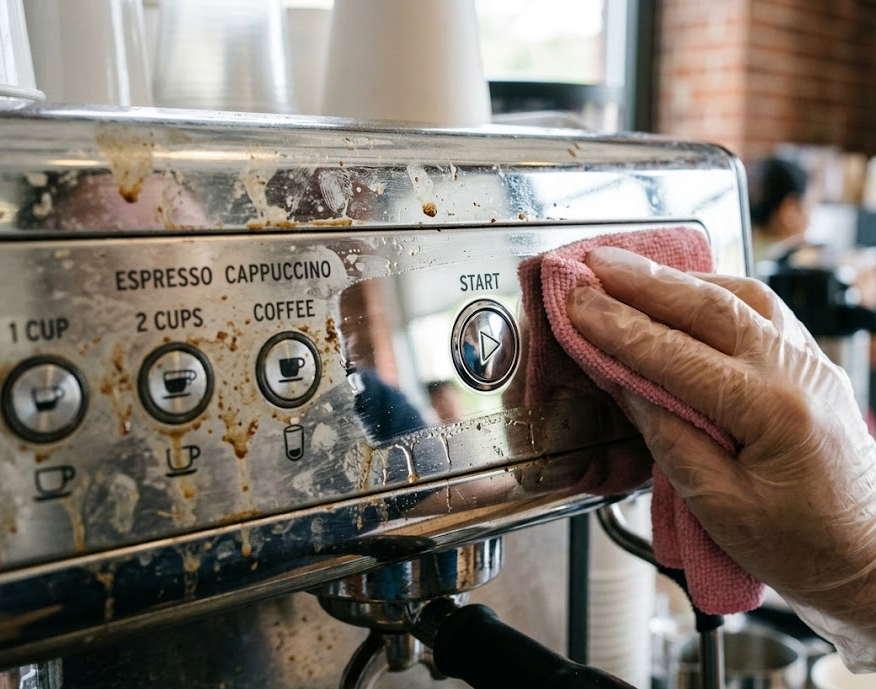
The Microbe Count on Shared Coffee Machines and Microwave Buttons
Statistically, the office breakroom holds a higher concentration of bacteria than a restroom seat. The buttons on the shared coffee maker and the keypad of the microwave are touched by dozens of people daily, often right before they handle food. When multiple hands touch these warm, slightly humid appliances, they create the ideal breeding ground for rapid microbial growth.
Refrigerator Door Handles as Invisible Vectors for Seasonal Bugs
The communal fridge handle is touched by almost every person in the building, yet it is rarely included in daily office cleaning routines. Because people use it with unwashed hands throughout the morning, it gathers layers of oils, food residue, and biological matter. Ensuring these specific handles are treated with hospital-grade disinfectants is crucial to preventing the spread of seasonal viruses.
Why In-House Staff Cleaning Rotas Ultimately Fall Short
Relying on employees to maintain breakroom hygiene via a voluntary rota system almost always leads to inconsistent results. Staff members lack the commercial equipment, training, and time required to execute proper sanitization protocols alongside their core business duties. Partnering with a professional service like Go Cleaners London guarantees that these high-risk areas receive the rigorous, regular disinfection they require to remain safe.
The Fabric Trap: Why Boardroom Chairs and Reception Upholstery Require Deep Extraction
How Porous Textures Lock in Skin Cells, Sweat, and Liquid Spills
Hard surfaces are easy to wipe clean, but porous fabrics present a completely different challenge. Boardroom seats, desk chairs, and office sofas act like massive filters, trapping millions of dead skin cells, sweat particles, and accidental coffee spills deep within their fibers. Over time, this organic matter decays, leading to stale odors and an environment where bacteria thrive completely unnoticed.
First Impressions: The Hygiene Standard of Your Reception Area Sofas
Your reception area is the very first thing clients, candidates, and stakeholders see when they walk through your doors. Stained, faded, or foul-smelling seating immediately damages your company’s professional reputation. Ensuring your greeting space reflects high standards of cleanliness signals to visitors that your organization pays attention to detail, health, and operational excellence.
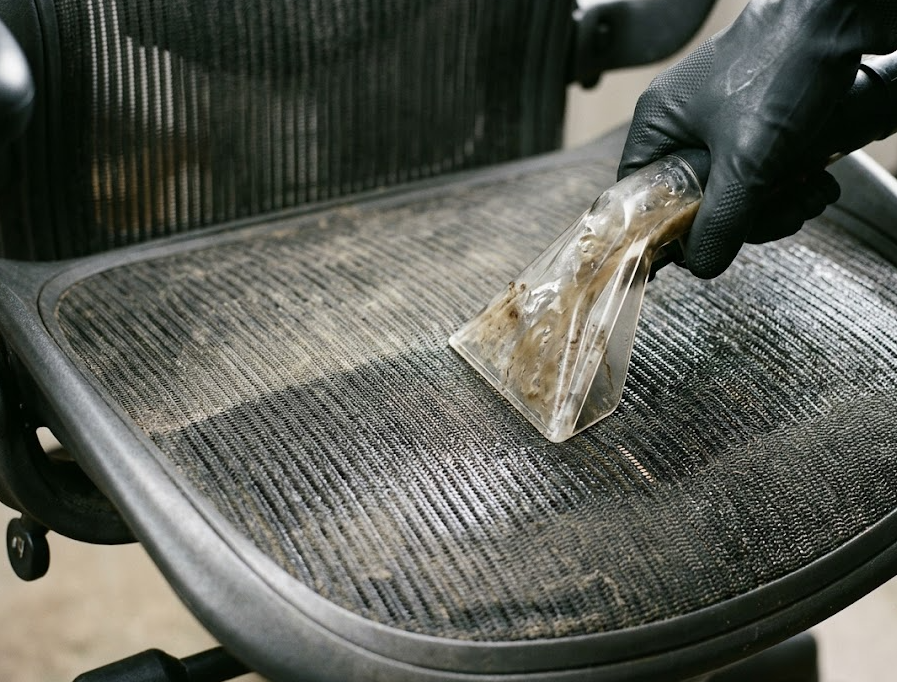
Restoring Comfort and Cleanliness with Deep Hot Water Extraction
Vacuuming only removes the loose dirt resting on top of fabric fibers. Eradicating deeply embedded grit, allergens, and sticky stains requires a professional-grade fluid extraction process that flushes the material from the inside out. Incorporating commercial-grade Upholstery Cleaning into your corporate facility plan safely washes the weave, sanitizing your furniture and extending its operational lifespan.
Air Quality and Invisible Bacteria: The Impact of Unsanitized Workspace Dividers
Acoustic Panels and Desktop Privacy Screens as Respiratory Traps
Fabric acoustic panels and desktop privacy dividers are highly effective at lowering office noise levels, but they are also major respiratory traps. Because they are positioned directly in front of employees’ desks, they continually catch airborne particles from coughs, sneezes, and daily conversations. Over months of use, these panels build up a heavy load of biological residue that standard cleaning completely misses.
The Dangerous Cycle of HVAC Re-circulation and Fabric Dust
When commercial heating, ventilation, and air conditioning (HVAC) systems activate, they create consistent airflow across the office floor. This moving air continuously dislodges fine dust and dried microbial matter from vertical fabric dividers, recirculating it back into the breathing zone. This constant loop of airborne irritants degrades indoor air quality and keeps pollutants moving through the office space.
Minimizing Employee Throat Irritation and Seasonal Workplace Allergies
Unexplained throat tickles, dry coughs, and itchy eyes among office workers are frequently blamed on seasonal changes, but the real culprit is often the office environment itself. Deeply sanitizing fabric dividers and vertical surfaces removes the hidden reservoirs causing these micro-allergies. Keeping these screens dust-free ensures your workforce breathes cleaner air, resulting in fewer respiratory complaints and a more focused workforce.
Partnering with Local Commercial Cleaners to Maintain a Sterile Corporate Environment
Delegating Rigorous Technical Requirements to Fully Vetted Crews
Managing facility hygiene at a corporate scale requires specialized training, strict adherence to health regulations, and professional-grade chemical management. Delegating these duties to an experienced external provider takes the logistical burden off your operations team. Fully insured and thoroughly vetted crews ensure your workplace stays clean safely and efficiently, giving you complete peace of mind.
Tailored Operational Maintenance for Busy London Corporate Districts
Every business operates on its own unique schedule, meaning cleaning services must be highly flexible to avoid disrupting daily workflows. Whether your office requires discreet, late-night deep cleaning, early morning surface sanitization, or weekend upholstery restoration, customized service plans adapt to your corporate hours seamlessly. This approach keeps your workplace immaculate without causing a single minute of operational downtime.
Securing Rapid-Response Support via Our Dedicated Local Branches
When accidental spills occur or an urgent workplace sanitization is required ahead of a major corporate event, having a local team nearby is an invaluable asset. Our extensive network of mobile commercial units allows us to deploy experienced staff to your property at a moment’s notice. You can instantly coordinate reliable maintenance through our expert Poplar cleaners team or book a dedicated commercial crew tailored to the unique requirements of your specific London borough.