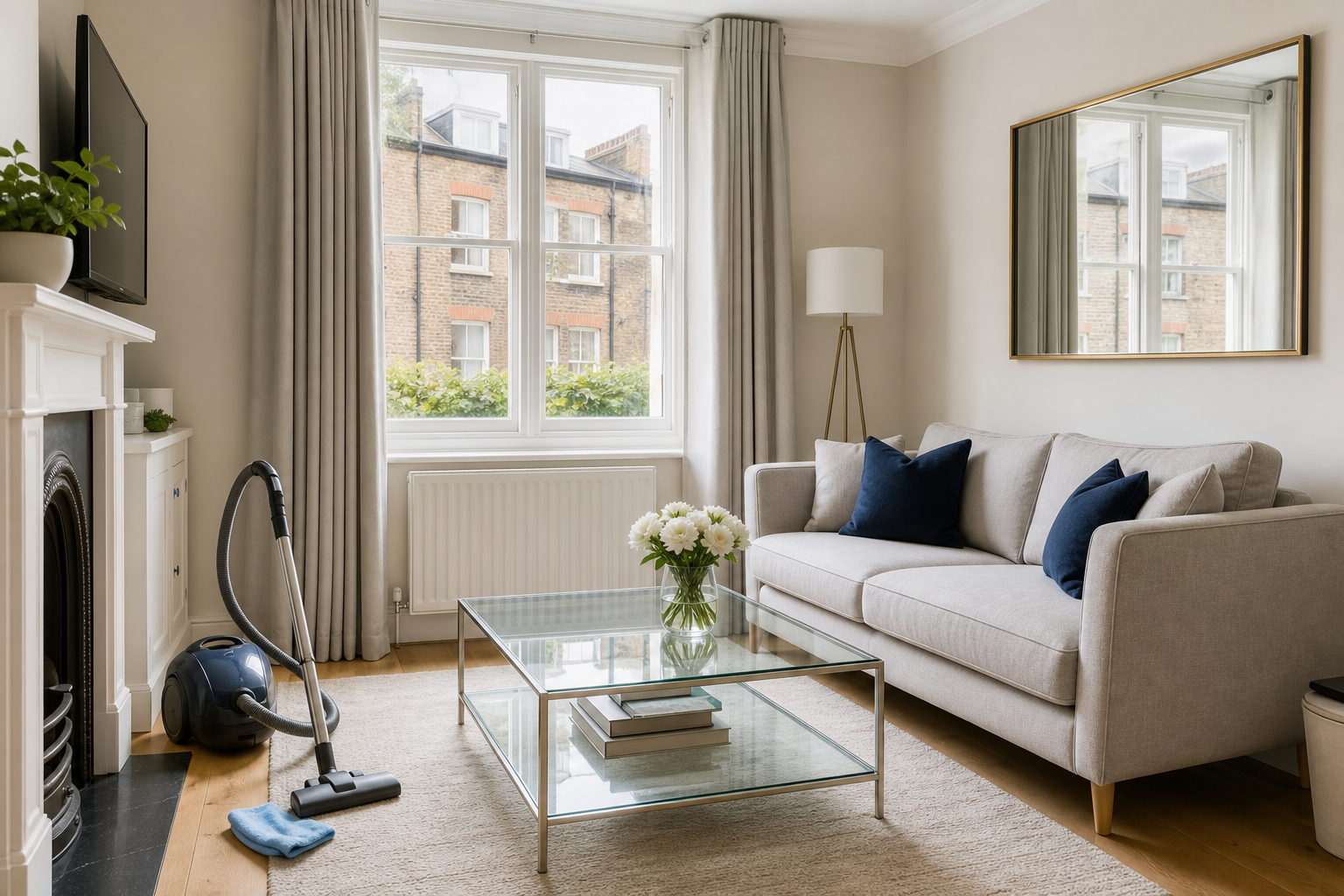
How this 90 minute viewing clean works
Purpose and approach
This plan is built for speed and perception. In a last minute property viewing cleaning situation, the goal is to make the home feel:
- Spacious (clear floors, fewer items on surfaces)
- Bright (open blinds/curtains, clean key reflective areas)
- Fresh (remove odours at the source rather than masking)
- Looked-after (bathroom and kitchen visibly tidy and hygienic)
Work in a single, continuous pass. Don’t bounce between rooms. Keep tasks time-boxed: when the timer ends, move on. A viewer will forgive an unpolished oven interior far more readily than they’ll forgive a grubby toilet, overflowing bin, or cluttered hallway.
Who this is for
- Homeowners who need a quick clean before viewing and want a practical order of operations.
- Tenants with short-notice agent viewings who need to “reset” a lived-in flat fast.
- Lettings agents/landlords who need a rapid spruce between appointments.
- Professional cleaners delivering a focused refresh rather than a full deep clean.
Prep and tools (0–5 minutes)
Gather a viewing-clean kit
Before you start moving, grab everything you’ll need so you’re not hunting for sprays mid-clean. A basic kit for a 90 minute viewing clean:
- 2–4 microfibre cloths (one for bathroom, one for kitchen, one general)
- Multi-surface spray (or mild detergent + water)
- Glass/mirror cleaner
- Disinfectant wipes or disinfectant spray
- Bin liners (at least one spare)
- Hoover (or cordless vacuum) + attachments
- Broom and mop (or flat mop)
- Duster (or a dry microfibre cloth)
- Rubber gloves
- One laundry basket / tote for rapid decluttering
If you have pets: add a lint roller or slightly damp rubber glove for quick hair removal on sofas and throws.
Plan the route
Use a simple route so you always move “forward” through the flat:
Entry → Living area → Kitchen → Bathroom → Bedroom(s) → Final sweep
- Work top-to-bottom (dust/wipe higher surfaces before floors).
- Work left-to-right in each room to avoid missing patches.
- Keep windows open briefly where possible for ventilation (even 3–5 minutes helps).
Entry and living area (5–30 minutes)
First 10 minutes: declutter and stage
This is the highest-impact part of any quick clean before viewing because it changes how big the property feels. Aim for “tidy, neutral, and easy to walk through”.
- Clear the hallway: shoes into a cupboard/box, coats on hooks, bags out of sight.
- Put all loose items into the basket (papers, chargers, kids’ bits, toiletries that wandered out, random cables).
- Collect mugs/plates and take them straight to the kitchen sink.
- Fold throws, straighten cushions, and reduce “busy” patterns if you can (one neat throw looks intentional; three can look like clutter).
- Remove laundry from sight (especially drying racks in living spaces if possible).
- Open curtains/blinds fully to maximise light (London flats often benefit immediately from this).
If you need more help with speed-decluttering, see how to organise your house quickly for a simple step-by-step approach.
Next 15 minutes: visible cleaning
Now do a fast “what your eye lands on” clean. Focus on the surfaces a viewer will naturally look at while standing in the doorway or walking to the seating area.
- Quick dust: shelves, TV unit, coffee table, window sills (dry microfibre is usually fastest).
- Wipe visible marks on: coffee table, dining table, desk surfaces, remote controls tray.
- Spot-clean fingerprints on: light switches around the entry and living area.
- Hoover: high-traffic lanes first (entry path, around the sofa, under the coffee table edge). Use the crevice tool quickly along skirtings if dust is obvious.
- If you have time: wipe any obvious scuffs on interior glass (balcony doors) for a brighter feel.
Tip for small London homes: if a room feels tight, clear the floor first (even if surfaces aren’t perfect). A visible, clean floor reads as “space”.
Kitchen (30–60 minutes)
30–45 minutes: surface and appliance tidy
Kitchens sell the idea of daily life. For last minute property viewing cleaning, you’re aiming for: no smells, no dishes on show, and clear worktops.
- Deal with dishes fast: load the dishwasher, or stack neatly in the sink and rinse (don’t leave food debris visible).
- Clear worktops: put away oils, spices, delivery leaflets, and small appliances if you can (kettles and toasters can stay if the area is tidy).
- Wipe worktops and splashback: one continuous wipe, edges included.
- Bin check: remove food waste and replace the liner if there’s any odour risk.
- Sink and taps: quick clean and polish. A shiny tap reads “clean kitchen” instantly.
If the home has cooking smells, vent quickly (window open a few minutes) and remove the source (bins, food scraps). If odours are stubborn, use neutral methods rather than heavy fragrance; the guide on get rid of unpleasant odours in the house is a useful reference.
45–60 minutes: polish and small repairs
This is the “close-up” stage — what a viewer sees when they lean in to check storage, appliances, or finishes.
- Wipe fronts: fridge door, microwave exterior, and a quick pass on cupboard fronts at eye level.
- Hob: remove crumbs and obvious grease spots; ensure it looks cared for (don’t attempt heavy degreasing in a rush).
- Toaster crumbs: tip into the bin and wipe the outside.
- Floors: sweep visible crumbs, then mop only the obvious zone (around the sink and entry to the kitchen). Don’t flood the floor; quick-drying is key.
What to skip in a 90 minute viewing clean: oven interior, deep descaling, pulling out appliances, detailed cupboard reorganisation. These can backfire if they eat your time.
Bathroom (60–75 minutes)
60–70 minutes: high-impact cleaning
Bathrooms are where cleanliness is judged hardest. Even in a quick clean before viewing, give this room a focused 10 minutes.
- Toilet: clean the rim, seat (top and underside), lid, and flush handle/button.
- Basin and taps: wipe toothpaste marks, polish taps, rinse and wipe dry.
- Mirror: glass cleaner, quick buff to remove smears.
- Shower/bath: remove hair, rinse the drain area, wipe the visible tray/bath edge.
- Touchpoints: disinfect the door handle and light switch.
70–75 minutes: finishing touches
- Replace damp towels with fresh, neatly hung ones.
- Hide toiletries (a small, tidy set is fine; a crowd of bottles is not).
- Empty the bathroom bin if there’s any smell or visible waste.
- Ventilate briefly; avoid overpowering sprays that can make viewers suspicious.
Bedrooms, final sweep and staging (75–90 minutes)
75–85 minutes: bedroom basics
Bedrooms should look calm and easy to maintain. You’re aiming for neat lines and clear surfaces.
- Make the bed properly (tighten the duvet, plump pillows, align the throw if you use one).
- Clear bedside tables: leave one neutral item if you like (a lamp, a book), remove chargers and clutter.
- Fast wardrobe check: shut doors; if open storage is visible, push items to one side so it looks intentional rather than spilling out.
- Hoover visible floor space, especially the path from door to bed.
85–90 minutes: final walkthrough
- Do an “entry view”: stand at the front door and look in — remove anything that catches the eye (basket of clutter goes into a closed room or cupboard).
- Light check: turn on lamps in darker corners so the flat feels warm and bright.
- Odour check: confirm bins are out of sight and the kitchen and bathroom smell neutral.
- Final hoover pass on the main walkway if needed (hall → living area).
- Close the bathroom door if it’s very small; it helps the home feel less “busy”.
What viewers notice first — and how to influence perception
Priority impressions
In most viewings, people decide how they feel about a place in the first moments. The biggest perception levers are:
- Light: open blinds/curtains, clean mirrors, avoid dim rooms.
- Space: clear floors and hallways, reduce items on worktops and tables.
- Smell: remove sources (bins, food, pet areas) before using any scent.
- Clean touchpoints: taps, toilet, door handles, light switches.
Use this to your advantage: a fast refresh of these areas often outperforms spending 20 minutes scrubbing something a viewer won’t inspect closely.
Quick staging tips
- Open curtains and tidy window sills so rooms read “bright”.
- Put one lamp on in the living room if the day is grey.
- Keep dining/coffee tables mostly clear (one neutral item is enough).
- Align chairs/stools and push them in — it visually “organises” the room.
- Fresh towels in the bathroom and a neatly folded bath mat can lift the whole space.
What cleaners can realistically achieve in 90 minutes
Realistic outcomes
In a true 90 minute viewing clean, an experienced cleaner can typically deliver a strong surface-level refresh, including:
- Rapid decluttering into a container/zone
- Wiping key surfaces and removing fingerprints
- Vacuuming high-traffic areas
- Kitchen reset (worktops, sink, visible appliance fronts)
- Bathroom refresh (toilet, basin, mirror, quick shower tidy)
- Light staging (beds made, towels changed, bins removed)
If you’re comparing this with a more thorough clean, use a room-by-room professional standard clean as a benchmark for what “full detail” looks like.
When to book more time
You’ll likely need longer than 90 minutes (or more than one cleaner) if any of the following apply:
- Heavy limescale, mould, or built-up bathroom grime
- Sticky kitchen grease on cupboards/extractor area
- Carpets need deep cleaning rather than a quick vacuum
- The property has been empty (dust build-up) or recently renovated
- You need an end-of-tenancy standard rather than viewing presentation
For realistic timing beyond a quick refresh, see how much time deep cleaning takes.
Quick troubleshooting: common last-minute problems
Bad odours
- Remove the source: take rubbish out, clear food scraps, check the sink drain area, and empty pet litter if applicable.
- Ventilate: open windows for a few minutes while you clean another room.
- Neutral over strong: avoid heavy sprays; they can feel like cover-ups and may irritate viewers.
Stains and marks
- Walls: lightly wipe obvious scuffs with a damp cloth (don’t over-scrub painted finishes).
- Carpet spots: blot (don’t rub) with a damp cloth and a tiny amount of mild detergent, then blot dry. If it’s large or old, don’t attempt aggressive DIY treatments minutes before a viewing.
- Glass/mirrors: a quick polish often makes a room feel cleaner than extra scrubbing elsewhere.
Safety and protection
Protect finishes
- Avoid abrasive pads on gloss cabinets, stainless steel, enamel, and delicate tiles.
- Use microfibre cloths and test any product on a small hidden area if unsure.
- Don’t mix cleaning chemicals.
- Keep floors only lightly damp so they dry quickly before the viewing.
When to call professionals
Same-day cleaning services
If you’re out of time, working, or the property needs a sharper finish than you can achieve alone, a professional team can run this plan efficiently and keep it focused. If you’re weighing up whether it’s worth outsourcing at short notice, read about same-day cleaning in London and what to expect from a short-notice booking.
Need help with a last-minute viewing clean? Contact the team at Go Cleaners London for practical advice on what’s achievable in 90 minutes and whether same-day availability might suit your property.