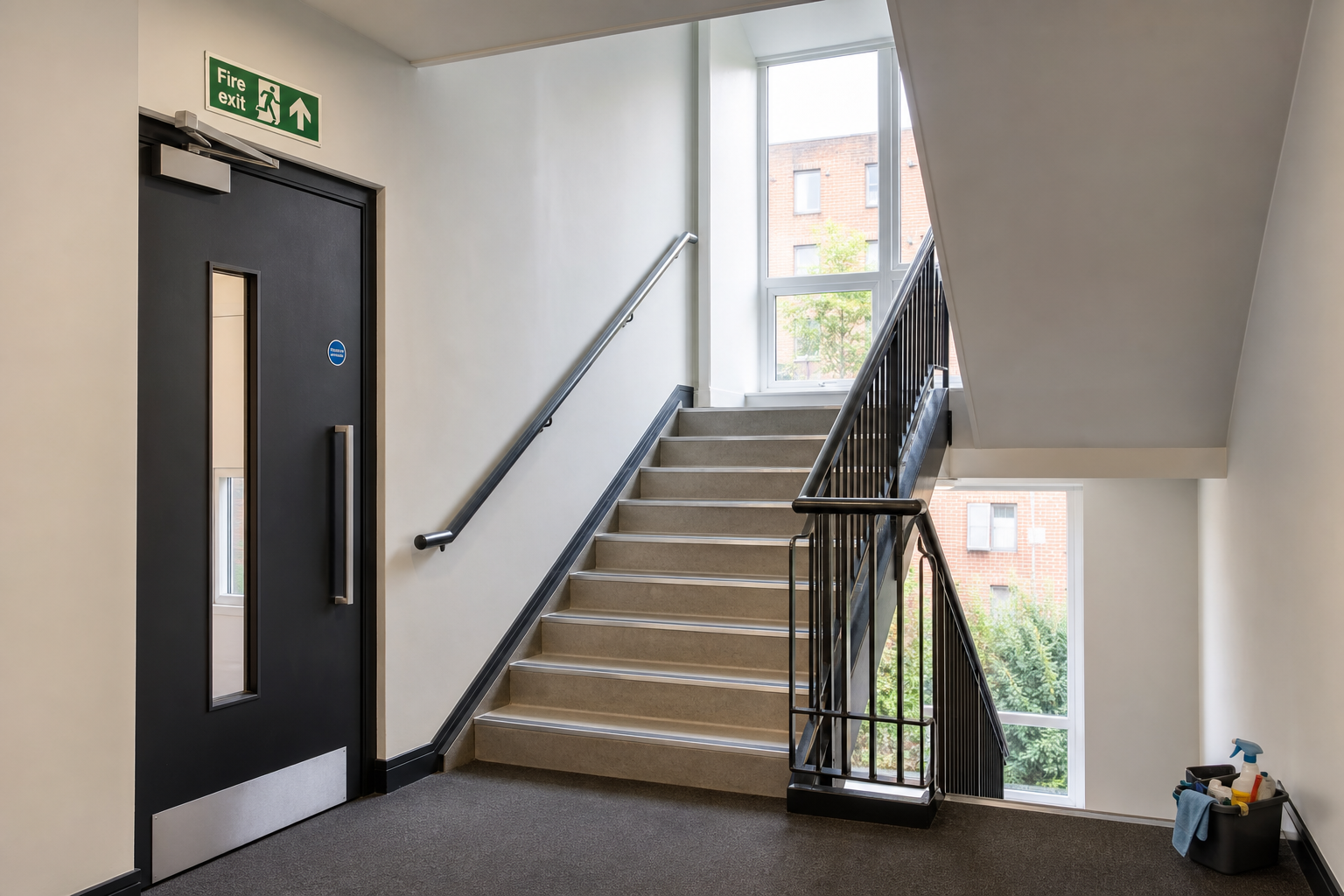
Why a communal stairwell cleaning checklist matters
Health, hygiene and tenant expectations
- Reduces dust, allergens and odours that collect on treads, skirtings, vents and corners—especially in older London conversions where airflow can be poor.
- Prioritises high-touch points such as handrails, door entry systems, push plates, lift call buttons (where present) and lobby handles.
- Improves resident satisfaction by setting a visible, repeatable standard—helpful when you need to evidence that communal corridor hygiene is being managed rather than “done when someone complains”.
For many blocks, the biggest win isn’t adding more visits; it’s being more specific about what “clean” means for each surface and how often it’s reset to a deep-clean baseline.
Fire safety and access considerations
- Keep escape routes clear: fire doors, signage, stairwells and landings should not be obstructed by equipment, waste sacks, wet-floor barriers or drying mats placed carelessly.
- Avoid temporary slip hazards: over-wet mopping, incorrect detergents, and poor drying procedures can reduce traction on escape routes.
- Coordinate for uninterrupted access: plan sequencing so residents, deliveries and emergency services can pass through safely at all times.
Any “block stairwell deep clean” method should be chosen with egress in mind—particularly in narrow stair cores and older blocks with limited alternative routes.
Who is responsible and how to confirm accountability
Tenure and contract checks
- Check the lease, management agreement or service charge schedule to identify who must commission and pay for cleaning.
- Confirm the instructing party: freeholder, managing agent, RTM company or residents’ association may be responsible for procuring contractors.
- Record the obligation so the cleaning specification, tender pack and cadence match contractual duties (and are defensible if challenged).
Helpful background: Who is responsible for cleaning communal areas in London.
Practical first steps
- Carry out a short survey of entrances, staircases and corridors and note surface types and current condition (scuffs, staining, gum, paint damage, mould, odours).
- Create a baseline condition report with dated photos. This stops “deep clean” being interpreted as a light tidy, and helps you measure improvement over time.
- Log recurring issues (fly-tipping, smoking in stairwells, pet fouling, damp patches) so your scope includes targeted interventions, not generic cleaning communal areas London tasks.
- Notify residents of the plan, timings and what to expect (noise, short-term wet-floor controls, access arrangements).
Assessing the building and setting realistic cleaning cadences
Factors to tailor frequency
- Footfall and user profile: multiple flats, short lets, families with pushchairs, ground-floor commercial units and parcel traffic all increase wear.
- Surface types: painted walls show scuffing; bare concrete holds dust; vinyl can haze if the wrong chemical is used; carpeted landings trap grit and odour.
- Local issues: damp, bin-store smells, bird fouling near entrances, pest activity, or nearby construction dust can change what “normal” looks like.
When you set your communal stairwell cleaning checklist cadence, aim for a stable baseline: light cleans maintain appearance, and deep-cleans reset ingrained soil and detailing.
Suggested cadence framework (guidance, not regulation)
- Daily/Weekly (higher-traffic blocks): litter pick, spot-mop, wipe/sanitise high-touch points, check for spills and hazards.
- Fortnightly/Monthly: full sweep/vacuum of stairs and landings, detail skirtings/edges, dust accessible ledges, check mats and thresholds.
- Quarterly/Biannual: deep-clean stair treads and nosings, handrails and balustrades, internal glazing, cobweb removal at height (where safe), machine scrub suitable floors.
- Annual: full communal deep clean plus a condition inspection—flag painting, sealant, grout, flooring repairs and damp/mould causes for maintenance follow-up.
Detailed deep-clean checklist: room-by-room/element-by-element
Use the sections below as a specification. Each line can become a tick-box item for cleaners and a KPI for inspections. Where you have delicate finishes, test products in an inconspicuous area and follow manufacturer guidance.
Entrances and lobbies
- Debris and litter removal: clear corners, behind the entrance door sweep, and around post boxes; remove leaf litter that becomes slippery when wet.
- Bins: empty, wipe external surfaces, sanitise lids/handles, and deodorise the area around bins (don’t mask odours—clean the source).
- Floors: vacuum/sweep first, then wet-clean; pay attention to edges and behind mats where grit collects.
- Scuff marks and staining: spot-clean walls, door frames and kick plates. Record any paint damage that needs maintenance rather than repeated scrubbing.
- Entry systems: clean and disinfect handles, push plates, buzzers/intercom panels and nearby touch points without over-wetting electrics.
- Glass and metalwork: clean internal glass doors and side panels; polish stainless kick plates/handrails if present to remove smears.
Staircases and handrails
- Stair treads: vacuum using a brush tool to lift grit from corners; machine-scrub where suitable (and safe to do so) to remove ingrained soil.
- Edges and nosings: detail-clean the leading edges where dirt bands form; don’t leave residue that increases slip risk.
- Handrails/balustrades: wipe and disinfect from bottom to top, including newel posts and end caps; finish dry to reduce streaking and re-soiling.
- Spot checks for defects: note loose nosings, worn anti-slip strips, or wobbly balusters and report them—cleaning should feed maintenance, not hide problems.
Corridors and landings
- Cobwebs and dust: remove from corners, ceilings and around pipework (where accessible). If height access is needed, it should be planned and risk assessed.
- Skirtings and edges: wash or wipe to remove black edge marks from shoes and vacuum hoses.
- Door furniture and post boxes: wipe letterboxes, door handles and push plates; remove fingerprints around common touch areas.
- Fire-safety signs and door glazing: wipe signage and vision panels so they remain readable and presentable.
- Keep routes clear: if residents leave items on landings, record and escalate through management channels—cleaners should not be forced to work around obstructions that compromise access.
Windows, vents and internal glazing
- Internal window panes and frames: clean glass, frames and sills; remove trapped debris and dead insects from reveals.
- Safe access: clean from inside only unless proper access equipment and controls are in place.
- Ventilation grilles: vacuum dust build-up to support airflow and reduce musty smells in communal corridor hygiene trouble spots.
Related guidance: how often should you clean your windows (useful when setting internal glazing frequencies).
Floors, carpets and mats
- Non-slip hard flooring: machine-scrub where appropriate, then rinse/dry properly. Avoid leaving detergent film that attracts soil and makes floors look dull.
- Communal carpets: vacuum thoroughly (including edges). Schedule hot water extraction / deep carpet cleaning based on soiling and odour—not just the calendar.
- Entrance mats: use heavy-duty mats to capture grit at the door; vacuum and periodically deep-clean/replace to protect internal flooring and reduce wear.
- Drying controls: apply wet-floor signage and stage cleaning so residents always have a safe route; avoid blocking a single stair core.
Mould, odours and drains
- Identify the cause: mould and damp patches should trigger a maintenance report (leaks, failed sealant, poor ventilation) rather than repeated surface wiping alone.
- Targeted cleaning: where safe and appropriate, clean affected areas using suitable products and PPE, and avoid spreading spores with dry dusting.
- Odour sources: check bin areas, damp mats, old spill residues, and neglected corners behind doors—deodorising works best after removing the cause.
- Drain/gully checks (where accessible): clear debris to prevent pooling water and smells, especially near entrances and basement access points.
Useful references: remove mould from walls and ceilings safely and prevent drains from clogging.
Pest prevention and waste management
- Bin store hygiene: clean and disinfect floors and touch points; ensure lids close properly and waste is bagged to reduce odours and pests.
- Record sightings: log evidence (droppings, gnaw marks, insects) and coordinate pest control as a separate instruction where needed.
- Reduce attractants: remove food waste spillage promptly and keep communal routes free of stored items that create harbourage.
Health & safety and compliance considerations
Operational safety
- PPE and chemical handling: ensure cleaners use suitable gloves/eye protection where required and follow product instructions for dilution and contact time.
- Slip and trip controls: stage wet works, use signage, and keep cables/equipment from creating trip hazards on stairs and landings.
- Manual handling: plan for moving equipment (e.g., vacuums, carpet machines) up and down stairs; avoid leaving equipment unattended in escape routes.
Regulatory and documentation checks
- Insurance: request public liability and employer’s liability details from contractors.
- RAMS: ask for risk assessments and method statements covering stair cleaning, wet floors, chemical use, and any planned work at height.
- COSHH and incident reporting: confirm safe chemical storage/handling arrangements and that incidents are recorded and escalated appropriately.
Access, timing and resident liaison
Scheduling to minimise disruption
- Choose practical cleaning windows: early mornings can work for quieter blocks; mid-day slots may be better where school-run traffic is heavy.
- Give clear notices: provide dates, start/finish estimates and any areas likely to be temporarily affected (e.g., lobby floor drying).
- Plan sequencing: clean from top to bottom to avoid re-soiling; keep at least one safe passage route where possible.
- Provide a contact point: residents should know where to report issues after the deep-clean (missed spots, slip concerns, odours that persist).
Managing keys, concierge and contractor access
- Key handling: log key collection/return, restrict duplication, and prefer supervised access for sensitive areas.
- Concierge coordination: if your block has concierge/security, agree arrival times, storage locations and where waste will be taken.
- Out-of-hours working: clarify noise constraints (vacuuming, machine scrubbing) and any additional supervision requirements.
Budget-conscious options and value engineering
Cost-saving tactics without compromising safety
- Tiered service levels: maintain hygiene with frequent light cleans, then schedule targeted deep-cleans quarterly/biannually for stairwells and corridors.
- Target the worst areas: allocate extra time to entrance thresholds, stair turns, and bin routes rather than increasing time everywhere.
- Invest in prevention: better entrance matting, durable kick plates, and straightforward “no storage in corridors” enforcement can reduce ongoing labour.
- Fix the underlying causes: recurring damp or mould will keep returning until leaks/ventilation are addressed—repair spend can reduce cleaning spend.
In-house vs contractor and hybrid models
- In-house routine + contractor deep-clean: a hybrid model often works well—simple weekly tasks handled routinely, with specialist machinery used periodically.
- Compare true costs: factor equipment purchase/maintenance, consumables, training, supervision and cover for sickness/holidays.
- Consistency matters: whichever model you choose, a written scope and inspection process is what keeps standards stable.
Tendering tips and KPIs to include in contracts
Preparing a clear brief
- Measured scope: list areas (lobby, stair flights, landings, corridors, bin store) and key surfaces (floors, skirtings, rails, glazing, vents).
- Frequency table: specify what happens weekly vs monthly vs quarterly deep-clean items.
- Baseline photos: include “current condition” images and agree what “good” looks like after the first deep-clean.
- Deliverables: require a dated checklist for each visit and post-clean photos for periodic deep-cleans.
To tighten specifications and reduce ambiguity, see: creating your own cleaning standards.
What to ask prospective contractors
- Itemised quotes: separate routine cleaning, periodic deep-cleaning, and ad hoc call-outs so you can compare like-for-like.
- Relevant experience: ask for references from similar London blocks (size, surfaces, access constraints).
- Staff controls: training approach, supervision, and whether DBS checks are used where appropriate for the site.
- H&S pack: RAMS, COSHH approach, insurance, and confirmation of how wet-floor and stair-route safety will be managed.
- Waste handling: how waste is removed and where it is stored temporarily (it should not block escape routes).
Quality control and contract management
- KPIs that are easy to inspect: visual cleanliness score (e.g., 1–5), missed-task count, response time for spills/hazards, and complaint response time. Example: use a quick 1–5 visual score recorded per stair core after each deep-clean, with 4+ expected on quarterly audits.
- Inspection cadence: schedule monthly walk-throughs and quarterly audits; keep a photo log to track trends (scuffs, recurring odours, mould spots).
- Trial periods: consider a short trial or phased roll-out (entrance + one stair core first) before committing long term.
Appendix: sample checklist template and frequency matrix
Sample task list (tick-box format)
- Handrails: wipe & disinfect (Daily/Weekly/Quarterly)
- Stair treads: vacuum + edge detail (Weekly) / machine-scrub (Quarterly)
- Skirtings, walls & door frames: spot-clean (Monthly) / wash-down as needed (Quarterly)
- Entrance glass & door hardware: clean & polish (Weekly/Monthly)
- Light switches/intercom touch points: disinfect (Weekly or more in high-footfall blocks)
- Bin store: empty, clean & deodorise (Weekly/Monthly)
- Carpet extraction: as specified by wear (Quarterly/Annual)
- Vents/grilles (accessible): vacuum dust (Quarterly)
Notes for tender documents
- Make frequencies explicit and allow optional pricing for ad hoc works (graffiti removal, flood response, builder’s dust).
- Require evidence: dated checklists and periodic before/after photos reduce disputes and improve continuity when staff change.
- Align to inspection: if you can’t easily inspect it, it’s a poor KPI—choose measures that can be checked quickly during walk-throughs.
If you want an inspection-friendly format, an office cleaning checklist style audit can be adapted to communal areas.
Contact the team for practical advice—if you’d like a printable checklist or help drafting a tender pack for your London block, Go Cleaners London can provide an informal, no-obligation review of your communal cleaning needs. For guidance on choosing the right supplier, see our advice: How to choose the right cleaning company. You can also request a printable PDF version of this communal stairwell cleaning checklist by contacting the team; we can tailor it for your block and provide an inspection-ready tick-box format.