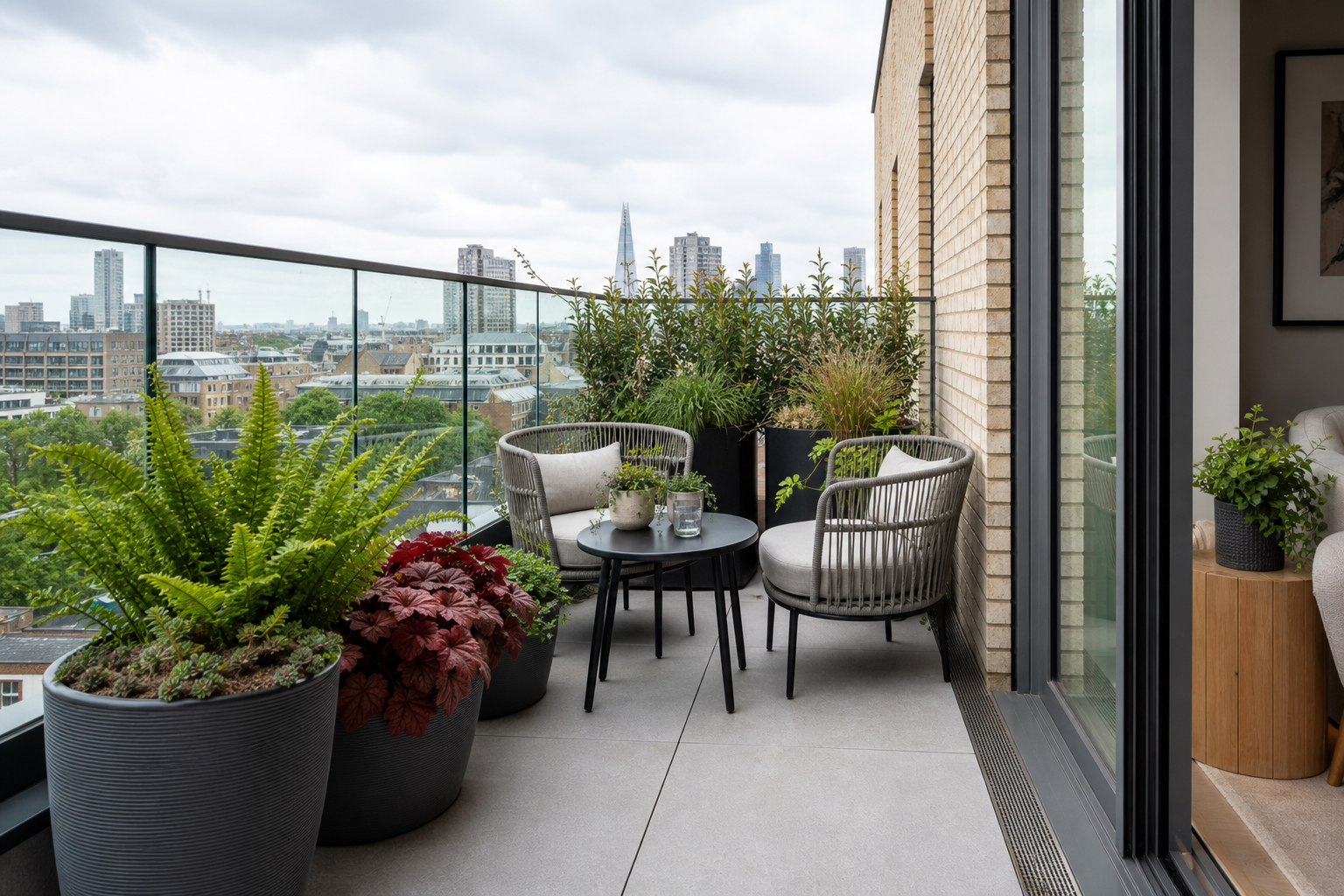
1. Quick assessment: size, exposure and permissions
Before you buy plants or cleaning products, take five minutes to assess what you’re working with. It prevents wasted effort (and helps you avoid issues with neighbours or building management).
Measure usable floor area and note where water currently drains
- Measure the “walkable” area (not just the overall balcony). Many balconies lose usable space to door swing, air-con units or a narrow pathway.
- Identify the drain point (often a small outlet, scupper, or channel). Pour a small watering can of clean water near the far edge and watch how it moves.
- Look for pooling. If water sits in one spot, note it—this will guide where to avoid placing planters and where to focus cleaning.
Check light levels across the day and wind exposure
- Light: Check morning, midday and late afternoon. A balcony can feel bright but still be “full shade” if it gets no direct sun.
- Wind: Higher floors and corner balconies can be surprisingly gusty. Wind dries pots faster, blows compost around and can knock over tall containers.
- Shelter: Doors and walls create a more protected micro‑zone—use it for any plants that dislike exposure.
Confirm building or landlord rules before permanent changes
- Check whether you’re allowed to attach hooks, use railing planters, or direct water run‑off (some buildings require saucers/trays).
- If you rent, keep your set‑up reversible: freestanding pots, removable risers and non‑permanent screening.
If you’re looking for inspiration, think practical: for small balcony planting London schemes, favour compact bulbs, shallow troughs and a couple of evergreen anchors rather than many large pots.
2. Simple cleaning routine for small balconies
Small balconies get messy quickly because there’s nowhere for debris to “hide”. A short, consistent routine beats an occasional big clean—especially in London’s leaf-fall and rain cycles. For deeper step-by-step guidance, see our guide on balcony cleaning in London. This section covers practical urban balcony cleaning and highlights how to pair surface care with planting choices so both thrive together.
Weekly: sweep, empty saucers, wipe touch points
- Sweep or brush leaves, grit and compost from corners, behind planters, and along the threshold by the balcony door.
- Empty pot saucers after watering or heavy rain to prevent overflow and algae build-up.
- Wipe down railings and ledges (especially if your balcony faces a road). A damp microfibre cloth usually does the job.
Monthly: check drains and edges for debris
- Lift any drain cover and remove visible debris (leaves, compost, pet hair).
- Clear the upstand (the small raised edge where the balcony meets walls/railings) where wet leaf litter collects.
- Look for slow drainage after rainfall—this often signals a partial blockage.
Quarterly (or as needed): deep clean tiles, inspect grout, address small issues early
- Use warm water + a mild, pH‑neutral detergent and a stiff nylon brush. Work from the far end back towards the door.
- Rinse with clean water and remove residue (detergent film attracts dirt and can make tiles look dull).
- Inspect grout lines: if you see cracking or missing areas, deal with it promptly to reduce water ingress risk.
Practical product notes (what to use and what to avoid)
- Best all-rounder: pH‑neutral detergent for most balcony surfaces.
- Avoid by default: strong acids/alkalis and heavy bleach on grout and porous stone unless your surface manufacturer guidance confirms it’s suitable.
- Skip abrasives: wire brushes and aggressive pads can scratch tiles and create more places for grime to cling.
Use this balcony cleaning and planting approach to balance tidy surfaces with thriving containers in dense urban settings—keeping debris away from drains while giving plants space and the right pots to perform.
3. Drain care and preventing water damage
On a balcony, drainage is everything. Blocked outlets can cause pooling, slippery algae, staining, and in some buildings, water finding its way where it shouldn’t. The aim is simple: keep soil and organic debris away from the drain path.
Keep the drain outlet clear of soil, leaf litter and compost
- Fit a removable mesh cover or small filter over the drain (easy to lift and clean).
- When sweeping, always finish by brushing away from the drain so debris doesn’t get pushed into it.
- If you want a broader checklist for home drainage habits, see our guide to prevent drains from clogging.
Empty saucers and reduce overflow
- After watering, wait 10–15 minutes, then tip out excess from saucers (into a bucket or watering can for other plants).
- Consider self‑watering/reservoir pots to reduce run-off and accidental overwatering.
Raise planters to improve airflow and speed drying
- If water pools, raise flat planters on small blocks or use breathable risers so air can circulate underneath.
- Aim to keep container bases from sitting in constant damp—this reduces algae rings and helps tiles dry faster after rain.
When to get help
If drainage is persistently slow, you notice water backing up, or there are signs of surface damage you can’t address with routine cleaning, consult building maintenance. Avoid forcing tools into outlets if you’re unsure what sits below the surface.
4. Tile and surface maintenance (low‑effort, long‑lasting)
The goal is to keep surfaces safe underfoot and easy to wipe down. A little prevention—removing residue and keeping grout healthy—reduces staining and makes future cleaning faster.
Routine: sweep, then mop gently
- Sweep first to remove grit (mopping over grit can scratch).
- Mop with warm water and mild detergent. Use a well-wrung mop rather than flooding the floor.
- Rinse if needed, then squeegee or towel-dry pooled areas—especially in cooler months.
Stain removal: act quickly and stay non-abrasive
- Organic stains (leaf marks, compost tea): use soapy water and a nylon brush.
- Greasy marks (from outdoor dining): use a small amount of washing-up liquid in warm water, then rinse well.
- Skip grinders and harsh scraping—damaged surfaces hold dirt and are harder to maintain.
Grout care: keep joints clean and repair small failures early
- Grout gets darker when it holds grime and organic residue. Keep it clear with gentle brushing and regular rinsing.
- If grout is crumbling or missing, patching early is usually simpler than waiting for a larger repair.
- For targeted guidance, see our tips to keep grout white on floor tiles.
Winter: reduce slip risk and freeze-thaw stress
- Remove standing water after heavy rain where practical.
- Avoid leaving pots sitting frozen onto tiles for long periods; use risers to reduce prolonged contact and trapped moisture.
5. Seasonal, low‑maintenance planting plan for shaded and windy London balconies
A balcony planting plan works best when it respects your conditions. If you’re shaded, choose plants that don’t sulk without sun. If you’re windy, keep the “sail-like” plants and tall, light pots out of exposed positions.
A clear seasonal plan helps your balcony cleaning and planting stay manageable across the year—you’ll know when to tidy leaves, top up compost and protect tender plants without overworking the space.
Plan by aspect: position plants for wind and shelter
- Windy edge (near the balustrade): use lower, heavier pots and wind-tolerant plants.
- Sheltered zone (near walls/doors): place more delicate plants and anything you want to check frequently (herbs, flowering pots).
- Keep access clear: leave a walkway so sweeping and drain checks stay easy.
Spring: quick colour, minimal effort
- Plant bulbs in containers (e.g., crocus, early tulips). They’re low-effort and give a “looked after” feel early in the year.
- Tidy winter debris and top up compost in pots that have settled.
- Do a combined spring reset: sweep, check the drain, wash tiles, then plant. If you like checklists, use a spring‑clean checklist for outdoor space to time your tasks.
Summer: structure plus water-wise habits
- Choose shade-tolerant perennials and a few trailing plants for softness around edges (without blocking the drain).
- Water deeply but less often so roots grow downwards. Early morning or evening reduces quick evaporation on windy balconies.
- Remove yellow leaves promptly—this keeps plants healthier and reduces mould risk in humid periods.
Autumn: tidy and protect, don’t overwork
- Clear spent annuals and fallen leaves before they turn into wet compost on the floor.
- Lightly cut back perennials and add a thin mulch layer to protect roots.
- Check pot stability—autumn winds can pick up as temperatures drop.
Winter: keep it neat, keep it safe
- Protect tender plants with fleece or move lighter pots indoors during very cold spells.
- Reduce watering as growth slows; wet compost stays cold longer and can encourage mould.
- Keep surfaces clear—winter leaf litter becomes slippery fast.
6. Plant types and examples to consider (for shade & wind)
This shortlist focuses on plants that generally cope well with London balcony realities: less sun, variable wind, and the need for low fuss. Always check suitability for your exact aspect and how sheltered your balcony is.
Shade-tolerant, low-maintenance options (north-facing or shaded courtyards)
- Ferns for texture and a “green” look without sun.
- Heuchera (coral bells) for colourful foliage and year-round interest.
- Epimedium for reliable groundcover-style growth in shade.
- Ivy for evergreen trailing (keep it controlled in a pot).
- Cyclamen for winter interest and compact colour.
Wind-tolerant, low-water options for exposed spots or higher balconies
- Ornamental grasses for movement and resilience (choose compact varieties for small spaces).
- Sedums for drought tolerance and low maintenance.
- Sempervivums (houseleeks) for tough, tidy rosettes in well-draining pots.
Herbs and edibles for partial shade
- Chives and parsley are generally forgiving and useful.
- Mint is happy in partial shade, but keep it in a separate pot—it spreads.
A simple “always looks cared for” mix
- 1–2 evergreen plants for year-round structure.
- 2–3 foliage perennials (e.g., Heuchera + fern) to fill space without constant flowering needs.
- A small container of seasonal bulbs to add colour without daily maintenance.
7. Containers and techniques that minimise mess
Containers can make balcony maintenance easier—or create constant clean-up. The right choices reduce compost blow-out, staining and run-off onto tiles.
Use self-watering or reservoir pots to reduce spills
- They help prevent accidental overwatering and reduce the chance of water streaming across the balcony.
- They also space out watering sessions, which is useful during busy weeks or holidays.
Choose pots with built-in trays (or improve your saucers)
- Built-in trays are tidier and harder to knock out of place.
- If using separate saucers, line shallow trays with a thin layer of gravel to reduce soil wash-out and keep the pot base from sitting directly in water.
Secure tall pots and reduce tipping risk
- On exposed balconies, choose wider bases rather than tall, narrow containers.
- Discreet weights at the bottom (e.g., a heavier inner pot or stones beneath the liner) can improve stability.
- Position taller items nearer to walls where they’re less likely to catch gusts.
Pick designs that make repotting and cleaning easier
- Pots with inner liners reduce mess when repotting and help keep the outer pot cleaner.
- Troughs with a lip help stop compost washing over the edge during rain.
8. Mess-minimising watering and soil tips
Most balcony mess comes from two things: compost moving around (rain + wind) and imprecise watering. Small changes here make balcony maintenance noticeably easier.
Top-dress to keep compost in place
- Add a thin layer of decorative gravel or bark mulch on top of the compost. It reduces splash-back, keeps soil from blowing, and can make pots look neater.
- Keep top-dressing slightly back from stems so plants don’t sit too damp at the base.
Water accurately to reduce dripping and mould
- Water into the soil rather than over foliage to reduce moisture sitting on leaves (a common mould trigger in shaded areas).
- Use a narrow-spout watering can or a simple drip set-up so water goes where it’s needed.
- If you’re unsure, water a little, wait, then top up—this reduces sudden overflow into saucers.
Repotting without the balcony disaster
- Work over a sheet, open bag or shallow storage box to catch loose compost.
- Seal compost bags immediately after use—London wind will find the opening.
- Sweep straight away so damp compost doesn’t smear onto tile texture or grout lines.
9. Pest, mould and safety considerations
A tidy balcony is easier to keep healthy. The same habits that keep surfaces clean—removing wet debris, improving airflow—also reduce pests and mould problems.
Inspect plants regularly
- Check leaf undersides for pests and remove affected foliage early.
- Isolate new plants for a week if possible before grouping them with others.
Prevent mould by controlling constant damp
- Avoid leaving standing water in trays for long periods.
- Thin out dead leaves and debris in pots—rotting material holds moisture and encourages mould.
- Keep some space between pots so air can move around them.
Balcony safety basics
- Place heavy items securely and avoid overcrowding the edge.
- Don’t lean items over the balustrade and follow building rules for planter placement.
- If you’re on an upper floor, avoid anything that could be lifted by wind (light trays, loose gravel, unweighted pots).
10. Low-effort maintenance timetable (example)
Here are straightforward balcony maintenance tips you can follow so your balcony stays presentable without becoming a chore. Adjust up or down depending on leaf fall, traffic pollution and how many pots you have.
Daily / every visit (1–5 minutes)
- Quick sweep of obvious debris.
- Check saucers and empty if needed.
- Water only where compost feels dry (focus on smaller pots first—they dry fastest).
Weekly (15–30 minutes)
- Clear around drain covers and remove any visible build-up.
- Tidy pots: remove dead leaves, rotate containers if plants lean towards light.
- Light wipe of railings/ledges if they collect dust quickly.
Monthly (30–60 minutes)
- Deep clean tiles with mild detergent and a stiff nylon brush; rinse well.
- Inspect grout and edges for dark build-up or cracking.
- Top up compost and mulch where it has settled or thinned.
Seasonal (1–2 sessions per season)
- Prune and cut back lightly; replace tired annuals.
- Add bulbs (spring/autumn) or protective fleece (winter).
- Do a “balcony audit”: check pot stability, drainage speed, and any developing surface issues.
If you’d rather outsource the heavy lifting occasionally, our guide can help you find a cleaner for one-off balcony cleans and understand what to ask for.
Want a hand keeping it tidy?
Want help keeping your London balcony tidy and plant‑friendly? Contact the team for practical advice about one‑off balcony cleans, drain checks or a seasonal maintenance visit that suits your flat and your building rules. Follow this simple balcony cleaning and planting routine and you’ll keep the space tidy, safe and enjoyable with far less effort than you might expect.