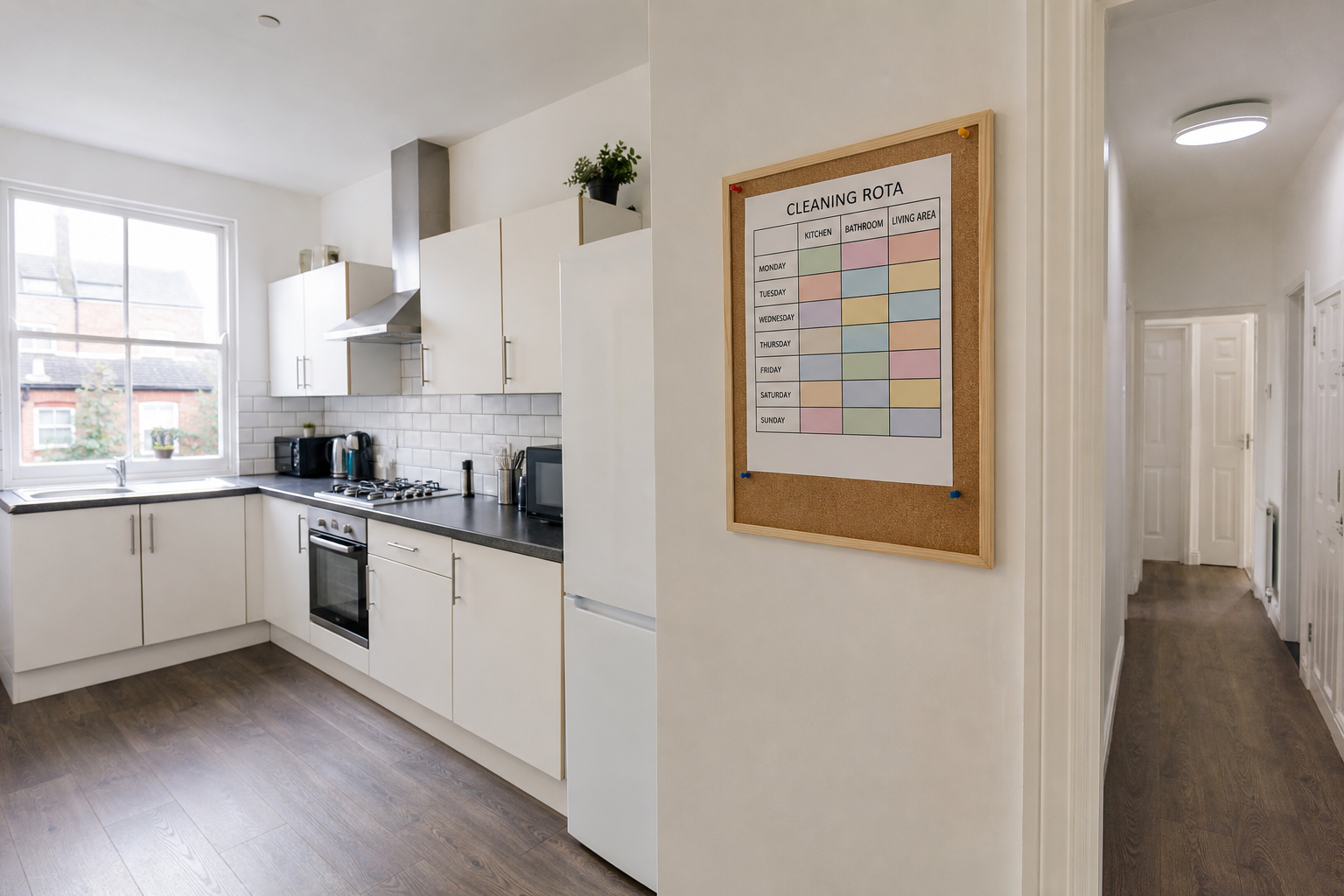
Downloadable rota and checklist — what you get
The most effective HMO cleaning systems are the ones that tenants can follow without guessing. A good rota is short, dated and signed, and the checklist is specific enough to inspect in minutes.
Our recommended “downloadable-style” pack includes:
- Weekly rota template (communal areas + shared bathrooms) with named responsibility, date, and initials.
- Monthly deep-clean schedule to prevent limescale, grease build-up and odours.
- Room-by-room checklist you can use for routine inspections and turnover cleans.
- Short inspection record section for issues (leaks, mould, broken fixtures, blocked drains) and follow-up actions.
If you’d like an editable file or a printable PDF, request it via Go Cleaners London’s contact page (https://gocleanerslondon.co.uk/) and we’ll send the files — formatted for tenant signatures and simple landlord/managing agent sign-off.
Weekly rota: who does what (sample breakdown)
Weekly tasks are the “conflict reducers” in shared house cleaning. If you only do monthly cleans, small problems (food spills, hair build-up, bin odours, mould spots) become bigger, more expensive issues.
Two rota options that work well in London HMOs:
- Per-person allocation: each tenant owns one area every week (e.g., Bathroom 1 / Kitchen surfaces / Hallway & stairs / Bins).
- Rotation: tenants rotate tasks weekly so the workload is shared fairly.
Keep it visible: print and place inside a kitchen cupboard door or on a noticeboard, with a pen attached.
Sample weekly items (shared kitchen and communal areas)
- Wipe worktops, table and splashbacks (including corners where crumbs collect).
- Degrease hob surface; wipe knobs/buttons; spot-clean visible spills inside microwave.
- Clean sink and draining board; rinse food debris into the bin (not down the drain).
- Empty indoor communal bins into the external bins; replace liners; wipe bin lids.
- Sweep and mop hard floors (kitchen and any shared hallway).
- Wipe high-touch points: door handles, fridge handle, light switches, bannisters.
- Fridge control: remove obvious spills; label-and-date shared items; flag out-of-date items for disposal on bin night.
Sample weekly items (shared bathrooms)
- Sanitise toilet seat, flush handle/button and outer bowl; clean bowl and rim.
- Clean sink and taps; wipe splashback and mirror.
- Remove hair from shower/bath area; clean shower screen/curtain edge and tray.
- Quick descale where needed (taps and showerhead face).
- Mop floor, paying attention to the base of the toilet and behind the door.
- Empty bathroom bin; replace liner (especially important where sanitary waste is present).
Record keeping
Every week, the responsible person initials the completed tasks and records issues such as:
- Slow-draining shower/basin
- New mould spots or strong damp smells
- Broken extractor fan, loose toilet seat, leaking tap
- Bin store overflow or pests
This protects tenants (they can show they did their part) and helps landlords/agents act early before problems become complaints.
Monthly and deep-clean tasks
Monthly cleaning is about preventing build-up: limescale in hard-water areas, grease in extractors, and bacteria on overlooked surfaces. It also supports smoother inventories at changeover.
Monthly tasks
- Descale: kettles; showerheads; taps; around plugholes and overflow outlets.
- Oven/extractor: clean oven glass and racks; degrease extractor hood and accessible filters (per manufacturer guidance).
- Fridge clean: wipe shelves and door seals; dispose of forgotten food; defrost if needed.
- Behind/under: pull out small appliances; wipe behind microwave/kettle area; clean skirting edges.
- Soft furnishings: vacuum sofa creases and under cushions in communal lounge; check for odours/spills.
- Vents and fans: dust extractor fan covers and vents (helps reduce condensation and mould risk).
- Grout and sealant check: note black spotting, cracked silicone, loose tiles—log for repair rather than endless scrubbing.
Quarterly or turnaround deep clean
Schedule a deeper clean quarterly (for stable tenancies) and always consider a documented deep clean at tenant changeover, especially where occupancy is high.
- Full kitchen deep clean (cupboards inside/out, kickboards, tiles, bins, handles).
- Descale all bathroom fixtures; detail clean behind toilets and around pedestals.
- Professional carpet clean where stained or odour is present (or after repeated spills/pet issues).
- Wash or replace shower curtains; sanitise grout lines where safe to do so.
- Condition documentation: dated photos for inventory/check-out records.
For a broader turnover standard, compare with an end-of-tenancy cleaning checklist — landlord-approved guide.
Room-by-room HMO cleaning checklist (actionable)
This is the practical checklist you can adopt as-is for weekly routines and inspections. If you want a more detailed standard to train tenants or cleaners, see our room-by-room guide for a professional standard clean.
Kitchen (shared)
- Worktops and table cleaned; splashbacks wiped; crumbs removed from corners.
- Sink and taps cleaned; drain strainer emptied; no food scraps left in plughole.
- Hob degreased; control knobs/buttons wiped; surrounding counter edges cleaned.
- Microwave: outside wiped weekly; inside spot-cleaned; full interior wipe monthly.
- Fridge: spills wiped; shelves cleaned monthly; food clearly labelled (where house rules require).
- Cupboard doors and handles wiped (high-touch area).
- Bins emptied to external containers; lids wiped; liners replaced.
- Floor swept and mopped; sticky patches addressed promptly.
- Cleaning products stored safely (out of direct food contact; follow label instructions).
Bathrooms (shared)
- Toilet sanitised (seat, rim, bowl, flush handle/button, surrounding surfaces).
- Sink, taps and splashback cleaned; mirror wiped.
- Shower/bath: soap scum removed; hair cleared; plughole checked.
- Limescale treated where present (taps, showerhead face, glass edges).
- Floor mopped; corners and behind-door area cleaned.
- Ventilation: window opened after cleaning where possible; extractor checked and dusted monthly.
- Mould: small surface spots cleaned safely; repeat growth logged for landlord action. If needed, follow remove mould from bathroom walls and ceilings safely.
Communal spaces and hallways
- Floors vacuumed (carpet) or swept and mopped (hard floor).
- High-touch points wiped: bannisters, door handles, light switches, entry buzzer area.
- Skirting edges and visible scuffs spot-cleaned.
- Clutter control: clear shoes/bags from corridors to keep fire access routes open.
Individual bedrooms
- Vacuum and dust (including behind door and under bed where accessible).
- Wipe window ledges and radiators (dust build-up can worsen air quality).
- Ventilation check: reduce condensation; report persistent damp patches or mould.
- Personal waste removed weekly to external bins; no overflow left in room.
- Report maintenance concerns early (leaks, heating issues, damaged seals).
Outside, bins and waste areas
- Indoor bins emptied to external bins on agreed days; no loose bags left in hallways.
- External bins kept shut; area tidy to reduce odours and pests.
- Bin store swept; spilled waste cleaned up promptly.
- Collection-day routine followed (especially important where access is tight).
For odour control routines that tenants can actually follow, link tenants to how to keep your trash bins odour-free.
Mapping tasks to landlord and tenant responsibilities
Clear boundaries reduce disputes and help you enforce standards fairly. Always align your house rules and tenancy agreement wording with how you actually manage the property. For a deeper local view, see who is responsible for cleaning communal areas in London?
Note (legal and practical): Tenants’ liability for cleaning and any cost recovery must be clearly set out in the tenancy agreement and handled in line with deposit protection requirements and local council rules. Landlords should document non-compliance before charging and seek local guidance if unsure.
Typical landlord responsibilities (summary)
- Maintain structure and services: hot water, heating, ventilation and sanitation in working order.
- Arrange repairs that impact hygiene/safety (leaks, broken extractors, defective drainage).
- Handle underlying damp/mould causes linked to building defects (not just surface wiping).
- Schedule major cleans between tenancies where required to reset standards and support inventory condition.
- Provide suitable waste storage arrangements where possible (e.g., adequate external bins, workable bin storage area).
Typical tenant responsibilities (summary)
- Day-to-day cleaning of their bedroom and agreed shared areas (via rota).
- Correct waste disposal and recycling practices; no bag piles in internal common areas.
- Prompt reporting of maintenance issues (slow drains, leaks, mould growth, broken fixtures).
- Following house rules (e.g., wiping shower screen, ventilating bathroom after use).
- Not undertaking repairs or using harsh methods that damage surfaces (e.g., scratching enamel, mixing chemicals).
London-specific operational tips
London HMOs face two practical pressure points: tight waste logistics and high-use shared bathrooms. Build these into your rota from day one.
Waste disposal on narrow streets
- Create a simple bin set-out plan: who moves bins out, and when they’re brought back in.
- Use a single weekly “bin captain” role (rotating) to prevent missed collections.
- Keep bin lids closed and bags tied—overflow attracts pests and complaints quickly.
- If your street has limited access or strict presentation rules, keep instructions printed near the back door/bin store.
Shared-bathroom hygiene in high-turnover HMOs
- Stock a small “starter kit” of basics (hand soap, toilet cleaner, microfibre cloths) at move-in to set expectations.
- Make high-touch sanitising (flush, seat, taps, handles) a weekly rota requirement.
- Encourage quick daily habits: wipe down shower glass, remove hair, open window/turn on extractor after showers.
- Log repeated mould growth as a maintenance issue, not a blame game—especially if ventilation is weak.
Quick-turnover checklist for new tenants
- Do a 10-minute hygiene pass: touchpoints (handles/switches), bathroom contact areas, kitchen sink/taps.
- Air the property: open windows briefly; check extractor fans are working.
- Confirm bins are empty and external area is tidy (first impressions matter on viewings).
- Photo-document condition and note any pre-existing marks/damage for inventory.
For a broader landlord turnover process, use how to prepare your property for new tenants — a landlord’s guide.
Implementing and enforcing the rota: practical steps
A rota only works if it’s easy to follow and there’s a fair process when it isn’t followed.
Tenant sign-ups and induction
- Include the rota and checklist in the tenancy pack and talk through it on move-in day.
- Set clear standards: what “clean” looks like (e.g., no grease on hob, no hair in shower trap).
- Make responsibilities measurable: initials + date, plus a space for “issues to report”.
Inspections and record-keeping
- Do short weekly/fortnightly checks of kitchens, bathrooms, hallways and bin areas.
- Take dated photos where there’s repeated non-compliance or a maintenance concern.
- Keep records neutral and factual (what was seen, what action is needed, by when).
Mediation and escalation
- If standards slip, issue a simple remedial notice: what must be cleaned, by whom, and by what date.
- For repeat disputes, consider an impartial third party (managing agent or cleaning company) to reset the baseline with a one-off clean.
- If your agreement allows recovery of costs for missed duties, document the steps taken before charging to reduce pushback.
When to bring in professional cleaners
Professional cleaning is most useful when you need speed, evidence, or specialist outcomes. In London HMOs, consider booking a professional clean for:
- Tenant turnover (especially short gaps between move-out and move-in).
- Persistent odours from bins, kitchens, soft furnishings or neglected rooms.
- Mould beyond surface cleaning or where ventilation issues need a structured plan.
- Deep kitchen/bathroom resets (grease, limescale, grout staining).
- Inventory support: a documented clean standard that’s easier to evidence at check-in/check-out.
Contact the team for practical advice on setting up a rota that tenants will actually follow, or on arranging a turnaround clean that fits your move-in timeline.