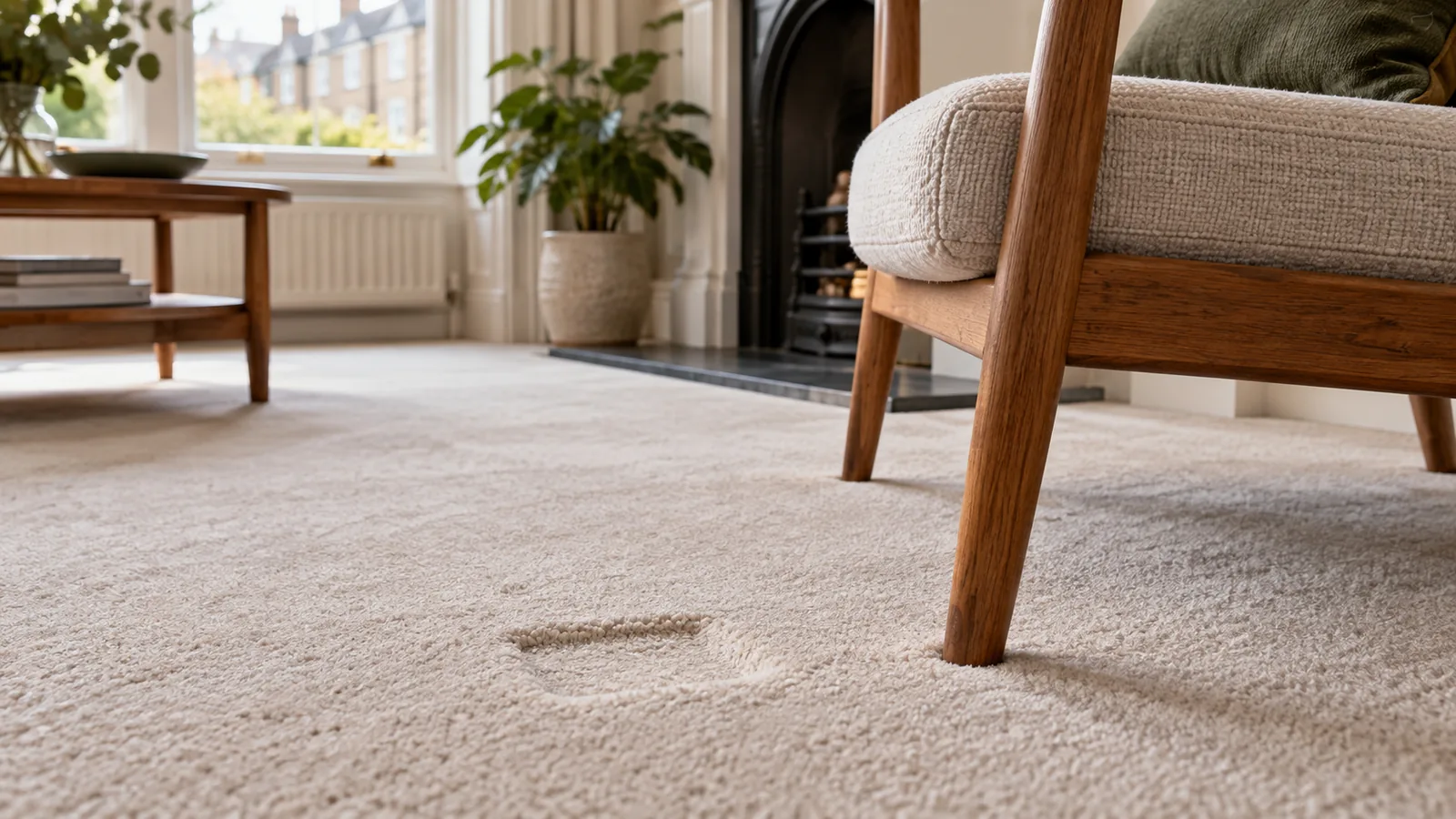
Move a bookcase and a neat row of square dents appears in the carpet. Some lift after the pile has time to relax; others remain because the fibres, backing or underlay have been compressed for years. A heavy wardrobe on a deep wool carpet is a different case from a dining chair that sat in one place for a few weeks. Before trying heat, steam or a wet cloth, assess what has actually changed.
The aim is to encourage recoverable pile to stand up again without damaging the carpet. Cleaning can remove soil that holds fibres down, but it cannot repair broken fibres or rebuild worn underlay. This guide helps separate the marks worth treating gently from those that may need professional advice or simply realistic expectations.
First, distinguish an indentation from a stain
Look at the mark from two directions in good daylight. A dent changes the height and direction of the pile; a stain changes colour. Run a clean hand lightly over the area. If the fibres are flattened but the colour matches the surrounding carpet, compression is likely. If the spot remains dark after the pile is lifted, soil or furniture finish may also be involved.
Check the shape. A sharp rectangle mirrors a furniture foot or castor. A broad worn path is more likely traffic abrasion. A dark outline where furniture sat may be a contrast between protected carpet and the surrounding faded or soiled area. Raising the pile will not make old and sun-faded sections identical.
Lift the furniture only if it is safe to do so. Heavy items can injure someone or tear the carpet if dragged. A second person or proper moving equipment is often needed. Photograph the carpet before any treatment, especially in a rented home where an inventory may record its condition.
Why carpet stays compressed
The pile bends under weight. How well it rebounds depends on fibre type, density, pile height, age and how long the weight sat there. Wool has some natural resilience, while different synthetics and blends behave differently. The carpet backing and underlay also absorb pressure. If the underlay has collapsed, the surface may not return to its original height even if individual fibres stand up.
Heat, sunlight, spills and accumulated soil can make recovery harder. A damp carpet under furniture may deform or develop colour transfer from a leg. Repeated chair movement can wear pile rather than merely flatten it. The article on extending carpet life explains how traffic and grit contribute to permanent wear.
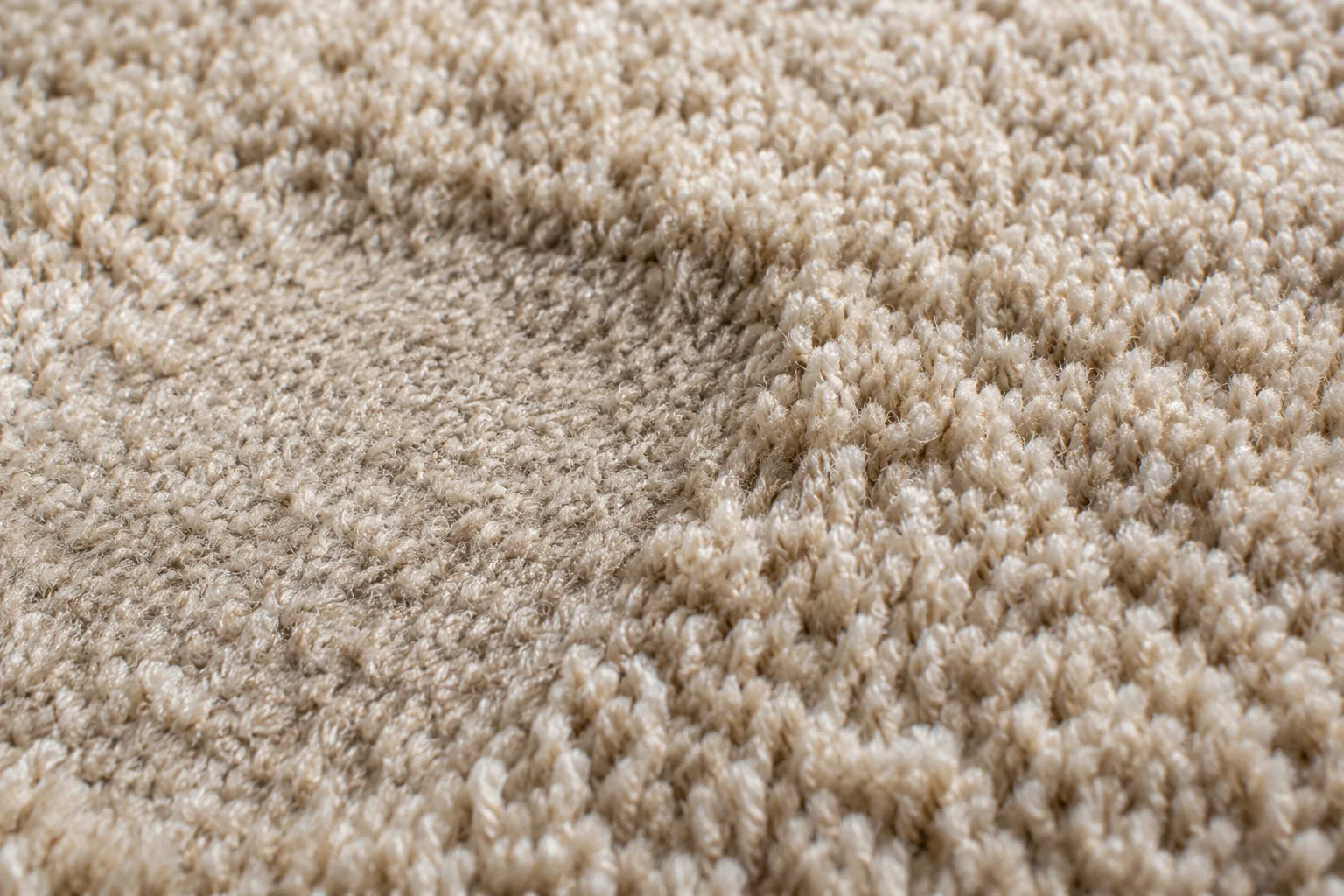
Some carpets have a directional nap. Fibres brushed one way look darker than fibres brushed the other, even when both are clean. A dent can therefore appear more dramatic under side lighting. Before applying any product, gently brush an unaffected patch in different directions to understand how the pile changes visually.
Start with time, vacuuming and light grooming
Give a recent dent a little time after the furniture is moved. Vacuum gently with an attachment suitable for the carpet. Use a soft brush or fingertips to encourage fibres upright, working in more than one direction. Avoid a stiff brush that can fray yarns. A loop-pile carpet deserves particular care: pulling a loop can create a snag that cannot be fixed by brushing.
If the dent was hidden under furniture for years, several gentle passes over a few days may show whether there is any rebound. Do not keep scraping at an area that looks unchanged. Flattened fibres can turn into a visibly fuzzy patch from excessive friction. Test a concealed spot first if you are unsure how the carpet responds to grooming.
Compare the treated area in normal room light rather than under a bright torch held close to the floor. Small changes in pile direction can be exaggerated by low-angle light. If the surrounding carpet is dirty, a freshly brushed dent may look lighter for a different reason. Consider the condition of the whole room before judging the result.
Be cautious with water and steam tricks
Advice to put an ice cube on every carpet dent is too broad. Meltwater can pass through the pile into the backing or underlay, and some fibres or dyes are sensitive to moisture. A wet spot may dry with a ring, particularly if the carpet holds soil. Likewise, a hot iron or direct steam can damage synthetic fibres, backing or finishes. Never press a hot iron onto carpet.
If the manufacturer specifically permits a damp or steam-based technique, follow those instructions closely and test a hidden area first. Use the smallest amount of moisture, keep heat and equipment away from the fibre unless expressly allowed, and allow the area to dry completely. Do not try such a method on a valuable rug, an unknown fibre or a carpet with a history of colour bleeding.
A professional carpet cleaning assessment can identify the fibre, level of compression and any underlying stain before using equipment. Cleaning may loosen soil and help pile appearance, but a technician should not promise to erase all furniture marks. The comparison of professional and DIY carpet cleaning explains why moisture control matters.
What if the dent is still visible?
Inspect the fibres closely. Are they intact but lying flat, or are they broken and rough? Does the carpet feel hard because the backing or underlay is compressed? Is the colour different from the surrounding area? These observations help explain why a dent remains. A professional can sometimes improve the pile's appearance, but severe compression and wear may be permanent.
Do not cut the pile to make the surface appear level. Cutting changes the carpet's texture and can expose backing. Avoid applying adhesive, wax or fabric conditioner; these products can attract soil and complicate later cleaning. If a furniture leg has left a separate dark mark, treat that as a stain problem rather than a pile problem. A targeted stain removal service may be relevant if colour has transferred from a wooden or metal foot.
For a rented property, record the mark accurately instead of concealing it. Distinguish ordinary wear from a spill or damage, and refer to the tenancy inventory and agreement if a checkout question arises. Cleaning advice is not a legal assessment of deposit deductions.
Prevent new furniture marks
Choose furniture feet or castor cups suitable for the carpet and furniture weight. A wider support area spreads the load. Check that protectors do not contain a dye or backing that could mark the floor. Move furniture slightly from time to time where practical and safe, rather than leaving every heavy piece fixed for years.
Keep the carpet dry and vacuum around furniture edges, where grit often collects. Lift furniture for cleaning only when it can be done safely; dragging it can tear fibres or stretch the carpet. If a room is being rearranged, plan the new layout so that old dents are not immediately replaced by new ones in the same traffic path.
Set the right expectation
Begin with a safe move, time, vacuuming and gentle grooming. Avoid improvised heat or moisture on an unknown carpet. If the pile will not rebound, inspect for wear and underlay compression before assuming more cleaning will solve it. Go Cleaners London can discuss carpet cleaning where soil contributes to the mark, while being clear about limits where furniture has permanently changed the fibres.