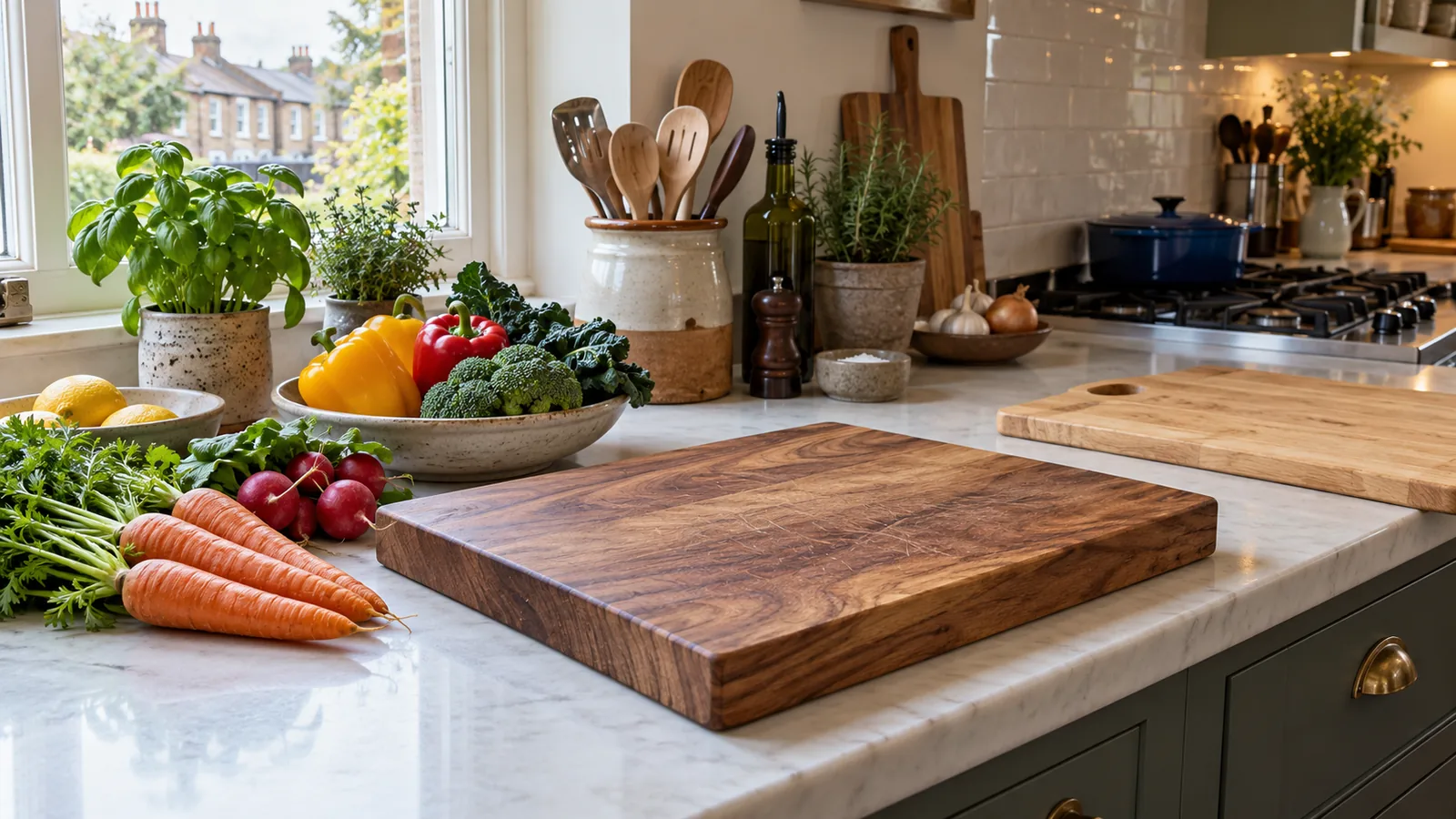
A wooden chopping board is a useful kitchen tool, but its surface changes with use. Knife marks, moisture and food residue can make it harder to tell when a quick rinse is enough. The important habit is to wash the board between tasks, dry it thoroughly and keep raw foods away from ready-to-eat foods. A board that has split or developed deep damaged areas needs a different decision from one with ordinary light knife marks.
Wood also reacts to water. Leaving it submerged or sealing it in a cupboard while damp can cause warping and slow drying. The following routine balances food-contact hygiene with care for the board itself. Always follow the board maker's instructions for finish, washing and any oil treatment, since laminated, end-grain and other constructions may differ.
Set up separate preparation tasks
Before cooking, put a clean board on a clean, stable worktop. Use a non-slip mat underneath if needed, keeping the mat itself clean. Plan the order of food preparation. The UK Food Standards Agency advises using separate boards for raw meat and ready-to-eat foods where possible, or thoroughly cleaning a board between those tasks. Its household food-safety guidance explains why direct reuse can spread contamination.
Using one face for raw meat and simply turning the board over is not a reliable substitute for washing. Juices may touch hands, edges or the worktop. Keep knives, cloths and plates separate as well. If you have only one board, prepare ready-to-eat foods first, then raw foods, and wash the board and utensils thoroughly before any later use for cooked or ready-to-eat items.
Our kitchen tips for busy families cover a broader daily routine. With a wooden board, the essential moment is the transition between ingredients. A clean-looking surface after slicing a tomato is not the same as a washed surface after handling raw poultry.
Wash promptly with soap and water
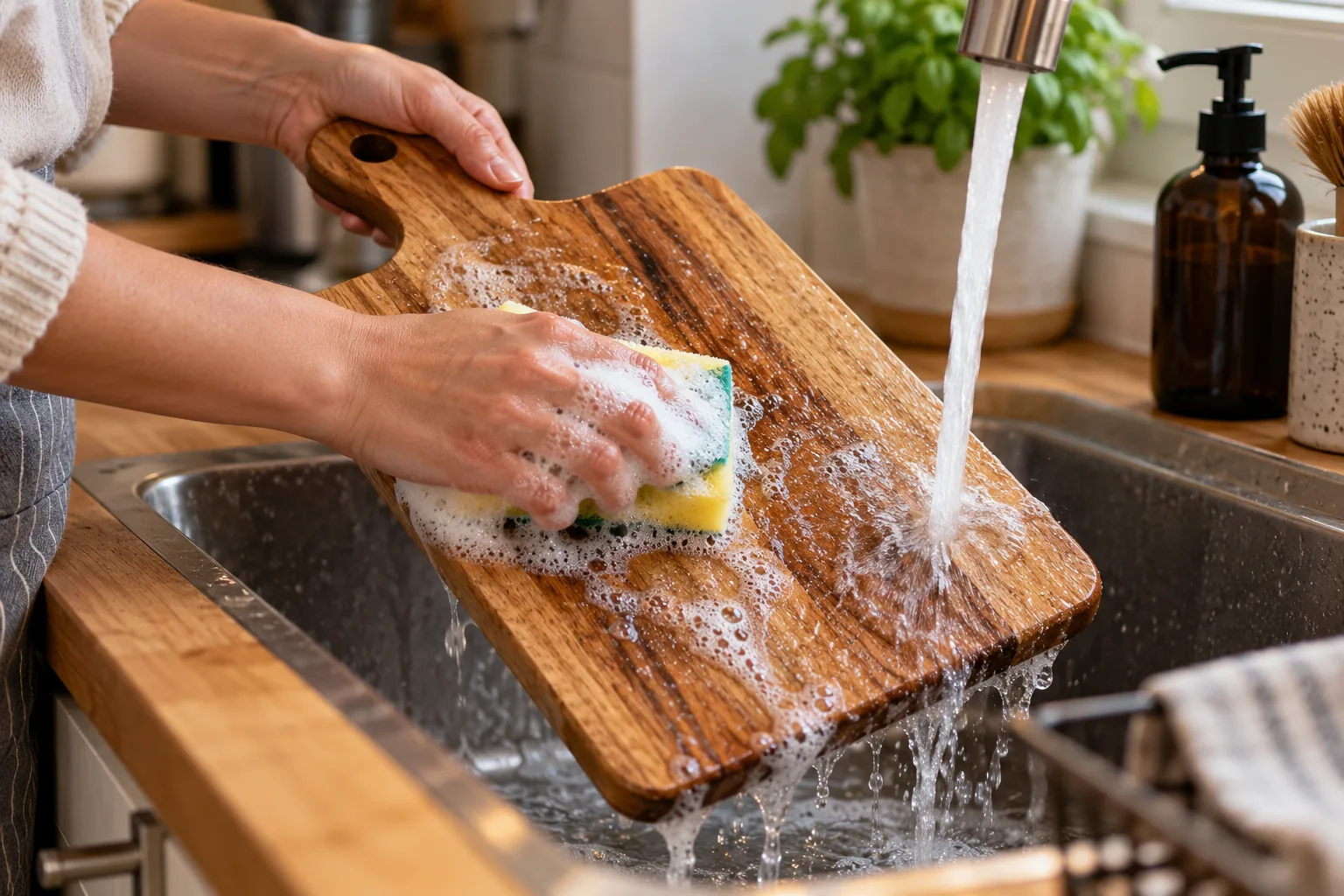
Scrape food scraps into the appropriate waste and take the board to the sink. Wash both faces, the edges and the handle with warm water and washing-up liquid, using a clean sponge or brush suitable for the board. Pay attention to knife grooves and end grain where small particles can lodge. The physical washing action and detergent matter; a brief rinse under running water does not remove all residue.
The Food Standards Agency describes washing boards with warm, soapy water and thorough cleaning between raw and ready-to-eat food tasks. Follow any extra board-specific directions from the maker. Rinse away the soap and visible soil. Avoid soaking the board in the sink, and do not put it through a dishwasher unless its manufacturer expressly permits that; prolonged water and heat may affect wood and glued joints.
For sticky grease, wash again with fresh soapy water rather than adding a harsh chemical. Do not use a kitchen sponge that has just wiped raw-meat juices on another surface. Clean the sink and nearby taps after a raw-food task as part of the same workflow. The article on removing kitchen grease discusses worktops and appliances; the food-contact board needs its own wash and rinse.
Dry the board on all sides
After rinsing, wipe the board with a clean towel or disposable kitchen paper and stand it so air can reach both broad faces. Do not lay a wet board flat on a worktop, where the underside remains damp. Keep it away from standing water around the sink. Store it only when fully dry. A board with a handle hole can sometimes hang to dry if the maker designed it for that; make sure it is secure and not touching a wall or dirty surface.
Fast, even drying helps limit warping. Do not put the board directly on a hot radiator or in an oven to speed the process. Excessive heat can crack wood or affect glue. If it develops a musty smell despite proper washing and drying, inspect for cracks, trapped moisture or a storage location that stays damp. A fragrance spray will mask the symptom without addressing the cause.
Drying cloths matter too. A cloth used on raw-food residue should not be used to dry a clean board. Wash reusable cloths regularly and let them dry. Keep a dedicated clean towel available for washed equipment, or use disposable paper when the workflow is busy.
Inspect wear rather than relying on colour alone
Light knife marks are normal, but deep grooves can trap particles and become difficult to clean. Check the board in good light after it is dry. Look for splits that open at the edge, loose glued joints, splinters, rough patches and areas that remain dark or damp. If the board rocks because it is warped, it may slip during chopping. A cracked or unstable board should be repaired by someone competent with food-contact materials or replaced.
Staining is not automatically the same as contamination. Beetroot, turmeric and other pigments can leave colour after the board has been washed. Conversely, a pale board can still be unwashed. Judge the cleaning process and the board's physical condition, not just its colour. If you cannot clean a deeply scored area effectively or it holds odour, replacement is a sensible decision.
Some makers recommend periodic food-safe oil or another finish. Follow their instructions on product, application and drying time. Oil does not clean a dirty board and should not be put over food residue. Wash, dry and assess the board first. Avoid furniture polish or a coating that is not intended for food-contact use.
Handle special situations carefully
If a board was used for raw meat, fish or poultry, wash it thoroughly before another food task and clean any surfaces and utensils that touched the raw food. Keep raw packaging away from the clean board. If a ready-to-eat food has been put onto a surface contaminated by raw food, follow appropriate food-safety guidance rather than trying to clean the food itself.
Food allergies also require attention to residues that may be hard to see. Use separate equipment where appropriate and follow the needs of the person concerned. A quick wipe cannot be assumed to remove every allergen from grooves. If you prepare food for someone with a serious allergy, use guidance tailored to that situation and a board you can clean reliably.
Do not assume lemon, vinegar or salt alone replaces washing with soap and water. These may change odour or appearance but are not a dependable substitute for the basic cleaning process. Be cautious with strong disinfectants on a food-contact wooden surface unless their instructions and the board maker both permit them, including any required rinse.
Keep the wider kitchen aligned
The board is only one part of a clean preparation area. Wipe worktops before placing a washed board on them, keep dishcloths fresh and clear splashes from the tap and sink. A kitchen cleaning service can address accessible room surfaces, but the board used for each meal still needs washing between tasks. A wider deep clean may be useful for cupboards and appliance exteriors when routine upkeep has slipped. Domestic cleaning can support the general home routine around food preparation.
Keep a simple check in mind: separate raw and ready-to-eat tasks, wash the board with soapy water, rinse, dry every side and inspect for damage. Replace a board that has split, warped badly or become too deeply grooved to clean with confidence. Consistent care is more useful than an occasional dramatic treatment, and it leaves the board ready for the next meal.