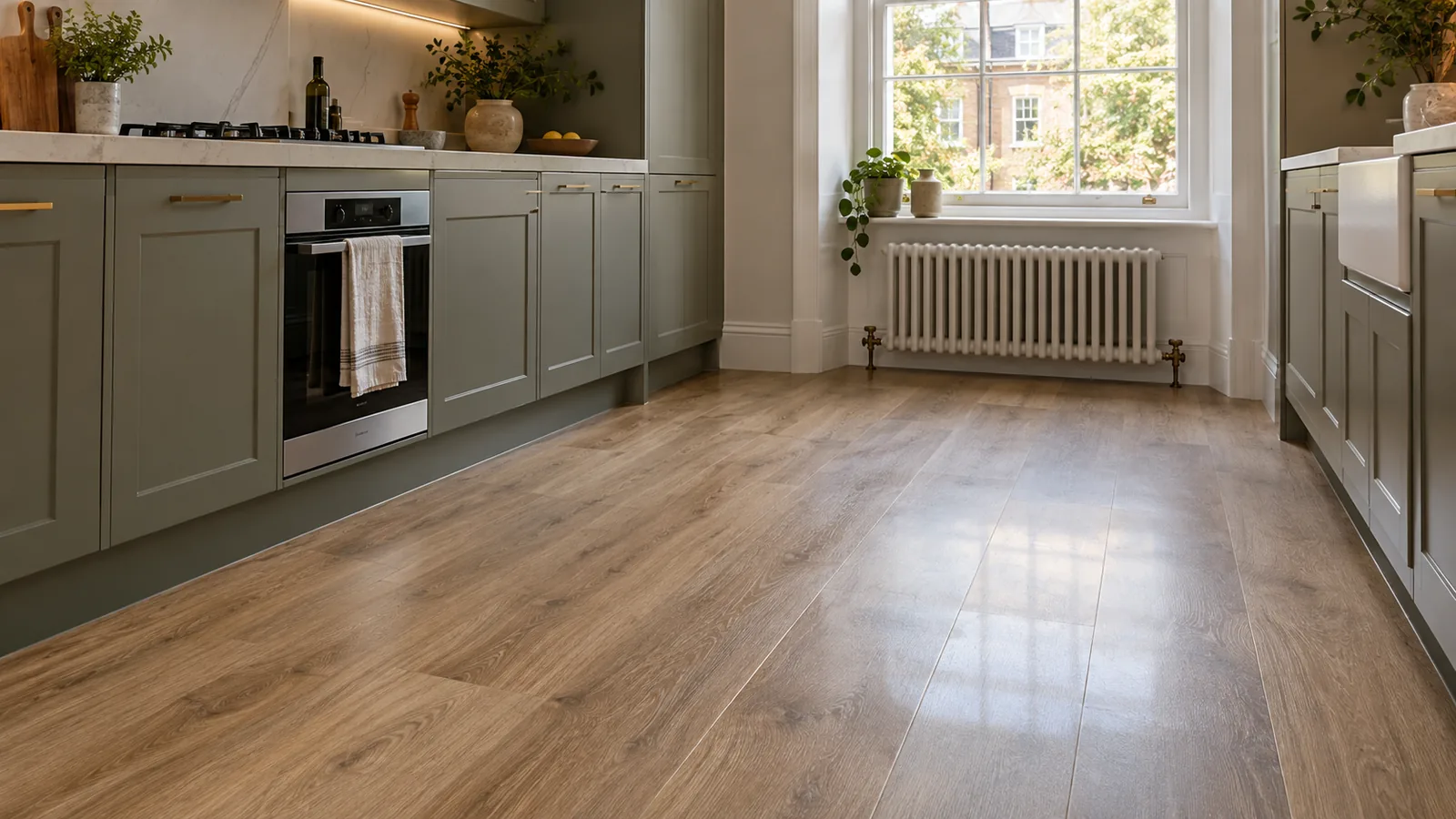
Luxury vinyl tile, often called LVT, is made to handle everyday household traffic, but it can look cloudy when cleaner residue dries on the surface. Water left at edges and joins can also affect an installation, especially where adhesive, subfloor or damaged seams are involved. The surface may imitate timber or stone, yet it should be cleaned according to the vinyl product's care instructions rather than the material it resembles.
A reliable routine starts with removing grit and choosing the correct cleaner dilution. Use a damp pad, not a flooded mop, then let the floor dry. If a mark remains, determine whether it is film, scuff, adhesive or physical wear. This guide focuses on those decisions and on protecting edges around doorways, appliances and skirting.
Identify the product and finish
Find the manufacturer's name and installation paperwork if available. LVT can be glued down, clicked together or installed in another system. Some products have protective surface layers with specific cleaning requirements. The maker may prohibit steam, wax, strong solvents or abrasive pads. A generic “vinyl floor cleaner” label is not enough if it conflicts with the floor instructions.
Look at the floor dry and in side light. A haze that follows the mop path may be product residue. A dull area under a desk chair may be wear. A line at a seam that is raised or curling may signal damage to an edge. Note any sticky patches left from installation or tape. Do not scrape them with a metal blade or cover them with polish before identifying the cause.
The general floor tools and solutions guide can help select basic equipment. LVT still needs its own product-specific method, especially if it has a textured finish that holds soil in shallow grooves.
Remove dry particles before mopping
Vacuum with a suitable hard-floor head or sweep with a soft brush. Check entrances and under dining chairs, where grit accumulates and is then dragged across the surface. A rough vacuum wheel or a pad carrying tiny stones can leave marks that look like a permanent cloudy patch. Inspect the mop pad before using it and wash it after each dirty area.
Lift rugs and mats to remove particles beneath them. Check that their backing is approved for the floor; some rubber or dyed backings may leave marks on vinyl. Dry any moisture trapped underneath before replacing them. Under kitchen appliances, use a crevice tool only where it can reach safely without catching cables or pulling at the floor edge.
For a small fresh crumb spill, dry cleaning may be all that is needed. Save damp cleaning for film, sticky marks and the interval the maker recommends. Less product on a clean pad often leaves a clearer floor than a heavily scented solution used every day.
Control cleaner dilution and water
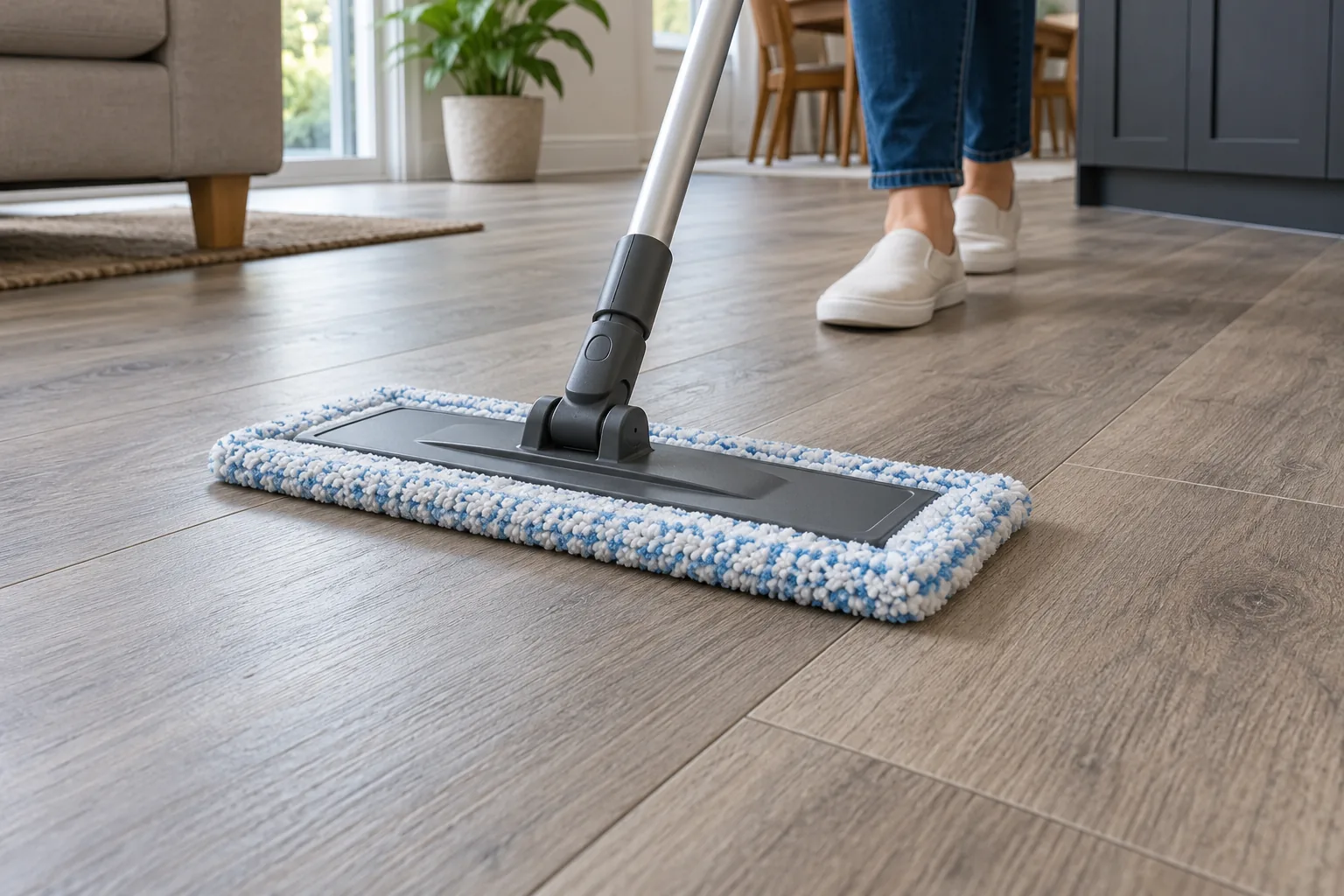
Prepare the maker-approved cleaner exactly as instructed. Too much product can dry as a tacky or cloudy film, attracting more dirt. A flat microfibre mop gives control over moisture; wring the pad so it is damp rather than dripping. Work in small sections and change the solution when it becomes dirty. Do not use a bucket of grey water to finish the last part of the room.
Pay attention to joins and perimeter edges. LVT is water-resistant at the surface, but an installation is not necessarily a watertight tray. Repeated flooding can let water into a seam or under an edge. Wipe up any visible puddle promptly and allow the floor to dry before putting mats or furniture back. Follow special instructions for newly installed flooring; adhesive may need a curing period before wet cleaning.
Avoid steam unless the manufacturer specifically approves it. Heat can affect vinyl, adhesive or joints. Likewise, a rotary machine or stiff brush can abrade a wear layer if used at the wrong speed or with the wrong pad. The article on why hard floors stay dull after mopping explains that extra mechanical action is not automatically the answer to haze.
Diagnose a cloudy finish
First let the floor dry completely. A damp surface can reflect light unevenly. If the haze follows recent cleaning, check product dilution and whether the mop pad was rinsed. Test the manufacturer's residue-removal method in a small area before redoing the whole room. A clean pad with the correct solution may lift the old film, but repeated application of more cleaner can build another layer.
If the dullness stays in a traffic lane and does not respond to a correct wash, the wear layer may be scuffed. A polish or coating should be used only if the flooring maker approves it for that product. Some finishes are designed to remain unpolished, and an incompatible coating can peel or create patchy shine. Photograph the dry floor to show a supplier or flooring specialist.
Scuffs from shoes or furniture may have a specific maker-approved removal method. Use a soft cloth first. Avoid solvent, abrasive sponge or rubber eraser without checking compatibility. A dark mark can be transferred material on the surface; a scratch catches light differently and is physical wear.
Protect seams and appliance edges
Inspect where the floor meets a dishwasher, washing machine or fridge. A slow leak can travel beneath LVT and show up as lifting or discolouration at an edge. Stop the leak and arrange appropriate drying and floor assessment. Mopping the top will not fix water trapped underneath. If a plank has curled, do not glue it down without understanding why it lifted.
Use protective pads under furniture and lift heavy appliances when possible rather than dragging them across the tiles. Check chair wheels are suitable for LVT. Keep mats at entrances clean and dry. Sunlight and heat near glazing can affect some vinyl products, so follow the manufacturer's guidance on temperature and window coverings.
When a seam is damaged, a flooring specialist can advise whether a tile or plank can be replaced. The ability to replace one piece depends on the installation system. A cleaner can remove soil but should not promise to restore a worn wear layer or a failed adhesive bond.
Choose professional care to match the floor
A hard floor cleaning service can assess the surface and product buildup before selecting a compatible process. Share the brand and past cleaners if known. Deep cleaning may address surrounding skirting and kitchen surfaces, while domestic cleaning can support routine dry soil removal and light mopping. A worker should know about lifted edges or a recent leak before bringing water to the floor.
The maintenance pattern is simple: remove grit, use the correct diluted cleaner, keep the mop only damp and let the floor dry. If haze remains, diagnose residue before adding polish. If an edge lifts or water appears beneath the flooring, stop cleaning and address the installation or leak. LVT looks its best when the care method matches the product beneath its wood or stone appearance.