
Polished concrete has a calm, continuous appearance that works well in an open-plan home. Its broad surface also shows every trail from the garden, kitchen splash and dining chair. Keeping it attractive is less about applying shine and more about removing abrasive grit before it scratches the finish. The first question is what finish the floor actually has: mechanically polished concrete, concrete with a topical sealer, or a coated floor sold with a similar appearance. Their maintenance requirements differ.
The following polished concrete floor cleaning routine starts with low-risk daily care and explains when to stop. Product labels and the installer’s instructions take priority. If the history of the floor is uncertain, test a small inconspicuous area and assess it after it is completely dry.
Find out what is protecting the surface
Mechanically polished concrete is refined with abrasives and may be treated with a densifier. Some floors also have a penetrating guard; others carry a film-forming sealer or coating. A photograph alone cannot establish which treatment was used. Ask the installer or previous owner for the specification, including any recommended cleaning solution and resealing interval. Keep that information with the household maintenance records.
A topical coating can be damaged by a cleaner or scrubbing pad that would be acceptable on another hard floor. A penetrating treatment may allow a spill to soak in if it has worn. Neither finish benefits from a default application of wax. Wax can attract soil, create an uneven sheen and complicate later professional work. If you see flaking, peeling or a sharply defined worn patch, request an assessment instead of trying to coat over it.
Control grit at the doors and under furniture
Dry particles under shoes act like fine sandpaper. Put a robust scraper mat outside an entrance where practical and an absorbent, non-staining mat inside. Shake or clean them before trapped grit is carried back across the floor. In wet London weather, deal with puddles near the threshold promptly; standing water can leave marks and make the floor slippery.
Fit suitable felt or manufacturer-approved glides to chair and table legs, checking them for embedded grit. Lift heavy furniture rather than dragging it. For wheeled chairs, choose wheels suitable for the particular floor finish. Rugs can protect busy routes, but check that their backing will not discolour or react with the sealer. Move a rug occasionally to inspect for trapped moisture and dust.
Use a soft brush attachment or a clean microfibre dust mop on the main traffic paths. A vacuum head with exposed hard plastic or a stiff rotary brush may scuff a finish. Work from the far side towards the exit so collected grit is not walked through again. Regular dry removal is the most useful part of the routine, especially beside doors and beneath dining chairs.
Mop with modest moisture and a compatible cleaner
After dry cleaning, dilute a floor product specifically permitted for the installed finish according to its instructions. A pH-neutral solution is commonly suitable, but “neutral” on the bottle is not a guarantee of compatibility with every coating. Use a clean microfibre flat mop and a small amount of solution. The mop should leave a light damp film, never puddles.
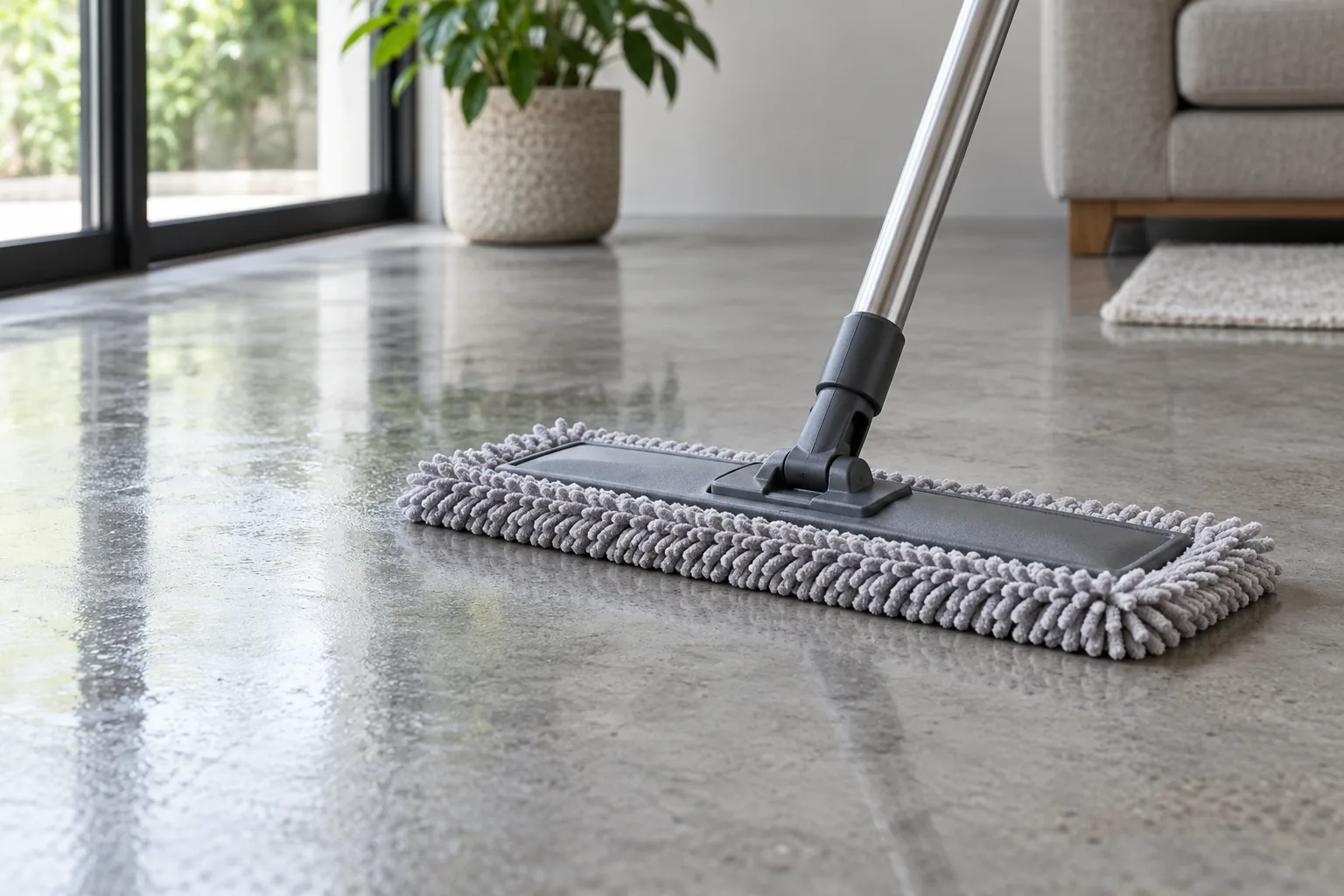
Divide a large open-plan room into manageable sections. Change the solution as it becomes dirty, rinse the pad regularly, and keep the path clear until the surface is dry. If the product requires a rinse, use a separate clean pad and fresh water. Residue from excessive detergent can make the floor look cloudy and attract more dirt. On a floor with textured areas or exposed aggregate, pay attention to low points where dirty water can collect.
Avoid using vinegar, acidic descalers, bleach or strong alkaline degreasers as all-purpose floor solutions. They may affect the sealer or leave the surface looking uneven. Steam is also a poor assumption: heat and sustained moisture can affect some coatings, so use it only if the floor manufacturer expressly permits it. A rough pad may remove a mark and the surrounding finish together.
Deal with spills before they become stains
Blot a fresh spill with a soft cloth rather than spreading it across a wide area. Remove crumbs or other solids first. Food oils, wine, coffee, citrus juice and cleaning chemicals can leave marks or affect the protection if allowed to sit. Wipe with the approved diluted cleaner, rinse only if the product says to, and dry the area. Use a separate cloth for greasy spills so oil is not distributed over the mop.
For a dried mark, soften it with a small amount of compatible solution and a short dwell time allowed by the product label. Wipe gently, then inspect after drying. Do not reach for a scraper or abrasive powder. A dark stain that remains after ordinary cleaning may have penetrated the floor or its worn sealer; further scrubbing can enlarge the dull patch without lifting the stain.
If water consistently darkens a spot for longer than the surrounding floor, note its location and photograph it in consistent light. That observation may help an installer identify a failing guard or coating. It does not by itself identify the treatment or prove that resealing is needed.
Separate cleaning problems from finish wear
Cloudiness can be dried detergent, a film left by a “shine” product, scratches or wear in the protective layer. Test a small section with the recommended cleaner and clean water as directed. Let it dry fully before comparing it with the rest of the floor. A cloudy appearance that disappears after a careful rinse points towards residue. If it persists only along the routes people walk, finish wear is more likely.
Uneven gloss is not always dirt. Aggressive buffing can change the sheen in one patch and make the difference more noticeable. Likewise, a polished concrete floor with naturally varied aggregate will not necessarily become uniformly glossy after cleaning. Take photographs from the same angle before and after the trial, ideally in daylight, so reflections do not create a false impression.
Our guide to floor cleaning tools and solutions helps match tools to different surfaces. The article on dull hard floors and rotary buffing explains why a machine treatment and routine mopping solve different problems. Do not book buffing on the assumption that a dull concrete floor only needs more polishing; establish the finish first.
Set a routine that fits the room
An entrance and kitchen need more frequent attention than a little-used spare room. Remove visible grit daily in a busy household, wipe spills as they happen and damp mop when the floor actually needs it. There is no useful universal “mop every day” rule: over-wetting a lightly soiled floor simply adds work and residue. Clean mop pads after each use and allow them to dry, so the next session does not push old dirt around.
Check high-traffic areas every few months for new scratches, water absorption, peeling and changes in sheen. Record recurring marks. If the floor is part of a rental or managed property, document a pre-existing finish issue before trying a stronger treatment. For a wider cleaning visit, a professional hard floor cleaning service can inspect the floor and agree a suitable method. Where the home also needs a detailed reset, deep cleaning can address adjoining skirting, thresholds and kitchen surfaces without treating the floor as an isolated task.
When to seek a specialist assessment
Call the installer or a floor specialist when the coating is peeling, a stained area is spreading, water enters an unsealed crack, or a trial clean leaves an unexpected dull patch. They can identify the system, assess whether a guard has worn and specify repairs or resealing. A general cleaner should not promise to restore lost polish by using a stronger detergent.
For day-to-day care, the dependable sequence is straightforward: trap grit, remove it dry, use a modest amount of approved solution, and dry spills promptly. Check the condition of the finish periodically. That routine preserves the appearance of polished concrete while giving you a clear point at which cleaning should give way to repair or resealing advice.