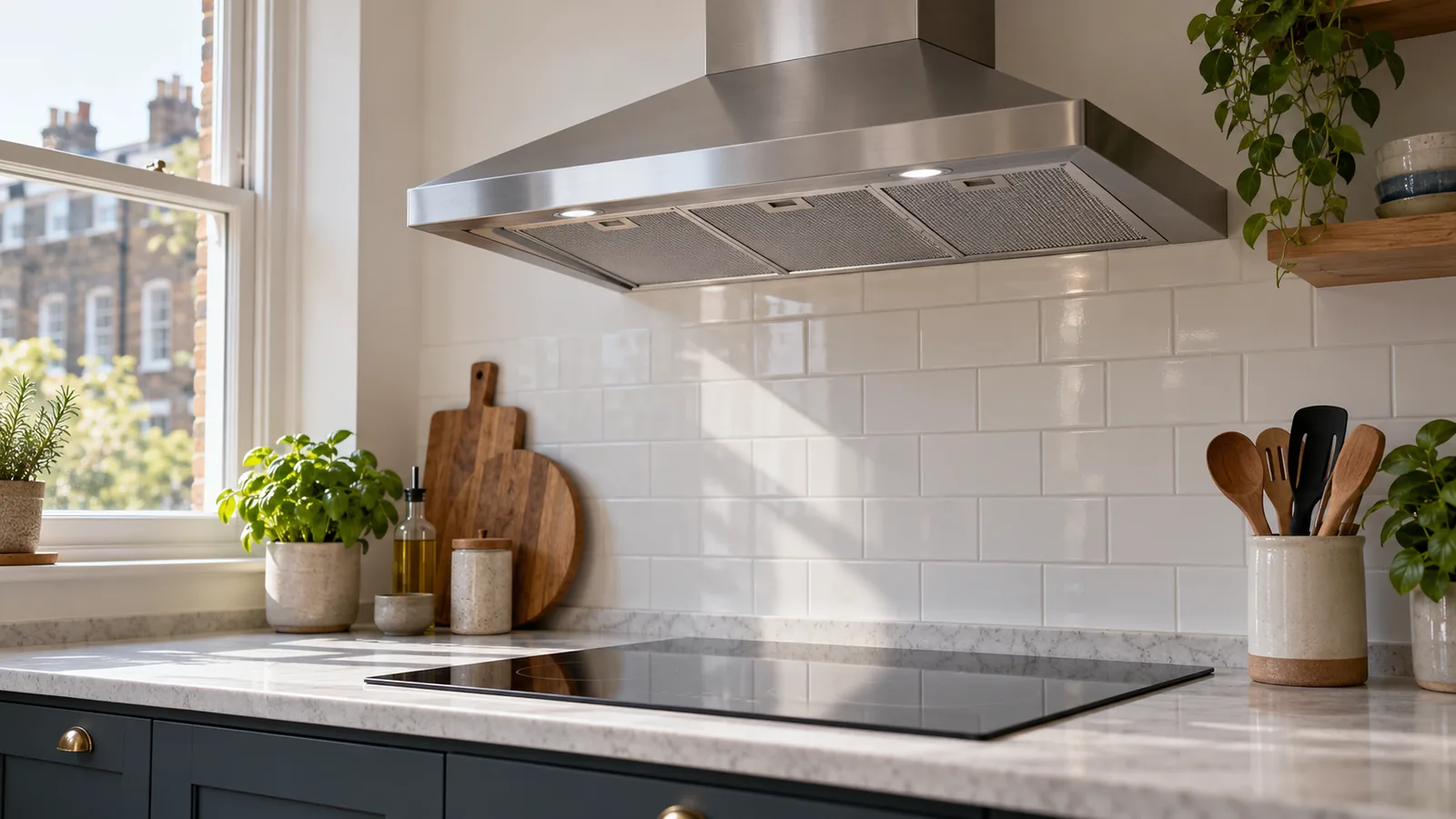
A cooker hood filter catches cooking grease before it settles inside the hood or travels around the kitchen. When the mesh is coated with sticky residue, airflow can suffer and the filter becomes unpleasant to handle. The obvious solution, putting every filter in hot water, is not suitable for every type. Some metal grease filters are washable; disposable charcoal filters generally have to be replaced, while certain specialist filters have their own care instructions.
Start by identifying the parts fitted to your hood. Then protect the hob and worktops, remove washable pieces as the manufacturer directs, and clean them without pushing grease into the mechanism or drain. This guide focuses on ordinary household maintenance. If the hood is faulty, the motor sounds unusual or there is visible damage to wiring, stop using it and follow the appliance maker's repair advice.
Check the manual and filter type
Find the model number, often on a label inside the hood or near the filter opening, and look up the manufacturer's cleaning instructions. Switch the appliance off and allow the hob and lights to cool before removing parts. Do not reach into a fan opening or work near a hot cooking surface. Put a clean towel or sheet of kitchen paper on the hob to catch loose grease as you lower the filter.
Metal mesh or baffle grease filters are commonly intended for cleaning, but their finish and dishwasher suitability vary. A thin paper, fabric or charcoal layer may be replaceable rather than washable. Recirculating hoods can have both a metal grease filter and a carbon odour filter behind it; cleaning the visible mesh does not renew the charcoal. Some carbon filters are designed to be regenerated by a specific process, but use that option only when the manual explicitly permits it.
Photograph the filter's orientation and latch position before removal. Work one piece at a time if the hood has several panels. A bent latch or filter installed backwards can cause rattling or leave a gap. The manufacturer's instructions also tell you how often to clean or replace each part based on the model; adjust the routine to your cooking frequency and the amount of residue you see.
Set up a contained cleaning area
Grease travels easily on wet cloths and brushes. Clear the sink and nearby food-preparation surfaces first. Place an old towel or washable mat under the filter before carrying it across the kitchen. If there is a thick layer of loose grease, lift it gently with kitchen paper and put the paper in the appropriate waste, rather than washing a mass of grease into the drain. Avoid scraping the mesh with a sharp tool that could deform its layers.
Use a bowl or sink large enough for the filter to lie reasonably flat. Follow the manual's recommended cleaner and water temperature. A mild washing-up solution is appropriate for many washable metal filters, but confirm compatibility first, especially with aluminium or coated finishes. Strong caustic products and abrasive pads can stain or damage metal. Never mix cleaning chemicals, and keep solutions away from electrical parts of the hood.
The existing guide to removing grease from kitchen surfaces covers surrounding splashbacks and cupboards. Treat the filter separately so that grease lifted from the mesh does not end up on a clean worktop.
Clean a washable metal filter gently
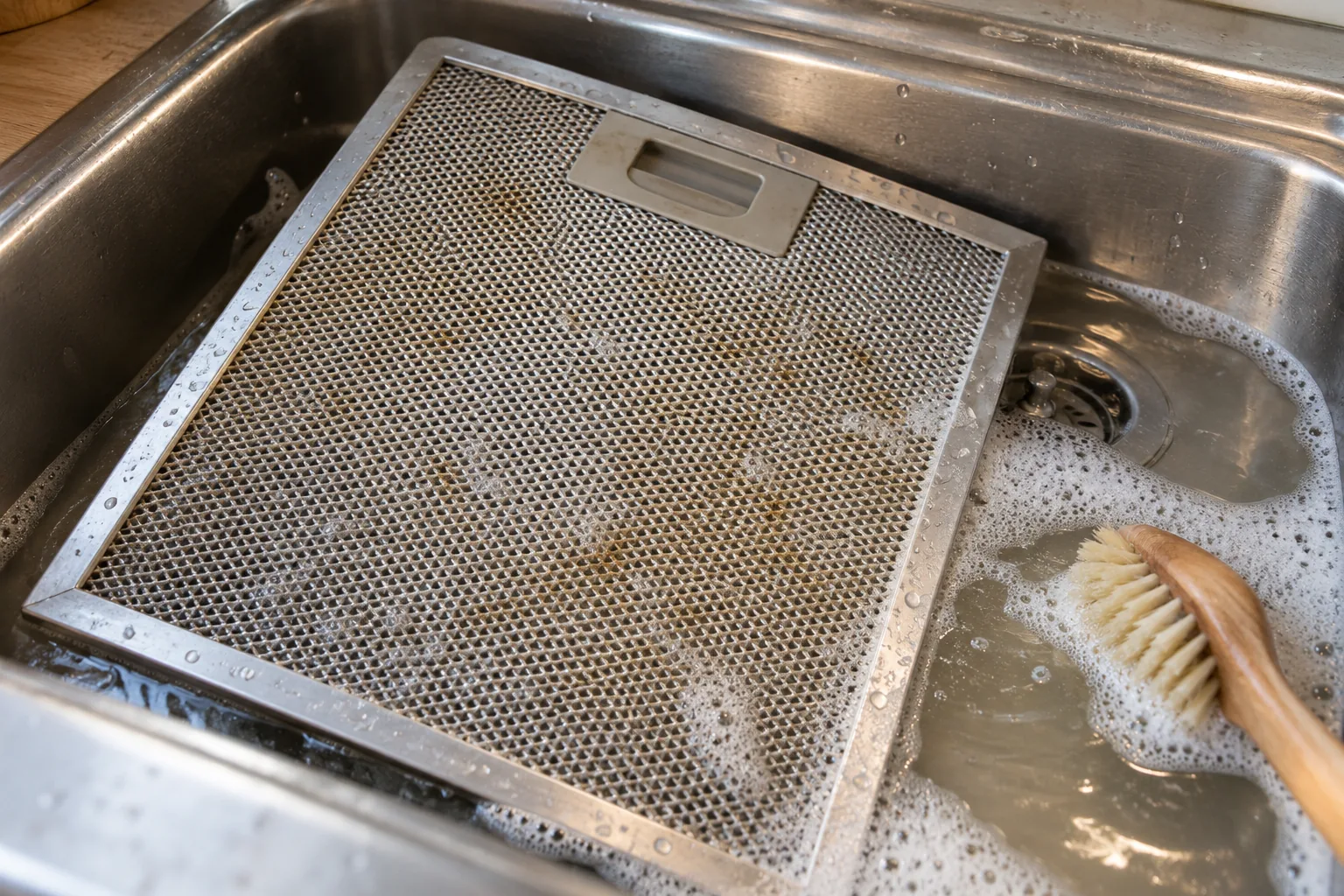
Lower the filter into the prepared solution according to the maker's guidance. Give softened residue time to release; vigorous scrubbing at once can bend fine mesh. Use a soft brush or non-abrasive cloth along the metal surface, paying attention to corners and the frame where grease collects. Work from both sides if the construction allows it. If the water becomes heavily greasy, replace it rather than returning the filter to dirty liquid.
Rinse thoroughly as instructed so that detergent is not left between the layers. Hold the filter over the sink and let the water drain. A narrow mesh may retain droplets, so turn it carefully and blot the frame with a clean towel. Do not twist the filter or bang it against the sink. If the manual permits dishwasher cleaning, load it exactly as directed and consider whether greasy residue could transfer to dishes or other items. Hand cleaning gives you more control when the filter is heavily soiled.
Inspect after cleaning. A brown tint on metal is not necessarily remaining grease, but sticky patches or blocked-looking mesh may need another gentle pass. If the filter is torn, warped or no longer fits securely, replacement may be safer than repeated scrubbing. Order a compatible part using the model number rather than choosing a similar-looking panel by eye.
Let it dry fully before refitting
Water trapped in a layered metal filter can drip onto the hob or into the hood housing. Leave it in a clean, airy place until fully dry, following the manufacturer's guidance. Do not speed drying with an open flame, a hot hob or a high-heat appliance. Wipe the accessible outer hood and filter seat with a suitable cloth while the filter is out, but do not spray liquid upwards into switches, lighting or the fan.
Refit the filter in the orientation you recorded, making sure the latch engages. Give it a light check so it cannot fall when the fan starts. Remove the protective towel from the hob and wipe any grease it caught. Run the hood briefly at a normal setting and listen for rattling. If airflow remains poor or the appliance makes a new noise, consult the manual or a qualified repairer; another round of surface cleaning may not address a blocked duct or faulty fan.
If the hood vents outside, check only accessible external areas that you can reach safely. Ductwork and elevated exterior outlets are outside a routine filter wash. A recirculating hood needs attention to its replaceable odour filter as well. Mark the replacement date on a calendar if it is easy to forget.
When to replace rather than wash
Disposable charcoal or paper filters cannot be revived by soaking unless their specific instructions say otherwise. Washing can break down the material while leaving odours trapped. A washable metal filter should also be replaced if its mesh has separated, its frame no longer holds shape or the retaining clip is damaged. If grease has accumulated beyond the removable filter into inaccessible parts, consult an appliance service professional rather than dismantling the motor housing yourself.
Consider why grease built up quickly. Frequent frying, cooking without running the extractor and a dirty hob surface all increase the load. Use the hood as instructed when cooking and continue it for the maker's recommended period afterwards. Wipe fresh splashes from the surrounding splashback once cool. The autumn kitchen deep-cleaning checklist offers a wider room routine; filter care is a smaller recurring task within it.
Include the hood in a sensible kitchen routine
A kitchen cleaning service can address accessible grease on suitable surfaces and removable parts according to the appliance instructions. Explain the hood model and whether it uses replaceable charcoal before booking so the scope is clear. A wider deep cleaning visit may be useful when cupboards, tiles and appliances have built up residue over time. If the oven needs separate attention, oven cleaning addresses that appliance rather than the hood's airflow components.
The maintenance decision is straightforward once the filter type is known: clean washable metal gently, dry it completely, replace consumable filters on the maker's schedule and arrange repair for damaged fittings or poor extraction that persists after cleaning. Keeping grease contained during the job makes the rest of the kitchen easier to finish and helps the hood perform as intended.