There is no single professional cleaning frequency that suits every office. A quiet two-person studio and a shared workplace with visitors, kitchens and long opening hours create very different levels of soil and contact. The most useful schedule combines frequent hygiene tasks with weekly detail work and planned periodic treatments.
A professional office cleaning service should assess occupancy, layout, working hours, flooring, facilities and access before recommending a routine. The table below is a starting point, not a fixed rule.
Example office cleaning frequency
| Area or task | Starting frequency | Adjust when |
|---|---|---|
| Toilets and washrooms | Daily; more often in busy premises | Footfall, opening hours or supply use increases |
| Kitchen contact surfaces and sinks | Daily | Several teams share the space or food is prepared |
| Reception and entrance | Daily or several times per week | Weather and visitor numbers bring in more soil |
| Desks and general work areas | Several times per week or weekly | Hot-desking and occupancy increase |
| High-touch points | Daily or several times per day | Many users share doors, controls and equipment |
| Meeting rooms | After heavy use; otherwise several times per week | Client meetings or catering are frequent |
| Vacuuming accessible carpet | Several times per week | Entrances, eating areas or visible traffic lanes soil faster |
| Detailed dusting | Weekly | Open shelving, equipment or ventilation produces more dust |
| Upholstery and carpet extraction | Periodic, based on condition | Spills, odour, stains or high traffic justify earlier treatment |
| Deep cleaning | Monthly, quarterly or otherwise planned | The routine leaves inaccessible or detailed tasks outstanding |

Small offices
A small office used by a consistent team may need professional attendance once or several times each week, supported by simple daily habits. Bins containing food, toilets and kitchen surfaces should not be left simply because the overall headcount is low. A hybrid office may need cleaning aligned with its busiest days rather than an even weekly pattern.
Busy shared offices
Hot desks, shared equipment and extended opening hours increase contact and visible soil. Daily cleaning is often a practical baseline, with checks during the day for washrooms, bins and kitchen areas where occupancy is high. The schedule should reflect actual use, not just the number of desks installed.
Reception and entrance areas
Entrances collect grit, rainwater and street dust. Mats may need daily vacuuming and regular maintenance, while hard floors require a method suited to their finish. Reception desks, door plates and seating also influence the first impression. During wet weather, increase checks to keep floors presentable and reduce slip risks.
Office kitchens
Food residue, shared handles and overflowing bins can become unpleasant quickly. Clean sinks, worktops, taps, tables and external appliance surfaces daily. Empty food waste and monitor fridge spills. Periodic detail work should include cupboard fronts, fridge interiors by agreement, splashbacks and accessible areas behind small appliances.
Toilets and washrooms
Washrooms usually need daily professional cleaning, with extra checks in busy workplaces. Attendance should cover toilets, urinals, basins, taps, mirrors, dispensers, touchpoints and floors, plus restocking where included. Persistent odour or scale may indicate a maintenance problem as well as a cleaning need.
Meeting rooms
Reset meeting rooms according to use. Remove cups and waste, wipe the table, clean obvious marks and arrange seating. Frequently booked rooms or spaces used for catering may need attention between sessions. Less-used rooms still require scheduled dusting and floor care.
High-touch surfaces
- Door handles and push plates.
- Lift and access-control buttons.
- Light switches and shared controls.
- Kitchen appliance handles and taps.
- Meeting-room remotes and shared phones.
- Printer controls and locker handles.
- Reception counters and visitor sign-in equipment.
Cleaning removes soil; disinfection is a separate process requiring a suitable product, correct contact time and a pre-cleaned surface. Do not apply disinfectant indiscriminately to screens, keyboards or specialist finishes.
Carpets and upholstered furniture
Frequent vacuuming slows the accumulation of dry soil, particularly at entrances and under desks. Periodic professional carpet cleaning should be based on traffic, fibre, appearance, spills and drying opportunities rather than an arbitrary date.
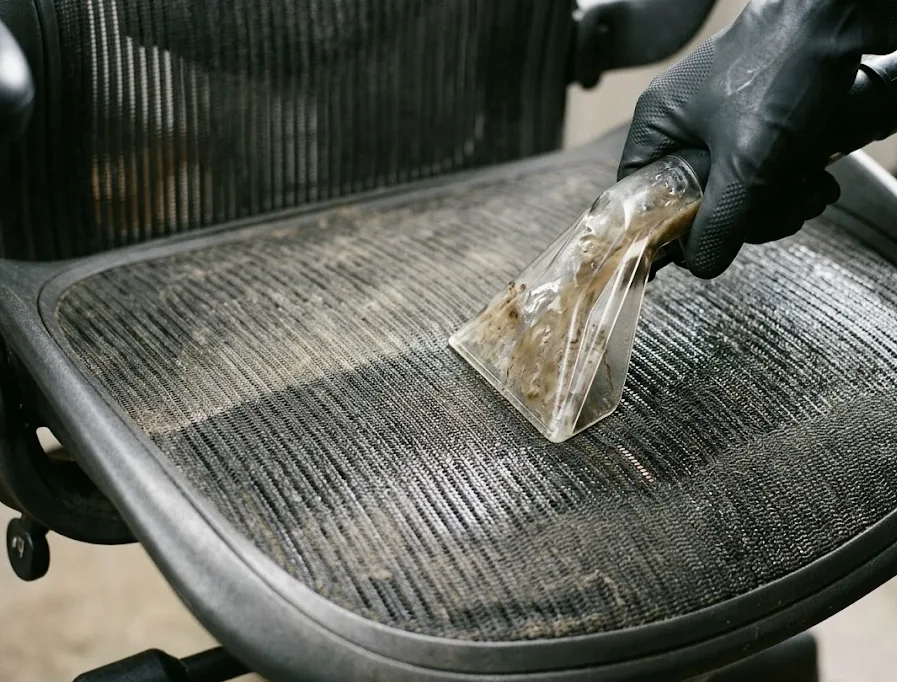
Office chairs and reception seating collect dust, body oils and drink spills. Arrange compatible upholstery cleaning after identifying the fabric and testing the method. Treat fresh spills promptly without over-wetting or rubbing them wider.
Build a schedule from evidence
- Map each area and record normal occupancy and visitor traffic.
- Separate daily hygiene tasks from weekly detail and periodic specialist work.
- Identify peak days, events and seasonal changes.
- Agree access, security, waste procedures and restricted equipment.
- Inspect results regularly and record recurring issues.
- Increase or reduce frequency using condition and usage evidence.
The required frequency can also change when a team grows, adopts hot-desking, extends opening hours or begins receiving more visitors. Review the plan after office moves, refurbishment and changes to catering or waste arrangements.
Signs that cleaning is too infrequent
- Bins overflow before the next visit.
- Washroom supplies repeatedly run out.
- Kitchen odours or sticky surfaces return quickly.
- Dust is visible on desks, skirting and equipment.
- Entrance traffic lanes and chair stains remain noticeable.
- Meeting rooms are not ready for the next users.
- Staff complaints concentrate around the same locations.
Do not respond only by extending every visit. The better answer may be an additional short attendance at peak time, clearer staff responsibilities, improved mats, better waste storage or maintenance of ventilation and plumbing.
Separate staff habits from professional duties
A workable plan states what employees do between visits. Staff might clear their own cups, put confidential papers away, report spills and place waste in the correct bins. Professional cleaners can then concentrate on the agreed hygiene, floor and detail tasks instead of sorting personal belongings.
Responsibility should also be clear for loading dishwashers, emptying fridges, watering plants, recycling unusual waste and reporting maintenance faults. Ambiguity creates gaps even when the visit frequency is adequate. Keep instructions short, accessible and compatible with workplace safety and data-protection rules.
Review these responsibilities with new starters and whenever the office layout changes. A simple reporting route for spills, low supplies and damaged fixtures helps the cleaning provider respond promptly and prevents minor issues from being overlooked between scheduled inspections.
Document seasonal adjustments so successful changes can be repeated the following year.
Frequently asked questions
Does every office need daily professional cleaning?
No. Small, lightly used offices may need fewer full visits, although toilets, food waste and kitchen hygiene still require timely attention.
How often should high-touch points be cleaned?
Usually daily in an occupied office, with more frequent attention where many people share the same controls and handles.
Is weekly vacuuming enough?
It may be sufficient in a quiet low-traffic room, but entrances, kitchens and busy shared areas often need vacuuming several times per week.
How often should office carpets be deep-cleaned?
Base the interval on fibre, footfall, visible soil, spills and drying time. Inspect regularly instead of relying only on a calendar.
Should desks be cleaned when papers are left on them?
Agree a clear-desk policy and data-security procedure. Cleaners should not move confidential papers or personal items without permission.
Can cleaning happen during office hours?
Often yes, but noisy equipment, wet floors, security and confidential work may make certain tasks better outside core hours.
To plan a practical schedule, contact Go Cleaners London with the office size, headcount, visitor numbers, opening hours and priority areas. The frequency can then be adjusted to how the workplace is actually used.