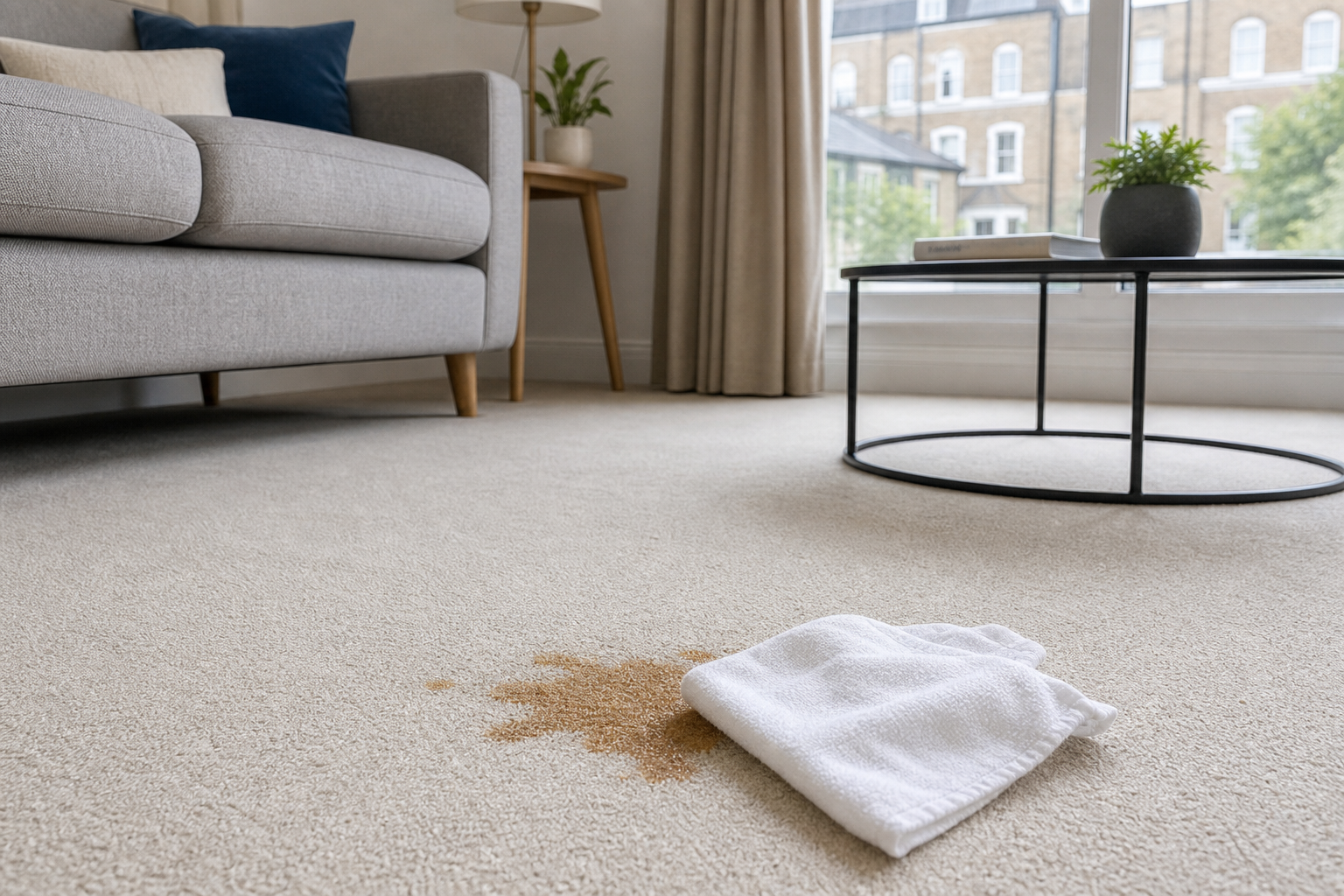
Quick first‑aid: what to do the moment a spill happens
The first few minutes matter most with tea coffee carpet stains, especially on light colours. Your aim is to lift as much liquid as possible without pushing it deeper into the pile.
Blot — use clean white paper towels or a plain cloth; press, don’t rub, to lift liquid.
Place a folded white paper towel or plain white cloth over the spill and press down with your palm. Replace as the towel becomes damp. If you only have coloured tea towels or patterned cloths, avoid them—dye transfer is a real risk on pale carpets.
Work from the outside in to avoid spreading the stain.
Start blotting from the outer edge of the spill and move toward the centre. This keeps the stain from “walking” into clean fibres and creating a larger ring.
If the spill is hot, cool it with a little cold water before blotting to avoid setting the stain.
Hot drinks can encourage staining compounds (tannins in tea; coffee pigments) to bind to fibres. Lightly dab a small amount of cold water around the area, then continue blotting. Don’t pour water directly onto the carpet—use it sparingly so you don’t soak the backing.
What to avoid to protect colours and fibres
Light carpets can be surprisingly easy to damage with the wrong approach. If you’re aiming for light coloured carpet stain removal without creating a pale patch, avoid the following:
Don’t scrub or rub vigorously — this can fuzz fibres and spread pigment.
Scrubbing can roughen the pile (especially on loop or wool blends) and push tea/coffee deeper. It can also distort the carpet in one spot, which is very noticeable on light shades.
Avoid coloured cloths or kitchen towels that can transfer dye; use white cloths only.
Colour transfer is common when you introduce moisture. White, lint-free cloths or plain paper towels are safest.
Never use household bleach or strong oxidisers on light‑coloured carpets — these can strip dyes and change tone.
Bleach may remove the stain and the carpet dye, leaving an uneven, lighter patch. This is one of the most common ways people permanently damage carpets while trying to remove tea stain carpet marks quickly.
Do not mix cleaning chemicals (explicitly): avoid combining bleach with vinegar, or vinegar with enzyme cleaners, and don’t combine multiple household products.
Mixing chemicals can cause harmful reactions or neutralise effectiveness. If you switch between treatments, rinse and blot the area with plain water and dry between steps to minimise interaction and residues.
Do not saturate the carpet with water — excess moisture can cause shrinkage, backing damage or mould in flats.
In many London flats, ventilation can be limited and carpets may sit over underlay on older subfloors. Over-wetting increases drying time and can lead to odour or mould issues. Aim for “damp-cleaning”, not drenching.
Step‑by‑step safe DIY treatments for fresh tea and coffee stains
For most coffee stain carpet UK situations (and tea spills), a gentle detergent solution plus careful rinsing works well. Keep your approach controlled and minimal with liquids.
Materials to have ready
- White cloths/paper towels
- Cold water
- Mild liquid dish detergent (clear, fragrance‑free if possible)
- White vinegar
- Spray bottle (optional, but helps control moisture)
- Soft brush (or an old, clean toothbrush for small areas)
- Bowl
- Vacuum (for after the area is fully dry)
- Enzyme cleaner (wool-safe if required) — optional (useful for spills that included milk or other protein/sugar)
1) Blot up as much liquid as possible.
Continue blotting until you’re no longer picking up moisture. If the spill included milk/sugar, this step is even more important—residue can attract dirt later and reappear as a grey patch.
2) Mix 1 teaspoon mild detergent with 500 ml cold water. Lightly dab the stain with the solution using a cloth, then blot dry.
Dip a corner of a white cloth into the solution and dab the stain—don’t pour the mix onto the carpet. Work in small sections. Follow each dab with blotting using a dry towel. This controlled “apply then lift” cycle helps prevent over-wetting and reduces the chance of a ring.
If the spill contained milk (a latte, flat white or tea with milk), consider using a small amount of enzyme-based cleaner designed for carpets—spot-test first and follow the product instructions. Remember: do not mix an enzyme cleaner with vinegar; rinse and dry between different treatments.
For guidance on general technique and ongoing care, see our related tips on how to clean your carpet.
3) Rinse the area with a small amount of cold water and blot until mostly dry.
Rinsing matters. Leftover detergent can attract soil in busy areas (hallways, living rooms), making the spot look worse a week later. Mist with plain cold water (or dab with a damp cloth), then blot repeatedly. If you plan to follow with vinegar or another product, rinse and blot thoroughly first.
4) For persistent colour, mix equal parts white vinegar and water, apply sparingly, blot, then rinse and blot again.
Diluted vinegar can help with lingering tea/coffee colour. Use a cloth to apply it sparingly, blot, then rinse with cold water and blot again. If your carpet is wool or a wool blend, be cautious with vinegar and stop if you notice any colour movement (more on testing below). Do not use vinegar if you have already applied bleach or certain enzyme cleaners — rinse first.
5) Finish by pressing with dry towels and allow to air dry fully; vacuum once dry.
Place a thick layer of dry paper towels over the area and press (you can add a light weight like a book wrapped in a clean bag). Once dry, vacuum to lift the pile back up so the cleaned area blends with surrounding carpet.
Treating set or dried tea/coffee stains safely
If you’ve only noticed the mark later (common in shared flats or after guests), you can still attempt light coloured carpet stain removal carefully. Dried stains often need a little dwell time, but you still want to avoid soaking the carpet.
Gently loosen dried residue with a soft brush, then vacuum.
Before adding any moisture, lightly brush the area to break up surface residue (especially if sugar was involved). Vacuum to remove loosened particles. This helps prevent turning the stain into a sticky slurry that spreads.
Apply the mild detergent solution to the stained area and allow to sit for 10–15 minutes before blotting.
Dab the detergent solution onto the stain until it’s evenly damp—not wet. Let it sit for 10–15 minutes, then blot firmly with a dry white towel. Repeat once or twice if needed, rinsing lightly between rounds and blotting to remove residues.
If residue remains, use a paste of bicarbonate of soda and water applied lightly, allow to dry, then vacuum. Follow with detergent rinse if needed.
Make a thin paste (bicarb + a few drops of water). Apply a light layer to the stained fibres and leave it to dry fully. Vacuum thoroughly. If a faint mark remains, return to the detergent-and-rinse method—keeping liquids minimal.
Consider a commercial carpet stain remover labelled safe for your carpet fibre; always spot‑test first.
If you choose a shop-bought stain remover, check it’s suitable for your fibre type and that it doesn’t rely on bleaching. Follow label directions exactly, and don’t combine products (mixing chemicals can cause discolouration or leave difficult residues). If you need an enzyme cleaner for milk, choose one marked safe for carpets or wool if applicable and spot-test.
Spot‑testing and checking for colourfastness
Spot-testing is the simplest way to avoid making a small stain into a permanent patch.
Always test any solution in an inconspicuous area (under furniture or inside a wardrobe).
Pick a hidden spot on the same carpet (or an offcut if you have one). Apply a tiny amount of your chosen solution.
Apply small amount, blot after 1 minute and check for dye transfer or colour change.
Press a white cloth onto the test area. If you see dye transfer onto the cloth, or the carpet looks lighter/darker after drying, stop using that solution.
If dye lifts or colour shifts, stop and contact a professional to avoid permanent damage.
This is especially important with older carpets, wool blends, or carpets that have been cleaned with unknown products before. If you’re considering professional help, our guide on how to prepare for a carpet cleaning appointment explains what to do beforehand.
Adjusting methods by common carpet fibres in London homes
London housing stock is mixed—period conversions, newer builds, and a lot of rental properties—so carpet fibres vary. Matching your method to the fibre improves results and reduces risk.
Synthetic fibres (nylon, polypropylene): generally more stain‑resistant — mild detergent or vinegar solution usually safe.
Many rentals use synthetics because they’re durable. For these, the detergent method is typically effective for tea coffee carpet stains. Keep vinegar diluted and avoid overuse—residue and over-wetting are still risks even on synthetics.
Wool or wool‑blend carpets: fibre‑sensitive — use minimal water, avoid alkaline cleaners and strong heat; prefer enzyme or wool‑safe products and consult instructions.
Wool is comfortable and common in higher-end homes, but it’s more sensitive. Avoid hot water and harsh products. Use a wool-safe cleaner if you have one, and always keep moisture low. If the stain is large or old, professional assessment is often the safer route.
Low‑pile vs high‑pile: high‑pile may trap more liquid; work gently and consider professional extraction for deep set stains.
High-pile carpets can hold spills below the visible surface, leading to odours or reappearing marks. If repeated blotting still brings up colour, or the area feels damp deep down, professional extraction may be more effective than repeated DIY attempts.
Pet households and high‑footfall flats: extra caution and upkeep
In busy homes—shared flats, families, and pet households—stains can combine with general soiling, making light carpets look dull even after the spot is treated.
Act quickly — pets and busy corridors increase soil and odour risks.
If pets walk over a damp spot, they can track in additional dirt and spread the stain. Block off the area while it dries (a chair over the spot can help) and keep blotting until towels come away mostly dry.
Combine stain removal with odour control: after cleaning, ensure the area dries fully and consider neutralising products labelled pet‑safe.
Odour is usually a moisture and residue problem. Drying thoroughly is your first line of defence. If you need extra help, use a neutraliser designed for carpets and labelled pet-safe, and avoid strong perfumes that can linger in small London rooms.
If pet-related marks are a regular issue, our guide to pet carpet cleaning in London covers practical approaches for stains and tracked-in mess.
Regular vacuuming and scheduled professional cleans reduce long‑term discolouration on light carpets.
On light carpets, general grime can make a treated stain area look “cleaner than the rest”. Consistent vacuuming helps keep the overall tone even. For maintenance planning, see how often to clean rugs and carpets.
When DIY won’t do: signs you should call professional cleaners
DIY methods are useful, but there’s a point where repeated attempts increase the risk of discolouration, pile damage, or a lingering ring. Consider professional help if any of the following apply:
Large or deep stains that don’t respond after careful DIY attempts.
If the stain covers a wide area (for example, a full mug spill that soaked through) or returns as it dries, it may be sitting deep in the pile/underlay. Professional equipment can remove more moisture and residue than surface blotting.
Stains that have been treated previously with unknown chemicals, or where test patches show colour change.
Unknown products can react unpredictably. If spot-testing shows dye transfer or a tone shift, stop. It’s safer to get a professional opinion than to risk a visible patch on a light carpet.
Concerns about shrinkage, backing damage, mould or strong lingering odours.
Over-wetting is a common cause of odour and drying issues in flats. If the area has stayed damp for too long, or smells sour/musty, it’s worth getting help before it becomes a bigger problem.
If you’re preparing a rental property for inspection or want to protect your deposit—professional cleaning may be appropriate.
For tenants, carpet marks can be a sticking point at check-out. If you’re weighing your options, these guides may help: professional vs DIY carpet cleaning and carpet cleaning costs.
Preventive tips to reduce future tea and coffee carpet stains
Prevention is particularly valuable with light carpets: it reduces emergency cleaning and helps keep colour even in high-traffic London rooms.
Use mugs with lids in high‑traffic rooms and put coasters or trays under hot drinks.
Lidded travel mugs aren’t just for commuting—they’re useful in living rooms and home offices too. A simple tray on the coffee table can catch drips and protect the carpet from splashes.
Create designated eating/drinking zones on hard floors where practical.
If your kitchen or dining area has hard flooring, try to keep hot drinks there—especially in homes with children, pets, or narrow walkways where bumps are common.
Apply a professional carpet protector suitable for light colours and your carpet fibre (follow manufacturer guidance).
Carpet protectors can buy you time to blot spills before they soak in. Choose one compatible with your fibre type and follow instructions carefully—incorrect application can cause patchiness.
Schedule regular vacuuming and periodic deep cleans to keep light carpets looking their best.
Routine vacuuming prevents soil build-up that can make light carpets look grey. Periodic deep cleaning helps reset the overall appearance—particularly in high-footfall flats.
Contact the team for practical advice if a stain won’t shift or you’d prefer guidance tailored to your carpet fibre and your home setup in London. You can visit gocleanerslondon.co.uk and reach Go Cleaners London for no-pressure options.