
North Sheen / TW9, TW10
Carpet Cleaning North Sheen: Find the Source Before Treating the Patch
- Surface spills separated from leaks and hidden moisture
- Backing and underlay limitations explained before cleaning
- Routine textile care paused where the carpet is not safely dry
- Odour and staining discussed without pretending every source is accessible
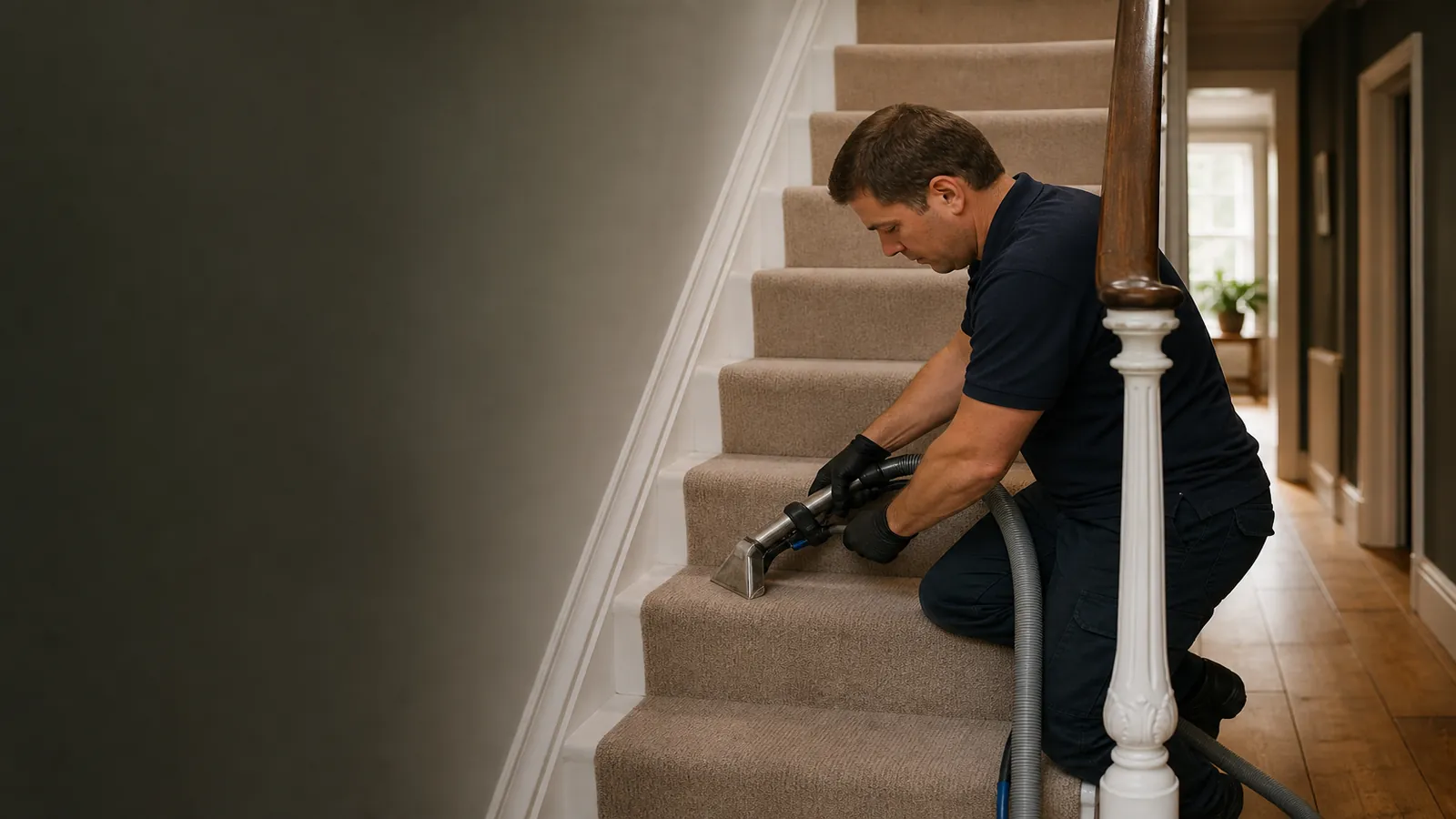
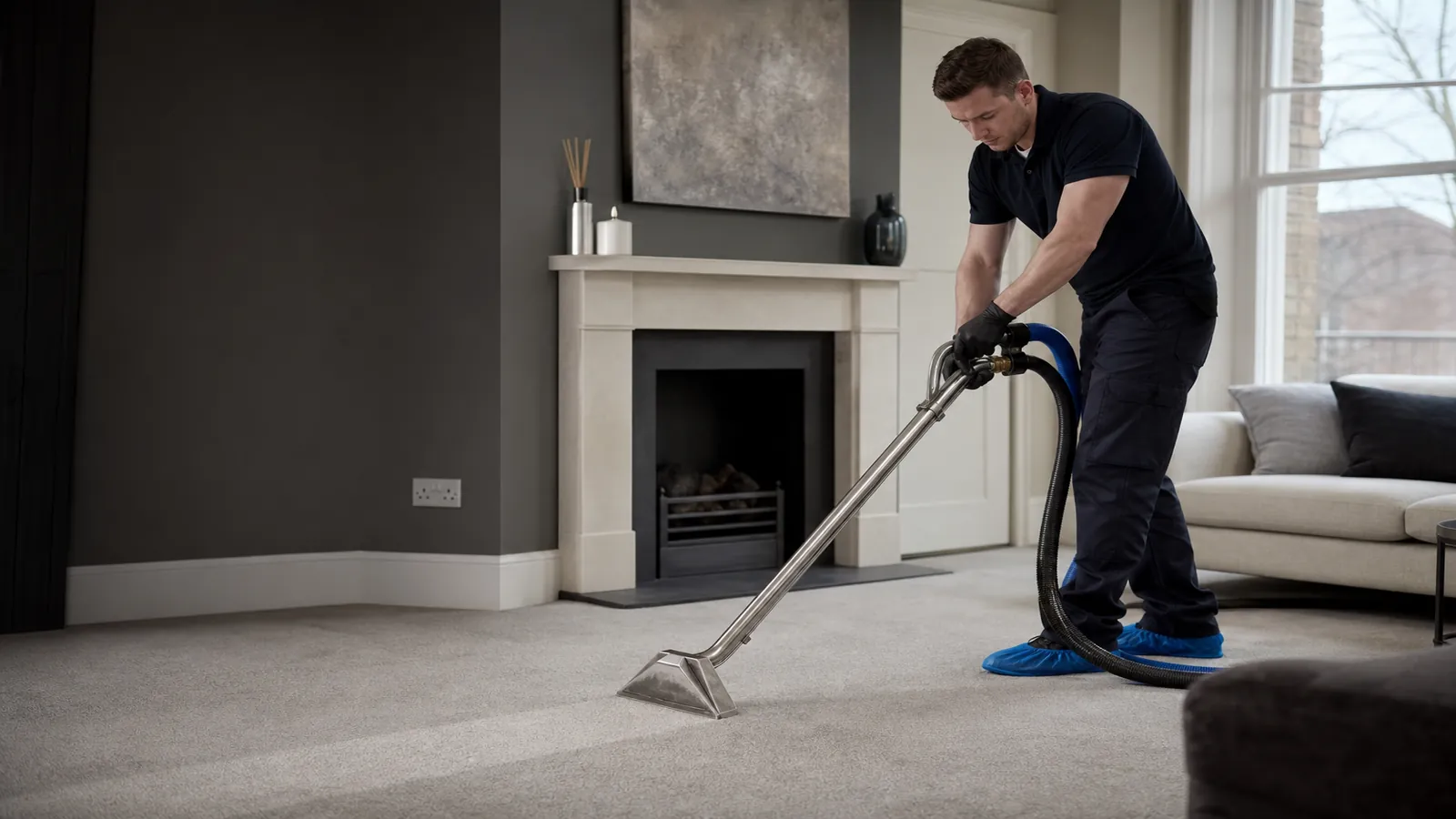
A dark or musty area may need investigation before cleaning
A carpet mark associated with moisture is not automatically a routine spill. A tipped drink, repeated wet mopping at a threshold, a plant pot, a plumbing leak and moisture rising from beneath the carpet create different risks. The visible surface may be only one part of the problem. For a North Sheen enquiry, the first useful question is whether the source is known, stopped and dry enough for ordinary carpet work to proceed.
Professional carpet cleaning introduces controlled moisture for a defined purpose; it is not a remedy for an active leak or saturated underlay. If the carpet feels persistently damp, smells musty, shows spreading discolouration or sits beside recent water damage, disclose that history when booking. The company can decide whether an inspection is appropriate or whether the source needs attention from a different specialist first.
Where the issue is a contained surface spill, the normal carpet process can begin with fibre and colour checks, thorough vacuuming, local assessment and a suitable room method. Where contamination appears to extend into backing or underlay, the cleaner explains what is and is not reachable. Masking an odour with fragrance would not prove that hidden material has been resolved.
A larger property reset may include domestic cleaning, but ordinary room care should not spread hard-floor water or spray onto carpet edges. If another cleaner discovers dampness, pause work in that area and identify the cause. Coordinated services are useful only when they share relevant observations rather than cleaning over them.
The objective is a safe boundary. Dry, suitable carpet receives a proportionate textile service. Active moisture, structural causes and inaccessible contamination are documented as outside that boundary. The customer receives a clearer route forward instead of paying for repeated surface treatment while the underlying source remains unchanged.
PROCESS / FOUR DECISIONS
Finish the works, remove dry matter, then clean
01
Confirm that dust production has ended
The customer identifies completed and outstanding work. Unsafe debris is removed by the responsible trade or waste service before the textile appointment.
02
Survey deposits and damage
The cleaner maps exposed carpet, protection boundaries, paint or adhesive spots, cuts and wear. Material information is recorded where known.
03
Prioritise dry recovery
Accessible carpet is vacuumed systematically. Only after loose matter is reduced does the suitable cleaning and local treatment plan proceed.
04
Review after the project context is considered
Remaining colour or texture changes are linked to their likely cause. Drying and access advice protects the carpet from trades or furniture returning too quickly.
VISIT / HANDOVER
Do not book the final carpet stage before the final dusty task


Remove tools, offcuts, screws, sharp debris and unused materials. Complete sanding, drilling and plaster work and clean high surfaces first. Retain labels for paint or adhesive involved in a mark. Do not scrape cured deposits or flood fine dust. Tell the cleaner whether carpet protection was taped, since adhesive residue can remain at its edges.
Dust sheets reduce exposure but do not prove protection
Particles can enter at joins, travel under foot and settle when sheets are lifted. The technician checks the carpet rather than assuming covered means clean. Tape and backing may also leave their own marks.
Wet plaster is not a normal spot
Fresh construction material should be handled as part of the works, not rubbed into carpet. Once cured, removal risk depends on fibre and deposit. The cleaner may limit treatment to avoid tearing or discolouration.
Airborne dust can return from other rooms
Clean shelves, ledges and adjoining hard floors before the carpet appointment. Otherwise ordinary movement may resettle fine matter onto the finished pile, creating the impression that the clean failed.
Upholstery may have collected the same project dust
If seating remained in the work zone, upholstery cleaning needs a separate fabric survey. Vacuuming and cleaning choices for furniture cannot be copied automatically from fitted carpet.
SERVICE TEAMS / THE AGREED WORK
Four ways earlier products alter the decision

Detergent attracts fresh debris
A patch can look clean when wet and darken after ordinary use because sticky material remains. Suitable rinsing and recovery may help, but the cleaner first checks fibre and what else was applied.

Bleaching changes the target
When dye is lost, the pale area is no longer removable soil. Adding chemistry can enlarge it. The technician records the colour change and avoids promising that cleaning will recreate pigment.

Scrubbing alters texture
Aggressive rubbing can fuzz, untwist or flatten pile. Different reflection may then resemble a stain. Viewing from several directions helps distinguish texture from remaining residue.

Multiple unknowns increase caution
Products can interact or leave misleading signs. If the history is incomplete, an unobtrusive test and restrained plan are safer than assuming the last bottle named by the customer is the only one present.
Where a product was also used on seating, upholstery cleaning needs a separate fabric history. The same spray can behave differently on another textile and filling.
PRICING / CLEAR STARTING POINTS
Treatment history can change the real scope
Provide room sizes, stairs, furniture and marks, then list anything used on the carpet. A small patch with several previous products may require more caution than a recent untreated spill, though it does not automatically justify an expensive add-on. General cleaning prices offer context; the confirmed quotation should describe routine spot assessment and any uncertainty requiring inspection. Photographs show position but rarely reveal residue or dye stability. A low price tied to a guaranteed instant removal should be treated carefully, as should an open-ended charge for repeated attempts. Transparent value comes from testing, preparation, proportionate action and the judgement to stop before further damage.
01
Single room
From £15 / room
Compact bedroom or study
02
Double room
From £15 / room
Standard double bedroom
03
Lounge
From £15 / room
Living room with clear equipment access
04
Stairs
Quotation
Standard flight, subject to construction
05
Hallway
Quotation
Reachable hall or landing
06
Whole property
Quotation
Measured rooms and fibre types
Prices are guide prices.
Final quotation depends on the property, condition and requirements.
SCOPE / CONFIRM BEFORE BOOKING
A carpet visit that audits previous treatment
Included in this brief
- Product record: discussion of sprays, detergents, machines, powders and professional work already used on priority areas.
- Comparative inspection: assessment of the patch beside untreated carpet, with fibre and colour checks where useful.
- Controlled response: suitable preparation, spot work or rinsing selected according to evidence rather than residue assumptions.
- Dry-result guidance: explanation of potential re-soiling, colour loss and signs worth monitoring after the visit.
Outside this cleaning brief
- The service cannot guarantee reversal of bleaching, dye migration, fibre distortion or damage caused by earlier products.
- Unknown product combinations are not pursued through unlimited chemical experimentation.
- A temporary fragrance change is not evidence that sticky residue or an odour source has been removed.
PREPARATION / BEFORE THE VISIT
Prepare the North Sheen address without pre-cleaning it.
- Confirm the entrance and any requirement involving street-specific parking controls.
- List the rooms or items covered by carpet cleaning.
- Point out sensitive finishes, pets, alarms and anything that must not be moved.
- Agree the key return, completion contact and any building time restriction.
MAP / COVERAGE CONTEXT
Route planning for carpet cleaning in North Sheen.
Coverage context for North Sheen. This map does not represent a staffed local office.
RELATED SERVICES / SAME AREA
Related services in North Sheen
NEARBY AREAS / SAME SERVICE
Carpet Cleaning near North Sheen
It is usually counterproductive if dust, paint or traffic will continue. Complete dusty work and agree a protected final sequence before booking carpet care.
Post-renovation carpet questions for North Sheen
Can you clean while decorators are still working?
Thorough dry recovery is important, but outcome depends on particle depth, carpet construction and exposure. The cleaner assesses what remains before selecting later stages.
Will vacuuming remove all plaster dust?
No. Paint chemistry, curing, fibre and previous attempts matter. Treatment is tested where suitable, and permanent residue or damage may remain.
Can every paint spot be removed?
No. Adding water can turn dry particulate matter into residue within the pile. Prioritise suitable vacuuming and professional assessment.
Should I shampoo fine dust myself first?
No. The map describes service coverage; it does not identify a staffed local branch.
Tell us what the project left behind
For carpet cleaning in North Sheen after decorating or building work, list exposed rooms, project materials, protection used and any unfinished tasks. A truthful project history allows enough time for dry preparation and separates cleanable debris from deposits or damage that need another answer.