
Amersham / HP6
Carpet Cleaning Amersham: Let Fibre Behaviour Set the Pace
- Construction considered before chemistry or temperature
- Colour response tested discreetly where uncertainty exists
- Agitation chosen for the pile rather than the stain alone
- Realistic improvement prioritised over aggressive treatment
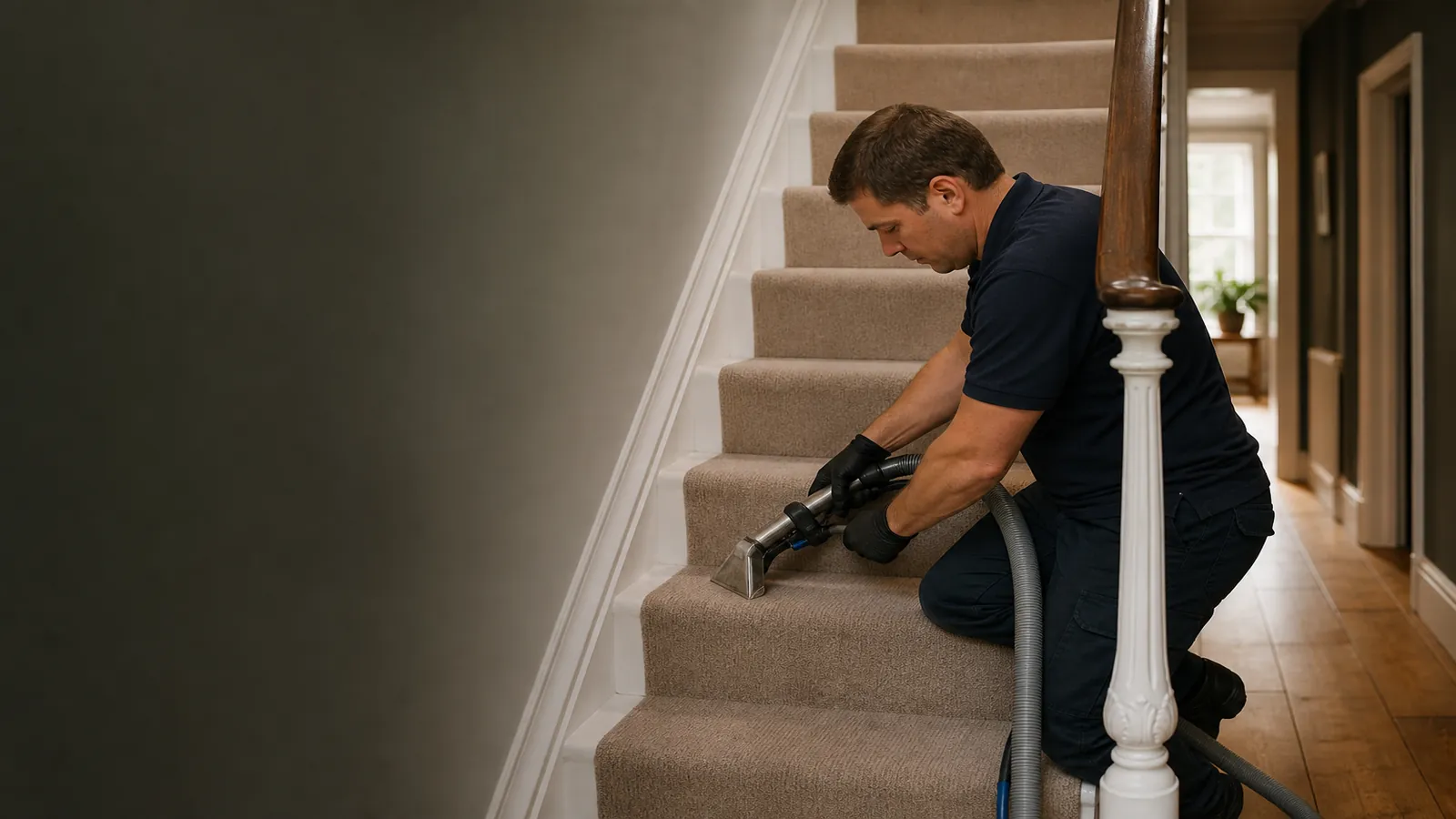
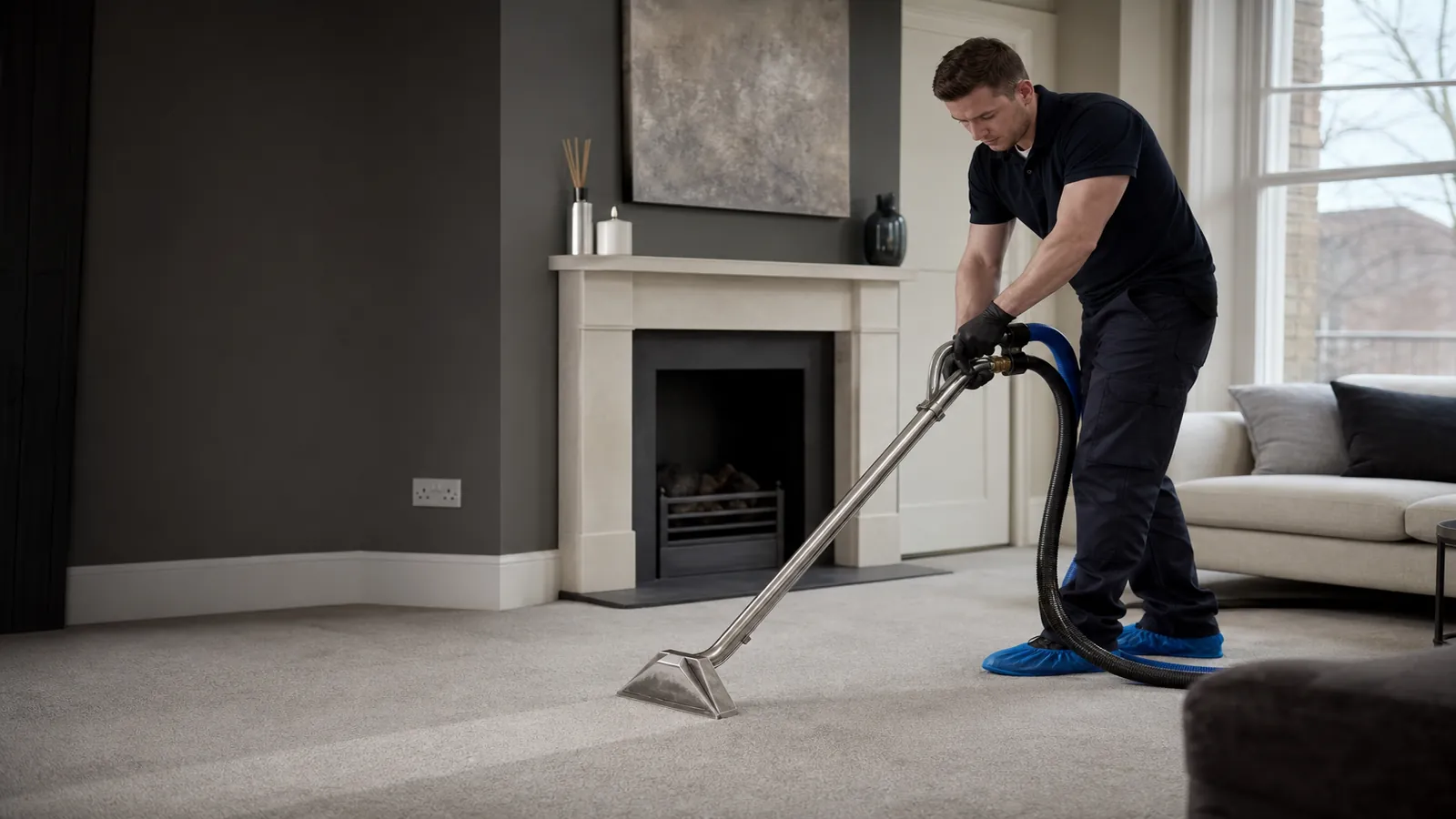
The safest clean begins with material knowledge
Two carpets can carry similar grey traffic lanes and still require notably different handling. Fibre content, twist, backing, dye behaviour, age and earlier treatments affect what can be done safely. Our Amersham page therefore approaches the appointment from the fibre outward: establish the material’s working range, then design the soil-removal steps inside it.
Identification is not based on appearance alone. Labels and customer records are useful when available, while inspection and a discreet response test add evidence on site. Wool-rich pile, synthetics and blends can each perform well under an appropriate system, but they should not be pushed through one standard temperature, solution strength or agitation routine for convenience.
The condition survey also looks for problems that cleaning cannot correct. Fuzzing, abrasion, loose seams, colour loss and changes caused by sunlight may become more visible once surrounding soil is removed. Noting them beforehand protects the carpet and sets an honest expectation: cleanliness can improve without the textile becoming new.
Stain work remains subordinate to fibre safety. A stubborn patch does not justify repeated strong applications when test results show limited movement or colour risk. We may make a second controlled attempt using a different principle, but we stop where the likely benefit no longer outweighs the possibility of setting, spreading or damaging the mark.
Related textiles deserve the same independence. An armchair is not treated with a carpet setting merely because it appears wool-like, and a mattress has its own layered construction. Customers can scope upholstery cleaning or mattress cleaning separately so every material receives a specific assessment.
SERVICE SCOPE / READ BEFORE BOOKING
A fibre-first service without restoration claims
Included in this brief
- Inspection of pile, backing clues, seams, wear and reported treatment history
- Colour or solution testing in an inconspicuous position when appropriate
- Dry-soil removal and a cleaning method matched to observed tolerance
- A final condition review that identifies improvement and lasting limitations
Outside this cleaning brief
- A universal hot-water setting for every carpet construction
- Promises to reverse fading, fibre loss, pile distortion or weak seams
- Specialist repair, re-dyeing and structural work

PRICING / CLEAR STARTING POINTS
Material, scope and condition belong in the quotation
The price discussion uses room dimensions, steps, furnishings, carpet information, contamination and access rather than an Amersham label. Published guidance remains on the prices page. Photographs and manufacturer details can support the enquiry, although final method decisions follow the textile inspected on site.
01
Single room
From £15 / room
Compact bedroom or study
02
Double room
From £15 / room
Standard double bedroom
03
Lounge
From £15 / room
Living room with clear equipment access
04
Stairs
Quotation
Standard flight, subject to construction
05
Hallway
Quotation
Reachable hall or landing
06
Whole property
Quotation
Measured rooms and fibre types
Prices are guide prices.
Final quotation depends on the property, condition and requirements.
SERVICE TEAMS / THE AGREED WORK
Textile observations that influence treatment

A wool-rich pile
The operative considers dye stability, pH, agitation and moisture without assuming fragility or robustness. Testing defines the suitable range, and the clean proceeds within it rather than following a synthetic-carpet preset.

A resilient synthetic construction
Synthetic fibre may tolerate a different approach, yet backing, seams and previous spot chemicals still matter. Material category informs judgement; it never replaces the pre-clean survey.

A flattened walkway
Soil can make compression look worse, so cleaning may improve clarity and pile presentation. It cannot rebuild fibre worn away by repeated use, and that distinction is included in the handover.

A colour-sensitive patterned area
Multiple dyes or an uncertain history call for discreet checks. The result guides solution selection and contact time, preventing a decorative pattern from being exposed to an unjustified blanket treatment.
Fibre identification guides decisions but does not predict every outcome. Construction, prior damage and the nature of the soil remain part of the Amersham assessment.
PROCESS / FOUR DECISIONS
A conservative route to meaningful soil removal
01
Inspect before naming the method
The cleaner reviews labels where available, handle, pile, edges and visible backing clues. Existing defects are recorded and the customer’s account of spill products is added to the working picture.
02
Test the uncertain variables
A small, hidden area may be checked for colour or solution response. This is interpreted alongside construction; a successful spot test supports the plan but is not treated as proof that every mark will release.
03
Build cleaning action gradually
Vacuum extraction removes dry matter. Compatible pre-treatment is applied in a controlled quantity, agitation respects pile structure, and rinsing uses suitable flow with repeated recovery rather than unnecessary heat or saturation.
04
Assess the carpet after grooming
The technician looks across the pile from changing angles, checks treated spots and identifies any persistent fading, shading or wear. Drying instructions are then tailored to the actual moisture and room conditions.
VISIT / HANDOVER
Useful evidence to share before we inspect

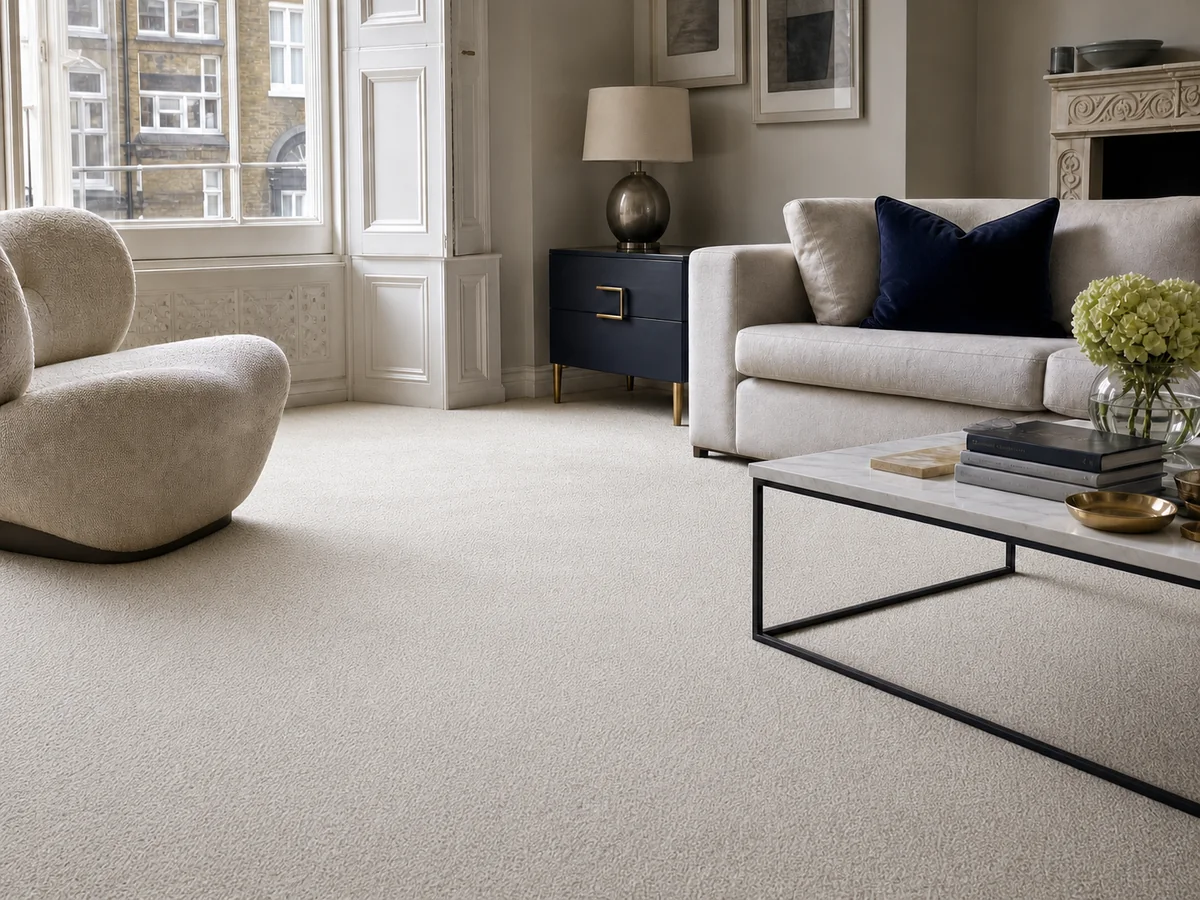
Provide fibre labels, purchase information or care instructions if you have them, but do not worry if these are unavailable. Stop experimenting with stain removers and clear delicate belongings. When the appointment accompanies end of tenancy cleaning, agree the sequence in advance.
Why a burn test is not casual on-site theatre
Material identification should use available labels, professional observation and suitable low-risk checks. A destructive test is not performed merely to create certainty for a sales explanation. Where composition remains uncertain, the method is chosen conservatively and adjusted from observed response.
Temperature is one variable, not the service
Warm solution can support some cleaning systems, but more heat is not a universal measure of quality. Fibre, dye, backing and the contaminant all influence the safe range. Preparation and recovery may matter more than pursuing a dramatic machine setting.
Colour change can sit beneath soil
Removing grey residue sometimes reveals fading or a previous chemical mark that was already present. This does not mean the cleaning created missing dye. Pre-condition notes and photographs help distinguish a revealed defect from a new event.
Routine care between professional visits
Use vacuum equipment appropriate for the pile and avoid repeated passes with a brush setting that distorts delicate fibres. Blot fresh spills, do not scrub them sideways, and seek advice before layering several products onto an uncertain material.
MAP / COVERAGE CONTEXT
Plan the route into the Amersham property.
Coverage context for Amersham. This map does not represent a staffed local office.
EXPLORE / NEXT
Related services in Amersham
EXPLORE / NEXT
Nearby areas for carpet cleaning
Not as a rule. Drying depends on construction, pile, solution use, recovery, ventilation and conditions. Wool influences method choices, but the technician assesses the complete carpet rather than assigning a fixed timetable to one fibre.
Amersham questions about fibres and carpet care
Do wool carpets have to stay wet for longer?
Often, yes. The cleaner inspects conservatively and uses discreet testing where useful. Uncertainty narrows the chosen operating range; it is not covered by pretending that visual identification is infallible.
Can you clean a carpet when the label is missing?
Construction and installation matter, which is why inspection and moisture control are essential. No remote answer can eliminate every risk, but a suitable method avoids treating all backings and fibres identically.
Will extraction shrink my carpet?
Only when it is appropriate to the material and soil. Excessive brushing can fuzz or distort some pile. Effective cleaning balances chemistry, time, movement and recovery instead of maximising one element.
Does stronger agitation remove more dirt?
No. It describes service coverage and practical local context, not a staffed branch.
Arrange an Amersham assessment around the textile
Describe the rooms, steps and important marks, then share any fibre label or previous cleaning information you hold. Include access and furniture notes. We will use those facts to prepare the appointment while reserving the final cleaning decision for the carpet’s observed construction, colour response and condition. If a care leaflet specifies restrictions, photograph the relevant page so the technician can compare it with the material and proposed treatment.