
Barnes / SW13
Carpet Cleaning Barnes: Use Moisture as a Tool, Not a Default
- Backing and edge condition reviewed before rinsing
- Solution volume matched to soil and textile response
- Recovery prioritised throughout the main treatment
- Permanent marks never chased with uncontrolled wetting
The right amount of moisture is the amount the job can justify
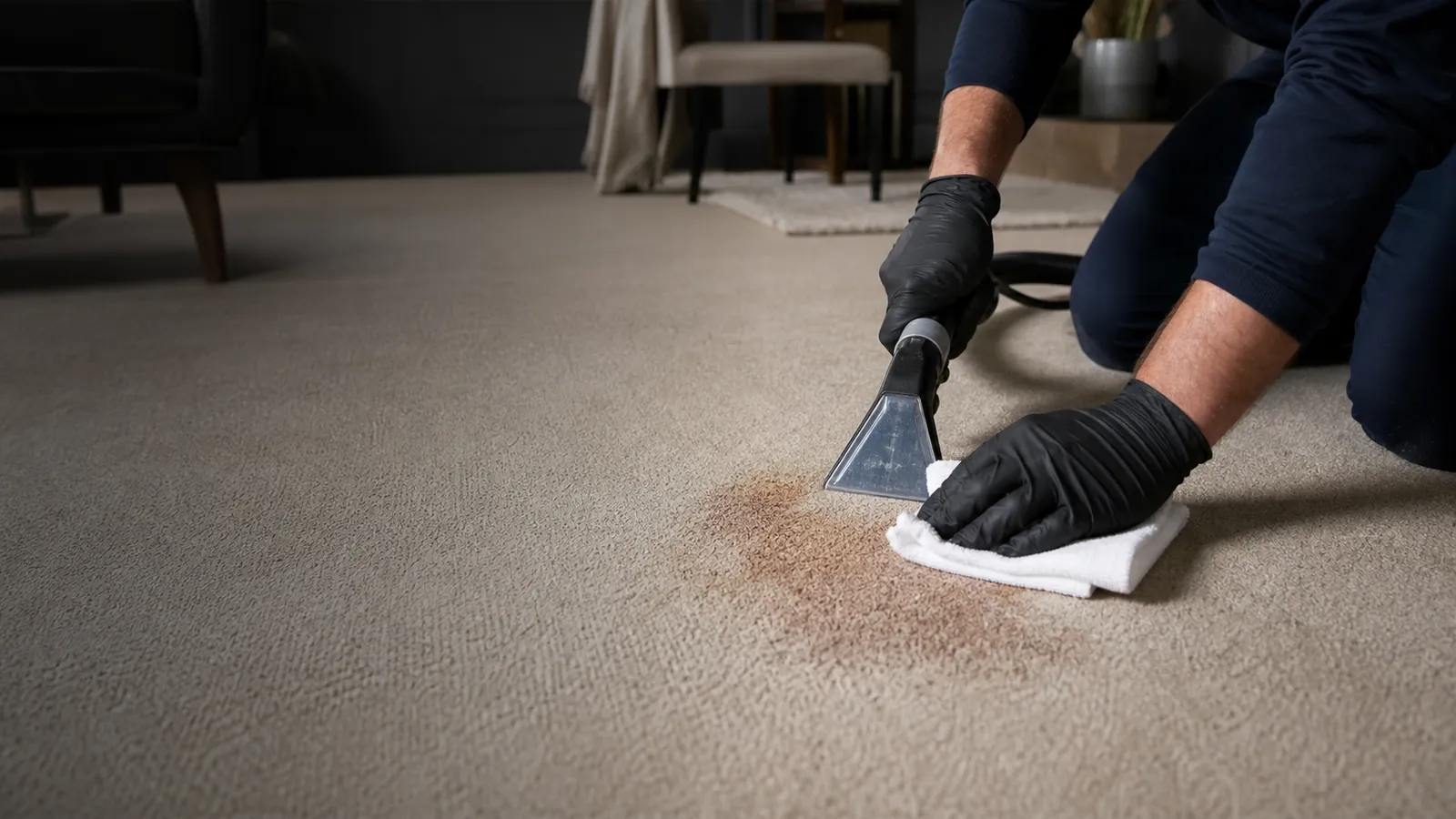
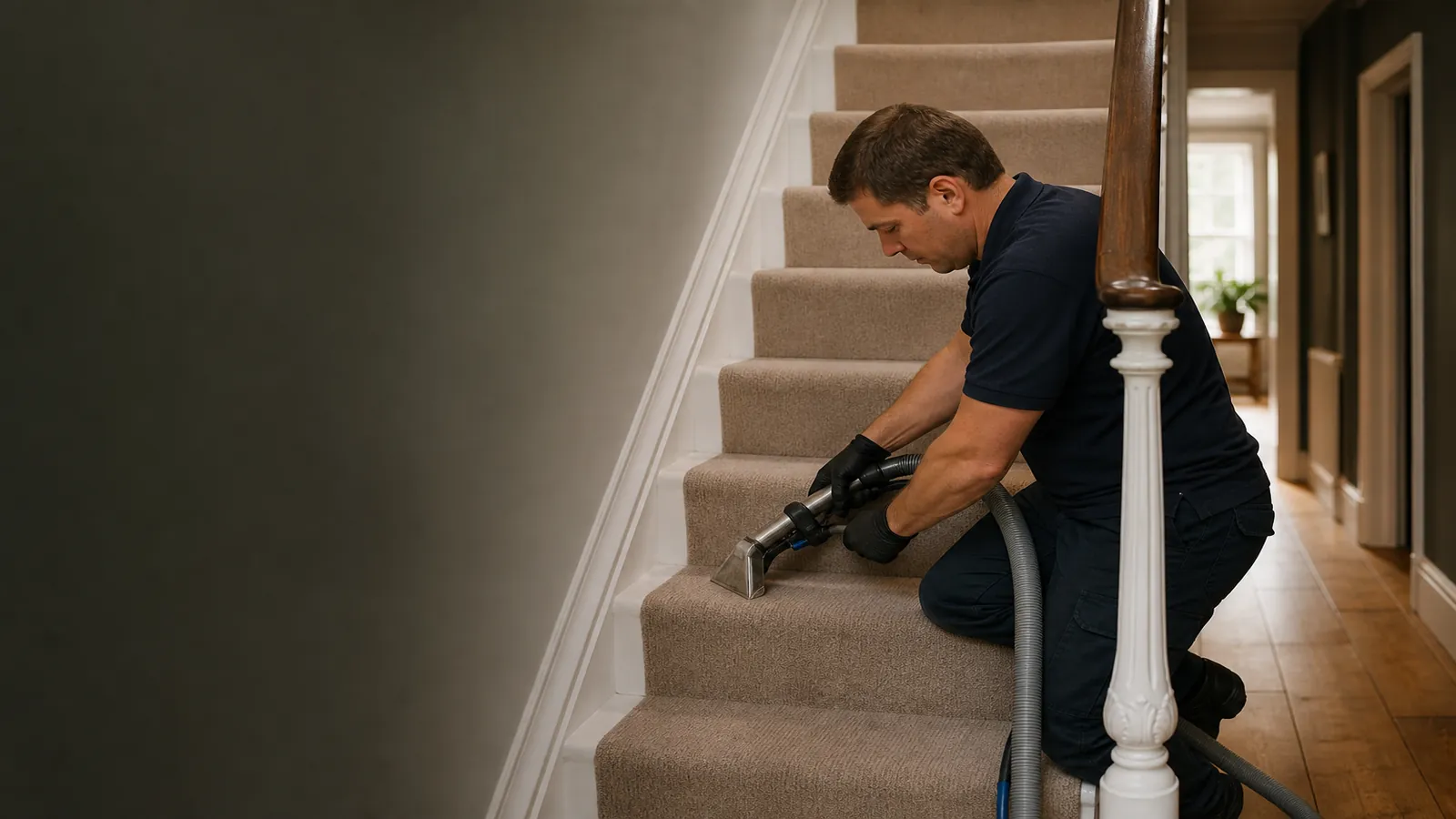
Water supports many effective carpet-cleaning systems, yet quantity alone says nothing about quality. Too little rinse may fail to remove suspended soil; too much can extend drying and stress vulnerable construction. A Barnes appointment is planned around the moisture boundary: enough cleaning action to achieve a meaningful result, paired with disciplined recovery and textile awareness.
Before wet work, the cleaner checks visible seams, edges, backing clues, pile density and previous damage. The customer’s account of shrinkage, rippling or slow drying after earlier treatment is relevant evidence, not an automatic diagnosis. Where stability is uncertain, testing and a conservative first pass provide a safer basis than confidence from appearance alone.
Preparation reduces the need for brute-force rinsing. Dry extraction removes particulate matter, a compatible pre-conditioner loosens bonded residue, and appropriate agitation distributes that action through the required pile. Extraction then has a defined task: carry released contamination away and recover solution efficiently rather than compensate for skipped stages.
Individual marks are handled with the same restraint. A patch that no longer transfers may be bleaching, dye change or abrasion. Repeatedly adding liquid because the colour remains is not persistence; it can be avoidable risk. The operative records the limitation and keeps the surrounding floor consistent.
Drying advice reflects conditions observed after the work. Safe air movement, sensible ventilation and temporary limits on furniture or footwear can help. No Barnes property type is presumed, and no exact return-to-use time is sold before the fibre and environment have been assessed.
SERVICE SCOPE / READ BEFORE BOOKING
A controlled-moisture clean with visible safeguards
Included in this brief
- Condition checks around seams, edges, pile and accessible backing clues
- Dry preparation and measured pre-treatment for the identified soil
- Rinse extraction with monitored flow and repeated recovery strokes
- Post-clean inspection plus room-specific drying instructions
Outside this cleaning brief
- Flood restoration, structural drying and treatment of concealed subfloors
- Guaranteed correction of shrinkage, rippling or damaged backing
- An assurance that every remaining colour difference is removable

PRICING / CLEAR STARTING POINTS
The quotation reflects treatment, not a machine label
Provide dimensions, stair numbers, fibre details, condition, stains, furnishings and access. Published figures belong on the prices page. The Barnes scope explains the work proposed; it does not inflate value by advertising water temperature or tank size without reference to the carpet.
01
Single room
From £15 / room
Compact bedroom or study
02
Double room
From £15 / room
Standard double bedroom
03
Lounge
From £15 / room
Living room with clear equipment access
04
Stairs
Quotation
Standard flight, subject to construction
05
Hallway
Quotation
Reachable hall or landing
06
Whole property
Quotation
Measured rooms and fibre types
Prices are guide prices.
Final quotation depends on the property, condition and requirements.
SERVICE TEAMS / THE AGREED WORK
Where moisture decisions become especially important

A dense or absorbent pile
Solution can take longer to recover from a deep construction. The cleaner adjusts application and adds dry passes while still providing enough rinse to remove the loosened contamination.

A questionable seam
An unstable join is photographed or noted before treatment. Moisture near it is controlled, and carpet repair remains outside the cleaning promise rather than being improvised during extraction.

A repeatedly treated spot
Previous products may have left residue or changed dye. A small response test comes before further liquid, and the attempt stops if continued wetting offers no defensible improvement.

A room with limited ventilation
The condition is disclosed before booking where known. Method and scheduling can be discussed, but safe advice is finalised on site rather than based on an imagined Barnes layout.
Controlled moisture does not mean a token surface clean. It means every application has a cleaning purpose and every rinse is paired with proportionate recovery. The operative can still give a heavily used section the preparation it requires; restraint concerns avoidable water, not a reduced commitment to removing soil. Where testing shows that a stronger attempt would threaten colour or construction, the limitation is recorded rather than concealed beneath another wet pass. That record also gives the customer a useful reference for future maintenance instead of leaving an unexplained patch to be treated repeatedly.
PROCESS / FOUR DECISIONS
Build the clean before opening the rinse valve
01
Identify the operating boundary
The technician reviews fibre, installation clues, vulnerable details and room conditions. Existing waves, loose edges or historic water concerns are documented before any change in appearance.
02
Prepare with dry and low-volume stages
Vacuuming removes grit; targeted product is applied where needed and allowed to work. Mechanical action is selected for the pile, making chemistry effective without soaking the backing unnecessarily.
03
Rinse with recovery in mind
Extraction uses measured solution flow and overlapping passes. The operator observes what is recovered, repeats dry strokes and avoids using additional water as the automatic answer to a resistant mark.
04
Set out the dry-down plan
The completed carpet is checked for consistency and residual dampness. Advice covers airflow, footwear, furniture and any area requiring longer protection, with permanent defects identified separately.
VISIT / HANDOVER
Share any previous moisture problem


Mention earlier slow drying, rippling, loose seams or products used on spots. Clear light belongings and do not shampoo the floor immediately before arrival. Coordinate a broader schedule with end of tenancy cleaning so freshly rinsed pile is not crossed repeatedly.
More heat is not automatically safer or cleaner
Temperature interacts with fibre, dye, chemistry and soil. The chosen range must serve the material and method. Strong heat used as a selling point cannot replace inspection, preparation or adequate solution recovery.
Dry passes are active work
An extraction stroke without additional solution helps recover retained moisture and residue. It may look less dramatic than spraying, but it is a meaningful part of the process and supports a more manageable handover.
Do not trap damp pile beneath dense items
Follow advice before returning furniture, storage boxes or protective sheets. Restricting airflow can prolong drying or create transfer concerns. Light objects should also wait until the cleaner confirms the appropriate arrangement.
Upholstery follows another moisture profile
Cushions, linings and frames alter how seating is treated and dried. If furniture needs attention, upholstery cleaning supplies the separate assessment rather than copying carpet settings.
MAP / COVERAGE CONTEXT
Plan the route into the Barnes property.
Coverage context for Barnes. This map does not represent a staffed local office.
EXPLORE / NEXT
Related services in Barnes
EXPLORE / NEXT
Nearby areas for carpet cleaning
Method choice depends on carpet construction, condition and soil. Extraction can be highly effective, but no process should be assigned solely from a service-page label before inspection.
Barnes questions about moisture and extraction
Is hot-water extraction always the best option?
Some passes apply and recover solution; others focus on recovery. The pattern aims for even rinsing and sensible residual moisture, not repeated wetting without purpose.
Why make several passes over the same area?
Wet cleaning involves moisture entering the pile, and construction differs. The operative controls application and recovery, but an absolute remote guarantee about unseen backing would be misleading.
Can you guarantee that the backing will stay dry?
It should not be assumed. A bed’s layers and intended use demand a distinct plan. Review mattress cleaning and declare the item during enquiry.
Can mattress work use the same extraction setting?
No. It describes service coverage and practical local context, not a staffed branch.
Discuss the Barnes carpet and its safe working range
Describe fibre, rooms, steps, stains, previous cleaning and any historic drying concern. Add photographs of seams or rippling and explain available access. The booking can then be prepared around purposeful solution use, careful recovery and an honest boundary between cleaning and structural repair. If a ripple appears only in certain weather or changed after an earlier clean, include that history without trying to diagnose it yourself. Note which edges are fixed beneath furniture and which can be inspected. These details help the technician plan cautiously while keeping repair decisions outside the carpet-cleaning quotation.