
Beddington / CR0
Carpet Cleaning Beddington: Give Each Room a Defined Cleaning Role
- Room conditions compared before one method is assumed
- Priority zones separated from lightly used carpet
- Stairs and transitions included explicitly in the route
- A single handover records different results honestly
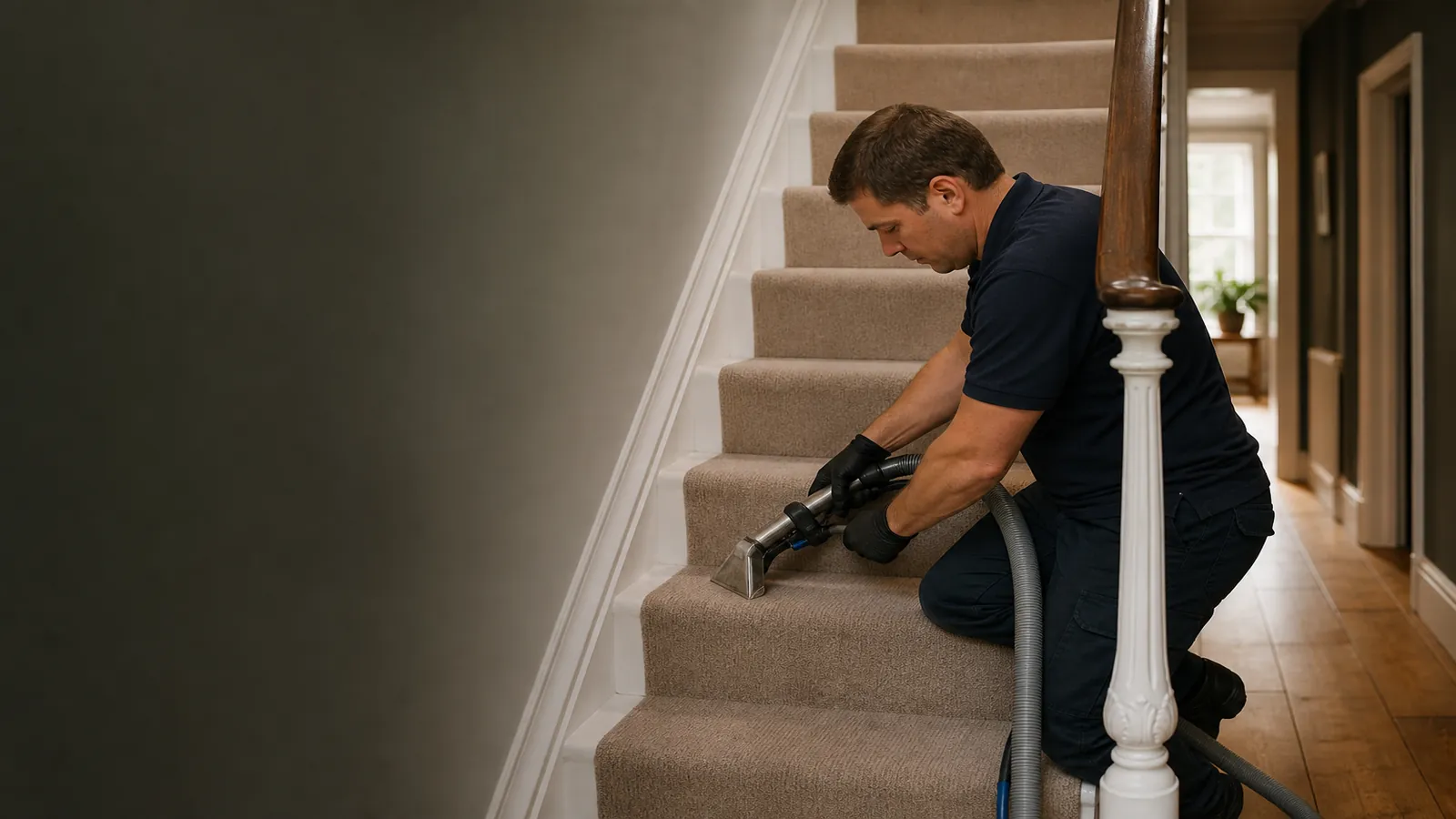
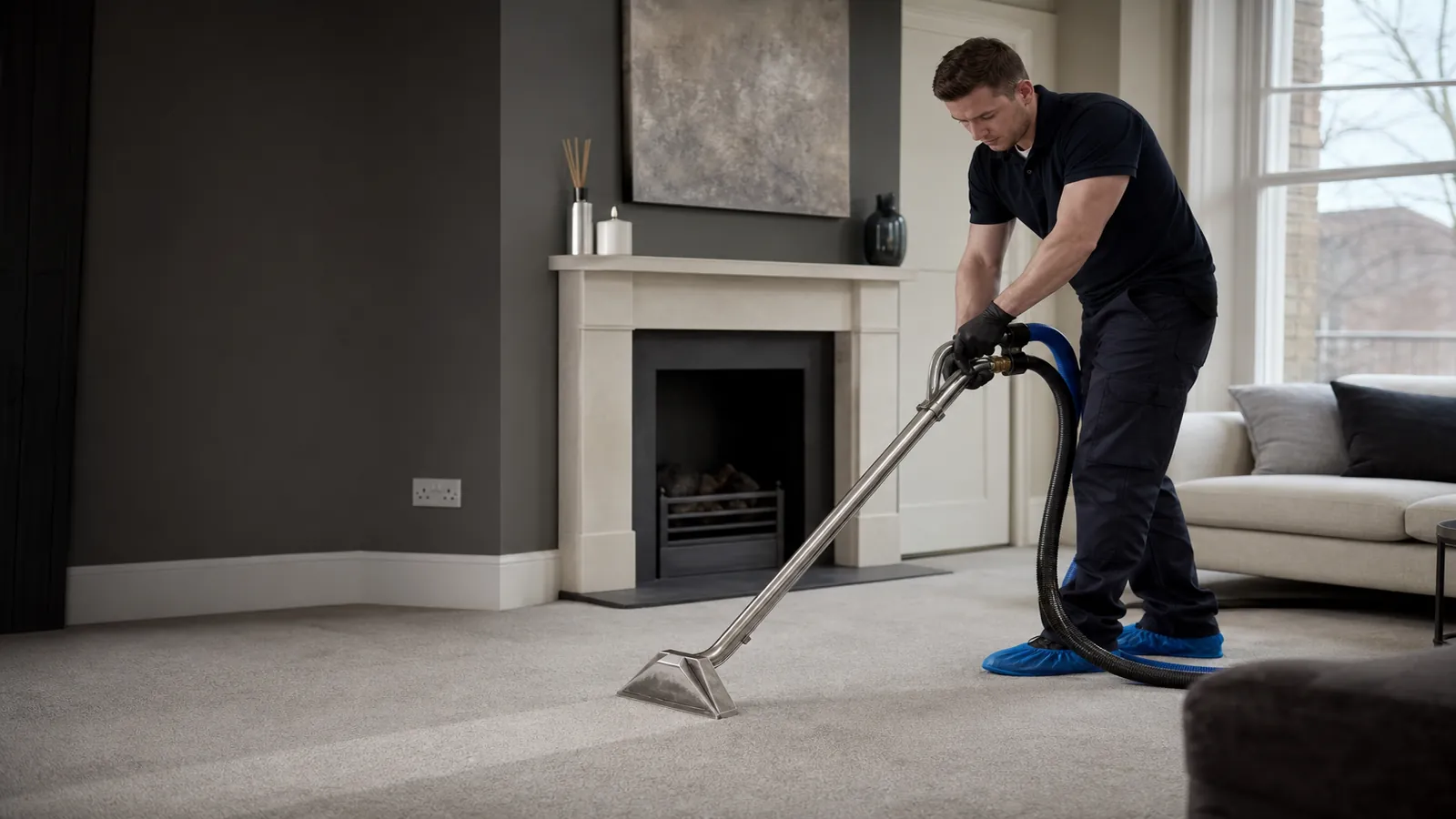
One booking can contain several different carpet problems
A multi-room quotation is easiest to understand when it is more than a total square metre figure. One area may contain entrance grit, another a small drink mark, and a quieter room may mainly need accumulated dust removed. For a Beddington enquiry, we divide the floor into condition zones so that preparation follows use and soil rather than applying one exaggerated treatment everywhere.
Zoning begins during the walk-through. The operative notes fibre differences, changes in pile, threshold strips, furniture limits and the route that links rooms. A carpet that looks continuous can still cross different underlays or levels of wear. The customer’s room names are useful for navigation, but the textile itself decides where one cleaning decision ends and another begins.
Dry extraction is organised accordingly. Busy routes receive deliberate passes in more than one direction; edges and sheltered areas are not ignored simply because their colour looks better. Pre-treatment can then be distributed evenly within a zone, while isolated spots receive a separate test. This prevents a stain product from becoming the default chemistry for an entire floor.
The working sequence also protects completed sections. Equipment, furniture and occupants should not repeatedly cross damp pile to reach the next room. Access priorities are agreed before setup, and the customer mentions any space that cannot be unavailable. A sensible route is more valuable than rushing through the same steps in an arbitrary room order.
At handover, variation is explained instead of hidden. A bedroom may look notably clearer, while a corridor still shows abrasion after its soil has been removed. Cleaning can bring consistency where the difference is contamination; it cannot make every zone share the age, exposure or fibre condition of the best-preserved section.
SERVICE SCOPE / READ BEFORE BOOKING
A room-by-room Beddington cleaning brief
Included in this brief
- Condition mapping across named rooms, steps and joining traffic routes
- Dry-soil removal adjusted to the load observed in each zone
- Compatible whole-area preparation plus targeted spot attempts
- Finishing review and separate notes for wear, drying and room use
Outside this cleaning brief
- A guarantee that differently aged rooms will finish with identical colour
- Cleaning beneath furniture that cannot be moved or reached safely
- Repairs to threshold strips, seams, underlay and damaged pile

PRICING / CLEAR STARTING POINTS
Price the zones that actually need work
List every carpeted room, flight of stairs and landing, then identify fibres, furnishings, notable marks and access. Published information remains on the prices page. The Beddington quotation reflects the declared zones rather than treating a lightly used bedroom and a heavily travelled route as interchangeable units.
01
Single room
From £15 / room
Compact bedroom or study
02
Double room
From £15 / room
Standard double bedroom
03
Lounge
From £15 / room
Living room with clear equipment access
04
Stairs
Quotation
Standard flight, subject to construction
05
Hallway
Quotation
Reachable hall or landing
06
Whole property
Quotation
Measured rooms and fibre types
Prices are guide prices.
Final quotation depends on the property, condition and requirements.
SERVICE TEAMS / THE AGREED WORK
Four zones within a possible whole-home booking

An entrance and circulation route
Loose grit and bonded tracking may overlap with fibre wear. Vacuum preparation addresses the particulate load first, after which the rinse is judged against a protected edge rather than a promise to rebuild the pile.

A furnished sitting area
The accessible carpet is agreed around sofas, tables and connected items. Shading beneath furniture becomes useful evidence, but an unreachable section is stated openly instead of implied within the cleaned area.

A quieter bedroom
Lower visible soil does not remove the need for inspection or dry extraction. Treatment strength and agitation can remain proportionate, avoiding unnecessary work merely to make every room follow the same dramatic routine.

Stairs between the zones
Treads, turns and landings are counted independently. Their edges and nosings collect soil differently from flat floors, and the working sequence must preserve a safe route while equipment is positioned.
These zones illustrate planning decisions, not a claim about a standard Beddington household. The survey uses the layout, construction and condition supplied by the actual property. A zone can also change after furniture is moved or dry soil is extracted, so the map remains a working document rather than a rigid label imposed before the technician has seen the complete pile. The map should record practical boundaries as well as visual ones. A doorway may divide two fibres; a large rug may conceal a cleaner reference patch; a corridor can connect otherwise independent rooms. When a spot sits exactly on a transition, the technician checks both constructions rather than carrying one treatment blindly across the join. This detail also improves the quotation: customers can see which areas received ordinary preparation, which required targeted work and which remained unreachable. The resulting room plan is useful at handover because different drying advice can be attached to a dense section, stairs or a lightly treated bedroom without pretending that one instruction fits the entire property.
PROCESS / FOUR DECISIONS
Map, prepare, treat and reconcile the result
01
Create the room condition map
The cleaner confirms the schedule, looks for changes in fibre or installation and records damage before furniture is moved. Known spills and previous products are attached to their precise locations.
02
Remove dry matter by priority
Vacuuming covers every agreed area, but additional direction changes and edge work are used where the particulate load warrants them. This is a planned response to evidence, not a skipped stage in quieter rooms.
03
Apply the right intensity to each zone
Pre-conditioning and agitation remain compatible with the carpet. Stain work is kept local, extraction follows an efficient route, and recovery passes reduce moisture before the team progresses onto the next section.
04
Compare without forcing uniformity
The finished rooms are viewed under their available light and from changing pile directions. The handover identifies soil removal, residual wear and any area needing longer protection while drying.
VISIT / HANDOVER
Prepare a room list that includes differences
Clear portable belongings and note rooms that contain a different carpet, recent spill or access constraint. Identify what furniture remains. If the appointment accompanies end of tenancy cleaning, order the services so later work does not carry debris through completed zones.
Open-plan floor still needs boundaries
A large continuous carpet can be divided by use, furniture and contamination even when no wall separates it. The cleaner defines workable sections for preparation and extraction, blending their edges so the practical plan does not create visible treatment lines.
Transitions deserve a condition note
Metal strips, door bars and joined carpet edges may be loose or sharp. They are inspected before hoses cross them. Soil around a stable threshold can be treated, while repair of an unsafe fitting stays outside the cleaning remit.
Routine housekeeping has another boundary
Dusting furniture and cleaning hard floors are not silently included because several rooms are booked. Customers can add domestic cleaning as a separate service with its own room specification and sensible order.
A mattress is not a fifth carpet zone
A bed’s covers, filling and drying needs differ from fitted flooring. Use mattress cleaning when it belongs in the appointment, allowing its condition and return-to-use plan to remain explicit.
MAP / COVERAGE CONTEXT
Plan the route into the Beddington property.
Coverage context for Beddington. This map does not represent a staffed local office.
EXPLORE / NEXT
Related services in Beddington
EXPLORE / NEXT
Nearby areas for carpet cleaning
No. Fibre, condition and soil may vary. The operative keeps the service coherent while adjusting chemistry, agitation or solution use where the textile provides a sound reason.
Beddington questions about multi-room carpet cleaning
Must every room be cleaned with the same machine setting?
You can request a defined scope. The cleaner will explain whether treating a partial area risks an obvious boundary and will quote what is genuinely proposed rather than assuming the complete floor.
Can I book only the busiest sections?
Lighting, pile direction, fading, wear and remaining permanent marks can affect appearance. The rooms are compared carefully, but cleaning cannot give differently exposed fibres an identical history.
Why does one room still look darker afterwards?
Yes, if requested and assessed separately. The upholstery cleaning scope identifies fabric, cushions and drying needs instead of treating a sofa as extra floor area.
Can upholstery be included in one room?
No. It describes service coverage and practical local context, not a staffed branch.
Send the Beddington rooms as a condition map
List carpeted rooms, stairs and landings; mark the busiest routes, known spills, fibre changes and furniture restrictions. Include photographs from more than one direction. That information helps us price meaningful zones, choose a safe working order and explain why a clean can be consistent without pretending that every section will become visually identical.