
Bexley / DA5
Carpet Cleaning Bexley: Handle Fine Dust Before It Becomes Wet Paste
- Recent decorating or building residue disclosed in advance
- Dry containment and extraction given priority
- Edges and air-deposition lines assessed separately
- Wet treatment begins only after the loose load is reduced

Fine dust changes the preparation, not just the appearance
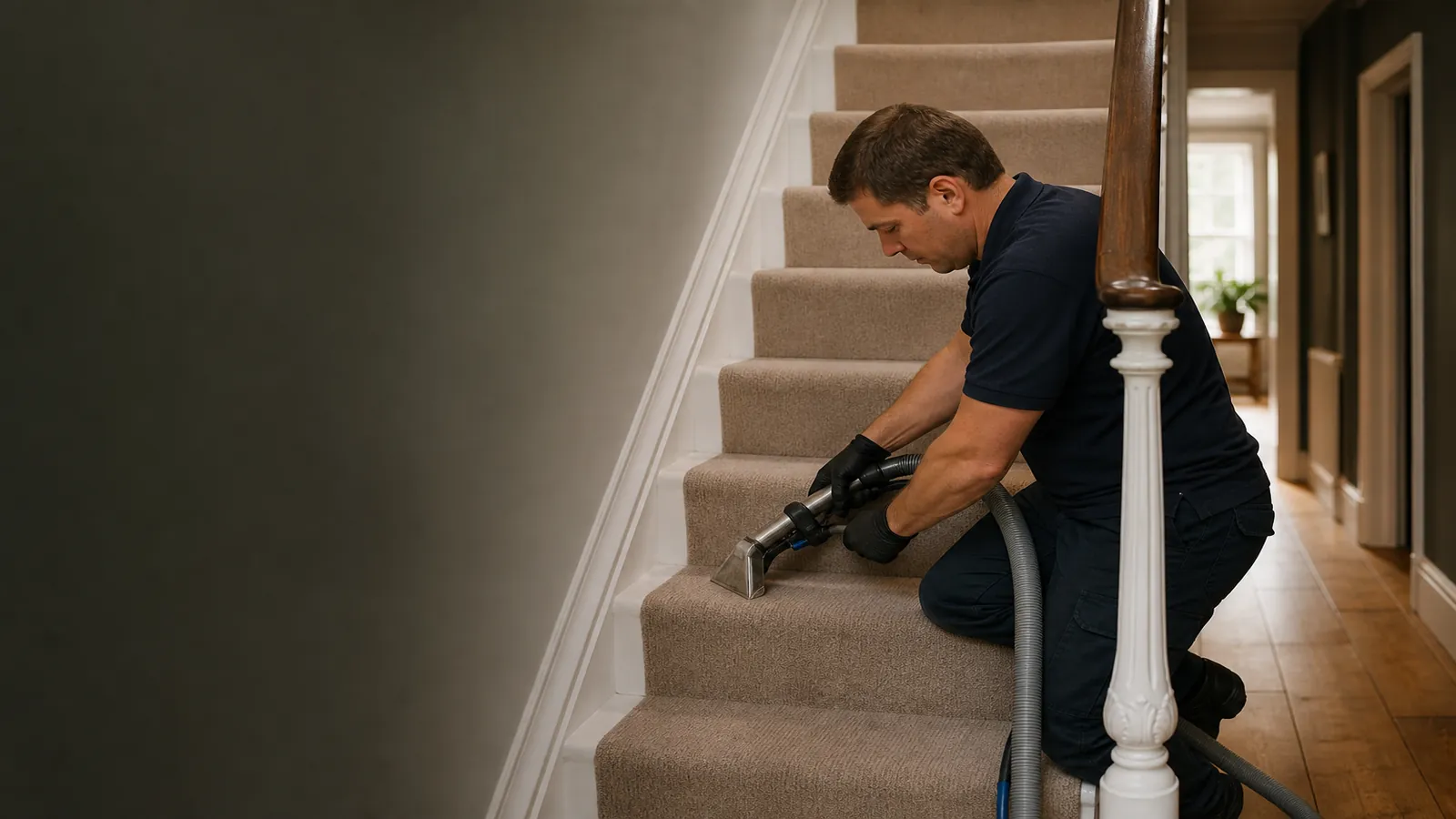
Sanding, drilling and decorating can leave particles much finer than ordinary crumbs. They settle across open pile, gather at skirting and may continue arriving from uncleared surfaces. The Bexley editorial theme is dust-first recovery: establish whether the source has stopped, remove as much material as possible while dry, and only then decide what bonded residue needs wet cleaning.
A carpet cleaner should not enter an active dusty workspace and pretend extraction alone will complete the property. The customer confirms that work has finished, loose debris is safe, and contractors’ waste has been removed. Hazardous or unidentified material requires appropriate handling outside an ordinary cleaning appointment.
The survey looks beyond the central floor. Fine lines near walls, beneath doors and around air routes may be filtration soil or recent dust deposition. Protected carpet beneath furniture offers a reference. Abrasion and old fading are recorded so a newly exposed contrast is not attributed automatically to missed particles.
Dry passes are slow and repeated, using tools suited to edges and accessible gaps. Bags, filters and equipment must be managed for the load. Introducing moisture too early can create paste, carry material deeper and make recovery harder. Pre-treatment therefore waits until the cleaner is satisfied that loose dust has been reduced responsibly.
The later rinse addresses remaining films and ordinary soil within the carpet’s safe range. It cannot guarantee removal of dust still falling from untreated walls, vents or furniture. A complete handover explains what was extracted, which surrounding sources remain and how to protect the floor from renewed deposition.
SERVICE TEAMS / THE AGREED WORK
Four questions before fine-dust carpet work

Has the source genuinely stopped?
Cleaning before sanding or drilling is complete invites immediate resettlement. The customer confirms that dust-producing tasks and loose waste removal have finished before the carpet appointment begins.

Is the material safe to vacuum?
Ordinary inert decorating dust differs from sharp fragments or an unknown substance. Anything presenting a hazard must be identified and handled through an appropriate service rather than hidden in a carpet brief.

Where has air carried the particles?
Edges and doorway lines can contain concentrated deposits. Narrow-tool extraction addresses reachable boundaries, while the handover notes sources outside the textile that may continue releasing material.

What does protected pile reveal?
A sheltered patch helps compare colour and dust load. It does not promise that exposed fibre will match perfectly, because sunlight, traffic and abrasion may have changed it independently.
Fine-dust preparation can be intensive, but it remains carpet cleaning rather than site clearance. The distinction protects equipment, technicians and the customer’s expectation. Before arrival, the room should be checked for screws, splinters, broken blades and other small hazards that disappear visually into pale powder. These are removed safely by the responsible contractor or occupant, not pushed towards the carpet edge. The cleaner can then focus on textile recovery instead of discovering construction waste through damaged equipment. Dust on the carpet may also be only one part of the load. Window boards, radiator tops, shelves and the upper faces of doors can release particles after the floor has been treated. The booking brief should state whether those surrounding surfaces have been cleared and whether ventilation equipment has continued moving dust. This does not convert carpet cleaning into a builders’ clean; it reveals the risk of immediate resettlement. Once dry extraction is complete, the operative can use a clean pale cloth or another suitable observation to decide whether loose powder remains before introducing pre-treatment for the bonded soil underneath.
A clean filter is part of effective extraction
Fine particles can restrict airflow quickly. Equipment performance must be monitored and collection components managed appropriately. Long machine noise is not evidence of useful soil removal if suction has already fallen away.
White dust can reveal old dark soil
Once a pale surface layer is removed, greasy traffic residue beneath it may become more obvious. That is why the carpet is reassessed between dry extraction and pre-treatment instead of declaring the first visual change complete.
Hard surfaces can recontaminate the floor
Shelves, ledges and skirting that continue holding dust may release it later. Domestic cleaning can be scoped for surrounding surfaces, with the order arranged to keep debris off treated pile.
Furniture fabric traps particles differently
Dust in upholstery seams and cushions requires tools and testing suited to fabric. Use upholstery cleaning if those items are affected rather than brushing their load onto the carpet.
PRICING / CLEAR STARTING POINTS
Dust load and readiness matter to the quotation
Send photographs, room dimensions, stair counts, carpet type, access and a description of recent work. The price guidance remains the published reference. A Bexley quote can allow for enhanced dry preparation without inventing a generic renovation story for every address.
01
Single room
From £15 / room
Compact bedroom or study
02
Double room
From £15 / room
Standard double bedroom
03
Lounge
From £15 / room
Living room with clear equipment access
04
Stairs
Quotation
Standard flight, subject to construction
05
Hallway
Quotation
Reachable hall or landing
06
Whole property
Quotation
Measured rooms and fibre types
Prices are guide prices.
Final quotation depends on the property, condition and requirements.
PROCESS / FOUR DECISIONS
Keep the dry and wet phases clearly separated
01
Confirm readiness and material type
The operative checks that dusty work has ceased, scans for sharp debris and agrees reachable rooms. Existing carpet defects and inaccessible sources are recorded before extraction.
02
Remove particles methodically
Vacuum passes overlap and change direction where useful. Edges, transitions and open pile receive attention, with filters monitored so loss of airflow does not turn a long session into ineffective surface grooming.
03
Reassess before using solution
Once the loose load is reduced, the cleaner judges remaining discolouration. Compatible pre-conditioner, agitation and rinse address bonded soil; moisture is not used to conceal inadequate dry preparation.
04
Protect the recovered floor
The carpet is checked after grooming and the room sources are discussed. Ventilation, footwear and later contractor access are covered so fresh deposition does not undermine the completed work.
VISIT / HANDOVER
Finish the dusty task before booking the rinse


Remove tools, sharp offcuts and loose waste; identify the work that produced dust and disclose any uncertainty. Do not dampen powder into the pile. Coordinate final property tasks through end of tenancy cleaning when relevant, but keep site clearance outside both assumptions.
SERVICE SCOPE / READ BEFORE BOOKING
A Bexley clean for carpet affected by declared fine dust
Included in this brief
- Confirmation that the area is ready and debris is suitable for normal cleaning
- Detailed dry extraction of reachable pile, edges and traffic routes
- Compatible pre-treatment and rinse after particulate reduction
- Final review plus guidance on preventing immediate recontamination
Outside this cleaning brief
- Removal of rubble, sharp waste or hazardous unidentified substances
- Cleaning while construction or sanding continues in the same area
- A guarantee against dust arriving later from untreated surroundings

MAP / COVERAGE CONTEXT
Plan the route into the Bexley property.
Coverage context for Bexley. This map does not represent a staffed local office.
EXPLORE / NEXT
Related services in Bexley
EXPLORE / NEXT
Nearby areas for carpet cleaning
That is usually counterproductive and may be unsafe. Dust-producing work and loose waste should finish first, leaving a stable area that can be assessed and cleaned properly.
Bexley questions about fine dust in carpets
Can you clean the carpet while decorators are still working?
Moisture can combine fine particles into paste and move them deeper. Purposeful dry extraction reduces the load before any solution is used for bonded contamination.
Why not shampoo the dust straight away?
Not necessarily. Filtration soil can be strongly bonded, and edges may show wear or gaps. Targeted treatment is attempted within safe limits without saturating the boundary.
Will every line along the wall disappear?
Routine carpet cleaning is not a hazardous-material service. If the substance is unknown or potentially harmful, it must be identified and managed by a suitably competent provider first.
Do you remove hazardous building dust?
No. It describes service coverage and practical local context, not a staffed branch.
Explain what created dust in the Bexley carpet
Send the work history, room list, stairs, photographs and confirmation that dust-producing tasks have ended. Identify sharp or uncertain material rather than sweeping it into the pile. This allows us to assess whether ordinary carpet cleaning is suitable and to allocate enough dry preparation before any rinse begins.