
Blackheath / SE3
Carpet Cleaning Blackheath: Judge the Result from More Than One Direction
- Pile shading separated from removable contamination
- Protected and exposed sections compared carefully
- Grooming used to reveal optical change, not hide it
- Fading and wear described plainly after cleaning
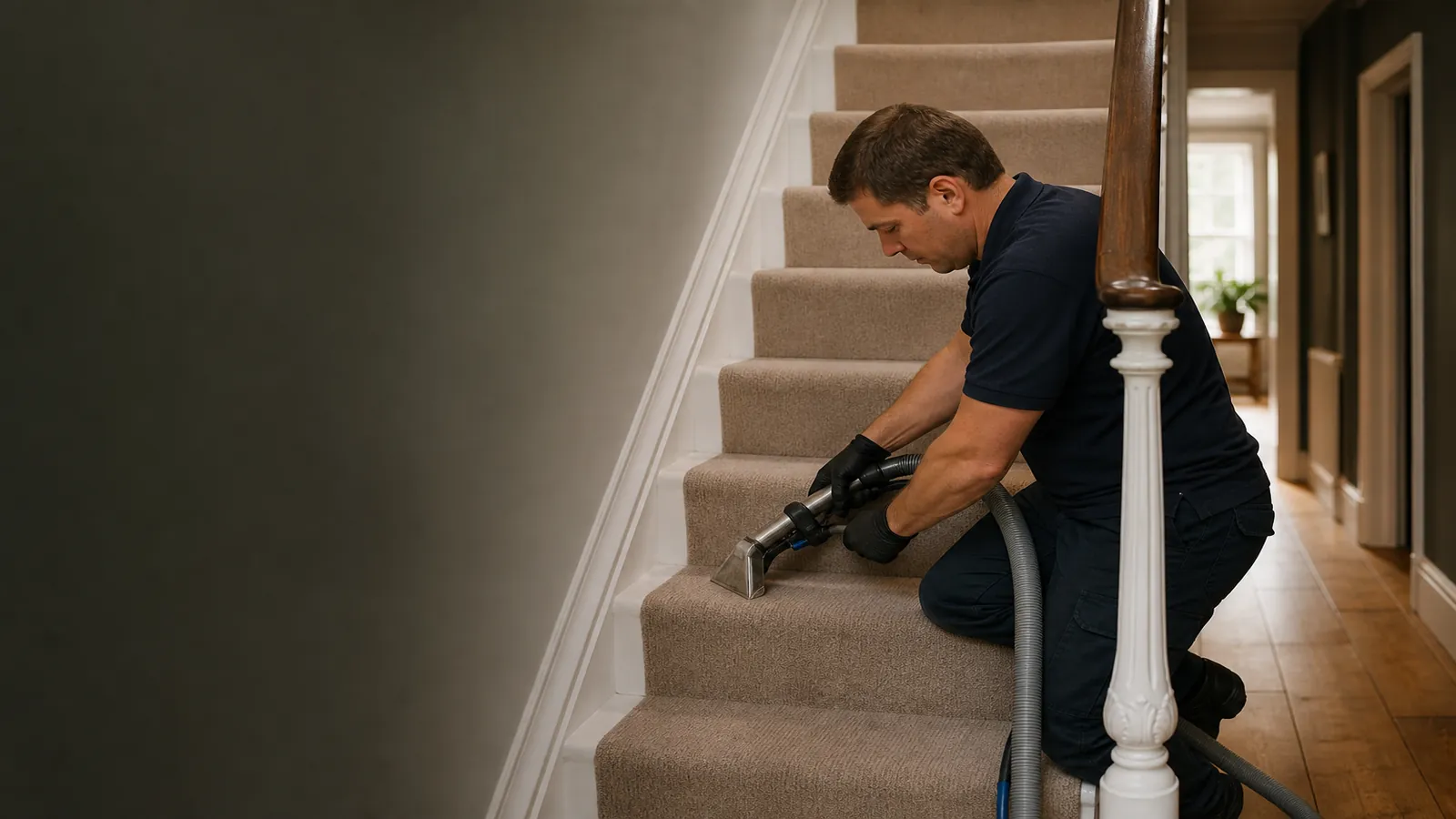

Carpet colour is partly a conversation between fibre and light
A carpet can look darker when viewed towards the pile and lighter from the opposite side. Foot traffic, vacuum direction and grooming alter that effect, sometimes creating a band that resembles incomplete cleaning. The Blackheath page centres on visual interpretation: assess soil thoroughly, but do not sell repeated treatment for an optical change that follows pile direction.
The pre-clean survey uses several viewpoints. The operative brushes a small area, compares carpet beneath furniture and notes where sunlight or regular movement may have changed colour and texture. A mark that remains fixed while the surrounding pile shifts is treated differently from a shadow that reverses as the viewer moves.
This does not minimise actual contamination. Dry grit, sticky films and spills still require methodical preparation and compatible rinsing. The distinction simply directs cleaning action where it can remove material, while protecting the carpet from needless agitation applied to shading, compression or missing dye.
Lighting conditions are recorded without claiming that one photograph tells the complete story. Flash, window light and evening lamps can each exaggerate contrast. Before-and-after images are useful when taken consistently, but the physical inspection and response to grooming remain stronger evidence than a dramatic camera angle.
At handover, the customer is invited to view the floor from the relevant directions. The cleaner identifies areas where colour clarity improved, where pile is still compressed and where fading persists. The result is described as soil removal within the textile’s limits, not as a promise of perfectly uniform reflection.
SERVICE SCOPE / READ BEFORE BOOKING
A Blackheath clean with an optical condition check
Included in this brief
- Multi-angle inspection of pile, traffic routes and known marks
- Dry extraction and textile-compatible pre-conditioning
- Controlled rinse, recovery and grooming appropriate to construction
- Final comparison explaining soil, shading, fading and wear
Outside this cleaning brief
- A guarantee that directional pile will look identical from every viewpoint
- Re-dyeing of faded areas or replacement of abraded fibres
- Photography staged to conceal permanent variation

PRICING / CLEAR STARTING POINTS
Visible contrast is described before it is priced as stain work
Provide rooms, stairs, fibre details, furnishings, access and photographs from several directions. Current guidance is available through cleaning prices. The Blackheath quote treats proven soil and marks without inventing additional spot work for every change created by light.
01
Single room
From £15 / room
Compact bedroom or study
02
Double room
From £15 / room
Standard double bedroom
03
Lounge
From £15 / room
Living room with clear equipment access
04
Stairs
Quotation
Standard flight, subject to construction
05
Hallway
Quotation
Reachable hall or landing
06
Whole property
Quotation
Measured rooms and fibre types
Prices are guide prices.
Final quotation depends on the property, condition and requirements.
SERVICE TEAMS / THE AGREED WORK
Four reasons a carpet may change across the view

Pile running in another direction
Fibres reflect light differently as their orientation changes. Gentle grooming and movement around the room help reveal this effect before the cleaner decides that a dark area needs more chemistry.

Compression through a traffic lane
Cleaning can remove soil and improve presentation, but repeatedly crushed pile may not stand like protected fibre. The remaining texture is documented rather than disguised as a wet patch.

Fading near a source of light
Missing colour cannot be rinsed back. Soil removal may increase the visible contrast with an exposed area, which is why pre-clean notes and consistent photographs matter.

A fixed mark across changing shading
If discolouration remains in place while pile reflection alters around it, targeted testing may be justified. Treatment still respects fibre and dye response, with no guaranteed removal.
Optical assessment prevents over-treatment; it does not excuse incomplete cleaning. The carpet still receives full preparation and the agreed rinse wherever recoverable contamination is present. Customers can make the final review more reliable by allowing ordinary room light where practical and by avoiding a single spotlight aimed only at the darkest view. If a band changes as people walk around it, that behaviour is recorded. If it remains fixed, the technician considers soil, dye and wear separately before proposing another attempt. Furniture placement can complicate the comparison. Carpet under a cabinet may retain taller pile and stronger colour while also holding a sharp pressure line at its edge. The sheltered patch is therefore a reference, not a promised final shade for the exposed room. After extraction, the cleaner allows grooming to settle before describing the contrast and notes which direction produces the darkest view. Customers are advised not to scrub a directional band after the visit. Such action can distort fibres and add product residue without changing the underlying way that light reflects from the pile.
PROCESS / FOUR DECISIONS
Inspect the view, clean the textile, then inspect again
01
Establish visual reference points
The cleaner views the room from entrances and windows, checks protected pile and notes fixed spots. Existing fading, wear and directional bands are recorded before vacuuming changes fibre orientation.
02
Remove soil without chasing shadows
Dry extraction covers edges and open areas, followed by compatible pre-treatment. A directional dark zone is not singled out for strong chemistry unless other evidence indicates contamination.
03
Rinse and groom consistently
Agitation and extraction follow the carpet’s safe range. Recovery passes remove solution; grooming provides an even finishing direction while leaving the technician alert to how that direction changes appearance.
04
Repeat the multi-angle review
The finished floor is observed from the same reference positions. Persistent marks are reconsidered safely, and the handover separates permanent visual features from the soil that was removed.
VISIT / HANDOVER
Send photographs that do not rely on one angle


Photograph notable areas from the doorway and the opposite side in ordinary light. Avoid applying a new spot product. Clear portable belongings and describe furniture that covers comparison areas. If end of tenancy cleaning is planned, protect the finished pile from later traffic.
Vacuum stripes are temporary presentation
Lines left by a vacuum or groomer can make a clean floor look deliberately finished, but they are not themselves proof of soil removal. Assessment considers recovered contamination, feel, residue and the view after normal pile movement.
Photography needs comparable conditions
A bright flash in one image and side light in another can manufacture an apparent transformation. Useful records keep position and lighting reasonably consistent, while acknowledging that a camera still cannot capture every textile response.
Furniture creates a protected comparison
Carpet beneath a movable item may be less faded, less worn and less dirty. Its colour is informative but not an unconditional target. Handling must be agreed before the item is shifted for inspection.
Fabric furniture has its own shading behaviour
Velvet and other upholstery can also change with nap direction. Request upholstery cleaning for a separate fabric assessment instead of transferring conclusions from the floor.
MAP / COVERAGE CONTEXT
Plan the route into the Blackheath property.
Coverage context for Blackheath. This map does not represent a staffed local office.
EXPLORE / NEXT
Related services in Blackheath
EXPLORE / NEXT
Nearby areas for carpet cleaning
Pile may reflect less light from that direction, though soil can contribute as well. The technician views and grooms the area before deciding whether additional treatment is justified.
Blackheath questions about shading and carpet colour
Why does my carpet look dark from the doorway?
No. Cleaning removes recoverable contamination; it cannot replace dye altered by light. The surrounding carpet may become clearer, making the faded section easier to recognise.
Can cleaning reverse sunlight fading?
It can align pile temporarily and improve presentation. Permanent compression, pile reversal or fibre damage may reappear as the carpet is used and viewed from changing positions.
Will grooming make every patch look even?
Routine vacuuming and room care can help control new soil. See domestic cleaning for surrounding tasks, while keeping equipment appropriate for the particular carpet pile.
Can domestic cleaning maintain the appearance?
No. It describes service coverage and practical local context, not a staffed branch.
Show the Blackheath carpet from both sides of the room
Send the room and stair schedule, fibre information and photographs of notable bands or spots from opposing directions. Identify which areas change when brushed and which stay fixed. That visual history helps us plan genuine stain work, avoid treating optical shading aggressively and explain the finished floor with evidence.