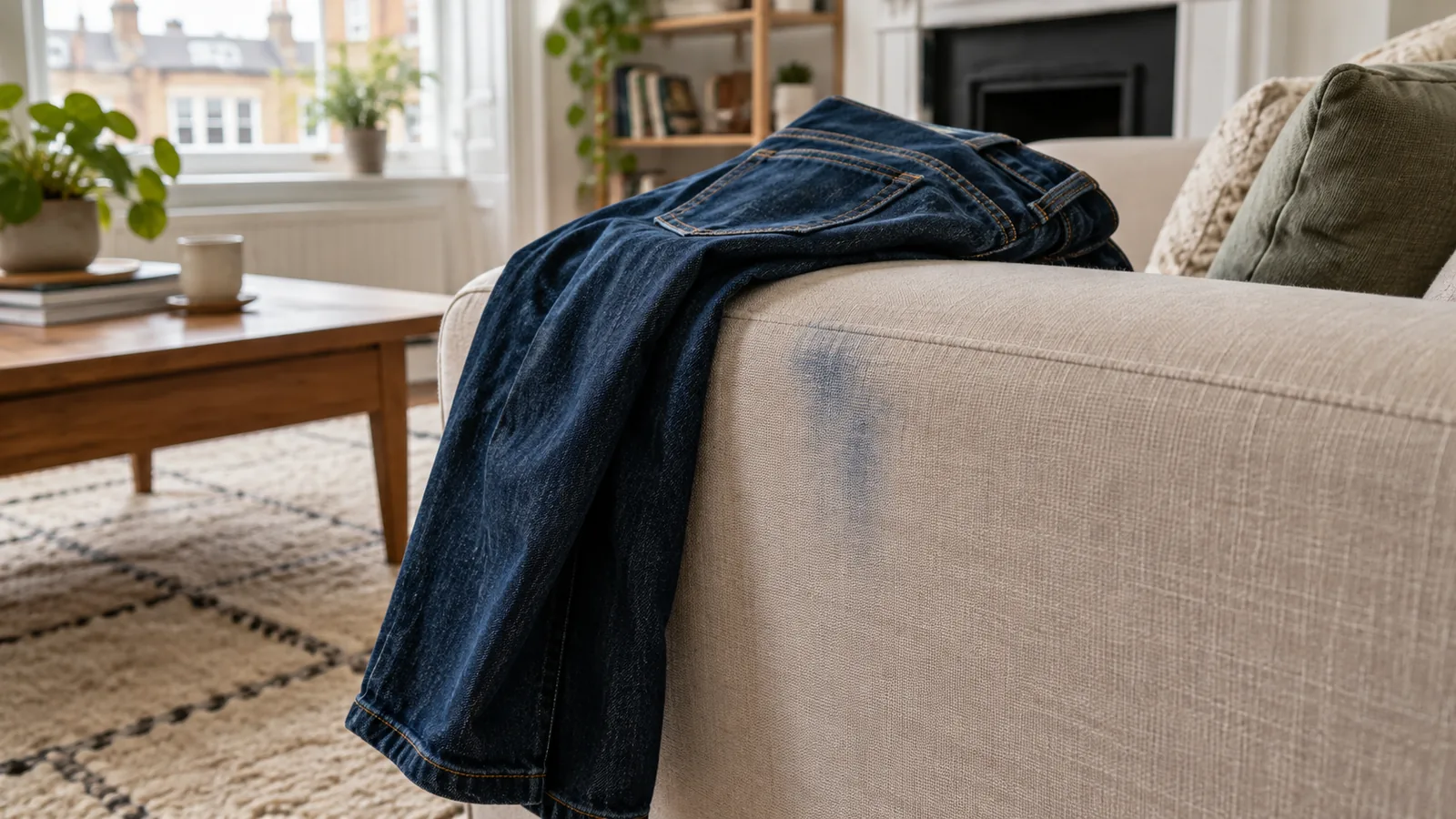
A pale sofa can pick up a blue shadow where new jeans have rubbed against the seat. A coloured cushion, damp blanket or recently dyed garment can leave a similar mark. Dye transfer is different from a spill: colour moves from one material to another through contact, friction, perspiration or moisture. It may sit near the surface at first, then become harder to shift after repeated use or an unsuitable cleaning attempt.
The safest first response is simple. Stop the contact, keep the affected area dry and check the upholstery label. Avoid scrubbing, bleaching or spraying a general cleaner over the mark. Those actions can spread the dye or strip colour from the sofa itself. The steps below help you decide what can be done at home and when the fabric deserves a professional assessment.
Confirm that it is transferred dye
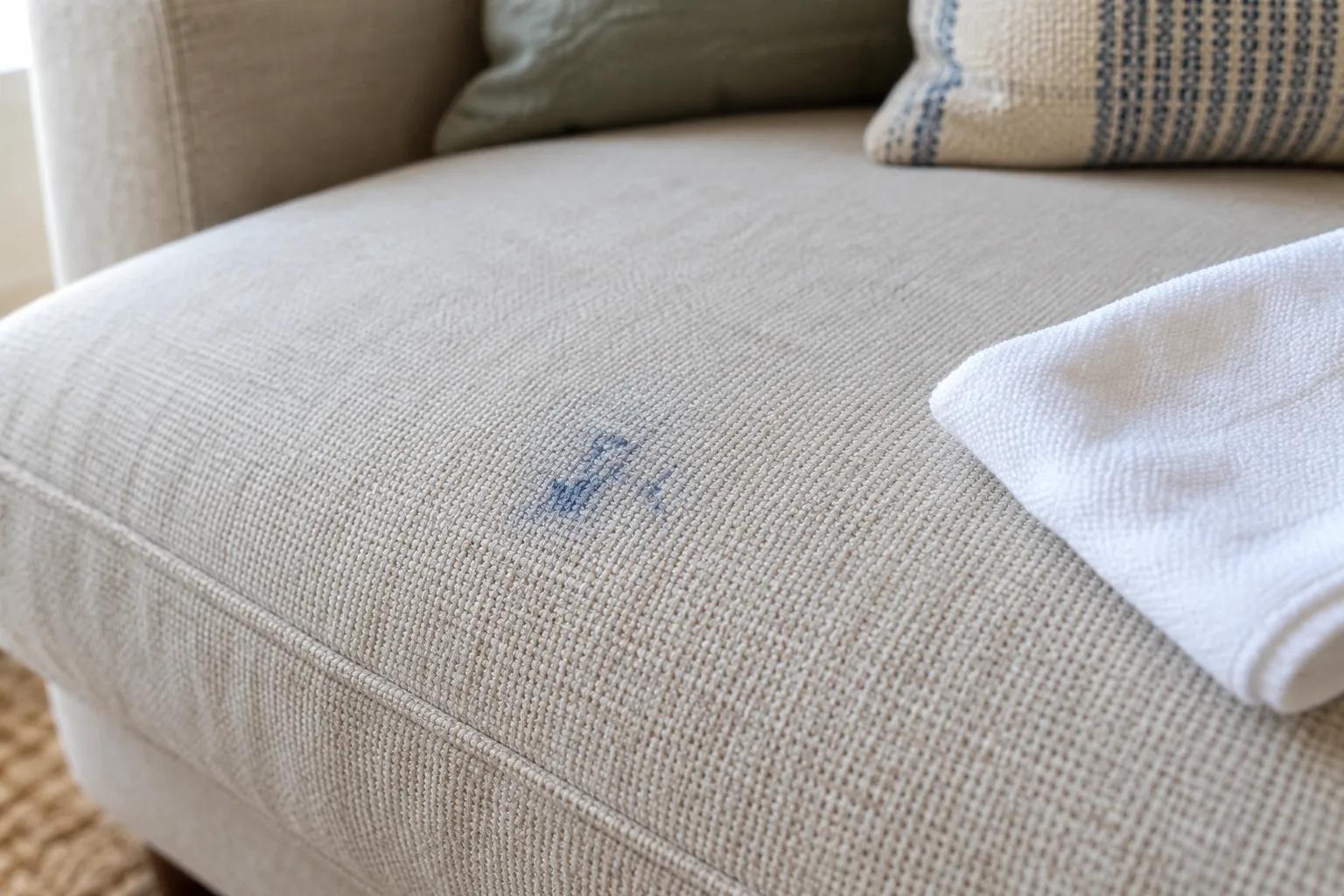
Look at the shape and position of the mark. Denim transfer often appears along the front edge of a seat, an armrest or the back where clothing makes repeated contact. Colour from a cushion may follow its seams or corners. A fresh transfer can look like a soft, uneven haze rather than a sharply outlined stain.
Compare the mark with the item that touched the sofa. Does a damp white cloth pick up colour from that item in a hidden spot? Only test the loose item if its care instructions allow it, and do not use this as a test on the sofa. Also consider other causes. Body oil can darken upholstery without adding blue or red pigment. Sunlight can fade surrounding fabric, making one protected patch look darker. Ink may form a more concentrated line or dot. The likely source matters because each type of mark needs a different approach.
Take a photograph in natural light and note when the mark first appeared. This can help you compare changes after any test, and it gives a cleaner useful background if you seek advice. A photograph is also preferable to repeatedly touching the area to see whether the colour is moving.
Check the sofa before adding moisture
Find the manufacturer's care label beneath the seat, under a cushion or along a cover seam. The common W, S, WS and X codes provide a broad indication of permitted cleaning methods, though they cannot predict how every dye or backing will behave. The separate guide to upholstery cleaning codes explains those limits. Because this article will be scheduled after that guide, the link will lead to a publicly available post when this one goes live.
Check whether the cover is removable, but do not assume that a zip means machine washing is allowed. A cover can shrink or lose colour, leaving a clean but unusable cushion. Look for a separate washing label and any manufacturer's instructions. If the fabric is delicate, coated, aged or already worn, even a small amount of rubbing may alter its surface.
Do not use water on an S or X coded sofa unless the manufacturer expressly permits it. For a W or WS code, a hidden-area test is still necessary. The dye may react differently from the sofa fabric: a product can leave the sofa intact yet drive transferred pigment deeper into its weave.
What to do immediately with a fresh mark
Remove the garment, cushion or blanket that caused the transfer. Keep it away from other pale furnishings until its colourfastness is understood. If the upholstery is dry, gently lift any loose surface particles with a clean upholstery vacuum attachment. Vacuuming will not remove dye bonded to the fibres, but it can prevent dust from being rubbed in during later assessment.
If the transfer happened while the sofa was damp, do not cover it with another cushion or sit on it. Improve normal room ventilation and let the area dry. Do not aim a heater or hairdryer at the mark. Heat can affect dyes, finishes, foam and adhesives, and it may set some residues. Keep children and pets away from any products and from the damp area.
For a truly fresh, small transfer on fabric that explicitly permits water-based spot cleaning, carefully blotting with a plain white cloth may show whether loose dye lifts. Use minimal moisture only if the label and manufacturer's instructions permit it. Work without rubbing, and stop if the sofa's own colour appears on the cloth, the mark spreads or a water ring begins to form. Allow the test area to dry completely before deciding whether anything improved.
Why common stain tricks can make it worse
Bleach can remove or alter the sofa's own dye and weaken fibres. Alcohol, acetone and other solvents can damage coatings or spread colour. A stiff brush can abrade a delicate weave, creating a lighter patch that remains even if the transferred dye is reduced. Strong detergent may leave sticky residue that attracts soil later.
Do not combine cleaners or apply one product after another without fully removing the previous one. Different ingredients can react, and residues make it harder for a specialist to identify what remains. Even familiar household products such as vinegar are not universally safe for upholstery. The care label and a controlled test matter more than a popular online recipe.
Steam is another poor first experiment. Moisture and heat may move dye into the padding or leave a larger tide mark. A small hand steamer can also heat one spot unevenly. If the mark is on a chair with a decorative trim or mixed fabrics, treating only the visible panel can leave a contrast along the seam.
When a specialist has a better chance
Seek an assessment if the dye covers a large area, has been present for weeks, sits on an S or X coded fabric, or has already resisted a careful first attempt. The same applies if the sofa is wool, linen, velvet, viscose, leather or another material with a sensitive finish. Dye transfer from new jeans onto a light synthetic sofa is a different problem from a dark dye transferred onto natural linen.
Tell the cleaner what transferred the colour, how long it was in contact, whether moisture was involved and exactly what has already been applied. A targeted stain removal service can assess both the pigment and the material. Depending on the sofa, a wider upholstery cleaning treatment may be appropriate to avoid a visibly cleaner spot surrounded by old soil. Neither option guarantees complete removal. Some pigments bond strongly or penetrate backing materials.
If the mark is on a leather sofa, do not follow fabric instructions. Leather finishes and protective coatings behave differently. The leather sofa cleaning service is the relevant route for that material.
Prevent another transfer
Wash new or heavily dyed garments according to their own care instructions before they regularly contact pale seating. This reduces loose surface dye, but it does not guarantee that colour will never rub off. Damp clothing and friction increase the risk. A throw can protect a frequently used seat, provided the throw itself is colourfast and does not trap moisture.
Check decorative cushions and blankets as well as clothing. A new cushion with a dark velvet cover may transfer pigment at its piping. If you notice colour on the sofa, remove the source until you understand it. Rotate reversible cushions if the sofa maker allows it, and vacuum regularly so grit does not increase friction against the weave.
Protective treatments need a considered choice. Some are unsuitable for particular fabrics or finishes, and they do not make upholstery stainproof. Ask the manufacturer or a qualified cleaner before applying a treatment to a new sofa. The article on refreshing a fabric sofa without over-wetting it covers routine care that does not depend on soaking the fabric.
A realistic next step
Identify the likely source, photograph the mark, read the sofa label and avoid aggressive cleaning. A very small fresh transfer on a water-tolerant fabric may respond to careful blotting, but stop at the first sign of spreading, colour loss or a tide mark. Older and larger transfers warrant a material-specific assessment. Go Cleaners London can review the sofa type, care code and treatment history before recommending whether sofa cleaning is suitable and what result is realistic.